The Big Down East Adventure Chapter 11

Answer:  St. John’s, Newfoundland

Question: Where are you sailing to this summer?
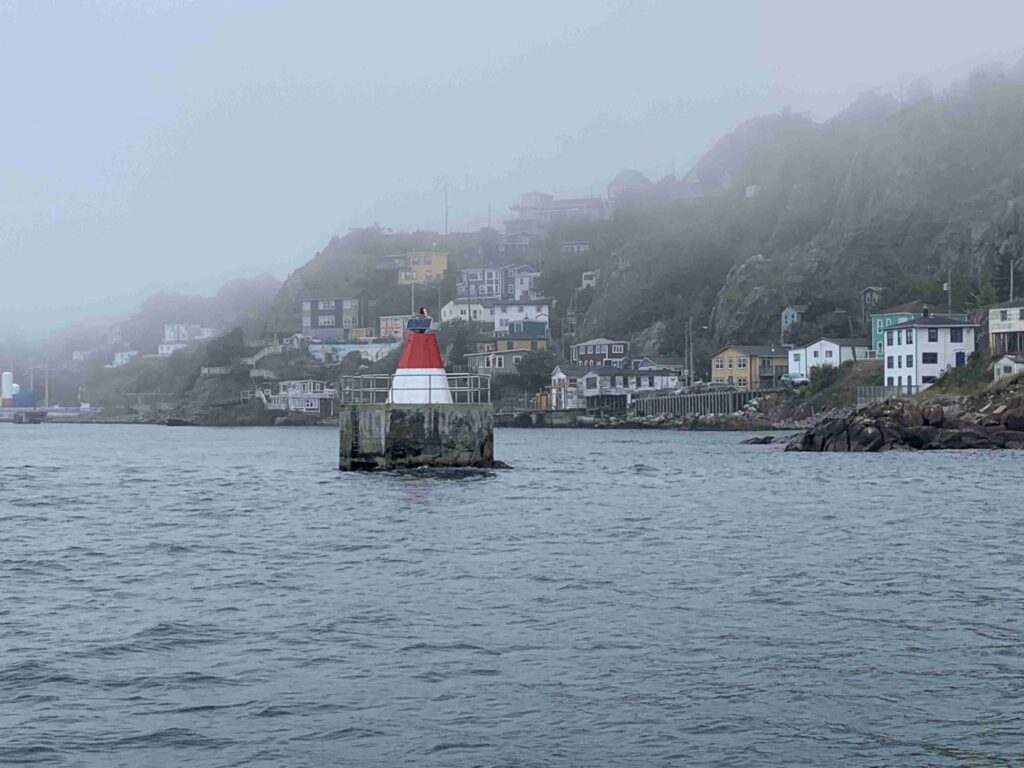
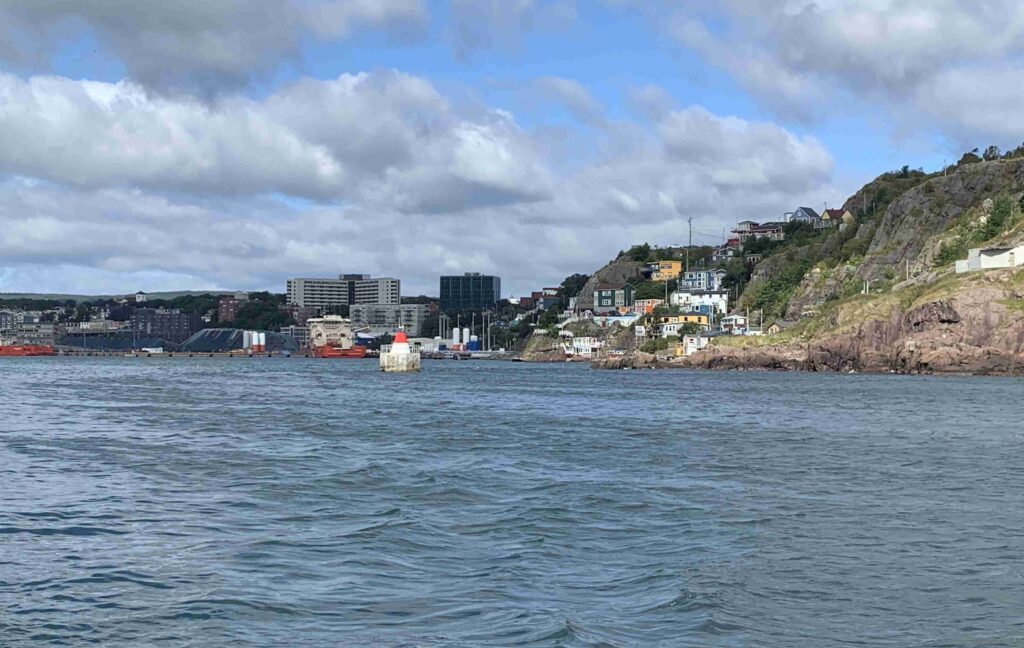
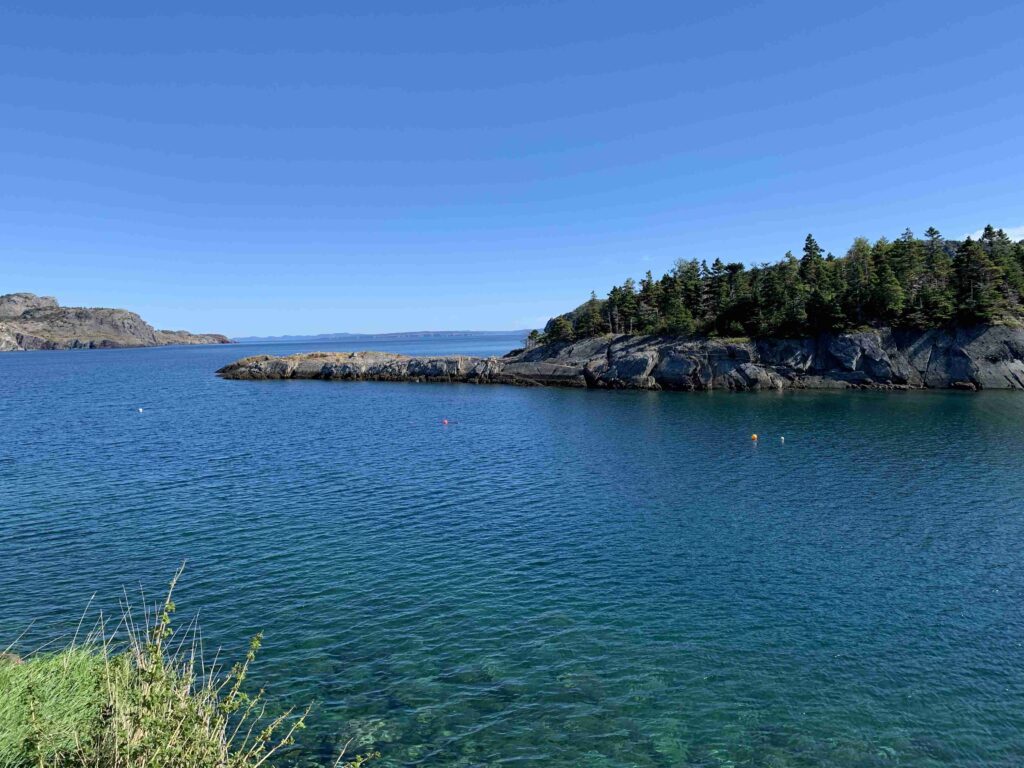
Buoy at St. John’s Harbour entrance
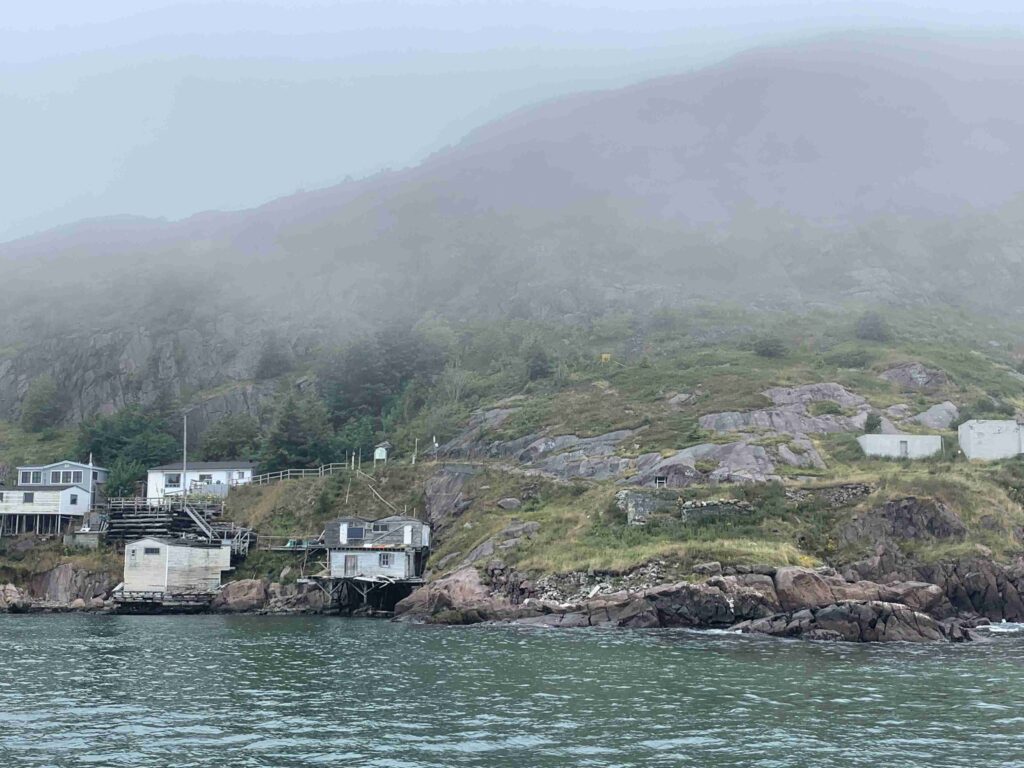
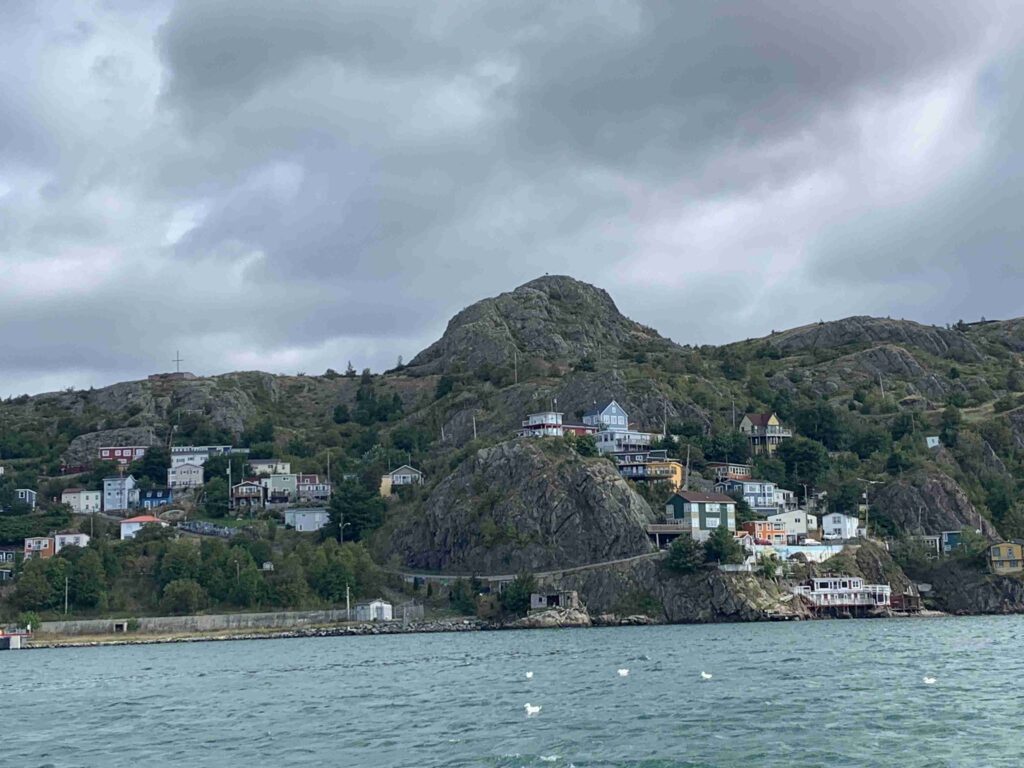
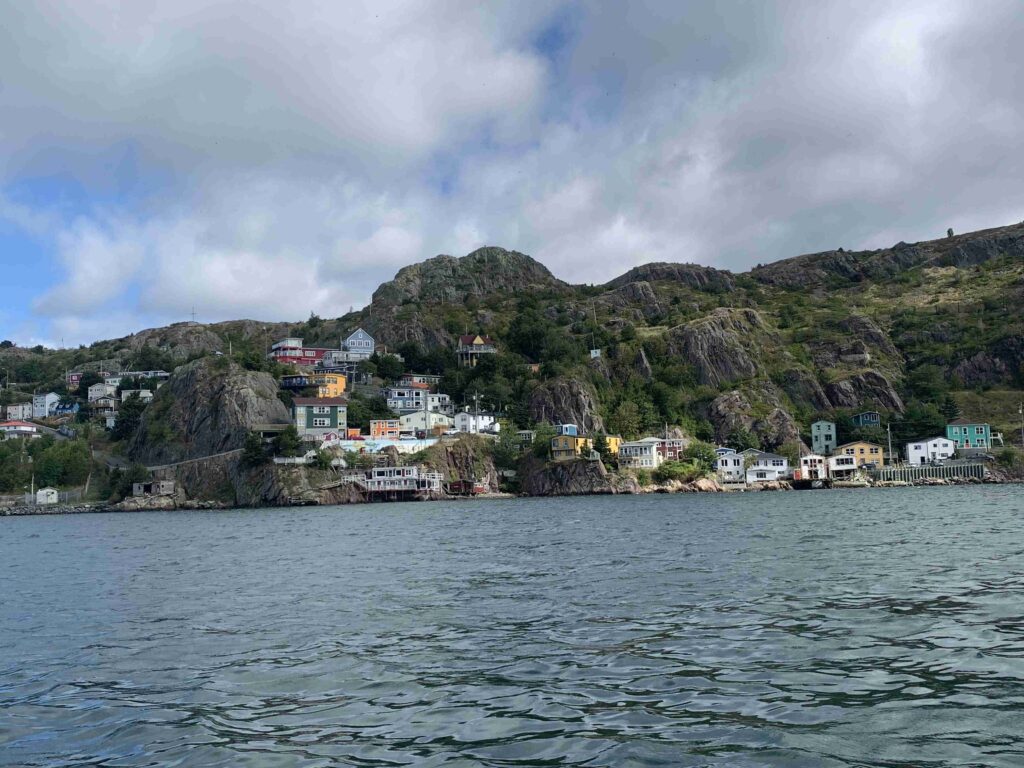
Harbour hillside

What started out as a dream became a reality.  Seventy-four days after leaving Toronto and almost 1800 nautical miles and countless adventures later, we arrived at the St. John’s Harbour Narrows, set between two impressive and historically significant headlands: Cape Spear and Signal Hill. 
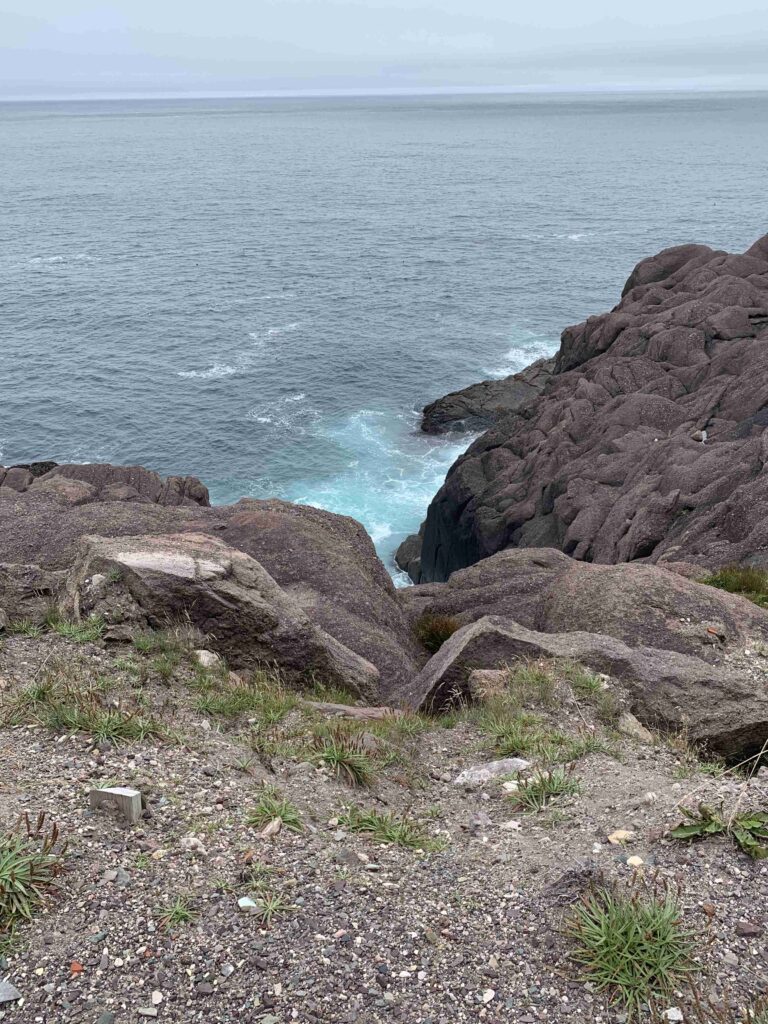
Eastern-most point of North America

Cape Spear is the eastern most point of North America – if you jumped in and swam in a straight line, you’d end up in Ireland. As we rounded the cape and the lighthouse came into view through the fog (surprise – it was foggy again!), a handful of tourists could be seen waving to us from shore.  Just two days later we were the tourists on shore as we visited the cape on land. Cape Spear is an interesting place to visit not just for the spectacular views of the sea (whale sightings are not uncommon), but also for its rich history.  Because of its proximity to shipping routes, Cape Spear served an important role in WWII as a gun battery, with two massive guns that disappeared inside the landscape and defended our coast.  The guns, bunkers and underground passages are still there and on display. 

View of St. John’s from Signal Hill

Signal Hill is the more famous cape because it was here, in 1901, where Gugliemo Marconi received the first wireless radio signal sent between Europe and North America.  Today the hill offers miles of hiking trails with breathtaking views of rugged coastline and the city of St. John’s. 
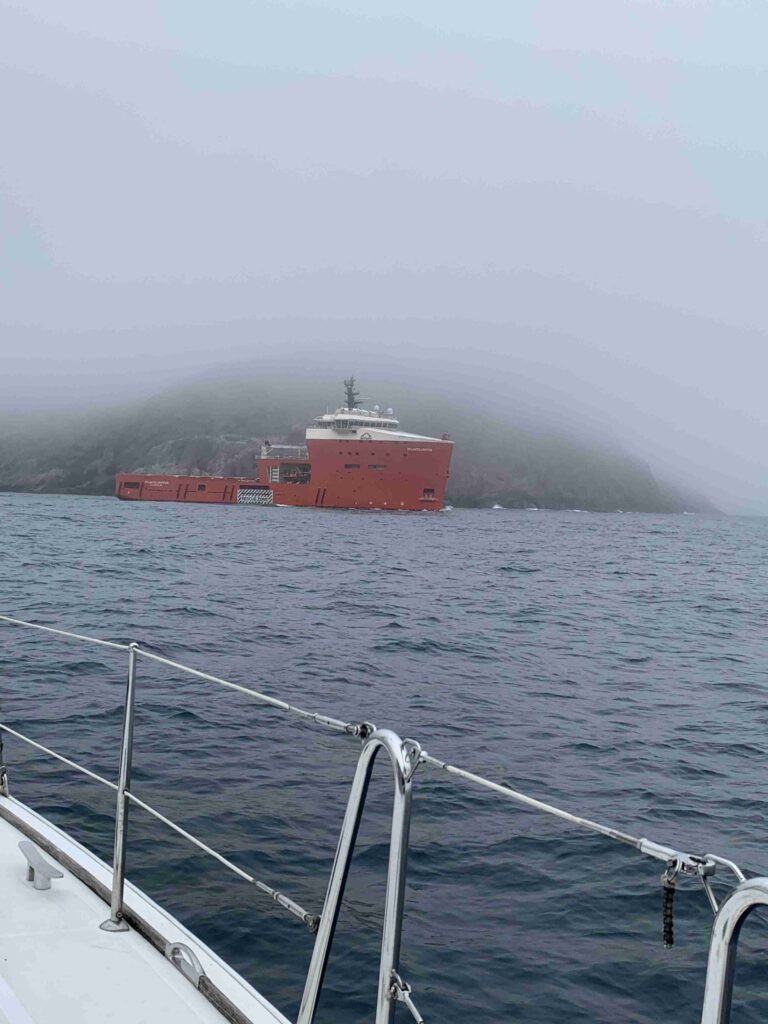
Waiting for clearance to enter St. John’s Harbour

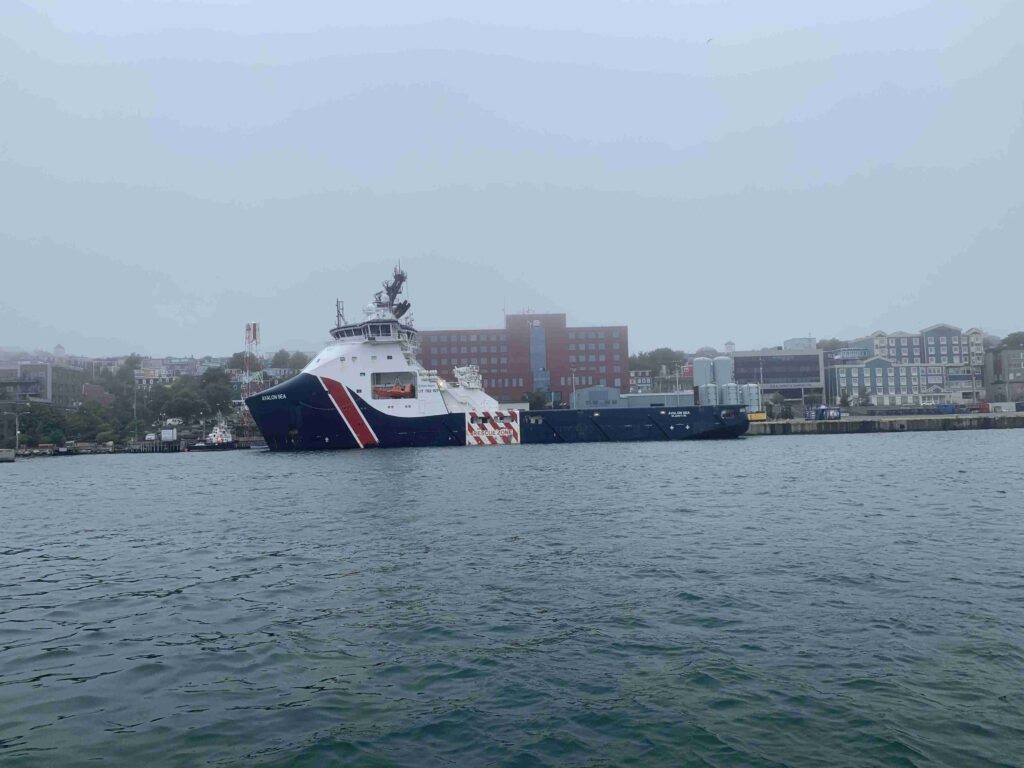
Entering the Narrows and St. John’s harbour is far more complex than just showing up.  This is a commercial harbour that serves heavy industry and the Canadian Coast Guard base – pleasure craft are not their main customers.  All vessels entering the Narrows must call into Harbour Traffic Control to request permission and wait for clearance.  Additionally, we were also required to call the Harbour Authority, a separate entity, to request permission to dock and obtain a berthing location. 

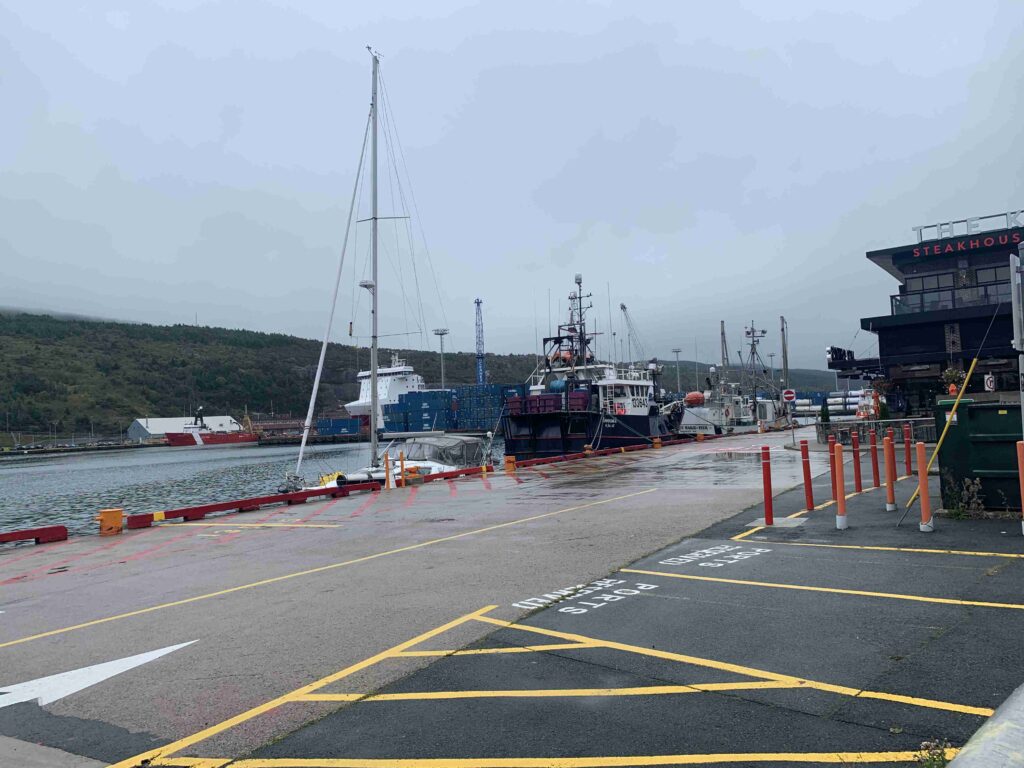
While smaller boats (anything less than 200 feet) are certainly welcome, the facilities do not cater to them.  We were assigned Berth #8, a stretch of dock wall literally steps away from heart of the city and settled in between a commercial fishing boat and a magnificent 200-foot sailboat named Adele, that had just completed a transatlantic crossing.  The massive wharf consists of wooden piles layered with 3’ diameter tractor tires so in addition to putting out all our fenders, we added fender boards to prevent the fenders from getting caught inside the tires. Electricity is provided at the wharf; however, other services such as fresh water, washrooms or showers are not available.  We were careful with water consumption, so this meant buying bottled water for drinking and food prep and signing-up for a trial membership at a nearby fitness club so that we could use their showers. 
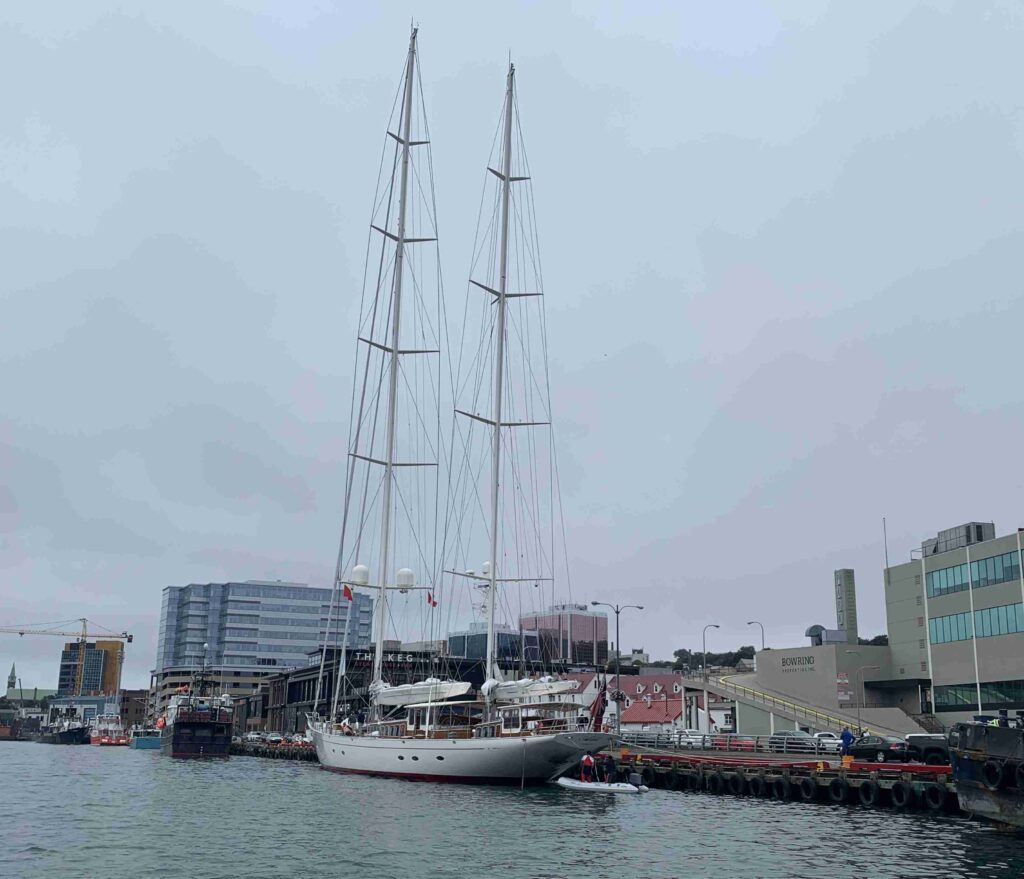
Sailboat Adele
St. John’s Harbour

We were thrilled with our location on the dock with its easy access to the historic downtown district with countless shops, restaurants and the famous George Street bars.  St. John’s is built into the side of a mountain and the boat was obviously at sea level, so we got a daily workout walking up and down the streets. The harbour attracts tourists and locals alike, including bike riders, dog walkers, people just enjoying the view, and since we were the only pleasure boat in the harbour, we had many people drop by to say hi, ask where we are from and chat about their own boating adventures.
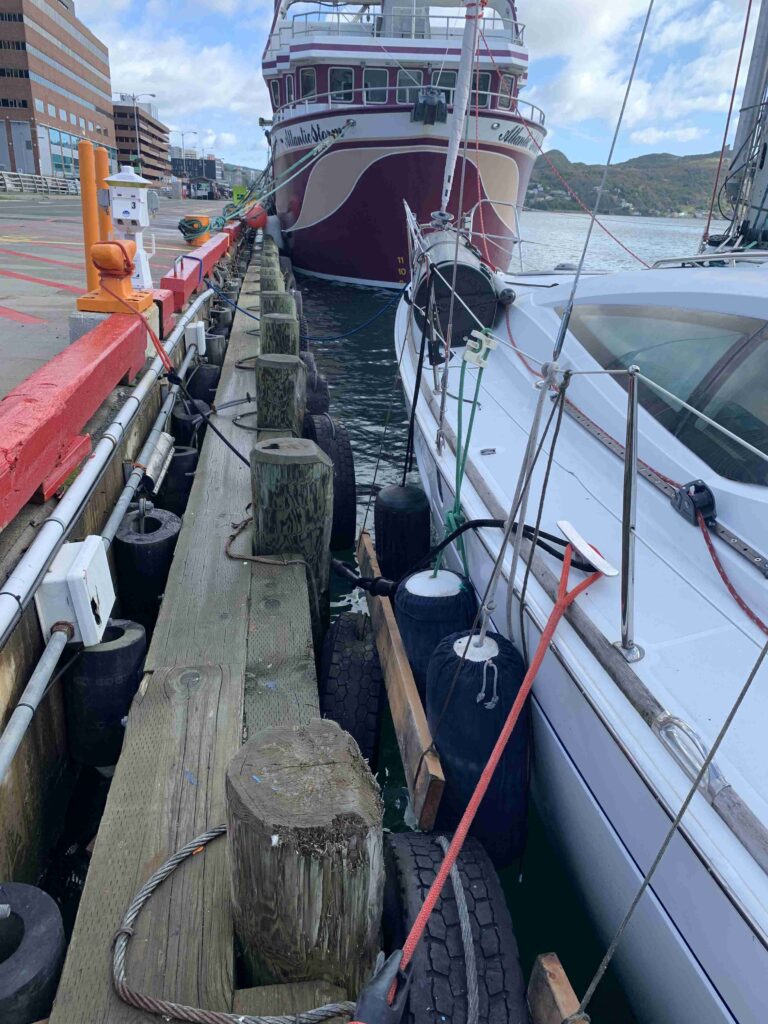
Meshuggana at low tide
Boards are strapped to outside of fenders to prevent them from getting trapped in pier

We spent 7 days in St. John’s, a few more than planned because we were between storms (Henri and Larry) causing strong winds and rough seas, but we filled our days exploring Newfoundland’s largest city.  Here are some highlights:

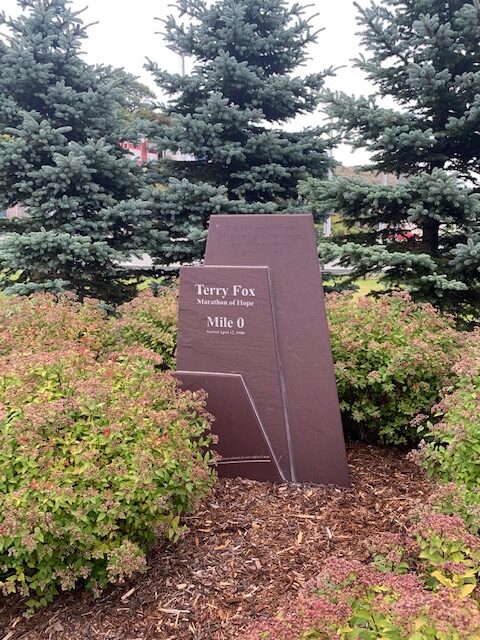
The Terry Fox Memorial stands at the base of Signal hill, celebrating this amazing Canadian hero.  Terry lost his leg to cancer when he was just 18 years old, and the age of 22, Terry set out to run approximately 8000 kms across Canada to raise awareness and money for cancer research.  Terry began his Marathon of Hope when he dipped is prosthetic leg in St. John’s Harbour on April 12, 1980. Sadly, on September 1, Terry was forced to end his run in Thunder Bay, Ontario, after completing 5,373 kms, the equivalent of more than 128 marathons in 143 days, when his cancer returned. Terry lived to see his goal of raising $1 for every person in Canada when donations topped $24.1 million before his death on June 28, 1981.  Today more than $850 million has been raised in Terry Fox’s name.
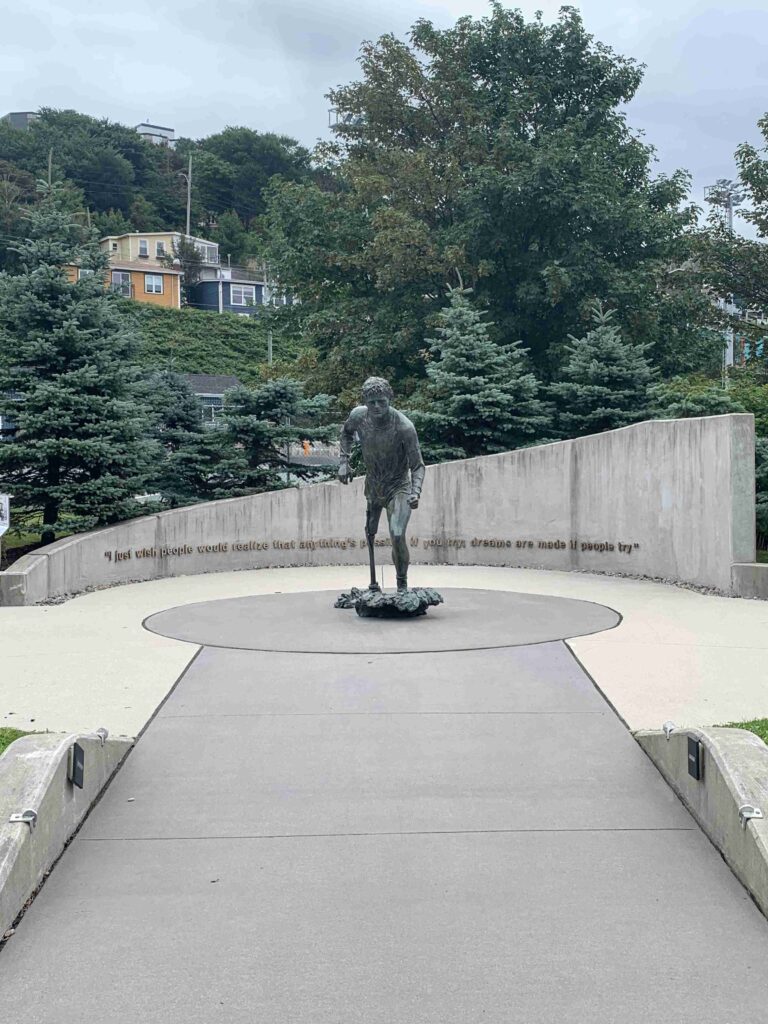
Terry Fox Memorial

The Rooms Museum, perched at the top of St. John’s, not only offers breathtaking views of the city and its harbour, it is also a must-visit stop for anyone visiting this city.  It is a history museum, a natural history museum and an art museum, spread across different rooms and different levels.  It has impressive exhibits of the origins of Newfoundland, including the indigenous peoples that used to and still inhabit this land, the story of European conquerors and early settlers, confederation with Canada in 1949, participation in world wars to present day events. 
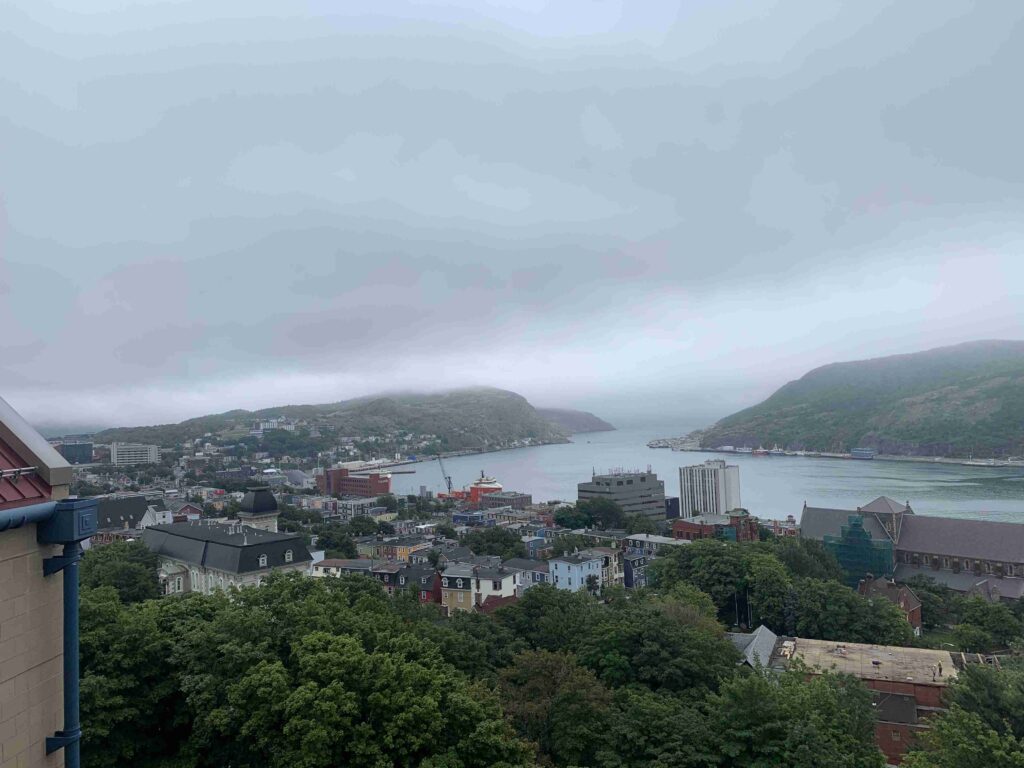
View from Rooms Museum

George Street is three blocks solid of bars and clubs and not surprisingly famous for its nightlife.  It comes alive every night of the week with throngs of young people, enjoying the festive atmosphere with live music coming from nearly every bar.  I estimate the average age of the patrons is 21, and as Allen ‘s and my kids are older than this, it wasn’t really our scene, but when in Rome….  One evening we ventured out to George Street, got a table at “Martini Bar” (correctly assuming the crowd may be a bit older) and enjoyed watching the street come alive. 
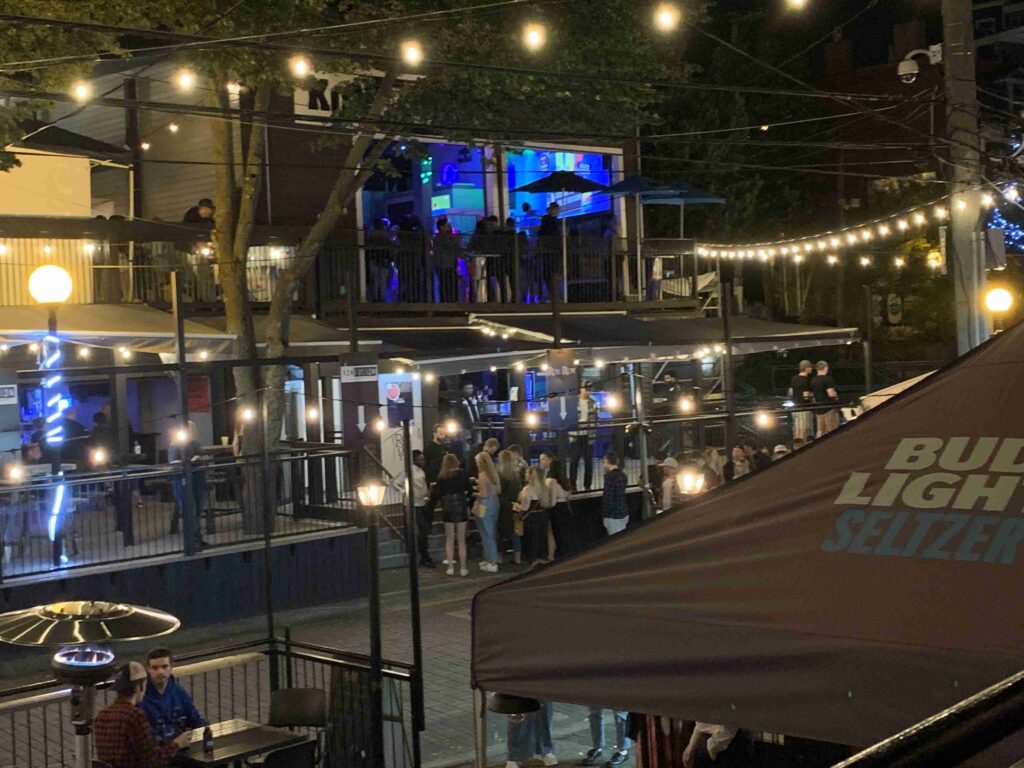
George Street nightlife

St. John’s is known for its vibrantly colored row houses, Jellybean Row.  These candy-coloured houses can be found throughout the city and have become a feature for tourism materials and every souvenir shop sells something with their image, from wine glasses to mailboxes. Despite the kitschiness of the trinkets, these houses are a must-see feast for the eyes. 
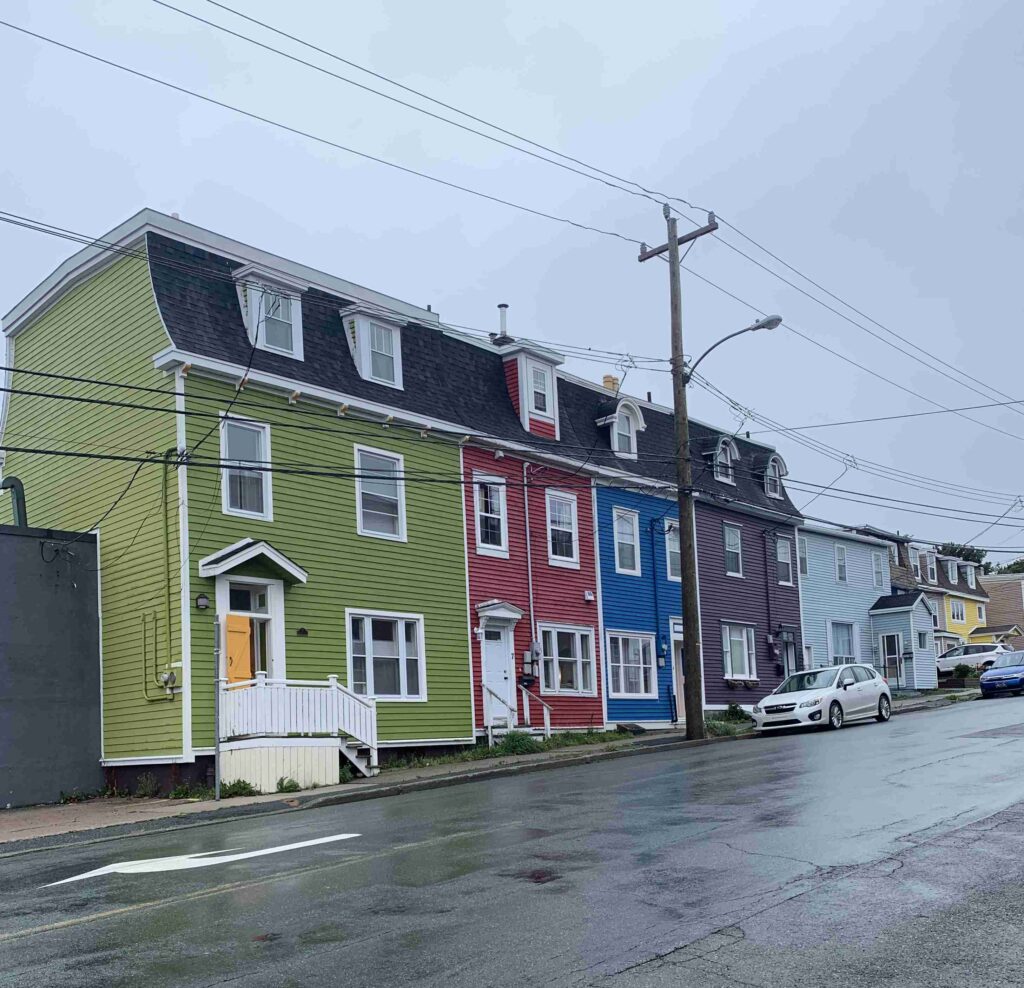
Jellybean row houses

After 7 days of anxiously watching weather news, we had a small window of favorable wind and waves to get out of St. John’s and get to the final destination of this trip, the Royal Newfoundland Yacht Club in Conception Bay.  A tropical storm was brewing near Bermuda and forecasted to make landfall on the Avalon peninsula of Newfoundland, As the storm moved north, it was gaining speed and morphing into a full hurricane.  St. John’s Harbour was not a safe place to ride out a massive storm from the south, so we had to go fast to reach the yacht club in Conception Bay and begin preparing for a hurricane. 
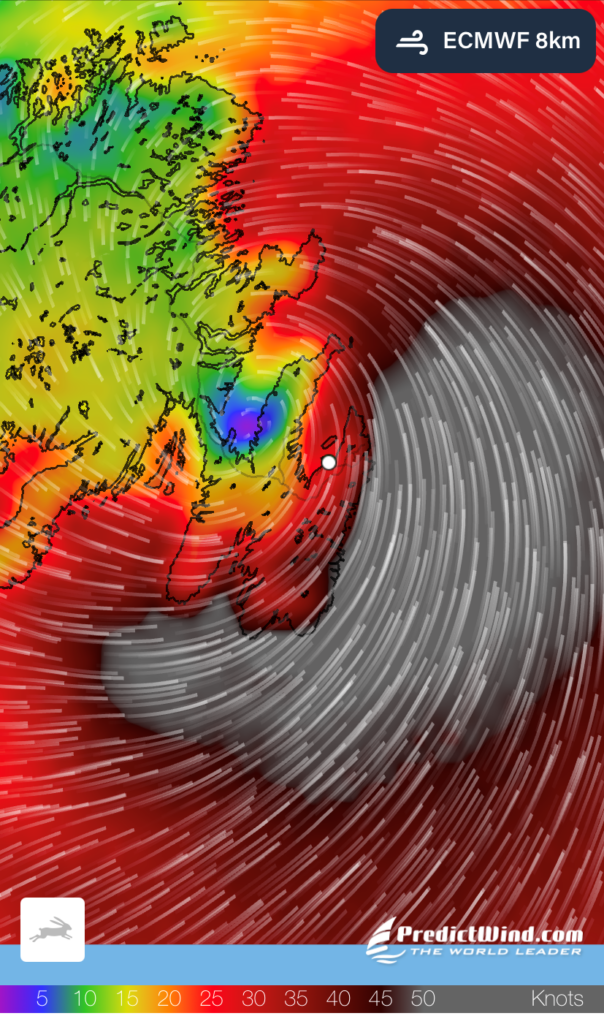
Hurricane Larry heading to Newfoundland
Departing St. John’s on a rare, sunny day

The Big Down East Adventure: The Final Chapter

We left St. John’s with one goal – outrun a hurricane.  Thanks to technology, we knew Hurricane Larry was on its way, taking aim directly at the Avalon Peninsula of Newfoundland, our exact location.  We had already experienced the dregs of two other Atlantic storms, Henri and Ida, and since they made landfall well south of Newfoundland, they gave us big seas and big wind that we safely waited-out in a couple lovely ports. However, Larry was on a different trajectory – he blew over Bermuda as a Category 3 and then turned east, skipping the coast, making Newfoundland his first landfall. With Larry we could not just wait a few days tied to a dock as we did with the other two, we needed a whole new level of safe harbour to weather a full hurricane.   We had a small weather window on September 8 to sail to Conception Bay, the other side of St. John’s.  It’s only a half hour drive across land, but by sailboat it’s closer to 6 hours.  We left St. John’s on a sunny Wednesday morning and sailed into an unsettled Atlantic for our final destination, the Royal Newfoundland Yacht Club.  There was a sadness as we sailed past the soaring cliffs, crashing waves and lighthouses, knowing it was our last sail of the season, yet there was an enormous feeling of accomplishment, and at the same time, trepidation about a hurricane on our heels.

Farewell St. John’s

We were met with the usual Newfoundland hospitality as we arrived at RNYC – sailors greeting us, ready to catch our lines and helping us settle into our slip at the dock.  The club is guarded by a massive rock breakwall, protecting it from the bay, and we were nestled deep inside the docks.  We learned the last storm a couple years ago wiped out their old breakwall, so this new one was bigger and stronger and better at holding off the Atlantic.  We felt safe and welcomed by our new RNYC community. 

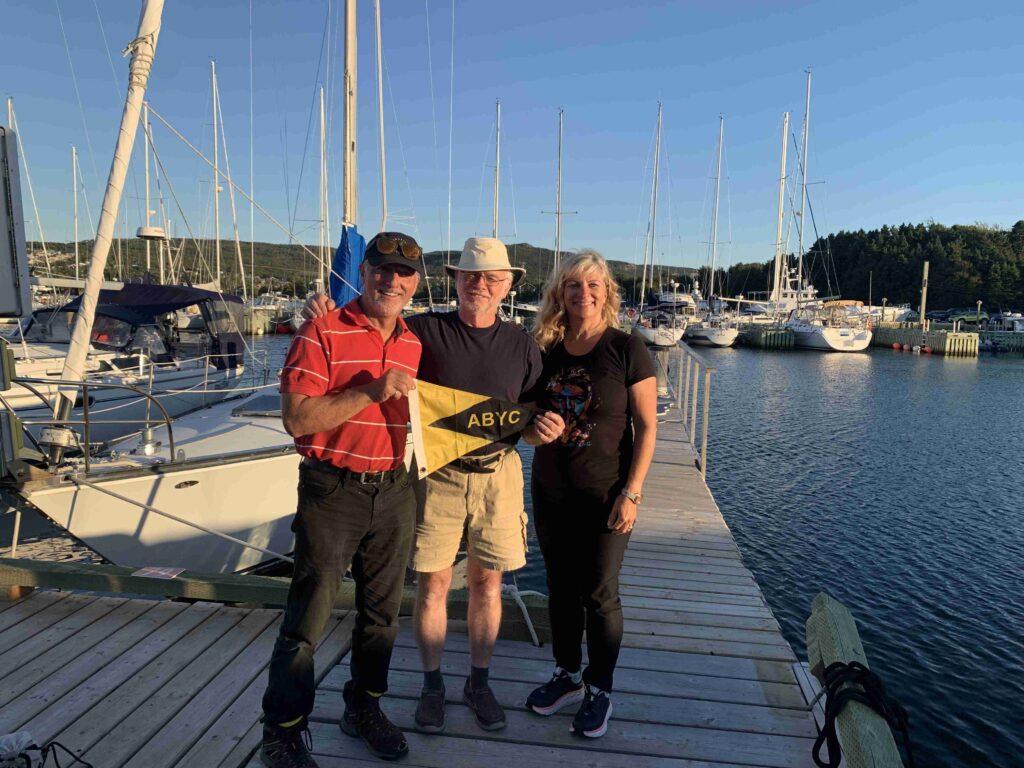
Presenting our home port burgee to Rear Commodore Jim Wyse of RNYC

Larry was forecasted to arrive around midnight on Friday, September 10 and the next two days buzzed with activity at the club.  Allen and I made a list and got to work: remove and stow everything that is not bolted down and tie-up the boat to every dock and pile any which way it can be tied-down.  Down came the sails, the boom, the canvas enclosure, even the solar panels. We could hardly turn around downstairs as we filled every open space with cushions, canvas, boat hooks and sails.  We appreciated every word of advice offered by other RNYC members because unlike us, this was not their first hurricane.  We were lent more fenders, offered more lines and even car keys were offered in case we needed to pick-up anything in town.  By the time we were finished, Meshuggana was secured by 14 lines attached to piles, docks, an anchor in the harbour and 10 fenders with boards separated her from the dock. 

Meshuggana prepped for the storm

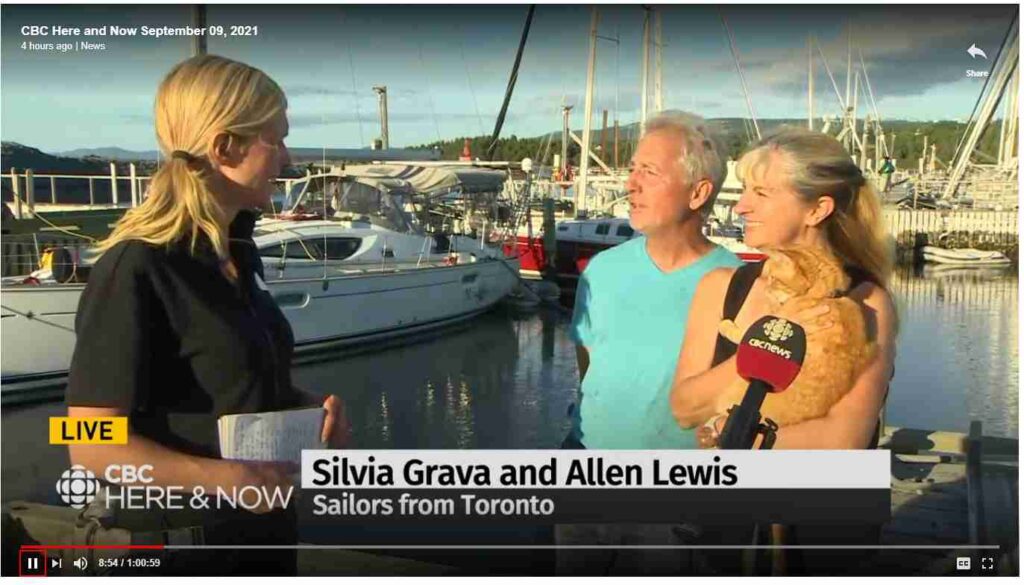
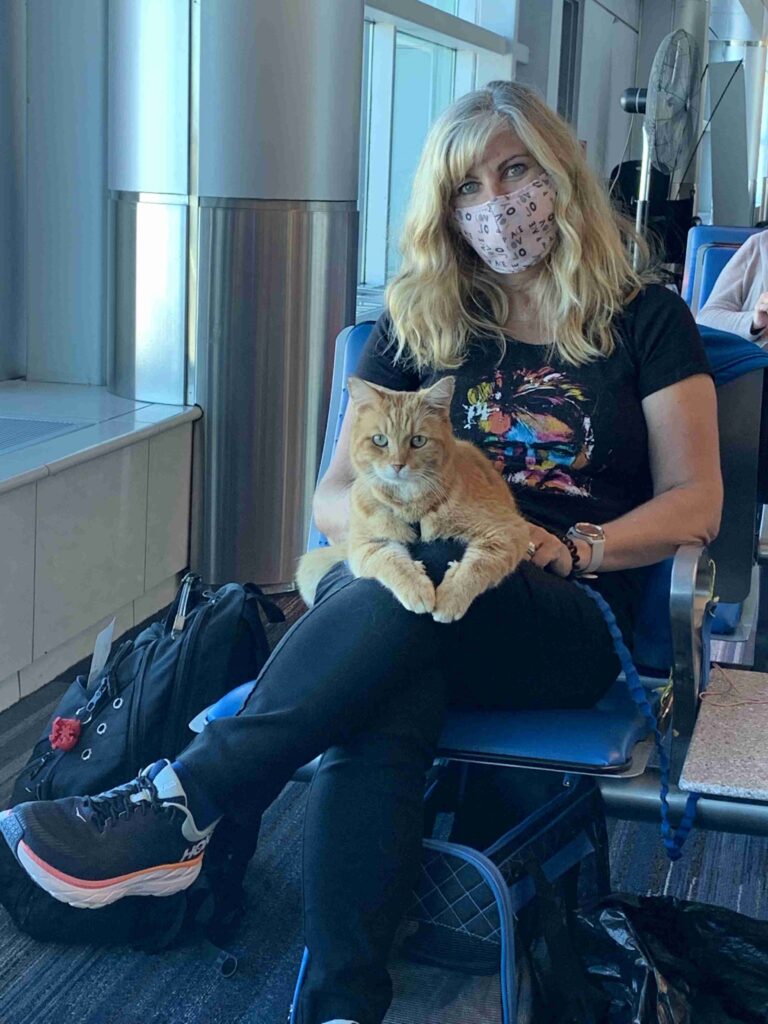
As a bonus, we got our 15 minutes (more like 1 minute) of fame when the CBC interviewed us, the hurricane newbies with a cute cat.

CBC Interview
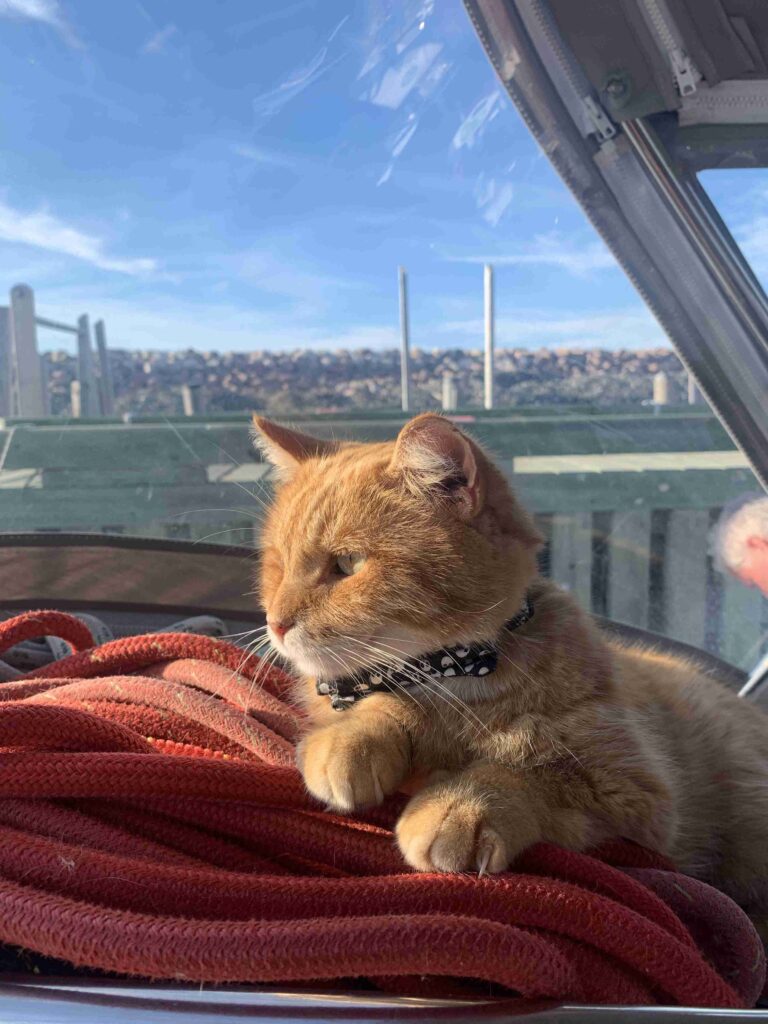
Cat Stevens dressed up for his interview

Our original plan was to remain on the boat during the storm because we (foolishly) thought there may be something we could do to protect her if something happened during the storm; however, we were quickly talked out of this idea.  Again, Newfoundland hospitality found us as Cathy and Fabian, a couple we met while in St. John’s, upon hearing our plans to remain on-board, insisted we come stay in their home.  We gratefully accepted their offer and packed-up Cat Stevens, a change of clothes and a few other valuables – hope for the best, but plan for the worst.  

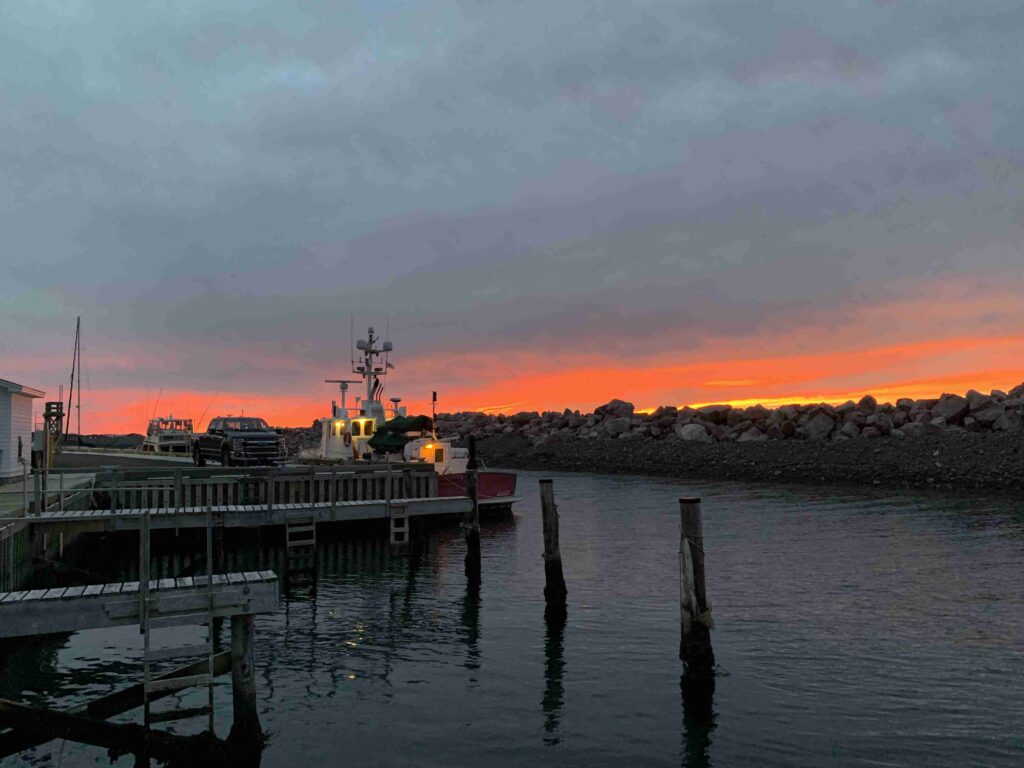
Evening before Larry
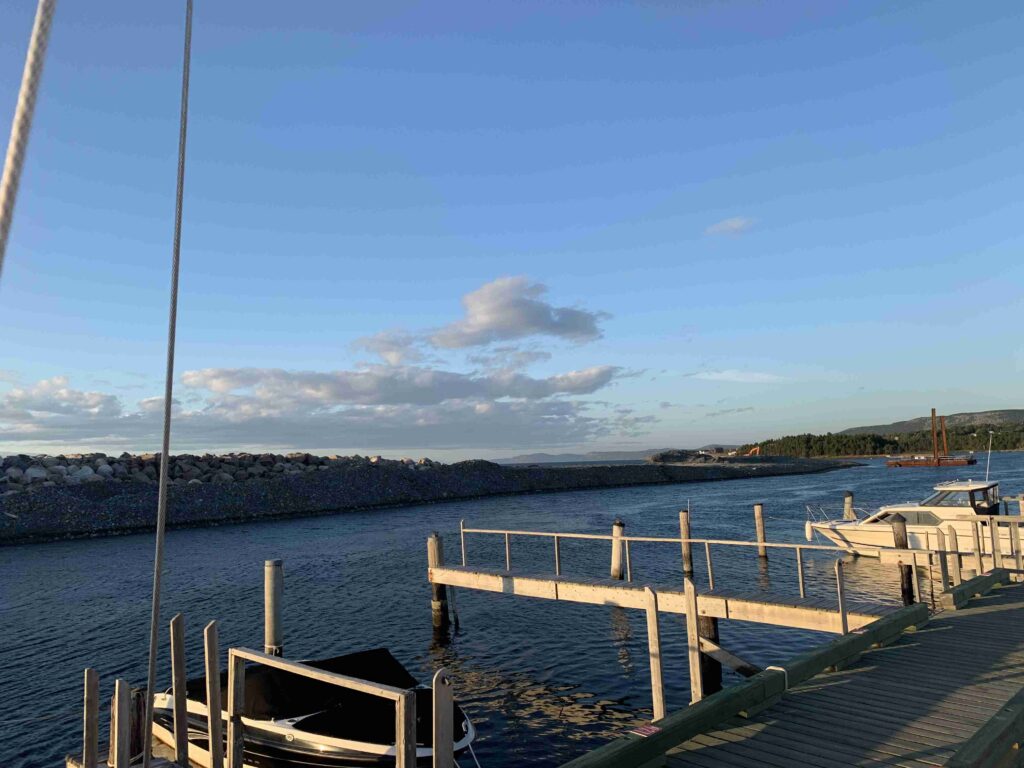
Calm before the storm

Our gracious hosts opened their home and welcomed us with such warmth that we immediately felt like family – it was not lost on us that on the eve of the 20th anniversary of 9/11, Newfoundlanders came to our rescue with kindness and generosity.  Their beautiful home felt safe and solid as we watched the storm move toward us.  Cathy and I opened the patio door to peek outside every hour starting at 8pm.  It started as a light drizzle, at 9pm it became steady rain with a strong breeze, at 10pm the rain was pouring and wind was gusting and at 11pm the trees were bent over and wind was howling and by 2am the rain was banging against the windows like a fire hose. Eventually we managed to get some sleep and the morning displayed minimal damage to Cathy and Fabian’s home – a few smaller trees snapped and handrails were pulled off the deck railings. 

On Saturday, September 11, just after midnight, Hurricane Larry made landfall as a Category 1 hurricane with sustained winds of 130 km/hour and gusts topping 180 km/hour.  By 5am, he was gone.

Screen shot from weather app – we are the white dot

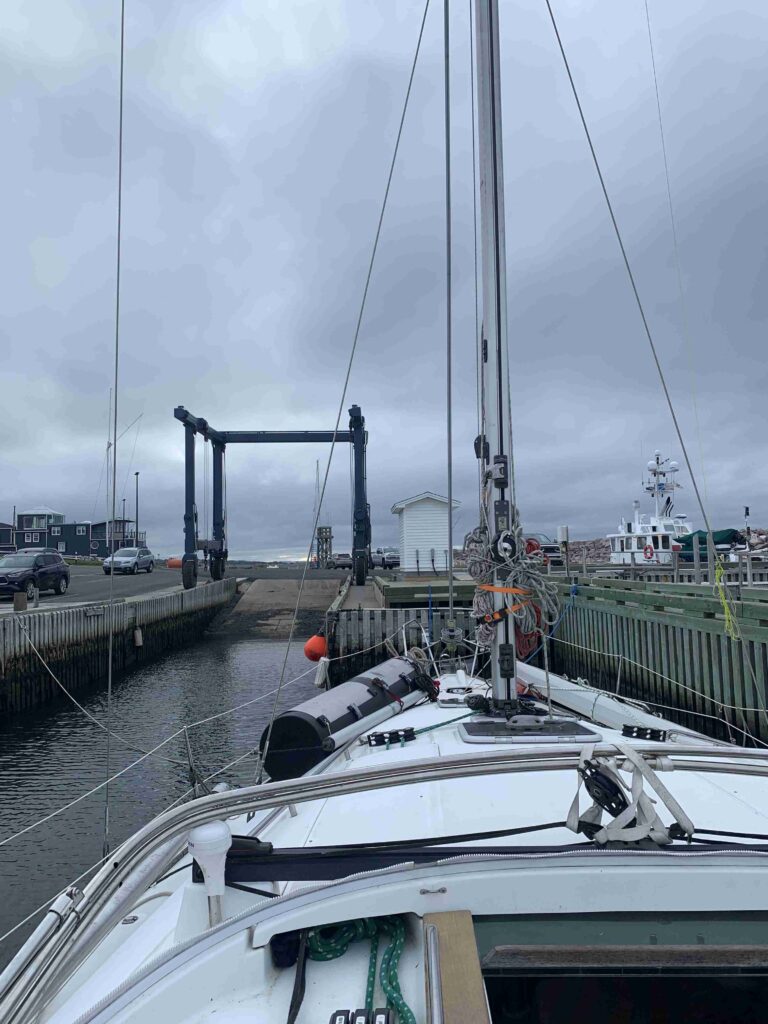
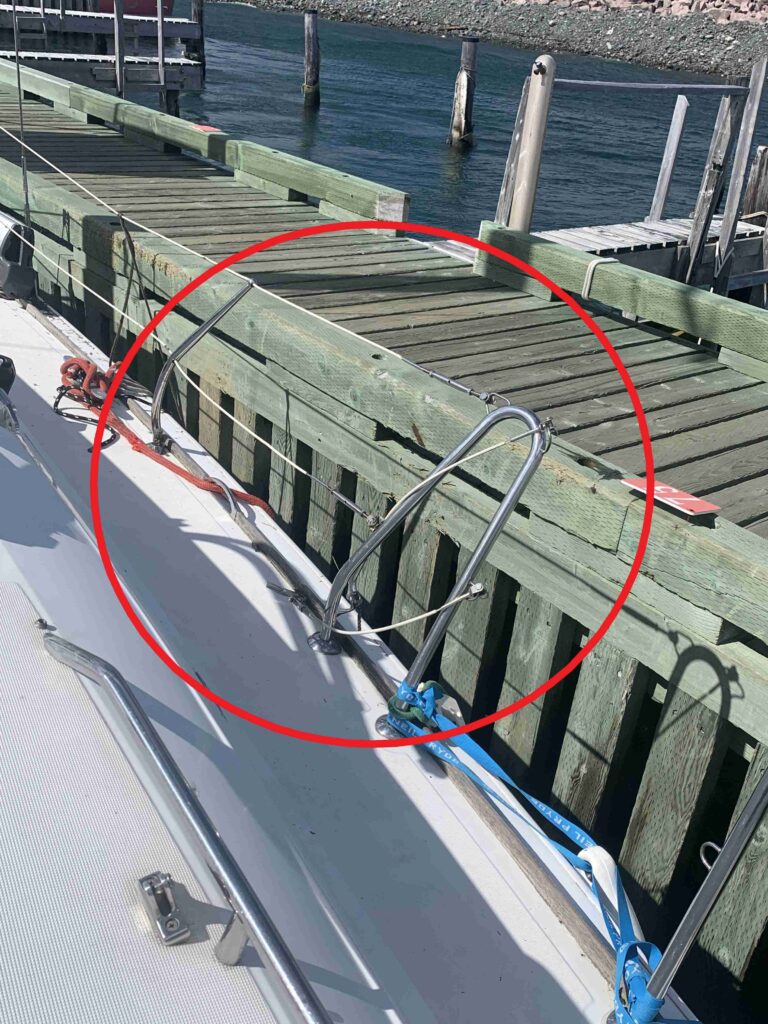
The 20-minute drive to RNYC revealed many felled trees and branches and downed power lines closed most businesses in town.  We anxiously approached Meshuggana, fortunately still tied to the dock, but unfortunately, she had sustained some damage.  All 14 lines held, but stretched, the anchor dragged letting her lay down far enough to catch the stanchions in the dock, bending them.  Our rudder also sustained damage as water left the harbour, dropping well below low tide levels, causing the boat to rock back and crushing part of the rudder. While a bit disheartened, we know the damage can be repaired and Meshuggana will be ship-shape by next season.  We are also so incredibly grateful we were not on-board during the storm.

Damaged stanchions

The hurricane cut our travel plans short by only a few days.  Our plan had always been to haul-out the boat at RNYC on September 14 and this happened as scheduled.  Preparing Meshuggana for the hurricane gave us a head start on necessary winterizing work, so we were rewarded with a full day to take a road-trip and see some more Newfoundland.

Crab pots in Brigus Bay
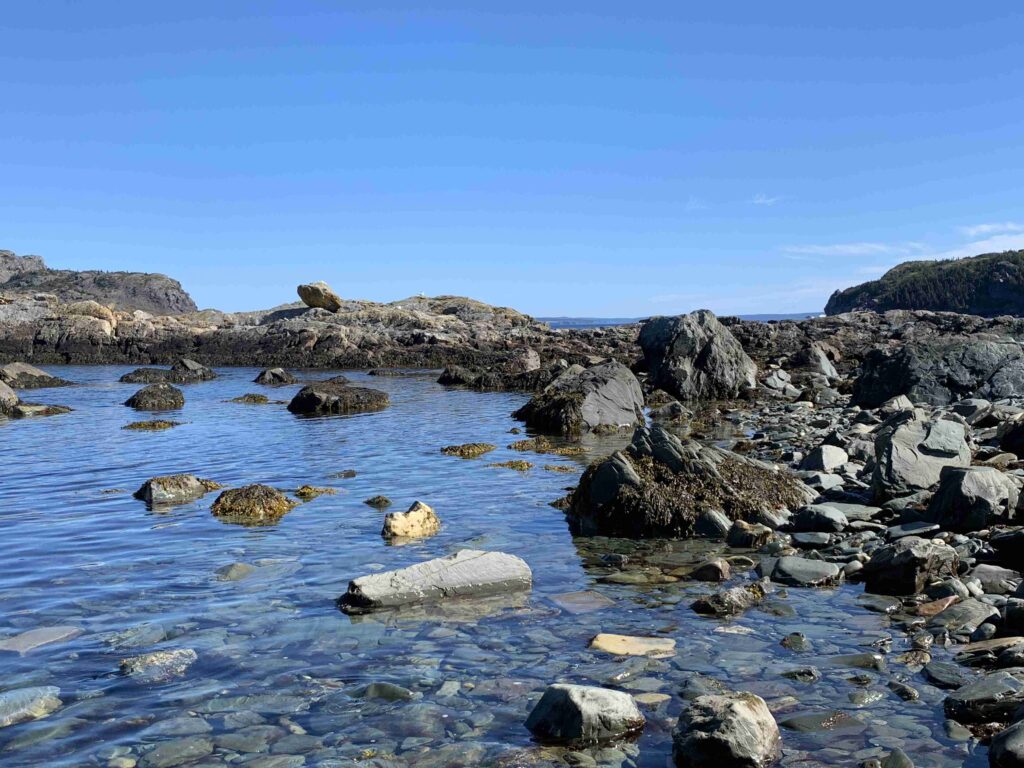
Rocky shore, Brigus Bay

It’s hard to imagine that after 14 weeks, 1800 nautical miles, 3 provinces, the mighty St Lawrence River, the stunning Saguenay River, the daunting Gulf of St. Lawrence, the immense Atlantic Ocean and of course, a hurricane, our Down East Adventure, Part 1 is over.  Allen and I are often asked what our favourite part was, but it’s simply not a question that can be answered.  The diversity of this trip, from the city of Montreal to the remote outport villages, from Belugas riding our wake to navigating with enormous freighters, made every day, every adventure special. 

Sampling at the Newfoundland Distillery Co.
Brigus

And just like that, a mere 3-hour plane ride later, we are back in Toronto, already dreaming and planning the Great Down East Adventure, Part 2. 

Homeward bound