
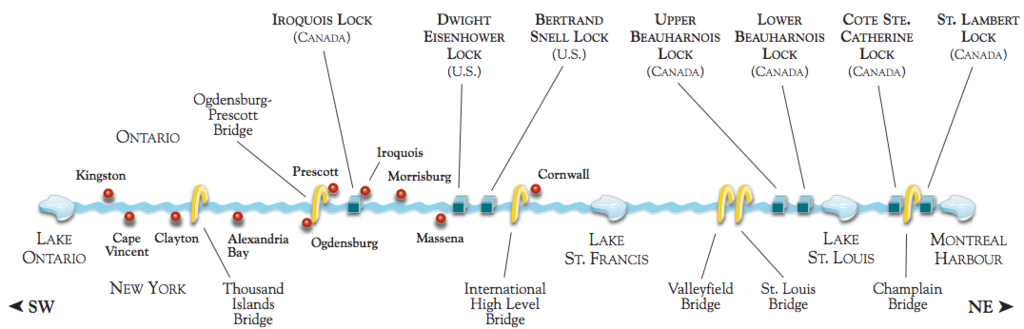
After leaving Brockville, Ontario, the power of the St Lawrence River became very real. There are 7 locks between Brockville and Montreal, about a 3 hour trip by car, that takes about 3 days by boat. Two years ago during our Great Lakes adventure we transited over 50 locks, some tiny ones in the Trent Severn system and some giant ones in the Welland Canal, so we were pretty confident we had this down pat. But it was time for more lessons – while the mechanics of lock travel were the same, the logistics of traveling the St Lawrence locks are quite different and Covid restrictions added yet another layer of complexity.
I have lived in the St. Lawrence Seaway’s backyard my whole life, though I never paid it much attention until now, and what I have learned is pretty interesting:
Known as “Highway H2O”, the St Lawrence Seaway is a series of locks, canals, dams and channels and it officially begins in Montreal, Quebec and ends in Lake Erie while connecting the Atlantic Ocean to Deluth, Minnesota.
Lake Ontario is 243 feet above sea level and these 7 locks make travel from Lake Ontario to Montreal possible: 5 are Canadian and 2 are American.
The Seaway was built by and still operated jointly by both the Canadian and US governments. The main route weaves in and out of both countries’ borders; however, we only check-in with Customs if we make contact with land. River bottom is considered land so we may not anchor in US waters without checking-in with Customs, and with the international border still closed due to the pandemic, this is strictly forbidden. This has proven to be a bit challenging in areas where the river narrows and the best and sometimes safest anchorage is on the other side of the border.
Construction on the Seaway began in 1954 and was completed in 1959. Approximately 6 villages and 3 hamlets were intentionally flooded on July 1, 1958 to create Lake St. Lawrence. They are now known as the Lost Villages and apparently today they provide some pretty cool dive sites.
Now back to our adventure!
It is mandatory to reserve your spot in each Canadian lock and prepay ($25 per lock) online at least one day in advance. There are only 2 times each day that pleasure craft may transit, in the morning anytime between 9am-1pm, and in the afternoon, 1 pm-8pm. Since the Seaway’s first priority is commercial traffic, big ships as well as trains crossing railway lift bridges, there is no wiggle room for pleasure craft. The US locks do not maintain a specific pleasure craft schedule, so you show up and they take you when they take you – it could be minutes, it could be hours.
On the eve of our first lock transit, we made an online reservation for the first lock, Iroquois Lock, for an afternoon passage. The previous day the afternoon transit was scheduled for 4:30 pm so we had lots of time to sleep in, visit the farmers’ market, top up fuel and water and leisurely cruise down the river to our first lockage in the late afternoon.
Lesson #1 – Check the day’s schedules by 7:30 am, every day as the schedule can be radically different from one day to the next.
We missed Iroquois Lock by about 3 hours. Fortunately we found an anchorage close to the lock, made a new reservation and got through the following morning.
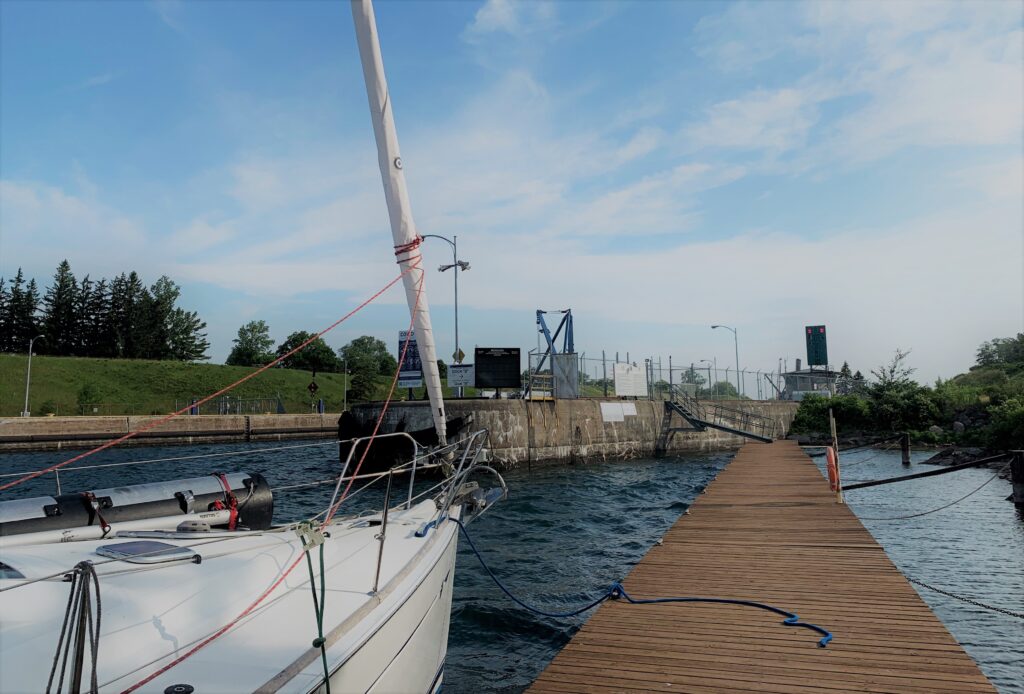
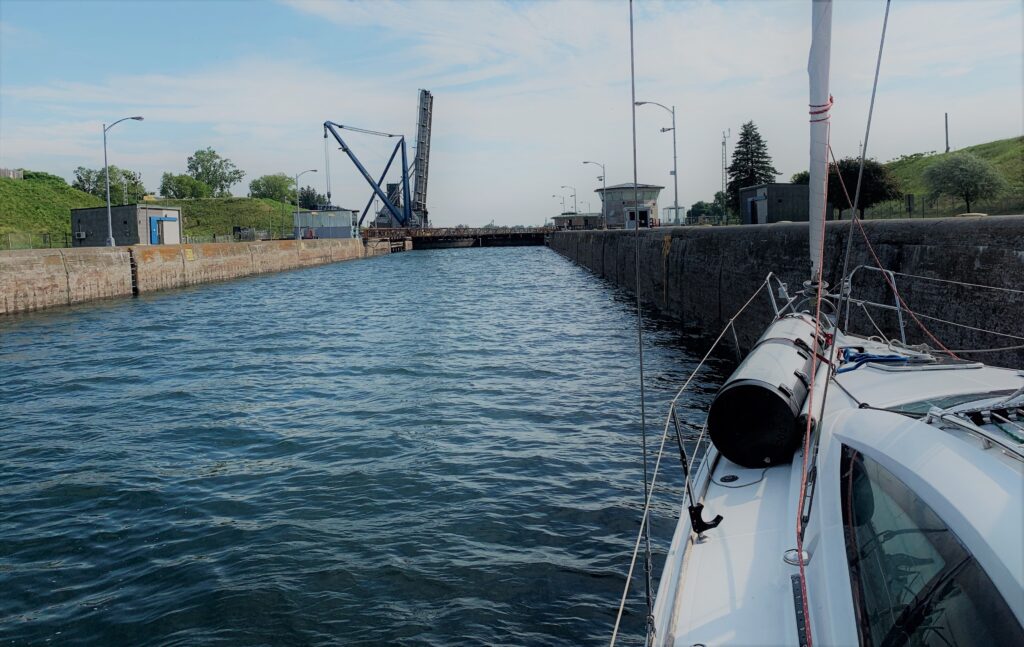
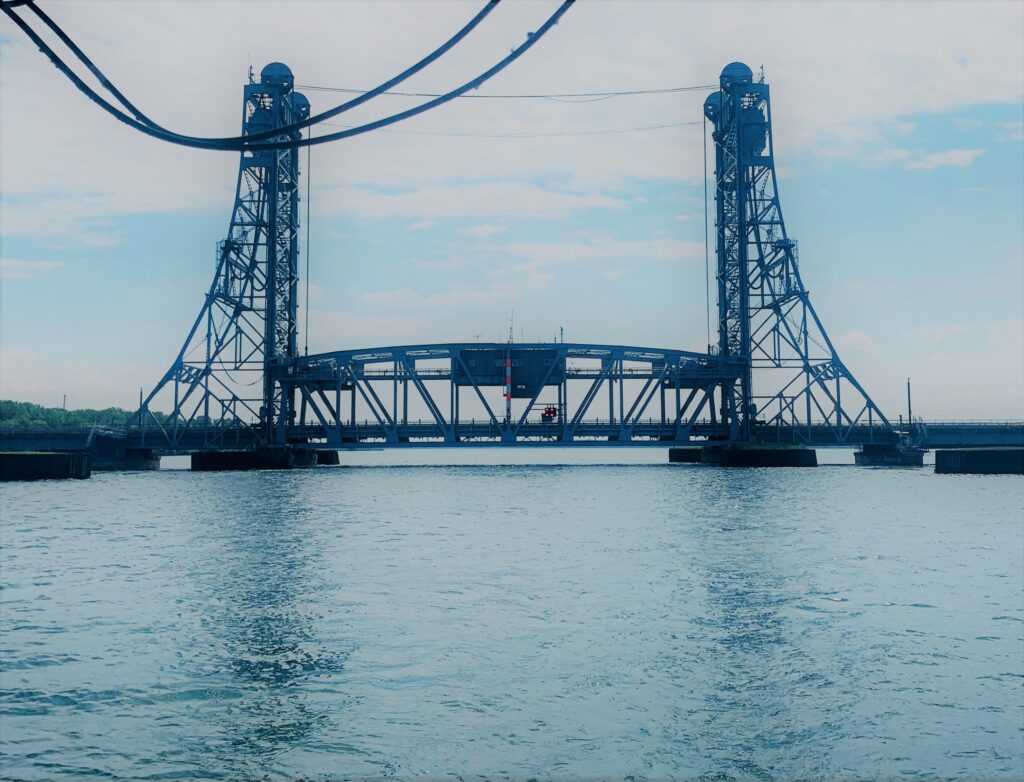
Lesson #2 – Check carefully for lift bridges and build in extra time.
For our second lock we checked the schedule and left with plenty of time; however, we only made the lock with minutes to spare. Approximately 1 mile upstream from the lock there is a railway lift bridge that is scheduled to be raised daily at 11 am; however, there was a train coming, an awfully long train, and we had to wait for the train to pass. Commercial traffic trumps pleasure craft every time.
Lesson #3 – They let (almost) anyone into the locks.
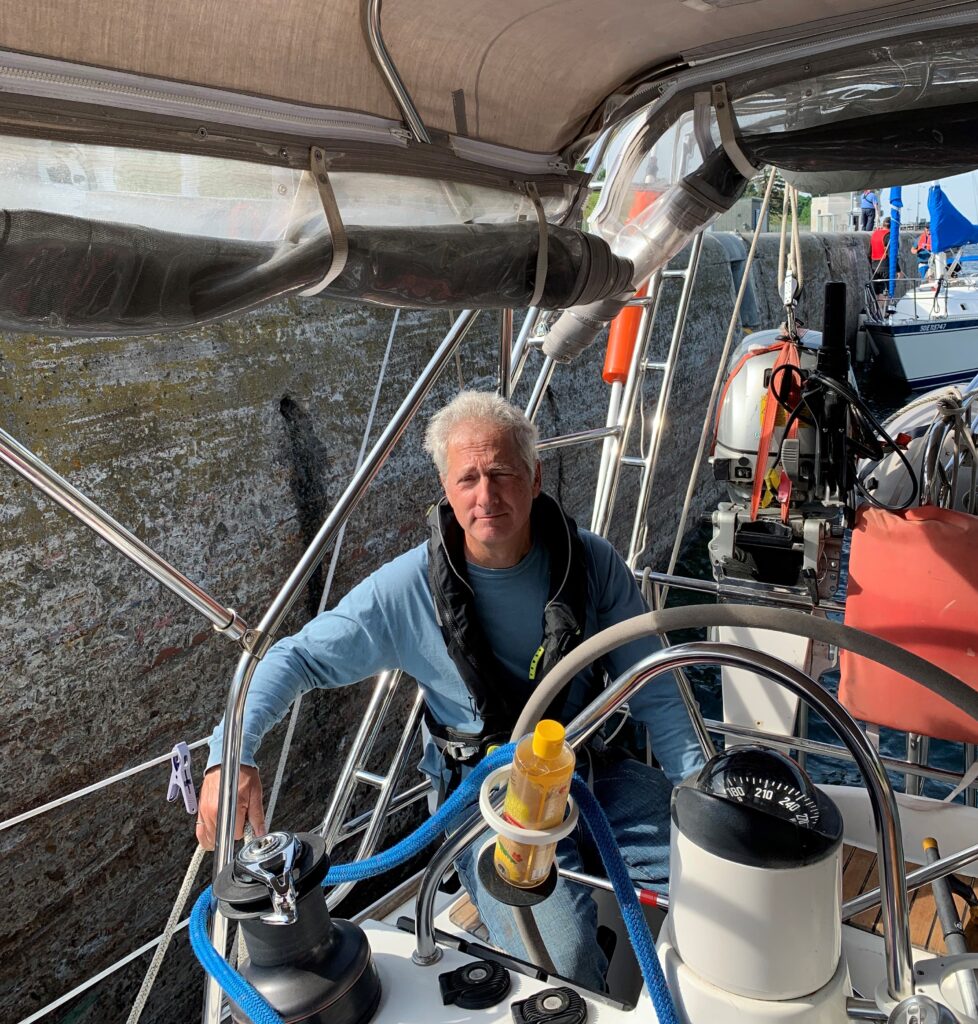
Two years ago, when transiting the Trent Severn locks and the Welland Canal, we found the lockmasters very helpful. They made sure we knew what we were doing and kept close eye on the boats in the locks in case anyone had trouble. This is not the case here. Although the administration was new to us, the locking procedures were not – Allen and I have a solid routine that gets us in and out safely and efficiently, but it was clear some of the boaters sharing our lockage were novices not only to locking, but to sailing in general. We had a near collision inside a lock with a small sailboat that lost control. Eventually they were instructed to get in front of us (much to our dismay) and they went through backward – stern first! We endured 2 more locks with this boat then helplessly watched them getting tossed around like a toy in rough conditions on Lac Ste Francis, lose some fenders and were relieved to see them finally go into marina while we moved on.
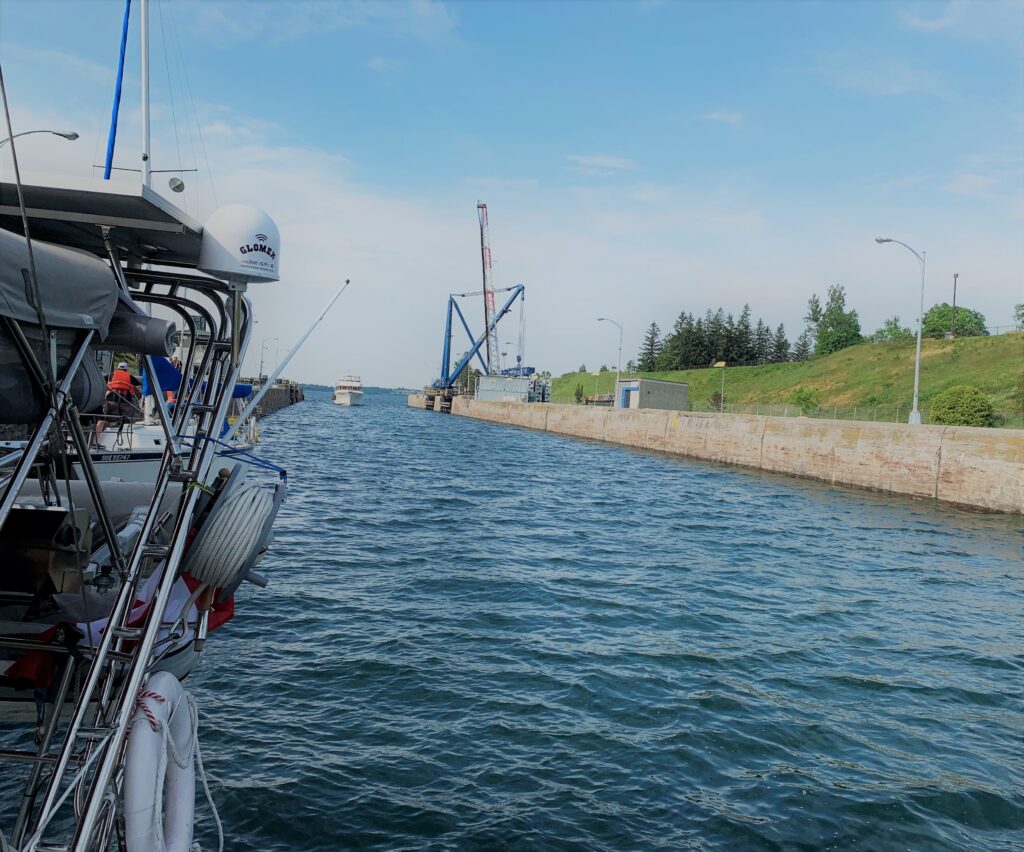
As we exited our last lock in Ste. Lambert, we took a 90 degree turn upstream and fought the 6 knot current for one mile to reach the Old Port Marina in beautiful Old Montreal. Time for croissants, café au lait and some R&R.
So interesting how these locks experiences are so different! And that makes no sense you can’t even anchor if it’s the US, such crazy rules! Glad there were no sailboat collisions 🙂