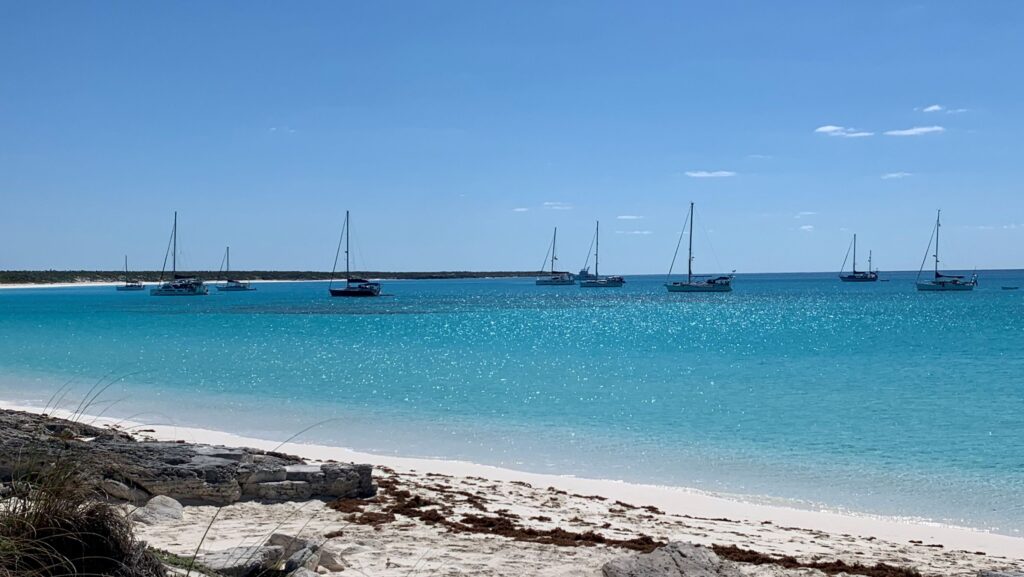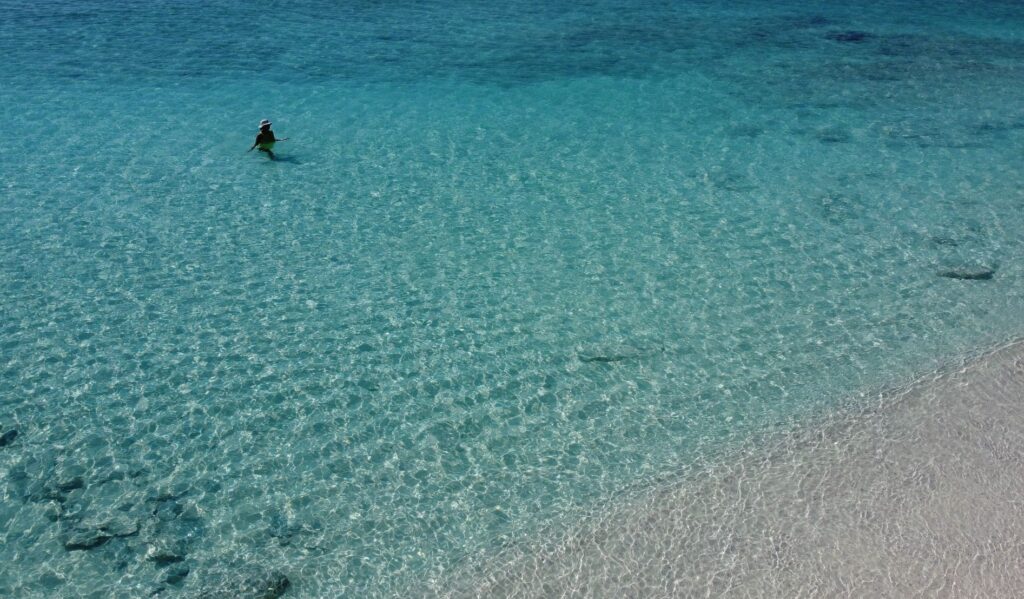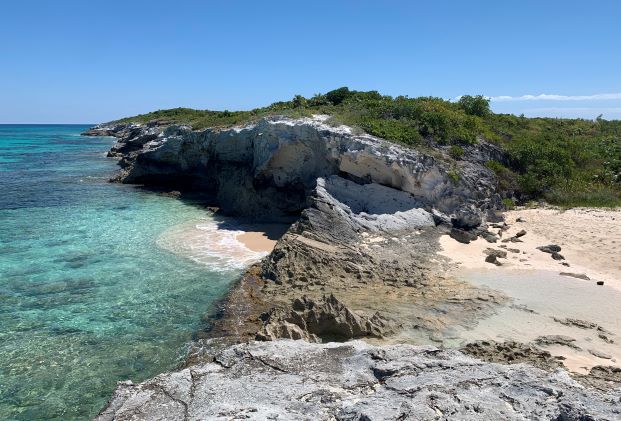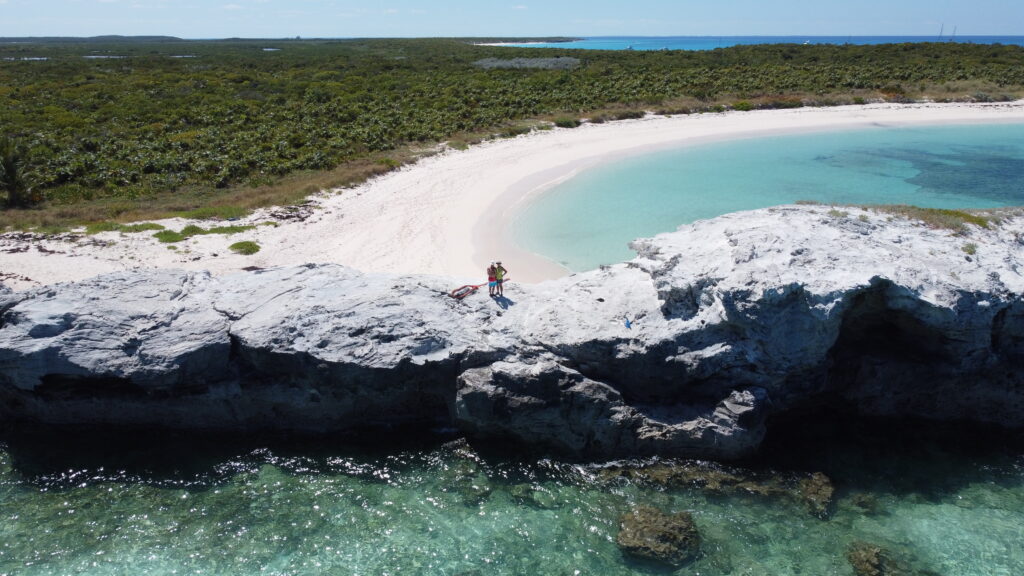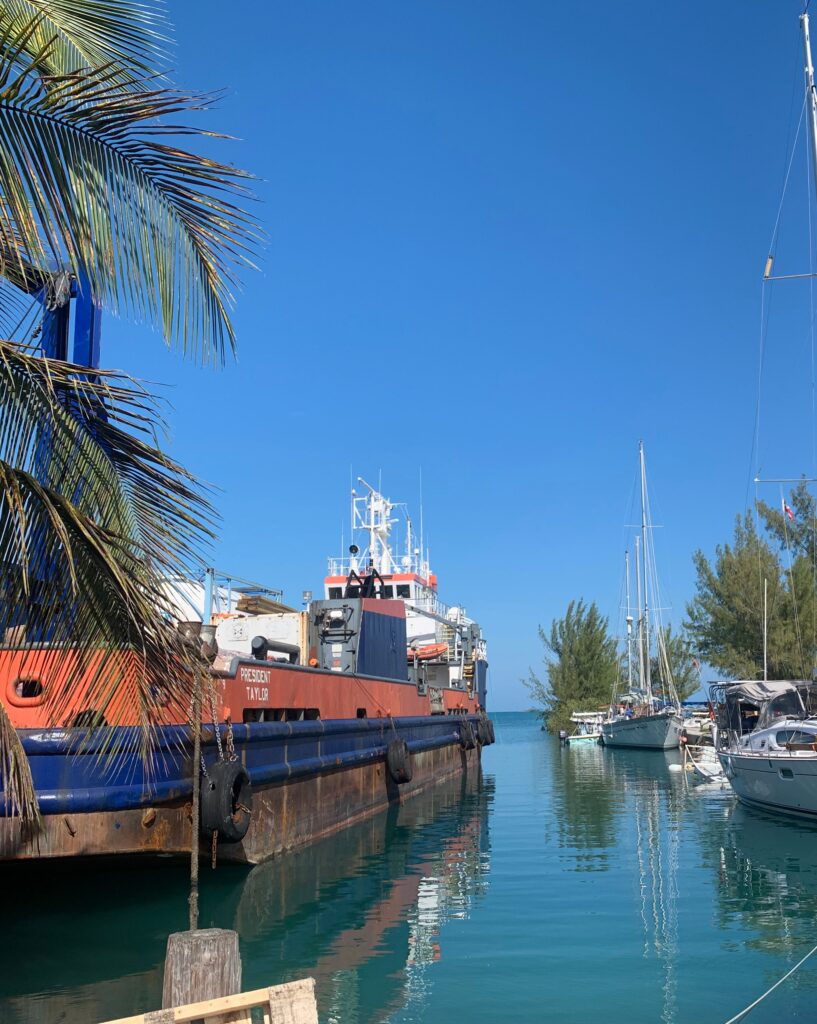
Hello Montserrat …and Ziggy

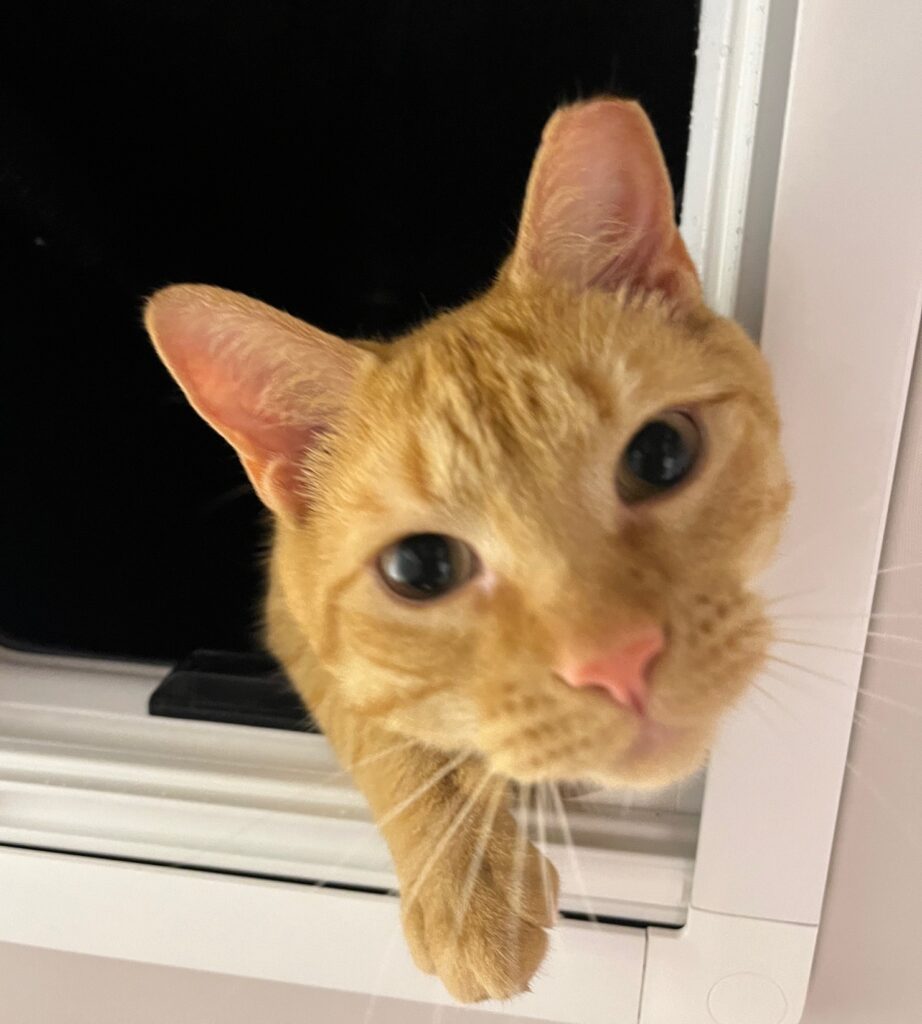
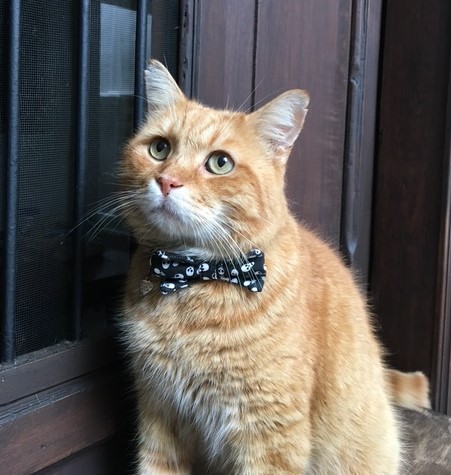
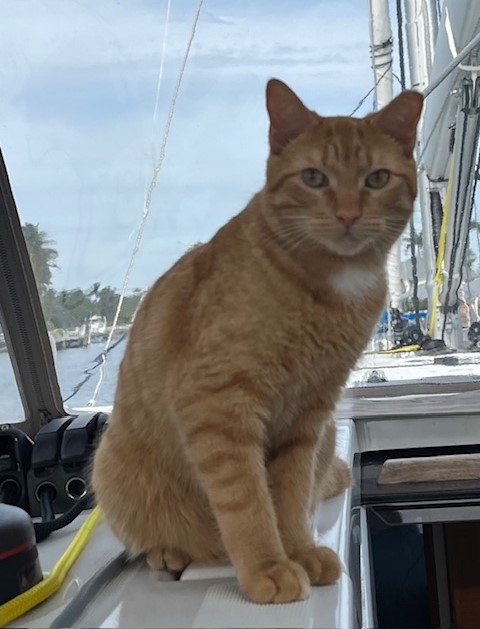
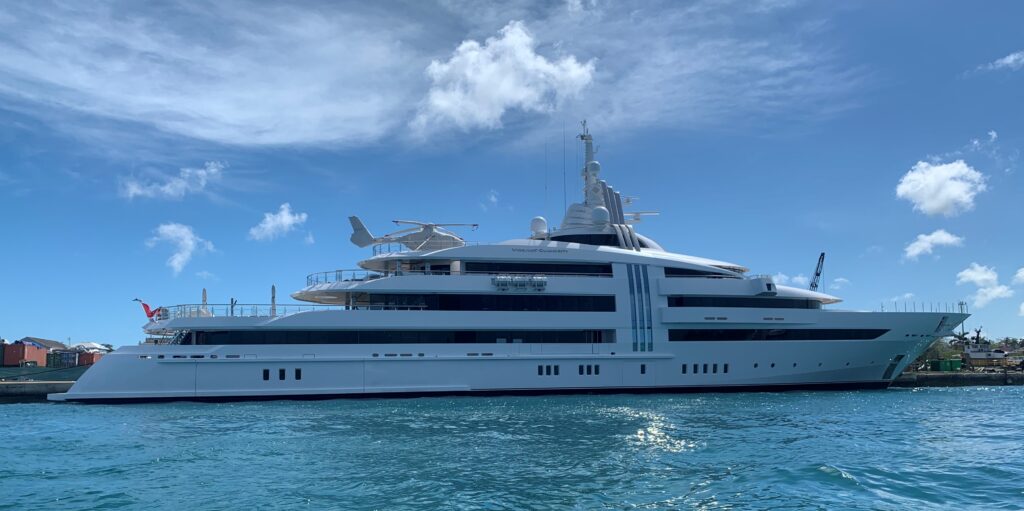
I have some incredible news to share – Ziggy has been found, alive and well! When Ziggy took off on December 11, and after searching for him for 3+ weeks, I had lost hope that we’d ever be reunited. I hoped he had stowed away on a mega-yacht and was sailing the seas in style, but I would never be certain.

On March 27, I received a phone call from Tory, a man saying my cat is on his patio. We still get these calls, though rarely now as it’s been nearly 4 months since I put up the posters, so I was prepared to say “thanks for calling, but that’s not my cat”. What I didn’t expect was Tory asking me several questions first – where and when did I lose him? Did I tie a rope around him?! After I gave him the details and confirmed I would NEVER tie a rope around a cat, he sent me photos and we connected on FaceTime. The cat on his patio certainly looked like Ziggy, my gut told me it was my Ziggy, but I’ve been down that road before and since I am now hundreds of miles and a very expensive plane ride away, so I had to be sure. I asked Tory to please keep feeding the cat and at his first opportunity, bring him to the Humane Society to see if the cat has a microchip. Two days later the Humane Society called – the chip number was a match!
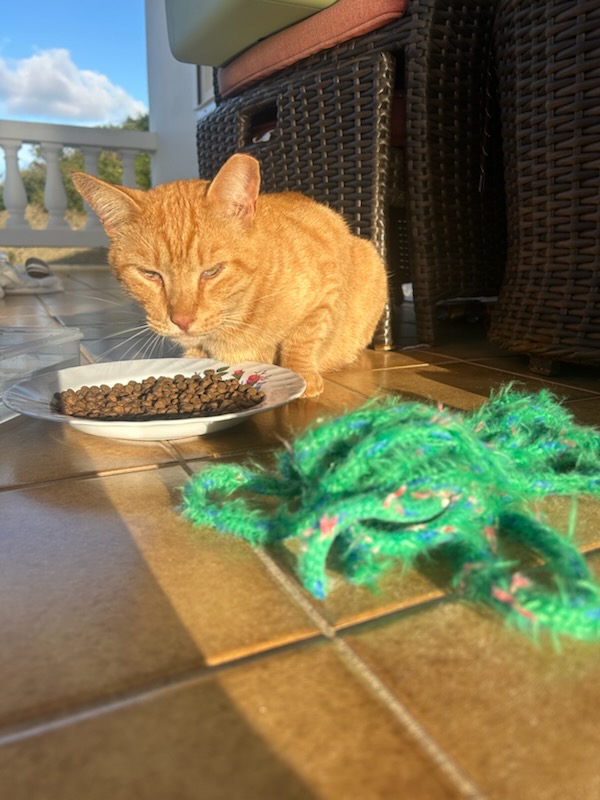
Ziggy, with the rope removed from his neck

Once the tears of joy subsided, I needed to figure out how to bring Ziggy home. Sailing there is out of the question as it would take about 2 weeks and that’s assuming perfect weather conditions. There are no direct flights from where we were (in Grenada); I would have to fly via Miami and the trip would require two overnights and over 20 hours of travel time in each direction. So I called my brother, Elmars, and asked him if he wants to take a short trip to the Virgin Islands…24 hours later, Elmars was on a plane to St Thomas.  After a couple days and two plane plane rides, Ziggy is now at home in Cleveland with my brother (I’ll go get him soon). 

Ziggy is now safe and happy, eating and snuggling like never before. My theory is somebody found Ziggy and wanted to keep him. They fed him (Ziggy has actually gained weight) but didn’t have a clue that you can’t walk a cat on a rope. Their mistake was my win – Ziggy escaped and found his way back to me.  Truly a miracle.
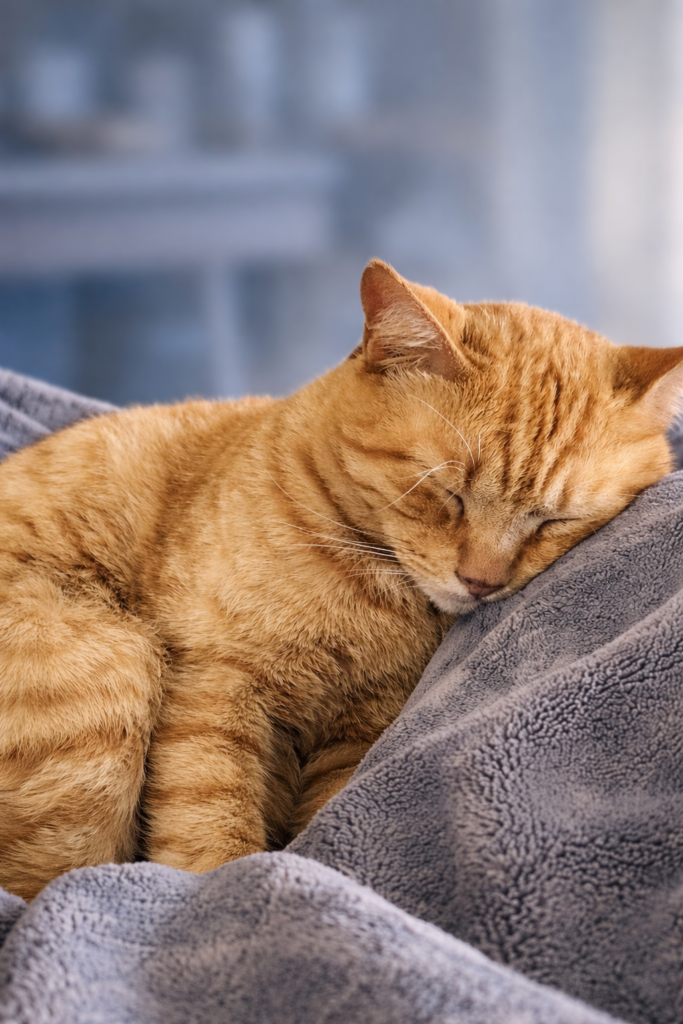
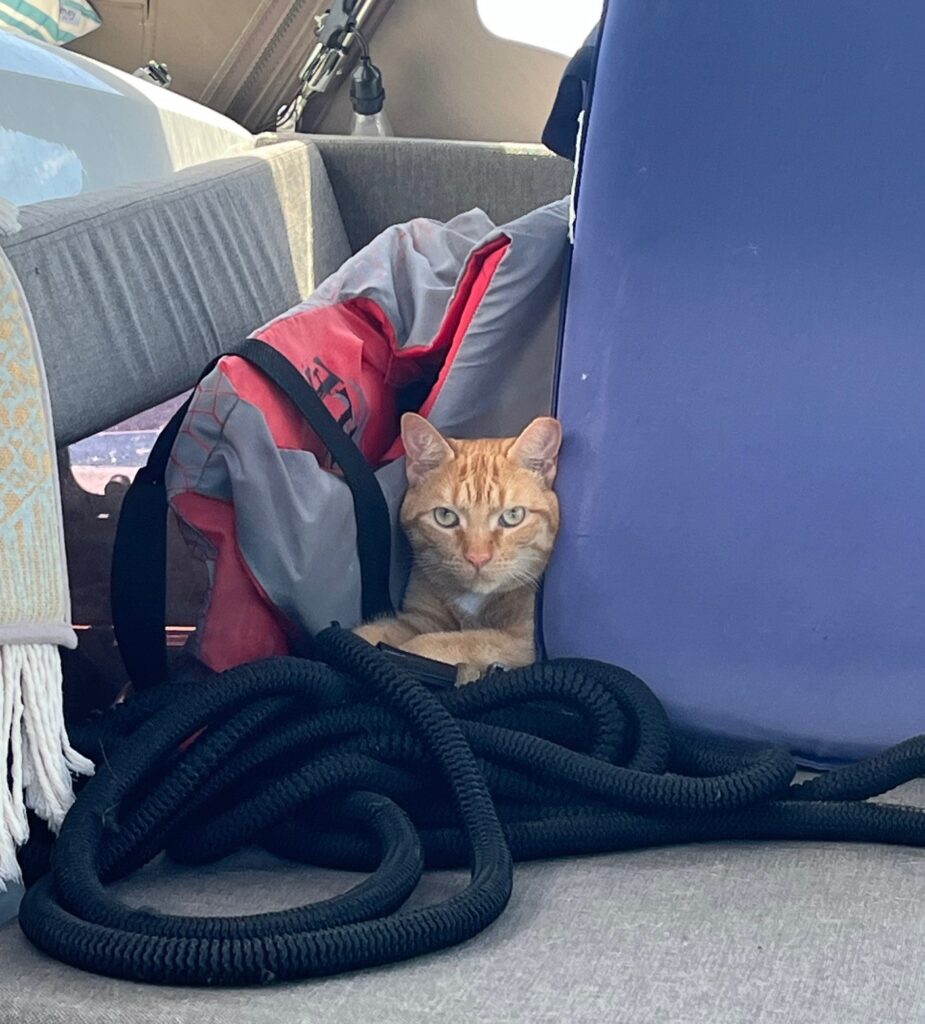
Finally safe…one happy cat

Now back to our volcano journey…

Montserrat is a small island, approximately 40 sq. miles, east of Antigua. It is a British territory, still supported by the UK government. The official language is English, their currency is the Eastern Caribbean dollar, though US dollars are widely accepted, and the population is approximately 5,000.
Before 1995 nearly 13,000 people lived in Montserrat, with the majority living in the capital city, Plymouth, on the south-western shore of the island in the shadow of the Soufrière Hills Volcano. It was a vibrant Caribbean city with a heathy economy consisting of fishing, agriculture and mostly tourism. It was home to many businesses including Barclay’s Bank, shops and hotels. That all began to change in July 1995 when Soufrière Hills unexpectedly woke up after hundreds of years of dormancy.
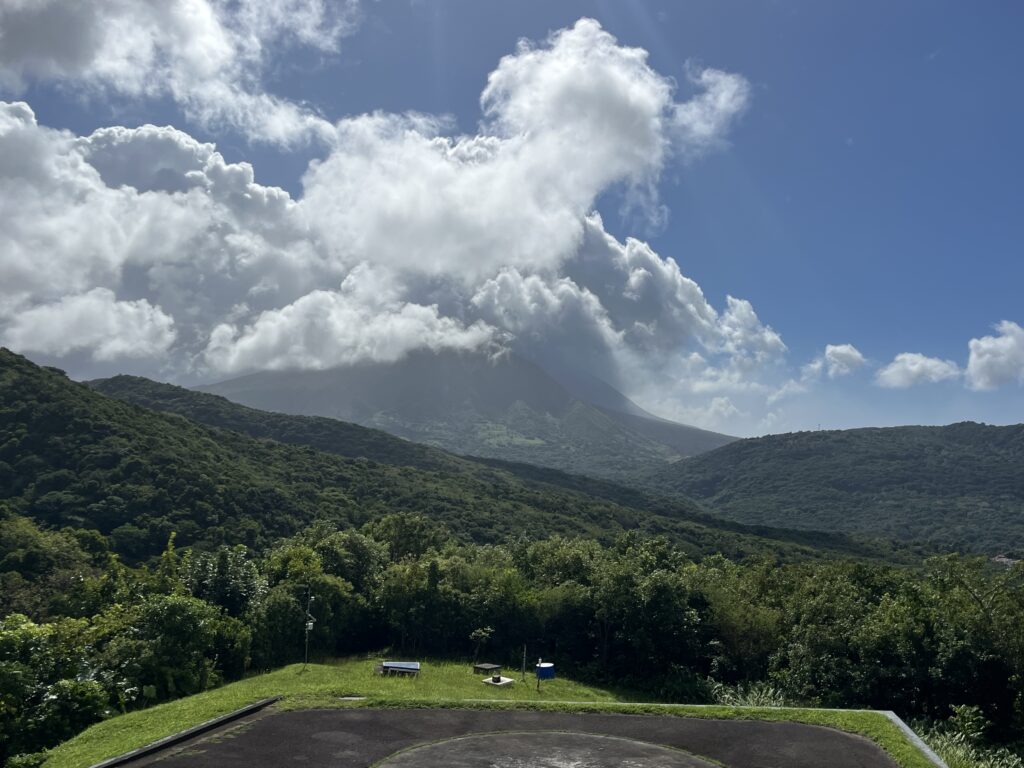
Soufrière Hills Volcano from the Volcano Observatory

Vents opened up at the summit of the volcano, spewing foul-smalling gas and steam. Several small earthquakes rattled the island, triggering initial evacuations. Then came mudflows and sulphur dioxide emissions, prompting more evacuations – there were 3 major evacuations in total. In December 1995, the first pyroclastic flow descended from Soufrière Hills. By April 1996, the capital city of Plymouth and surrounding villages were completely evacuated.

What is a pyroclastic flow vs a lava flow?  I’ll let AI explain it: Pyroclastic flows (all Caribbean volcanos) are fast-moving (up to 700 km/h), extremely hot (500–1000°C) avalanches of gas, ash, and rock, usually occurring during explosive eruptions and causing instant destruction. Lava flows (like in Hawaii) are slower, viscous streams of molten rock that generally move at a few miles per hour, destroying property through incineration and burial. 

June 25, 1997, is known as Black Wednesday in Monserrat. At 12:59 pm, the 300 foot lava dome blew in a violent explosion that lasted for 20 minutes, unleashing massive pyroclastic flows that buried Plymouth and nine villages. While most of the population had already been evacuated to other Caribbean islands or the UK, tragically 19 people lost their lives.
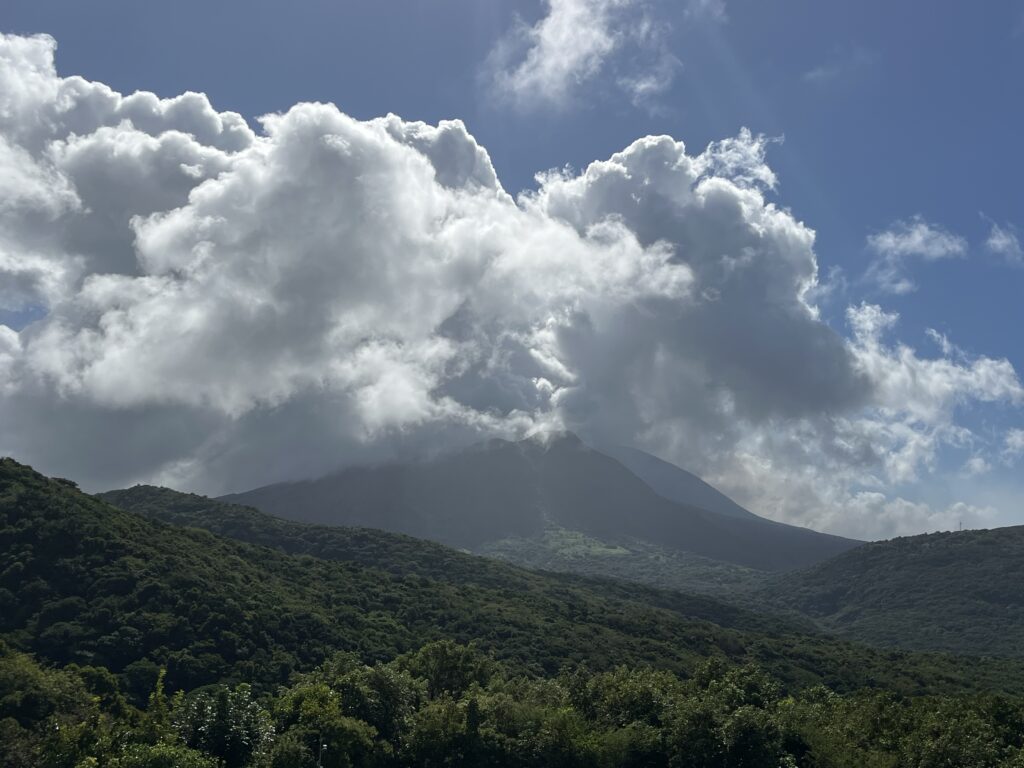
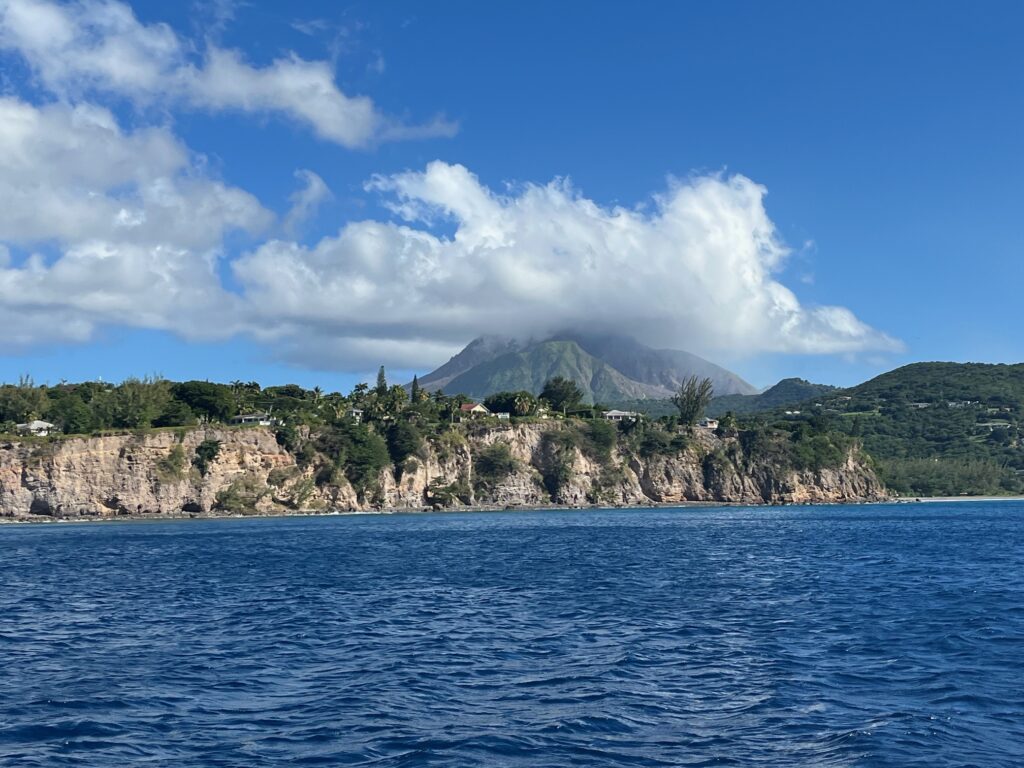
On Christmas Day 1997, more earthquakes shook the island and at 3am on the 26th of December, approximately 55 million cubic metres of dome material flowed at speeds of nearly 300 km per hour, and in less than a minute devastated a 7 km wide arc of city and landscape.

Soufrière Hills’ last major eruption took place in February 2010. Today, two-thirds of Montserrat remain an exclusion zone, requiring special licenses and permission to enter it. According to the Montserrat Volcano Observatory, the volcanic hazard level remains at 1. which means volcanic activity at the Soufriere Hills Volcano is low.  The volcano is monitored 24/7 by volcanologists.

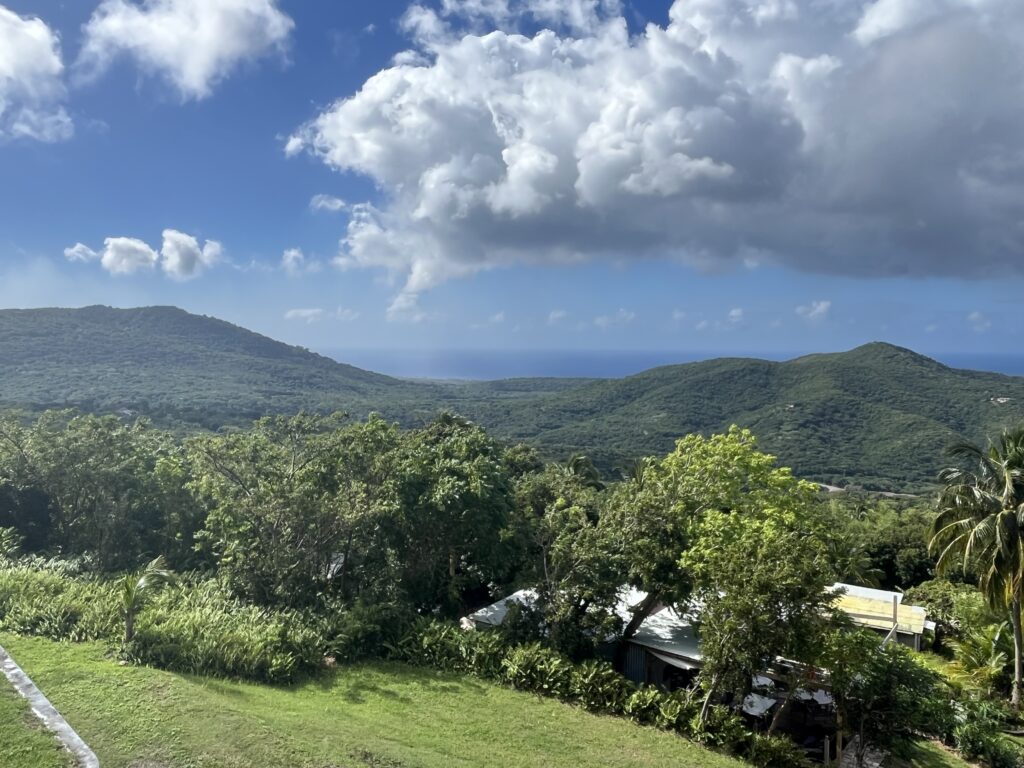
So why would we go to Montserrat if most of it is closed to the public? Because the north end of the island, in stark contrast to the south of the island, was protected by the Center Hills Mountain range. It is stunningly beautiful, lush and tropical.  The roadways are impossibly steep as they wind up and down the mountains and through rain forest. There are freshwater springs tricking down mountain sides where people line up to fill water bottles. You are surrounded by green jungle foliage, colorful flowers, stunning sand beaches and the residents are friendly and welcoming.
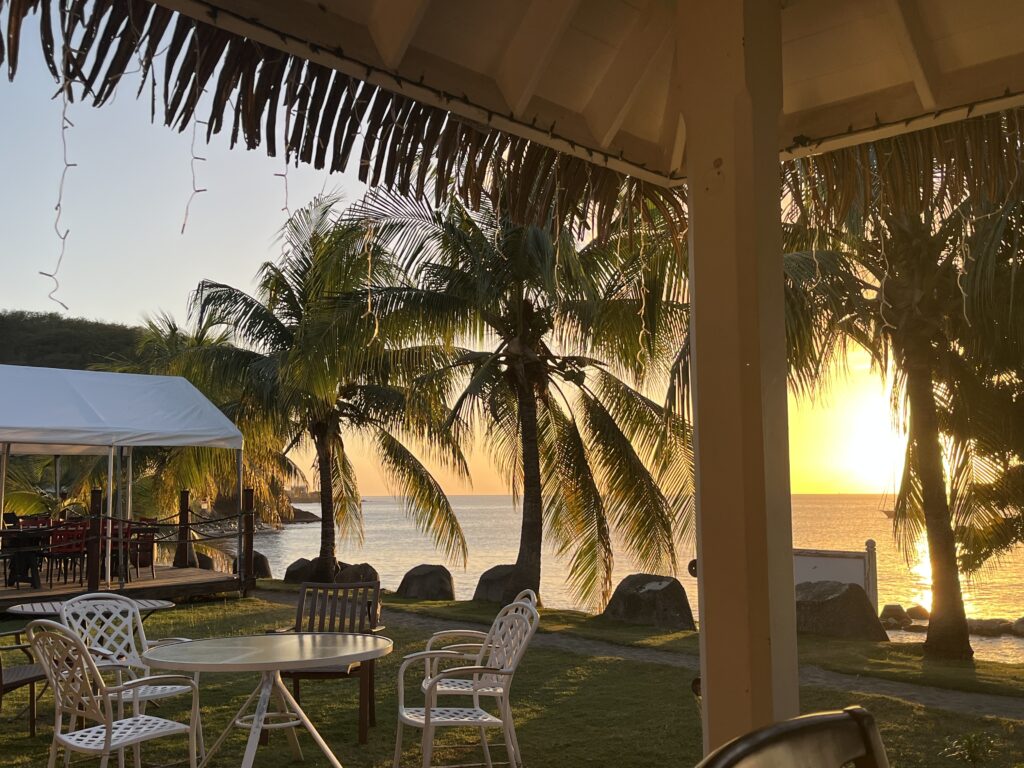
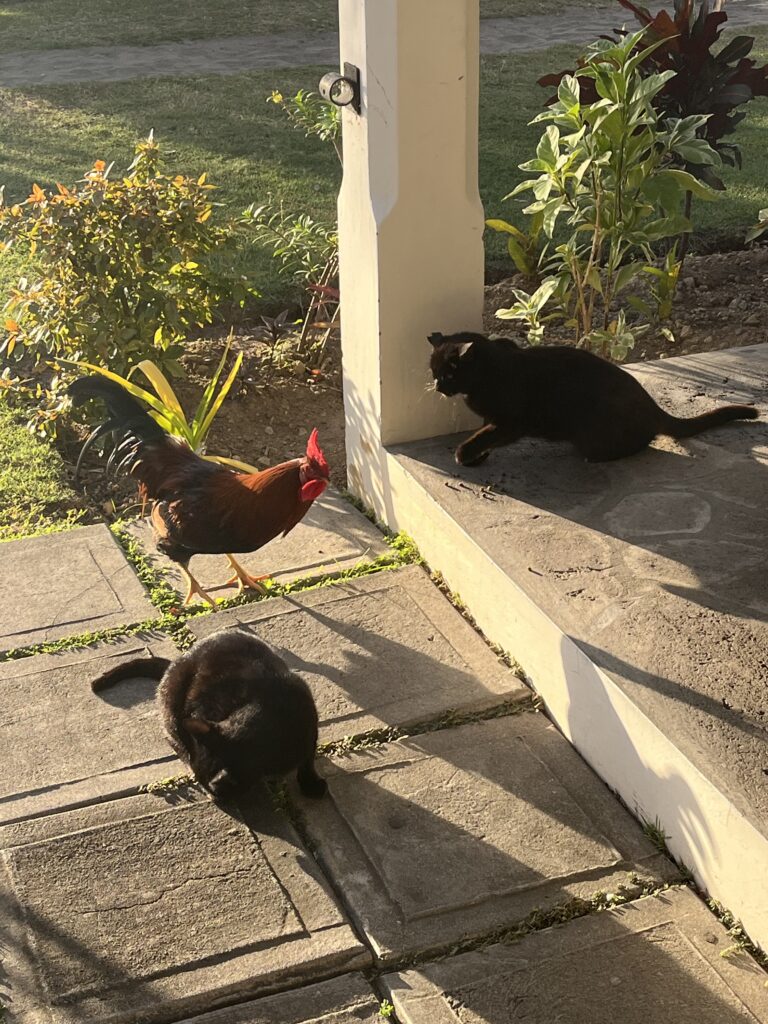
Idyllic Beaches
Friendly locals

Perhaps the main reason we sailed to Montserrat is because we were able to hire a driver licensed to take us into the Exclusion Zone. Joe is in his late 70’s and lived in the Plymouth area until 1995.
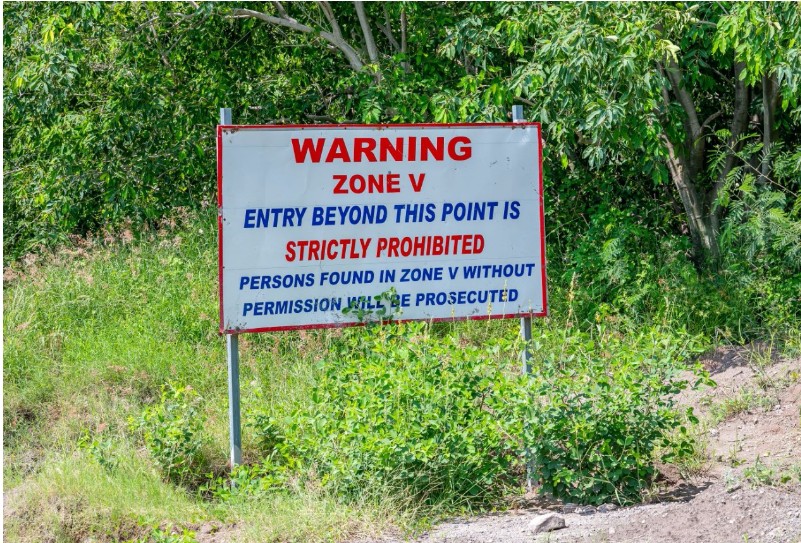
As we approached the Exclusion Zone boundary, Joe pulled over to speak with a guard, showed his credentials, then called-in the time and number of passengers. On the way out, he repeated the process. He told us that if he did not check-out before dark, search teams would have been sent to look for us.
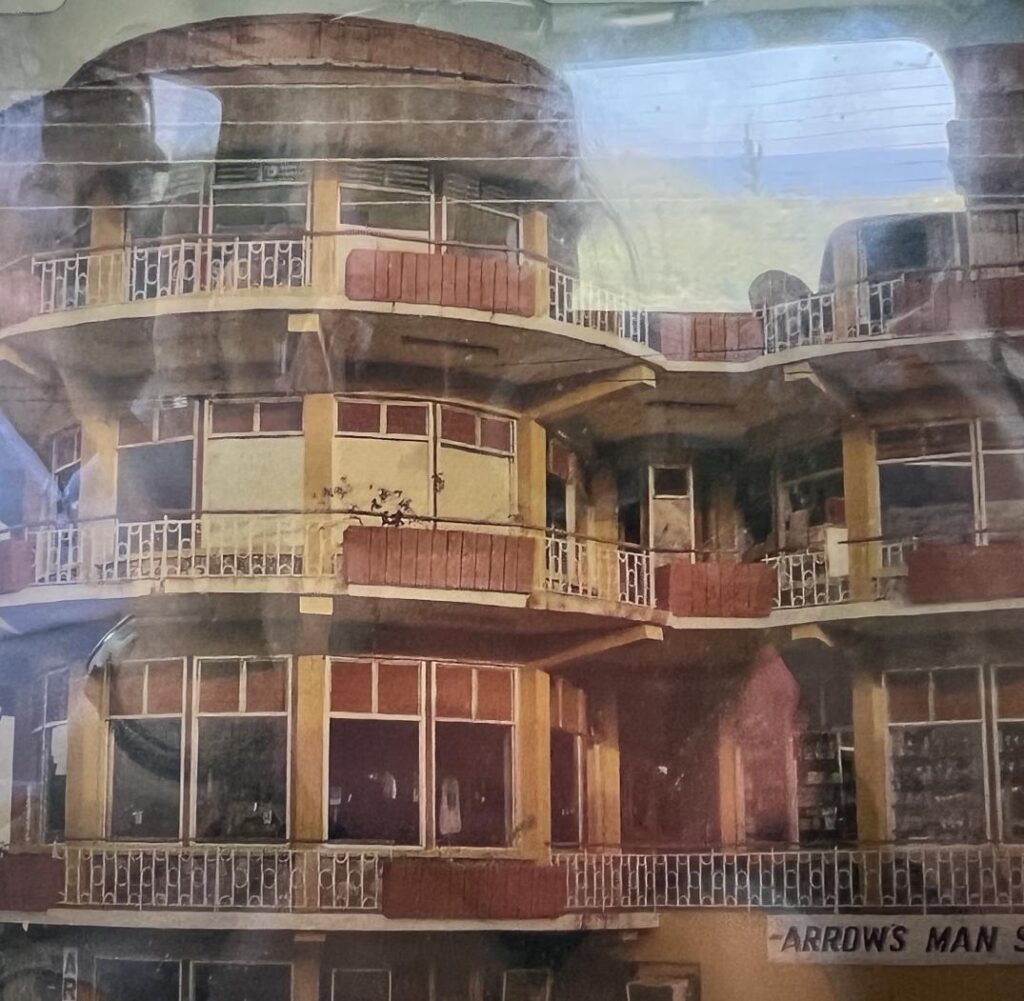
A “before” shot of a 3-story building,
a men’s wear store, taken from Joe’s iPad
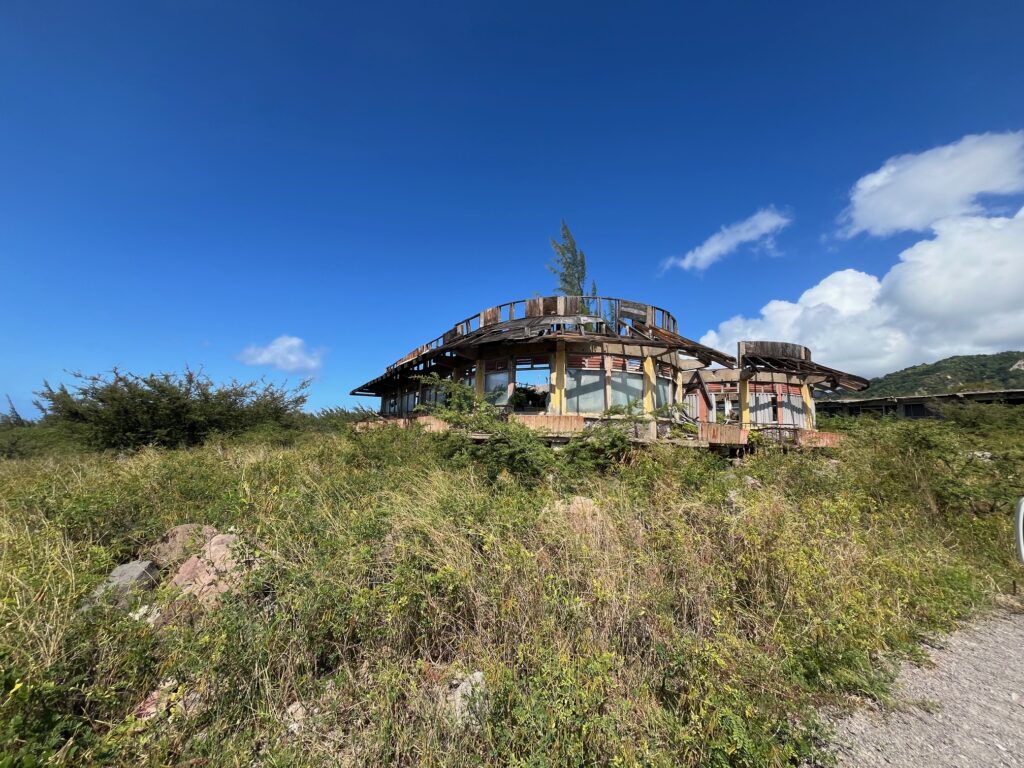
The same store today, only the top floor
remains visible

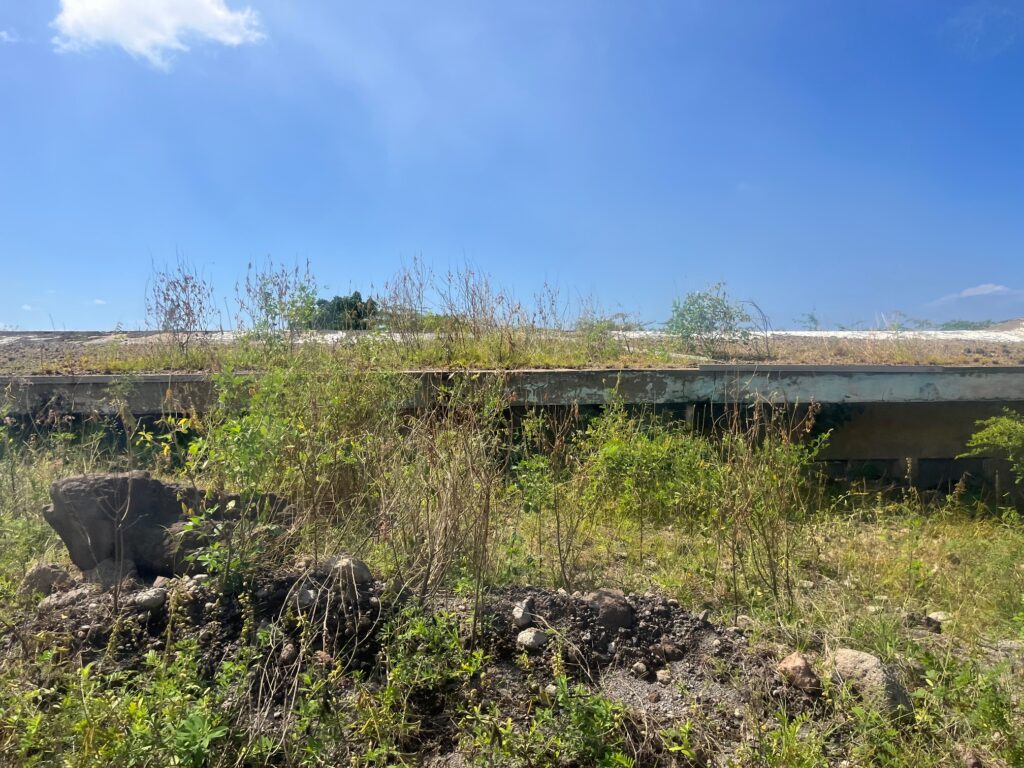
Joe gave us a four-hour tour, showed us “before” photos on his iPad as we parked in front of what used to be a men’s clothing store, a bakery, a church, a home. He brought us to the waterfront, an area that expanded as the mud, ash and rock flowed into the sea and solidified. We saw bollards (the short, strong posts on a pier used to secure ships) that used to be out on the pier, but are now well in-land. As we stood by the “new’ seashore, the volcano appeared peaceful against the white clouds and new vegetation growth, but the constant sulfuric smell of cooking eggs confirmed this giant is just having a snooze.
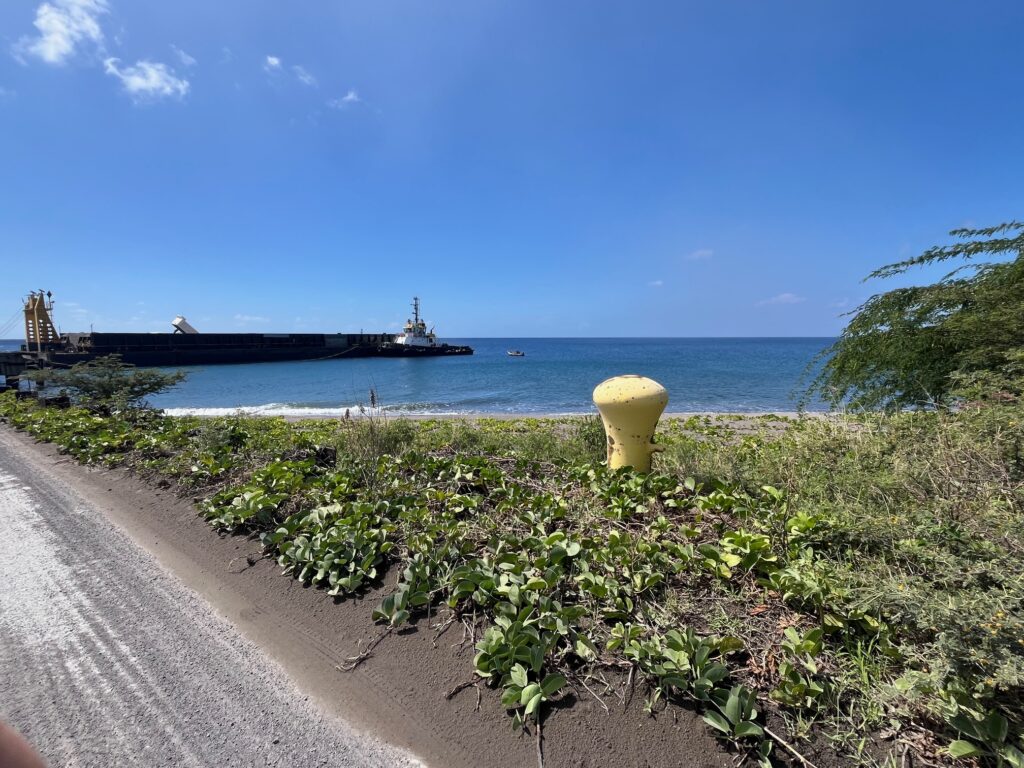
This bollard once sat on a pier
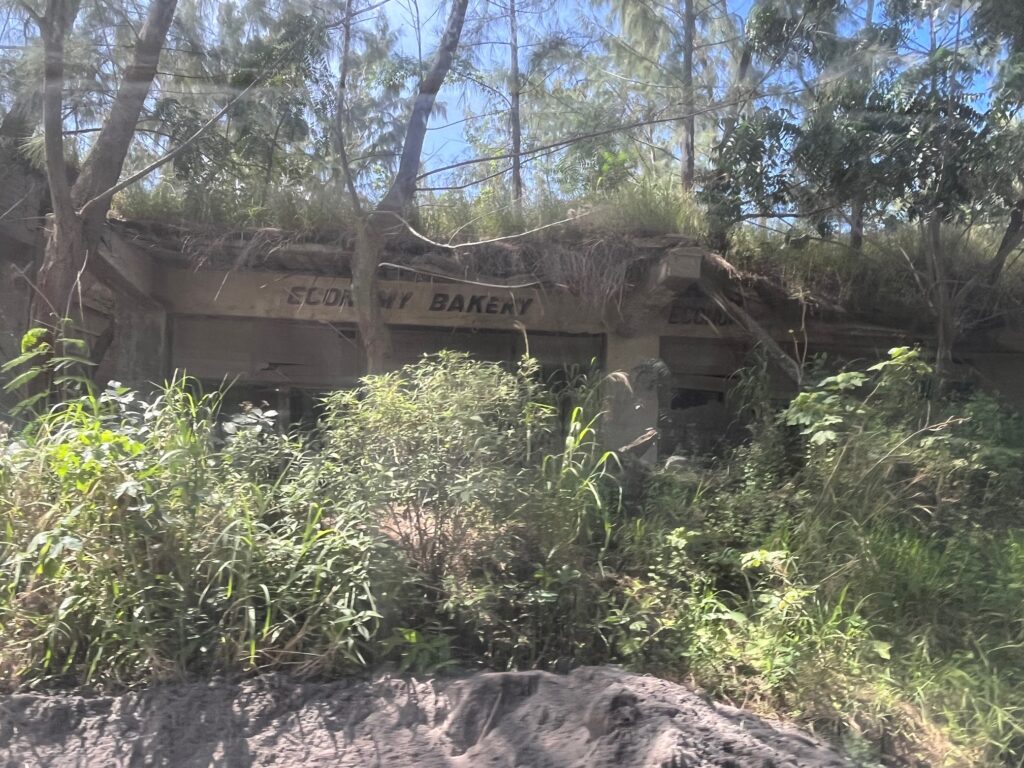
A 2-story building, another volcano casualty
That was once a bakery
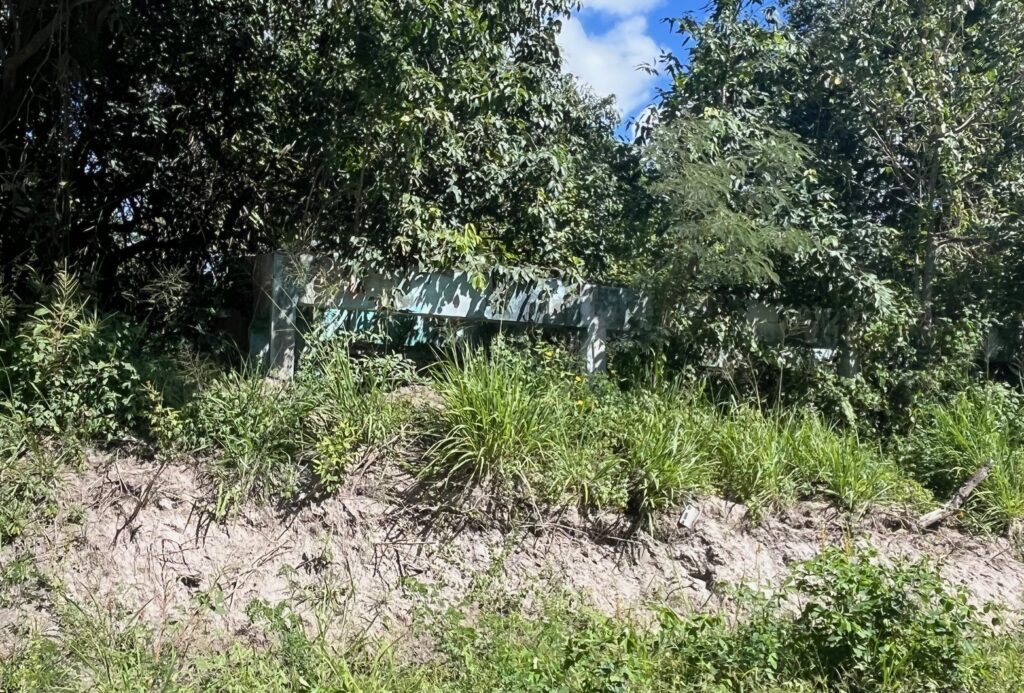
Can you see the building under the bushes?

We only had two days on this island of stark contrasts, but I want to see more of Montserrat…. perhaps next year we will go back, unless, of course, Soufrière Hills decides nap-time is over.
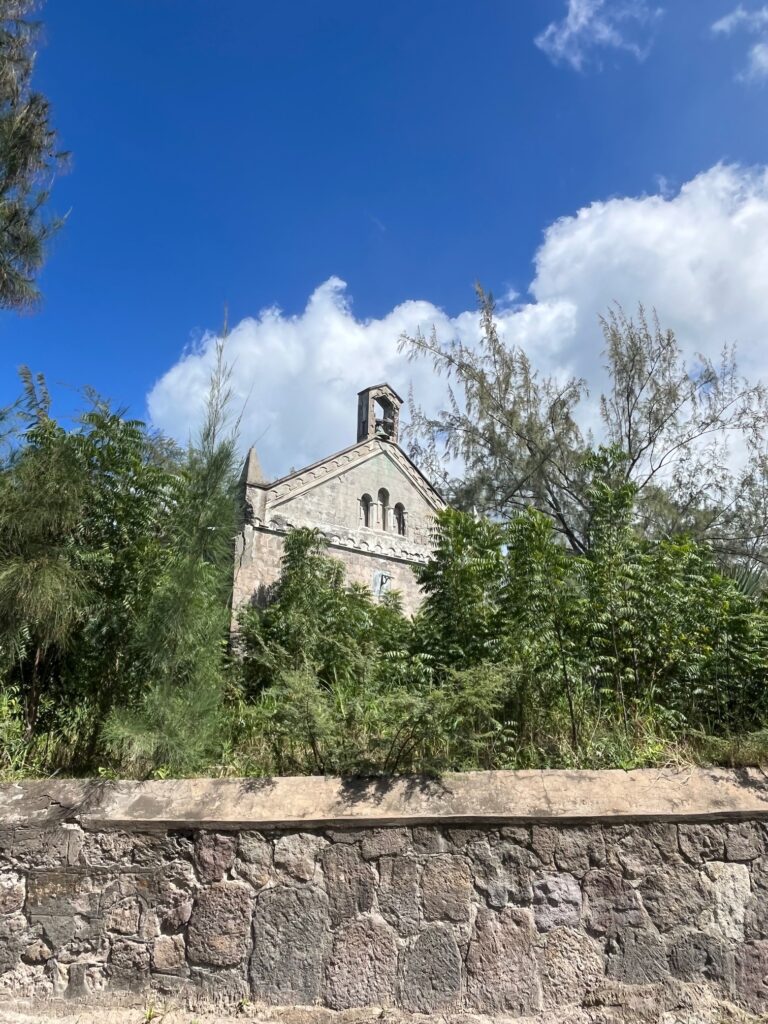
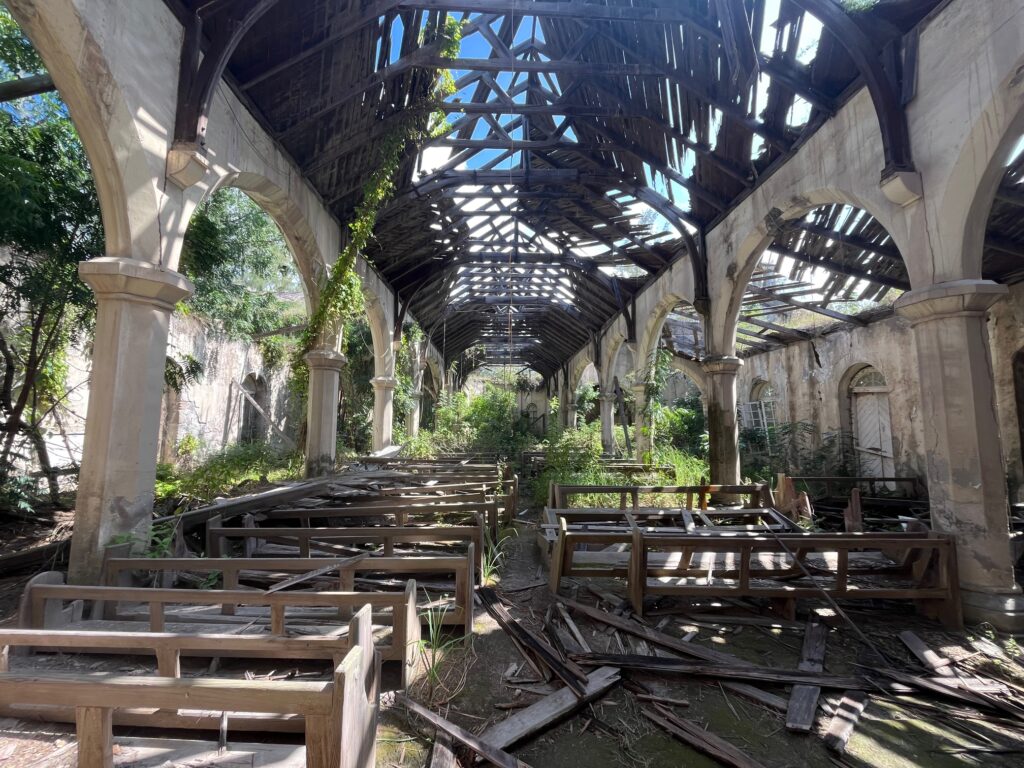
St Anthony’s Anglican Church, established in 1636

Hello Eastern Caribbean!

It’s been a while since my last blog and so much has happened since I last wrote in June 2025. Last time I wrote about frantically travelling home from the BVI to get treatment for a detached retina, and now it is almost one year later.  After three surgeries, two to repair the retina and one for the cataract the previous surgeries caused, my vision is crappy. I have permanent depth perception issues and distortion – straight lines look wavy. I’m fortunate that the other eye’s vision is pretty good and my brain is getting better at meshing the mixed vision and I’m navigating through my new normal world fairly well. I still stumble when I don’t see small obstacles on the sidewalk or a sudden change in elevation, like an unexpected step or slope, but I am counting my blessings that I can still move around independently and won’t let poor vision get in the way of living life.
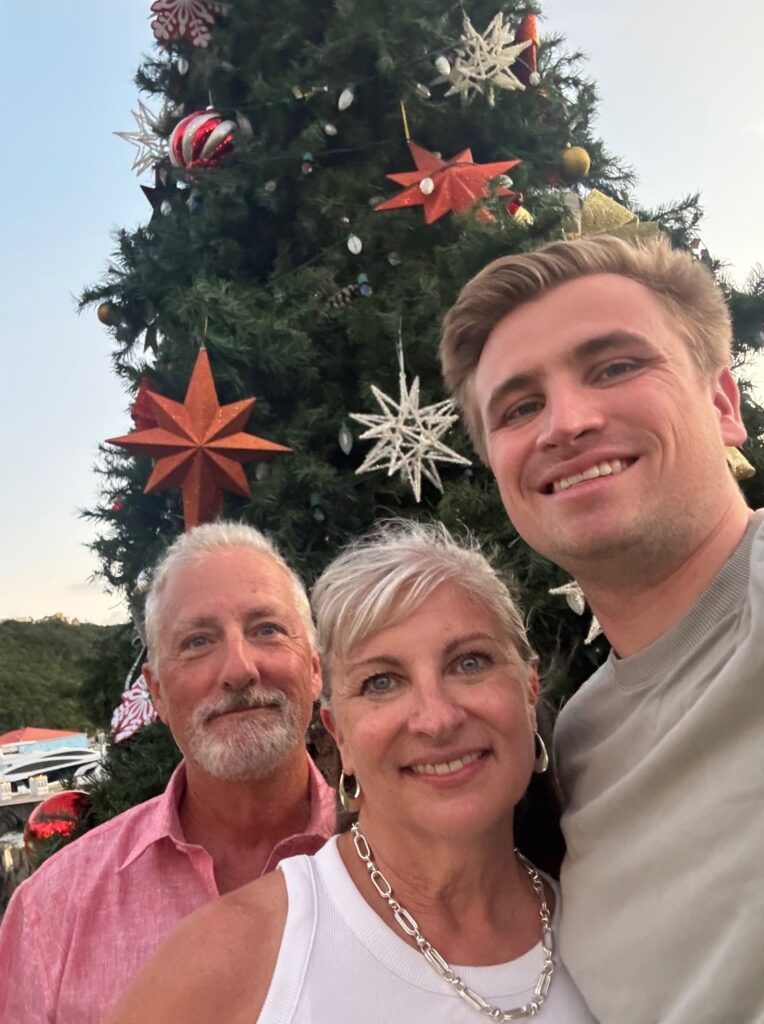
Family Christmas in USVI

This year Allen and I started off the season in different directions. Meshuggana 2 spent hurricane season in the yard at a marina in Fajardo, Puerto Rico. Hurricane season officially ends on December 1 so we usually fly down mid November to spend a couple weeks cleaning, rigging, provisioning and prepping so she is ready to go into the water in December. This involves many hours of hard labour in the blazing heat, sweating gallons and being eaten alive by fire ants and no-see-ums….not my thing. Last year I gave Allen fair warning– I’m not signing-up for this again.  And Allen agreed.
It’s not always margheritas and sunsets

In November Allen flew to Puerto Rico to work on the boat, while I jetted off to Europe, Latvia, Estonia and Lithuania, with an incredible group of eight women, to experience Baltic Christmas markets. After having my fill of incredible festive markets, as well as a little snow & freezing rain, I flew back home and about 30 hours later boarded a flight to the US Virgin Islands, with our cat Ziggy, to begin our sailing season together.
What seemed to be an incredible start to our season was marred by tragedy. Allen greeted Ziggy and me at the airport, brought us to the marina, and before getting into the dinghy to take us to Meshuggana2, I strapped Ziggy into his harness & leash, to let him stretch his legs in the grass after being cooped up 10+ hours in his carrier.  Just a few minutes later, something spooked Ziggy and he was out of his harness and gone! We walked the marina and surrounding roads, put up posters, staked out dumpsters and parking lots, industrial areas, befriended security guards and a man living in an abandoned building …. for 3 weeks we searched literally every day & night. Ziggy was never seen again. With heavy hearts we had to move on and accept Ziggy was gone.  But we don’t think he perished. There are no land predators in the islands that can take a cat, no venomous snakes or insects, there are no garages where he can get locked-in, and “roadkill” would have been obvious as we walked every single road every single day. However, the area where he disappeared was surrounded by docked mega-yachts, and a mega-yacht would have hundreds of places for a small cat to hide and not be discovered for days. We believe Ziggy traded up and is now sailing the high seas feasting on cream and caviar.  Fair winds, sweet boy.
Fair winds, sweet Ziggy. You’ve left a hole in our hearts.

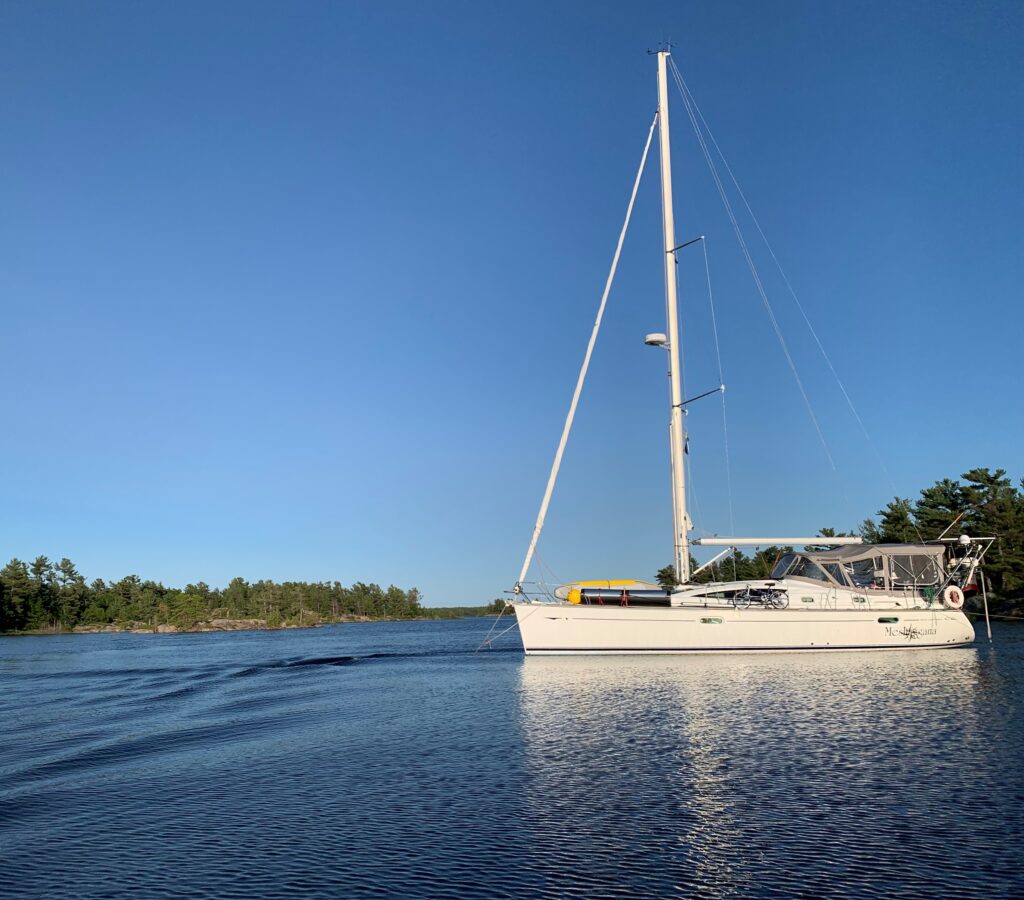
Though my heart ached for my funny little orange cat, I was excited to begin this season’s adventures. Last year we sailed to the British Virgin Islands (BVI) and spent the entire season there. I was ready so see more and this year has delivered in spades.

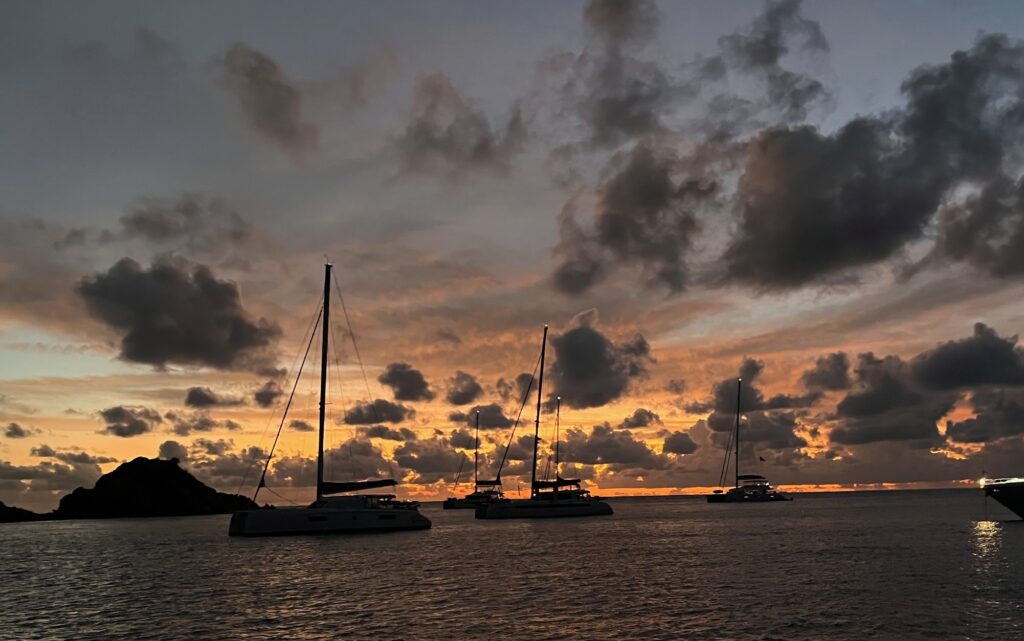
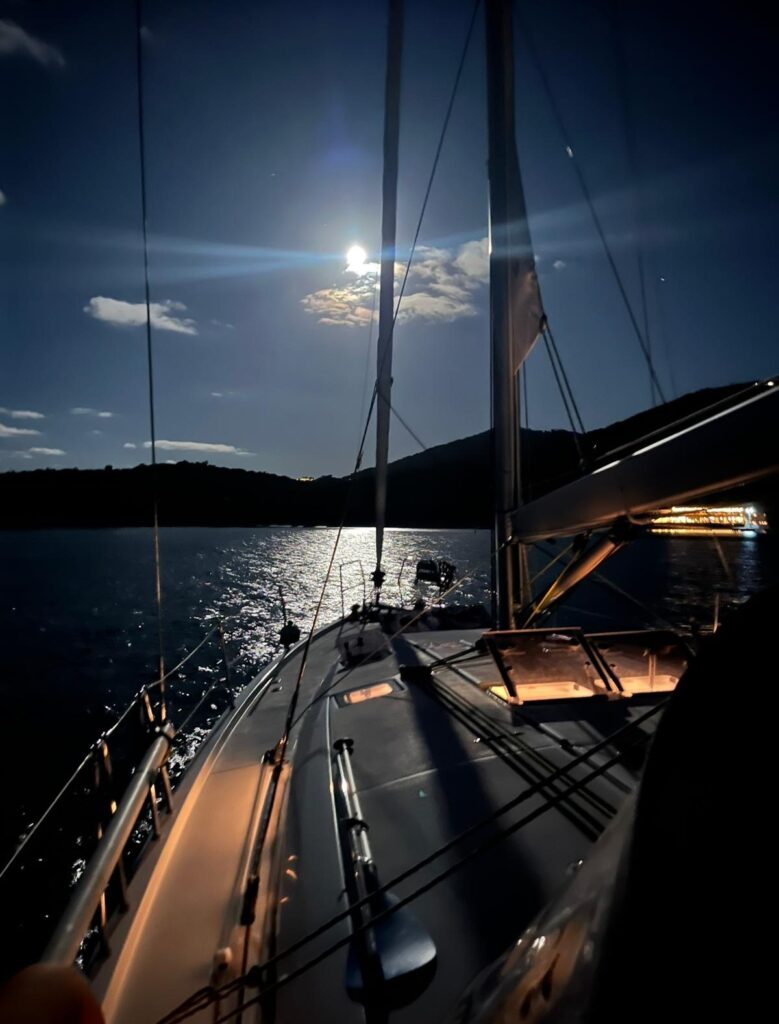
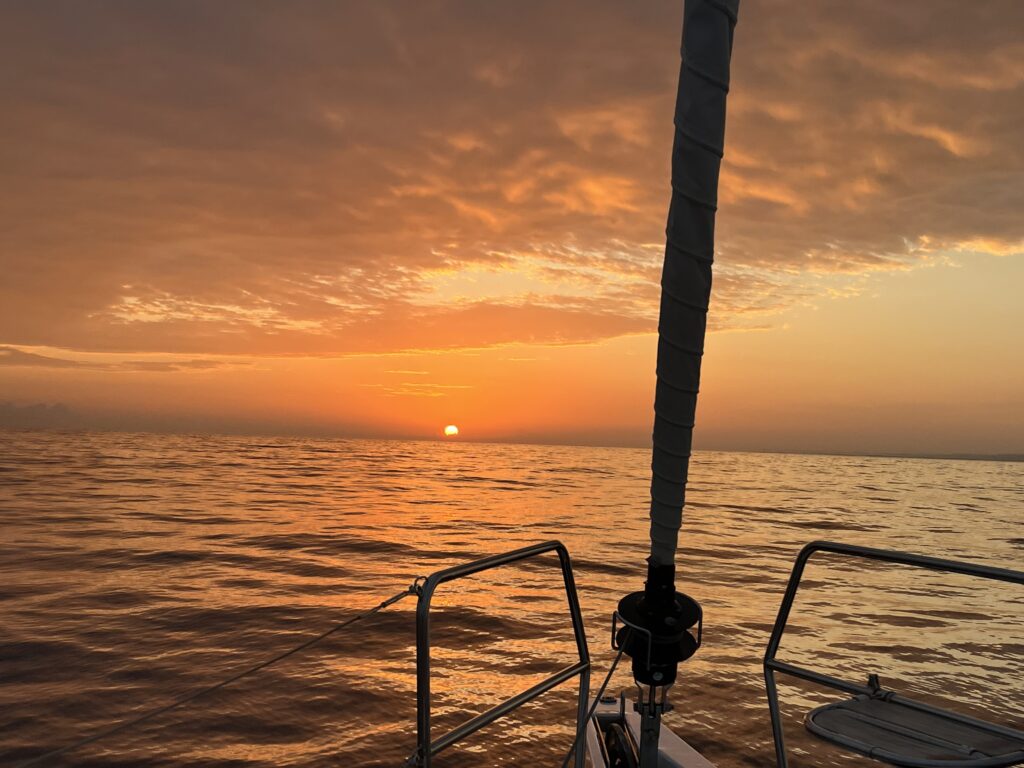
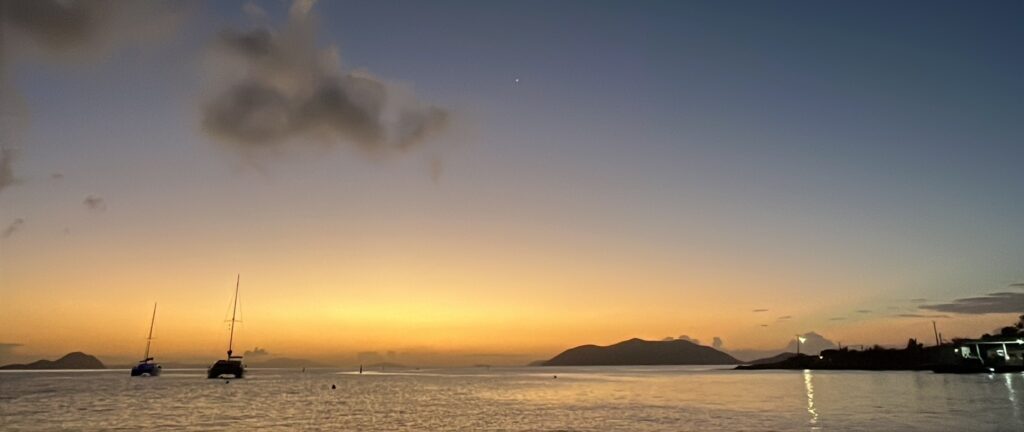
I was ready for evenings like this

Since early January we have been island hopping. Each island has its own character and vibe as well as some common threads – perhaps the most interesting is many are volcanic!

  • St Martin & Sint Maarten, French and Dutch sides – not volcanic
  • St Barts – not volcanic
  • St Kitts  – dormant, last verified eruption was 1800 years ago  
  • Nevis – classified dormant, but has signs of heat and low activity
  • Montserrat – the most active! In 1997 it buried the capital city of Plymouth!
  • Antigua & Barbuda – was volcanic millions of years ago
  • Guadeloupe  – actively volcanic
  • Dominica – actively volcanic
  • Martinique – actively volcanic – 1902 eruption claimed over 28,000 lives as the capital, St Pierre was buried in less than two minutes

Phew!!  And we’re not done yet!  Before our season ends and we haul the boat out in April in Grenada, we will have also visited volcanos in St Lucia, St Vincent and Grenada!

I love volcanos, the way they rise over the island, imposing, powerful, breathtakingly beautiful! Thanks to science, seismic activity is closely monitored and eruptions are now far more predictable and preventing tragedies like the 1902 death toll in St Pierre.

Here are summaries of some of our island adventures and perhaps in a future blog I’ll go deeper, as each has its own culture and idiosyncrasies and deserves it’s own page.

St Martin (French) & Sint Maarten (Dutch)– two countries sharing one island in perfect harmony!

Phillipsburg, Sint Maarten
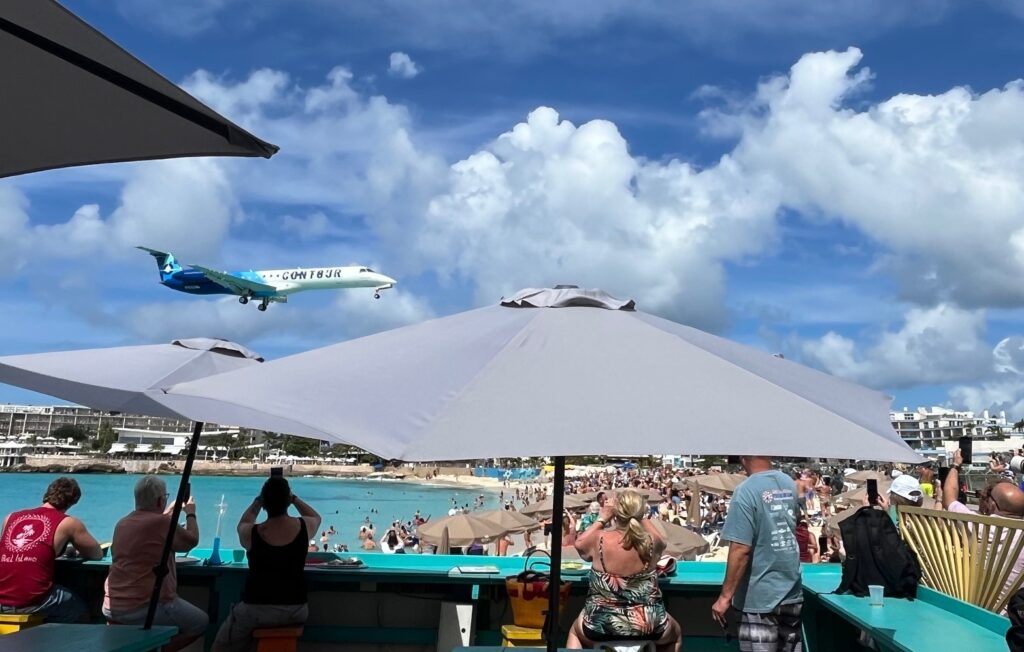
Jets landing overhead at famous Maho Beach in Sint Maartin
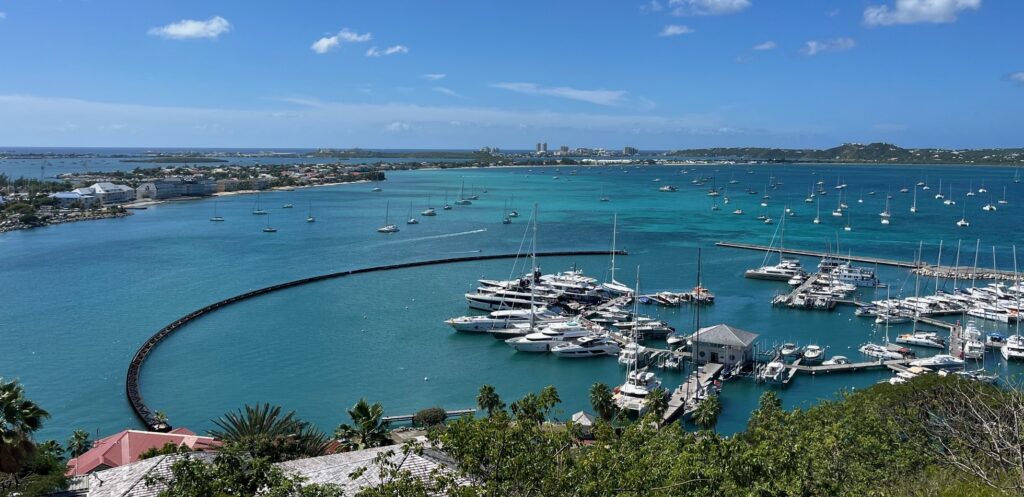
Marigot, St Martin

This island is big on tourism and everything that goes with it – resorts, hotels, restaurants shops, tours…it has it all. Moving between the Dutch and French sides is seamless, you may not even notice you’ve changed countries if you are walking, driving or riding in a dinghy through the lagoon. But NOT in your sailboat – that requires a whole pile of paperwork, fees, Customs office visits….so if you sail there, pick a side and stay here.

Incredible St/Sint Martin

This island has every type of yacht service imaginable, boat yards, sailmakers, chandleries – anything and everything boat. And it’s duty free, so it’s no wonder it has become a major sailing destination. Large, well-stocked stores make it the best place in the Eastern Caribbean to fill your freezer and pantry for reasonable cost. On the French side English is very much a second language, but service is good and most establishments make an effort to communicate in “Franglais”. On the Dutch side it seems to be English only.

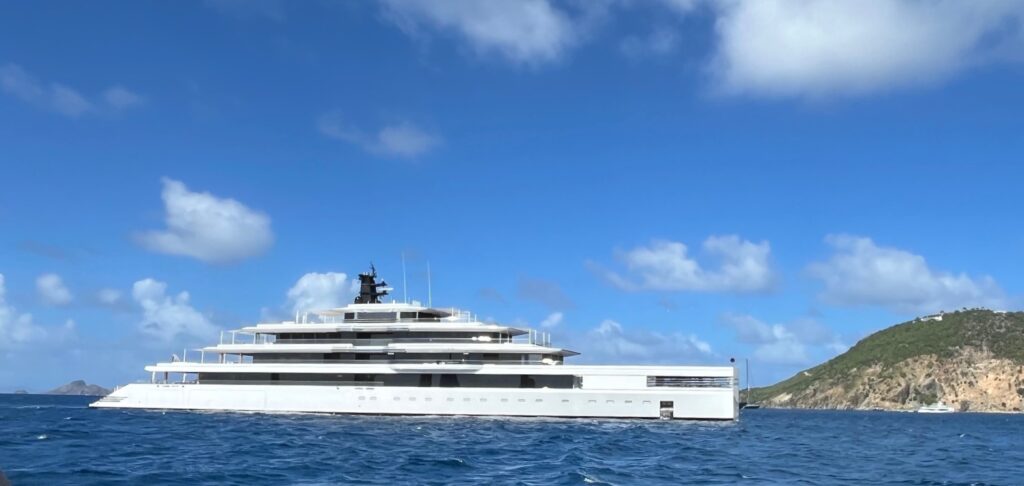
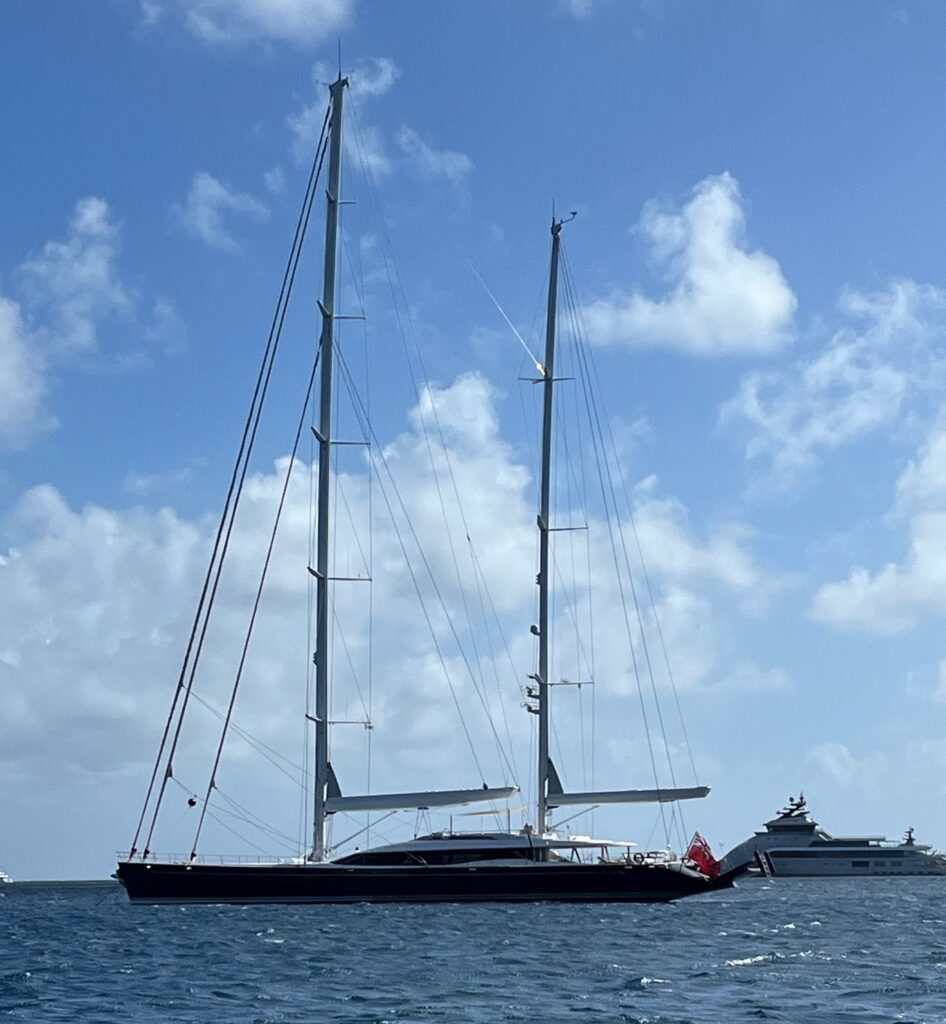
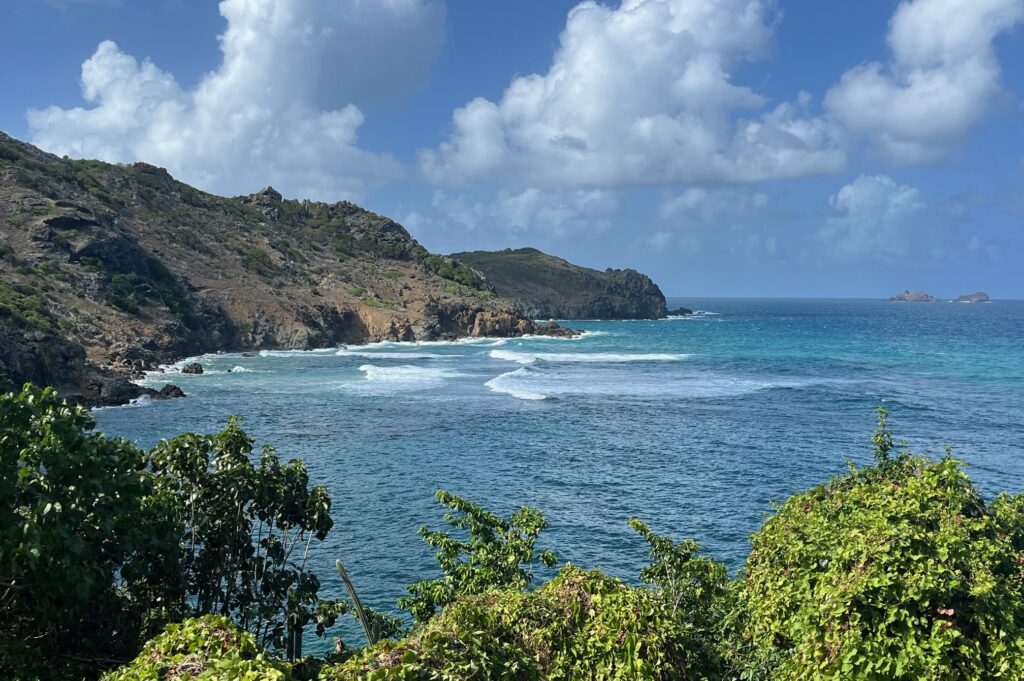
St Barts is a playground for the rich and famous. We learned that over 300 mega yachts were docked there for New Year’s Eve (maybe Ziggy joined the celebrations). Just behind the Customs office are several blocks of luxury shops – Hermes, Louis Vuitton, Dior…all there.  However, a bit outside the main city is a nature reserve with a pristine beach and lovely coastal hike and home to a sea turtle sanctuary – quite a nice change from the city.

Natural coastline in St Barts

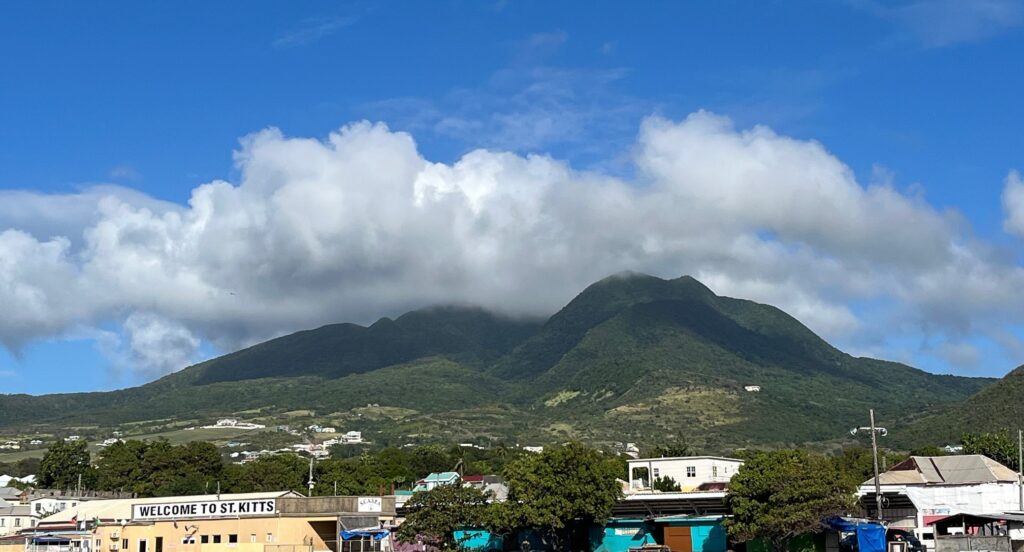
St Kitts & Nevis are one country on two separate islands. Historically it bounced between French and English occupation, so the language you hear the locals speak is an interesting Patois, but now as a British territory, English is the official language. Customs & Immigration is very formal, detailed, and honestly a pain in the butt with forms, and documents and fees.

Mt Liamuiga

The St Kitts capital, Basse Terre, has seen better days, except for a few blocks of the cruise ship shopping district. This area is a strange, artificial world with endless jewelry stores selling diamonds and watches next door to tourist junk stores selling t-shirts and fridge magnets, interspersed with tacky bars selling expensive sugary cocktails. This place is teeming with tourists until about 5pm when the ship leaves, then it becomes a ghost town.

But just one block outside the cruise ship terminal, Basse Terre feels more like a third world country with shells of buildings damaged by hurricanes long ago, crumbling streets, and residents who don’t seem to appreciate strangers wandering their neighborhoods. As Allen and I walked the around looking for a laundromat, we got the distinct feeling we were intruding. At no time did we feel threatened, but we did not feel welcome either. 

Then there is Nevis, just a two-hour sail away. A much smaller island that does not attract giant cruise ships. The main city of Charleston is compact and walkable. More businesses are open, lovely cafes and restaurants and EVERY SINGLE person we met greeted us with smiles and a ‘good day’, ‘welcome to our island’.  It’s clear they are investing in tourism, and residents appreciate visitors and make them feel welcome.

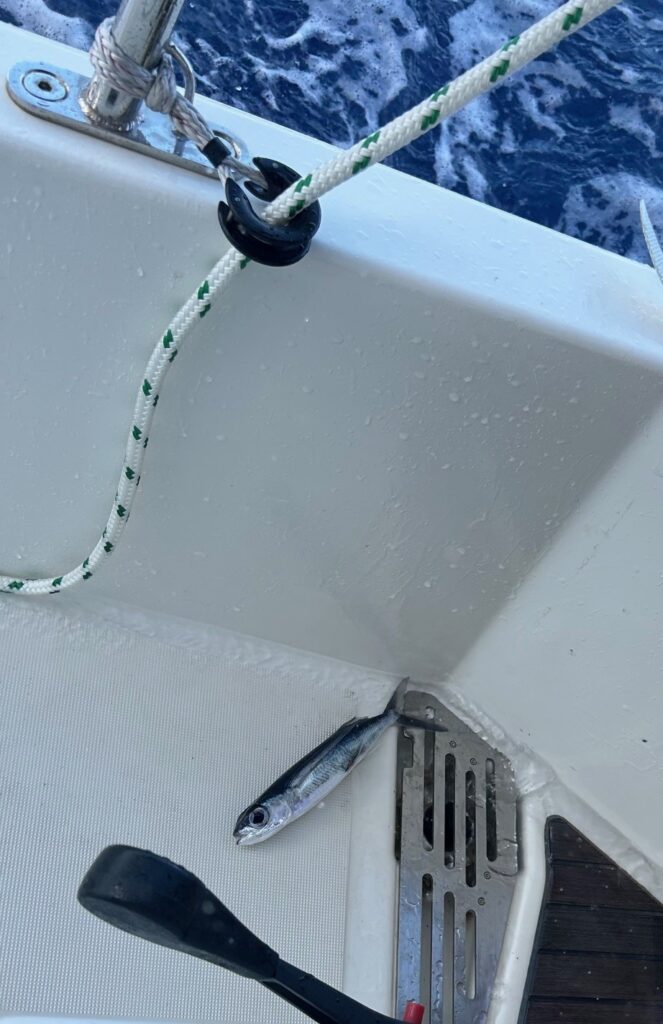
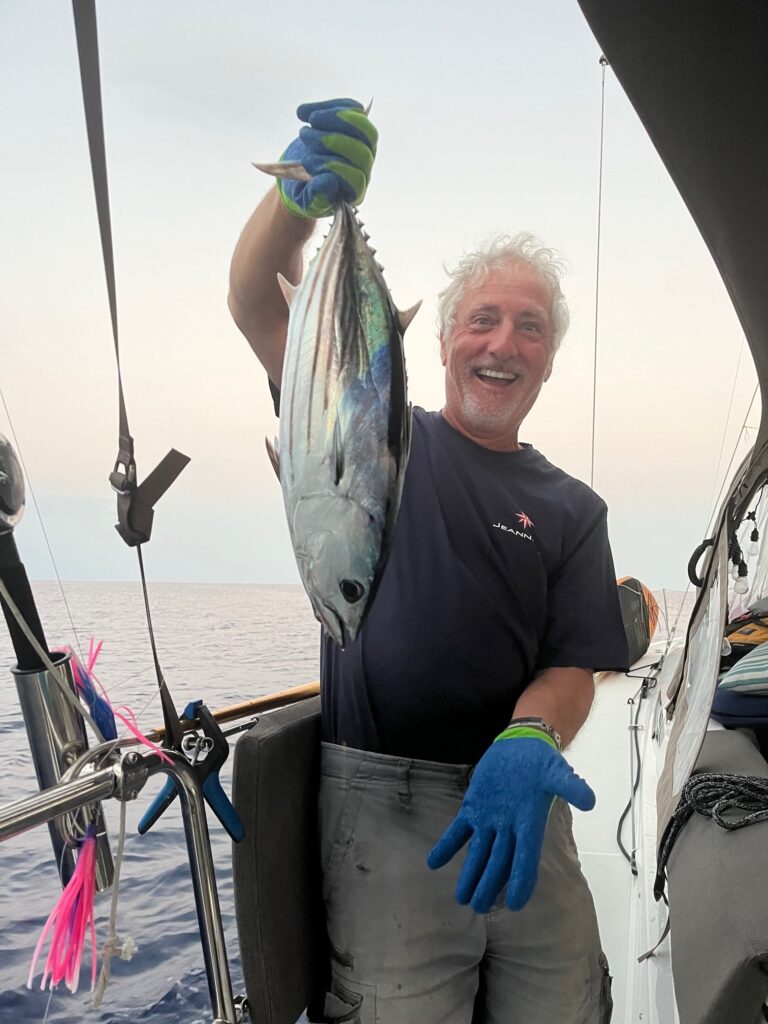
Sporty sailing conditions washed up a fish
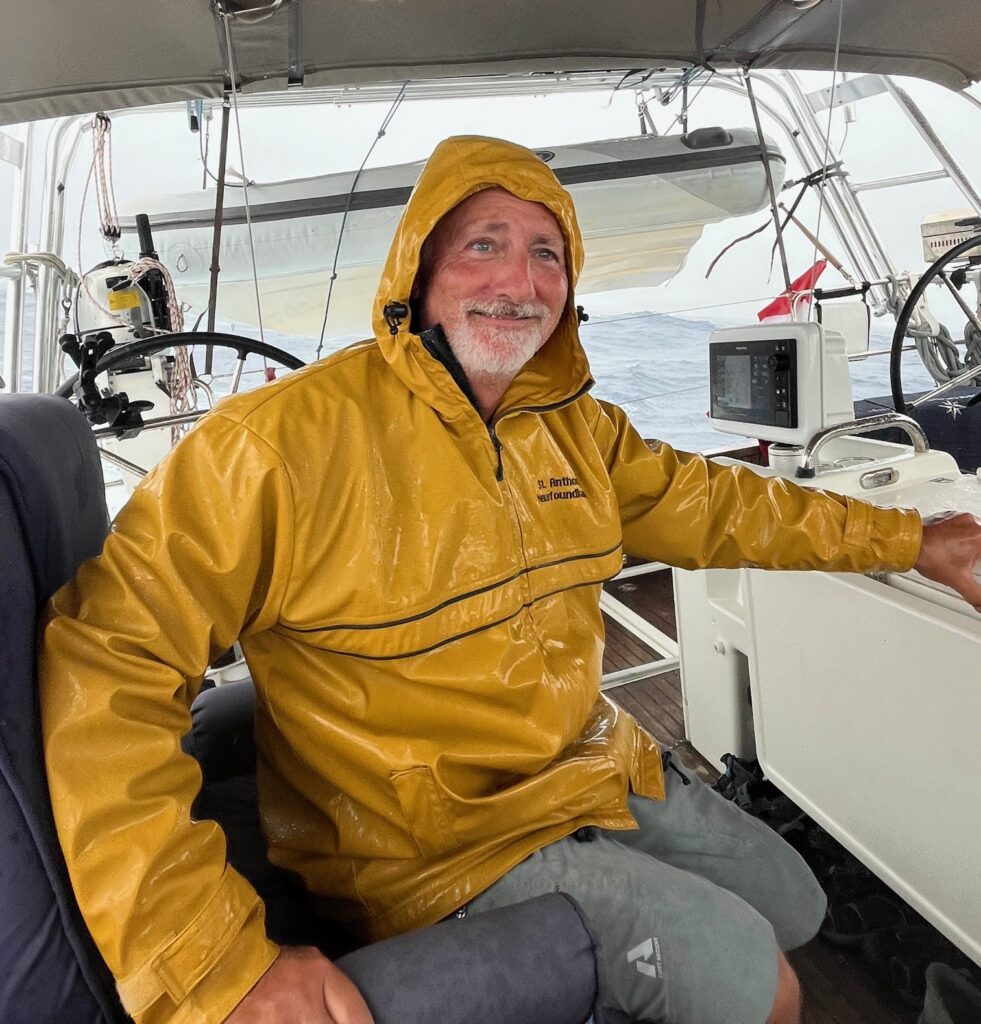
Caught in a squall – at least he’s still smiling!

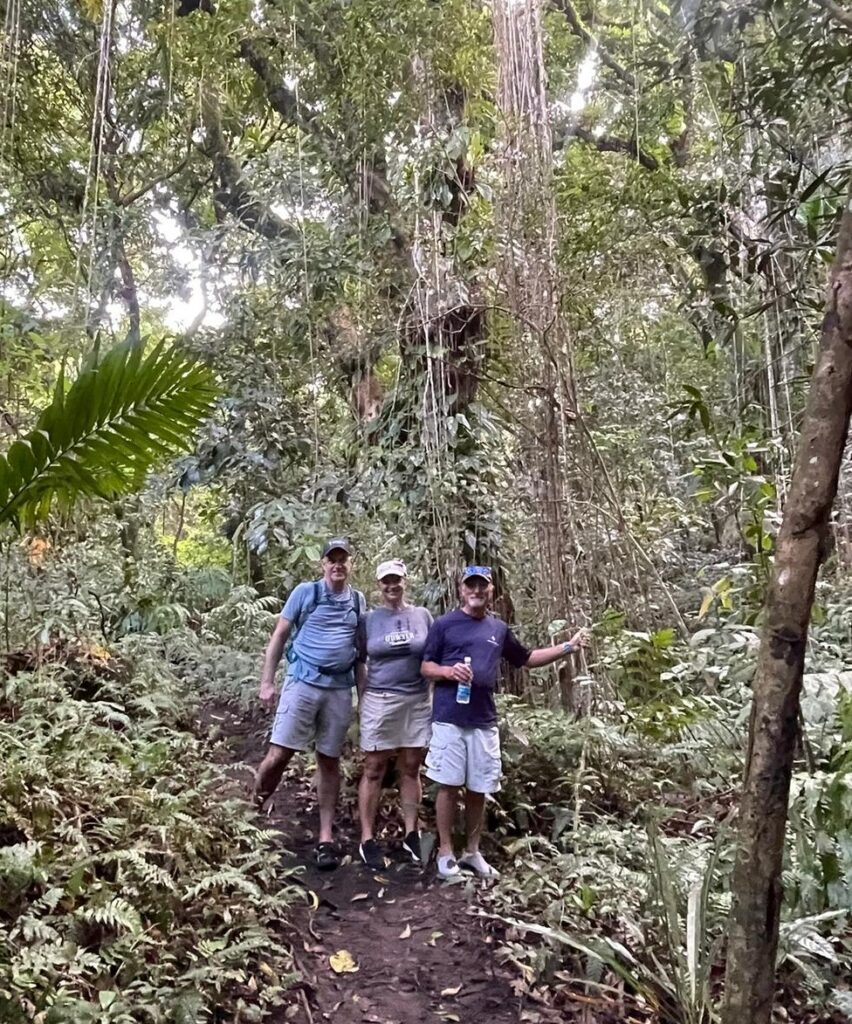
In St Kitts we were joined by friends & fellow sailors, Colleen and Gerald from Toronto. We promised them sailing adventures, and we delivered with some super ‘sporty” ocean conditions, but first we dragged them up a volcano! Well, they were actually very willing to join us on the advertised “hike through a rain forest to Mt Liamuiga volcano”.  A five-hour trip…we assumed we’ll need to wear sensible shoes, bring water, bug spray & sunscreen. It will be good to get some exercise!

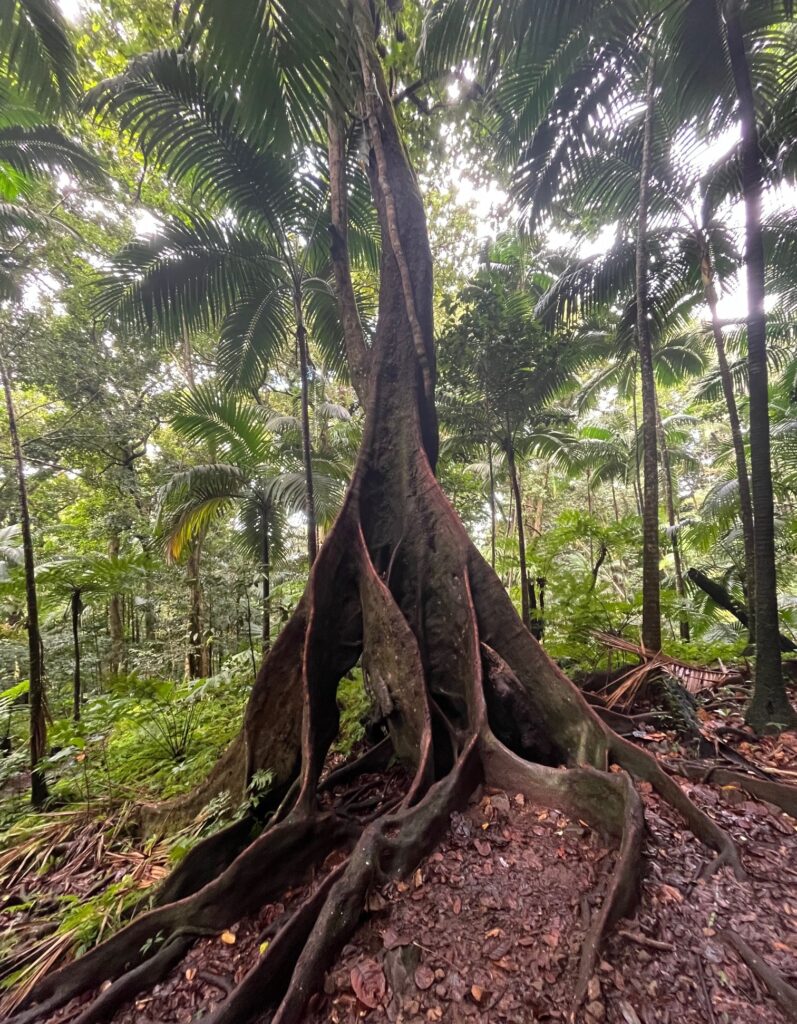
A mighty Ficus tree in the rain forest

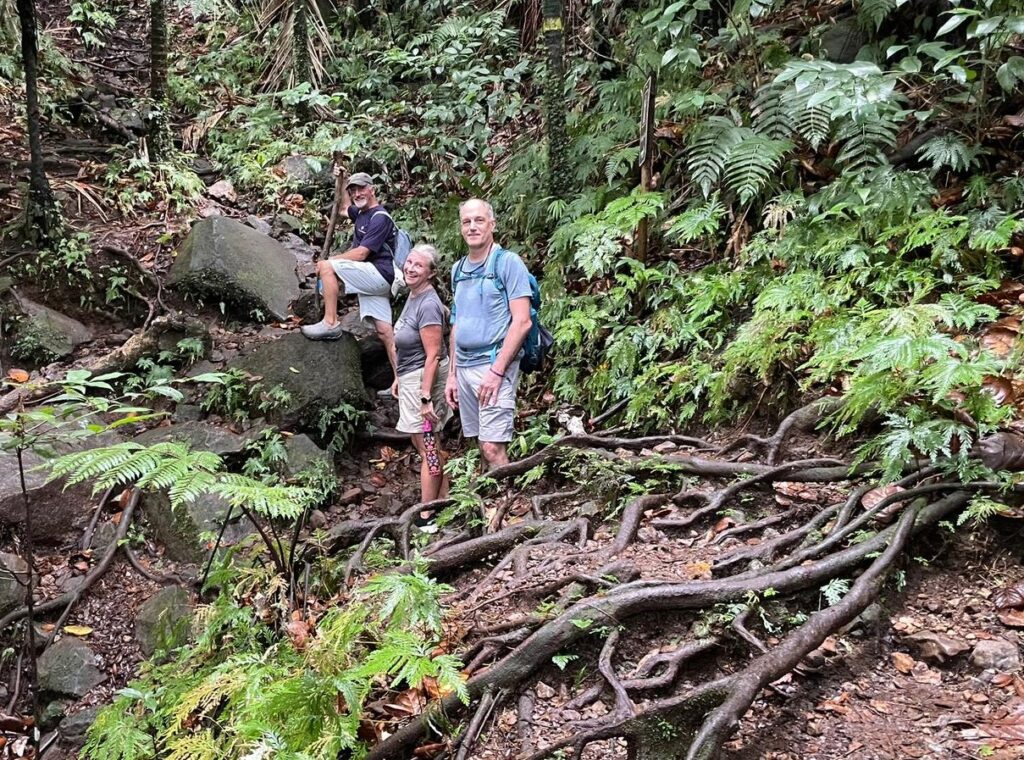
Our first clue should have been our guide changing out of his shoes and putting on mud boots. He also told us there are no bugs and we won’t be in the sun (he was right). Great! Then he told us the summit is over 3700’ vertical. That didn’t really sink in until it was too late and we were ankle deep in mud, my not-quite-appropriate for jungle hiking outfit was glued to my body with sweat, and realizing peanut butter toast may not have been the best breakfast choice for this level of physical exertion.  We hiked, climbed over rocks, used tree roots as ladders and after three exhausting hours, it was 3pm and we all noticed the change in the bits of daylight penetrating the thick foliage. The sun was making its descent and we had to begin ours despite not reaching the summit – we still had nearly 1000 feet to climb and the last part was the most difficult with more vertical climbing than the bottom.  Our 25-year-old guide seemed a bit disappointed, but we convinced him he’d have a heck of time getting us down the mountain in the dark.  Two and a half hours later we were back in the truck, a little bloodied, definitely dehydrated, covered in mud, but happy that we took on the challenge.

Almost there….
Still 2000 feet to the top….
There was blood, sweat and tears of joy to be get back before dark

I’m going to leave it here and save my favorite volcano for my next blog: Montserrat.

USVI, BVI and it’s a wrap…for now

It’s been some time since I last wrote, and there have been some amazing adventures, and some not so great events in the last 6 months. It’s been hard to get back into it as so much time as passed, but I woke up this morning ready to share my story.

Virgin Islands!

As I write this blog on a sweltering June day in Toronto, I am reflecting on an incredible sailing season, and then an unexpected turn of events that brought me home early. I’ve been back since exactly 3 a.m. on March 11, 2025—a full month ahead of schedule—cutting short my Caribbean adventure, but I’ll get to that a bit later.

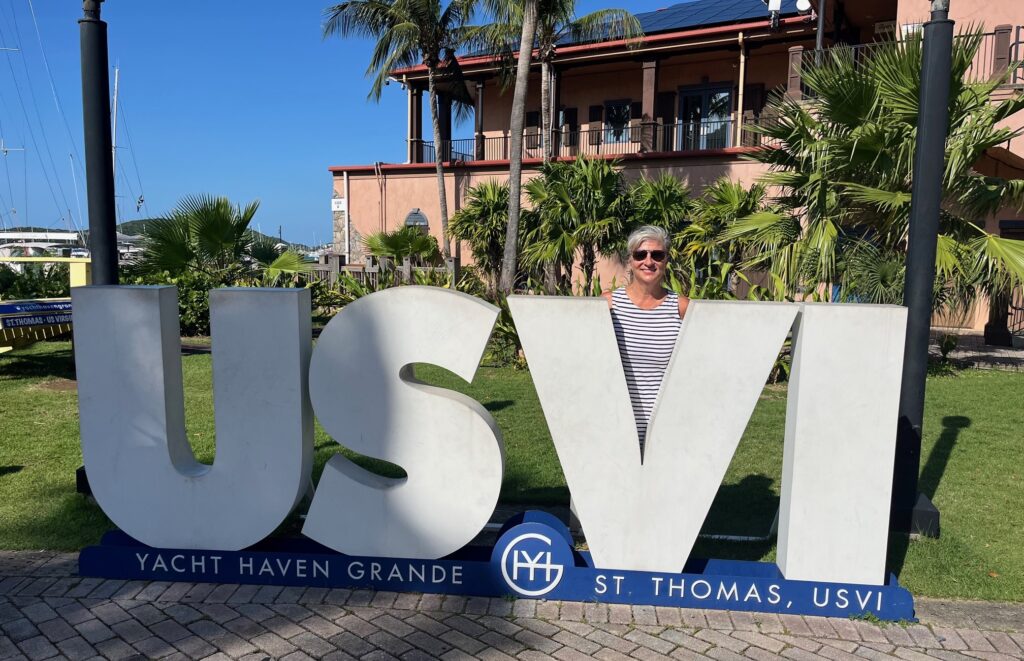
When I last wrote we had just finished a wonderful family Christmas in Puerto Rico and were heading east to explore new islands. First up – Charlotte Amalie, U.S. Virgin Islands.

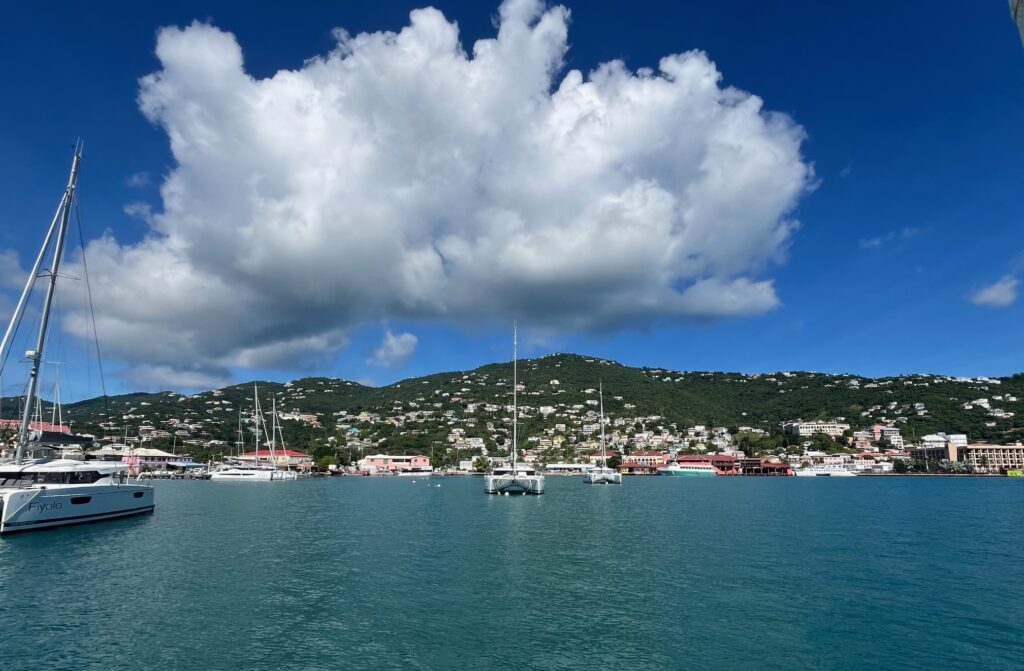
Charotte Amalie, the capitol of USVI, has a huge, sheltered harbour with room for at least 100 boats. Allen and I visited here about 16 years ago enroute to a charter vacation, and much was still the same despite the city being devastated in September 2017 by two Cat 5 hurricanes, Irma then Maria, hitting the USVI just two weeks apart. As Charlotte Amalie is popular cruise ship destination, I wouldn’t be surprised if cruise companies helped restore it—rebuilding countless duty-free shops selling luxury goods and enough jewels to outfit royalty. It’s touristy, but still pretty and charming.

Charlotte Amalie, USVI
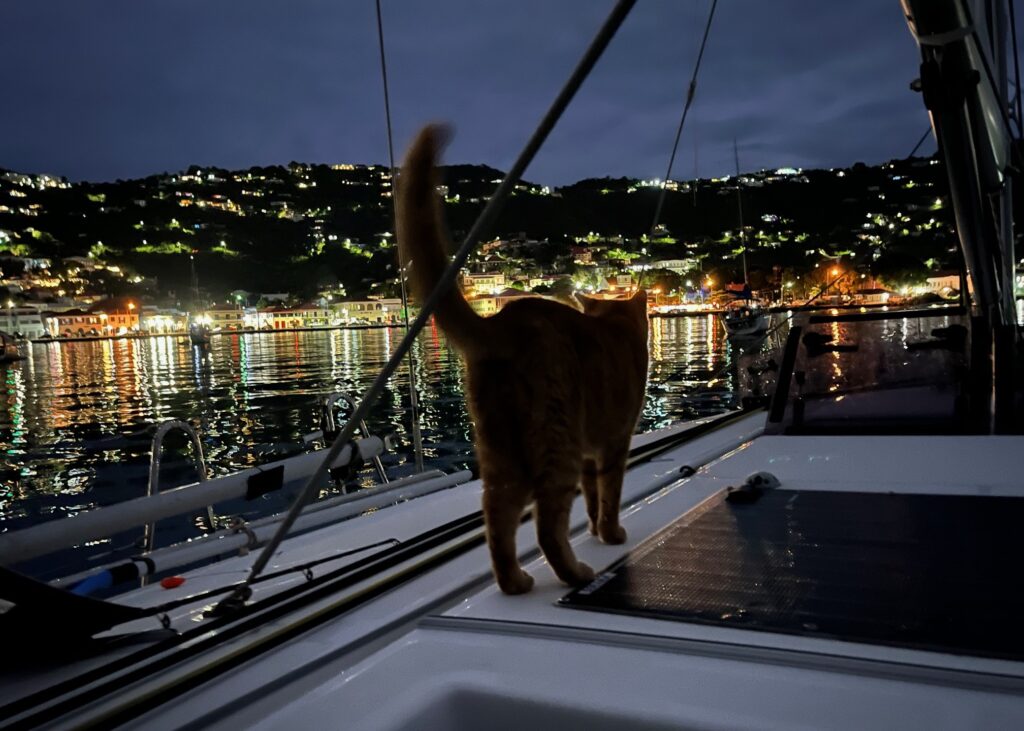
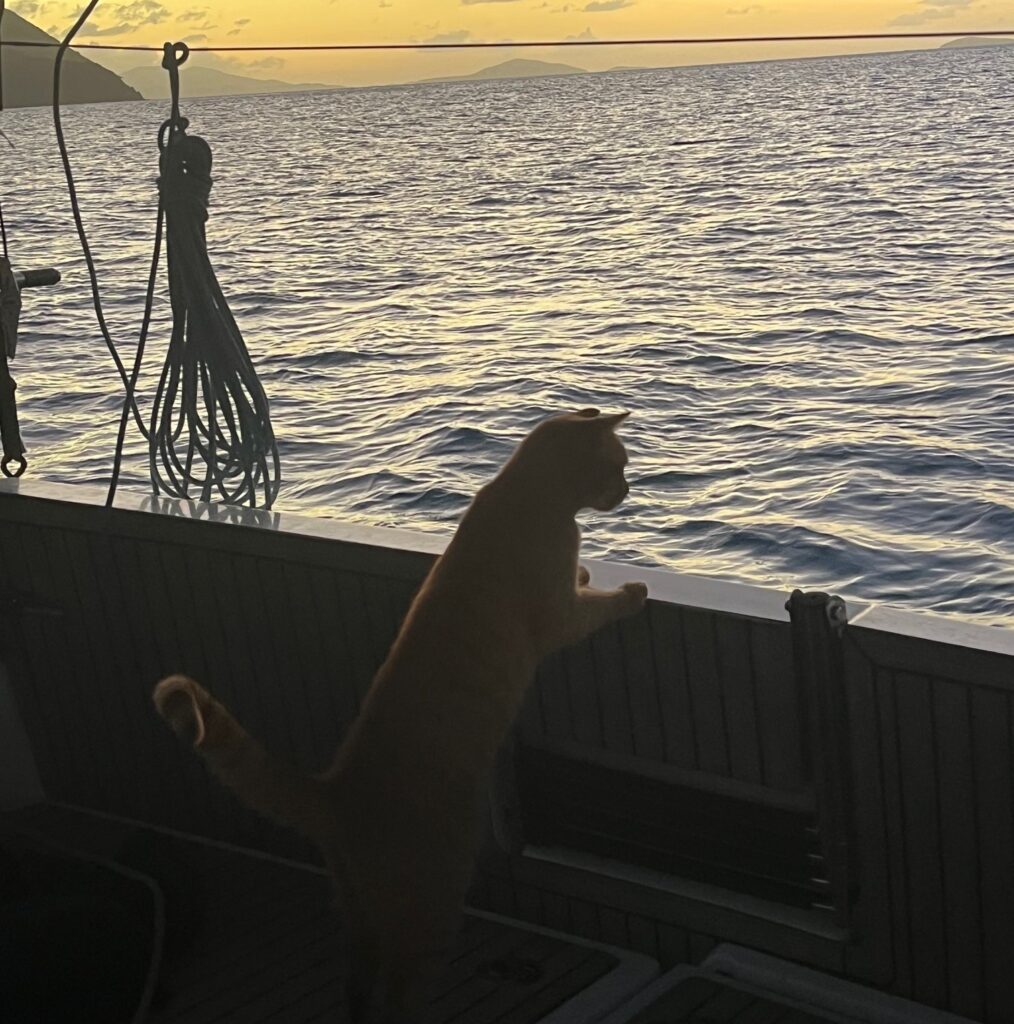
Ziggy on patrol in Charlotte Amalie

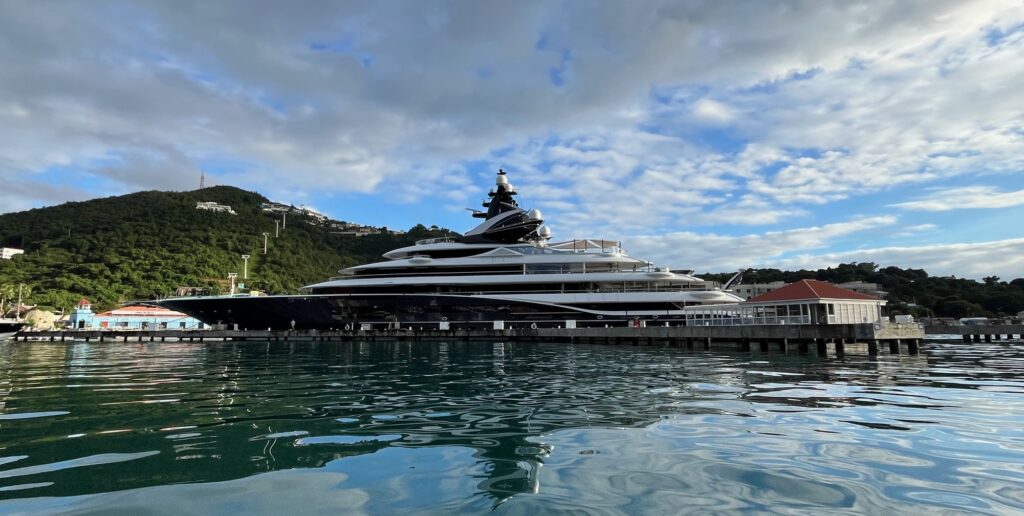
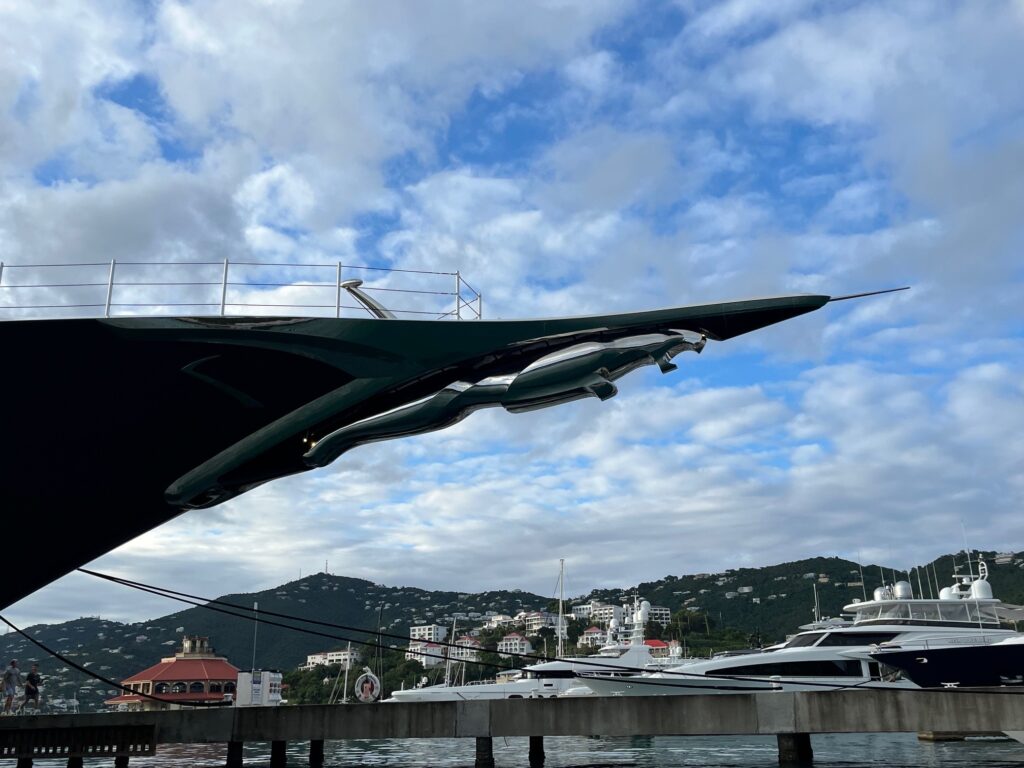
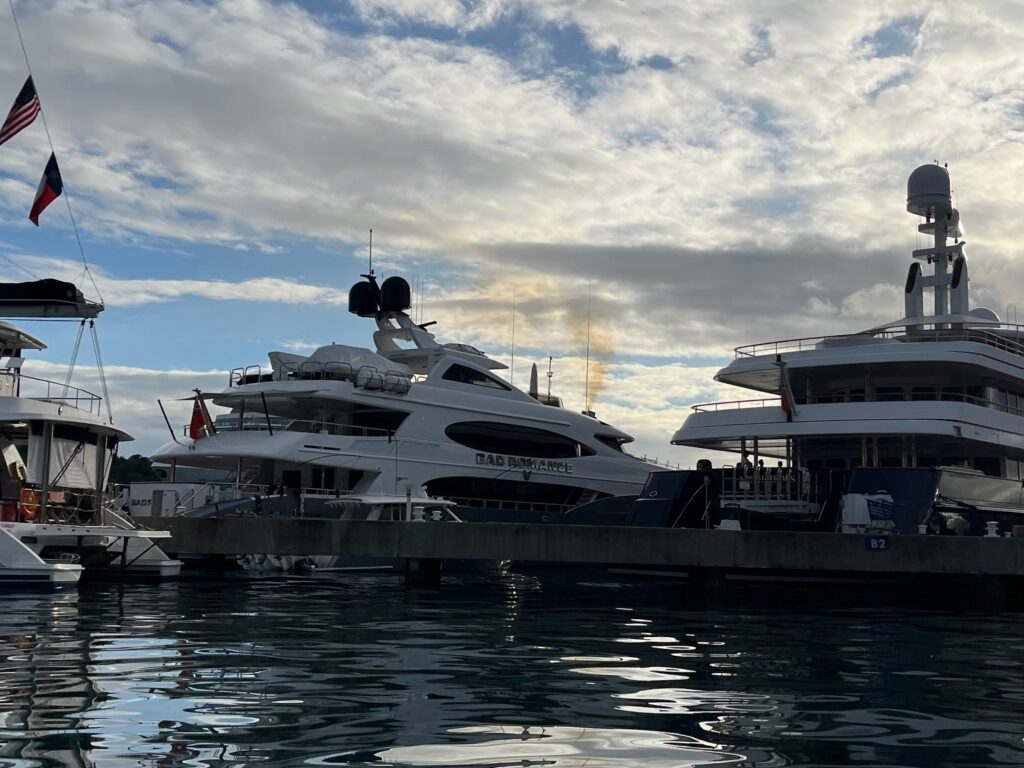
Sixteen years ago, we hadn’t noticed the marina for mega yachts. We took the dinghy for a ride and got a close-up look. With Google’s help, we identified several of them, including the stunning, blue-hulled Kismet, owned by Jacksonville Jaguars’ owner Shadid Khan, and the smaller Bad Romance,sadly not Lady Gaga’s, but Dr. Phil’s. Despite the flashy yachts, no celebrity sightings.

Yachts in Charlotte Amalie
Stunning jaguar adorning the bow of Kismet

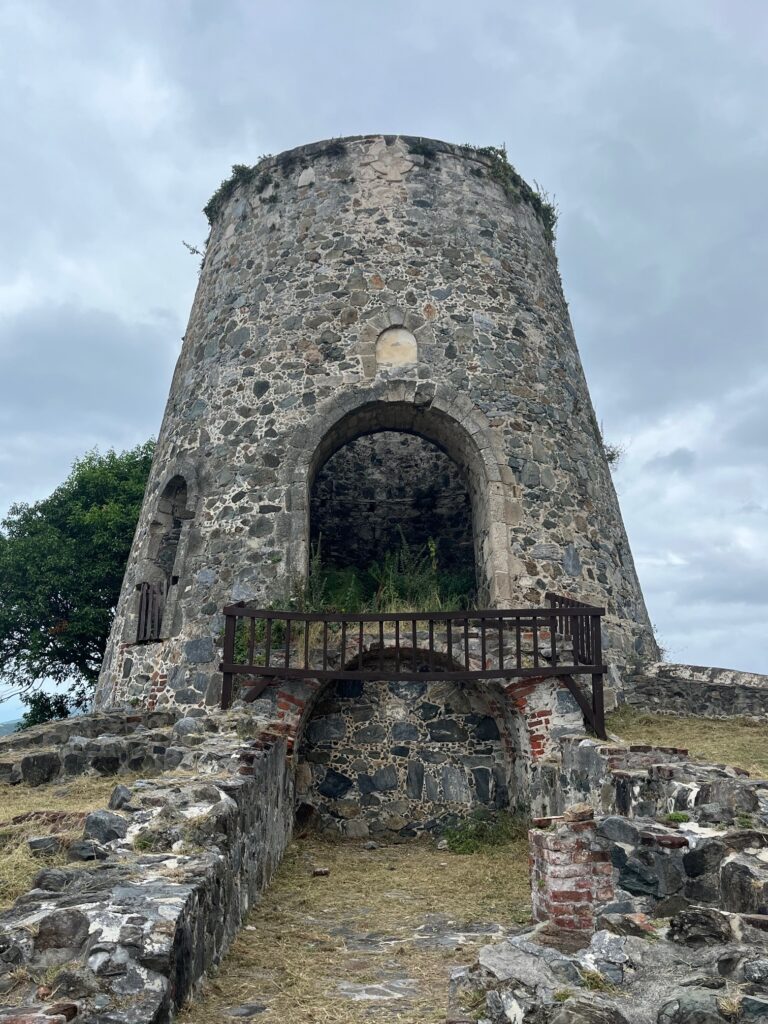
Next stop was St. John, the smallest USVI island with a very interesting history. In 1718, Denmark claimed the island and several plantations were established, growing primarily sugar cane and cotton. Eventually the island was home to 109 plantations, with the Annaburg plantation becoming one of the island’s largest sugar producers.

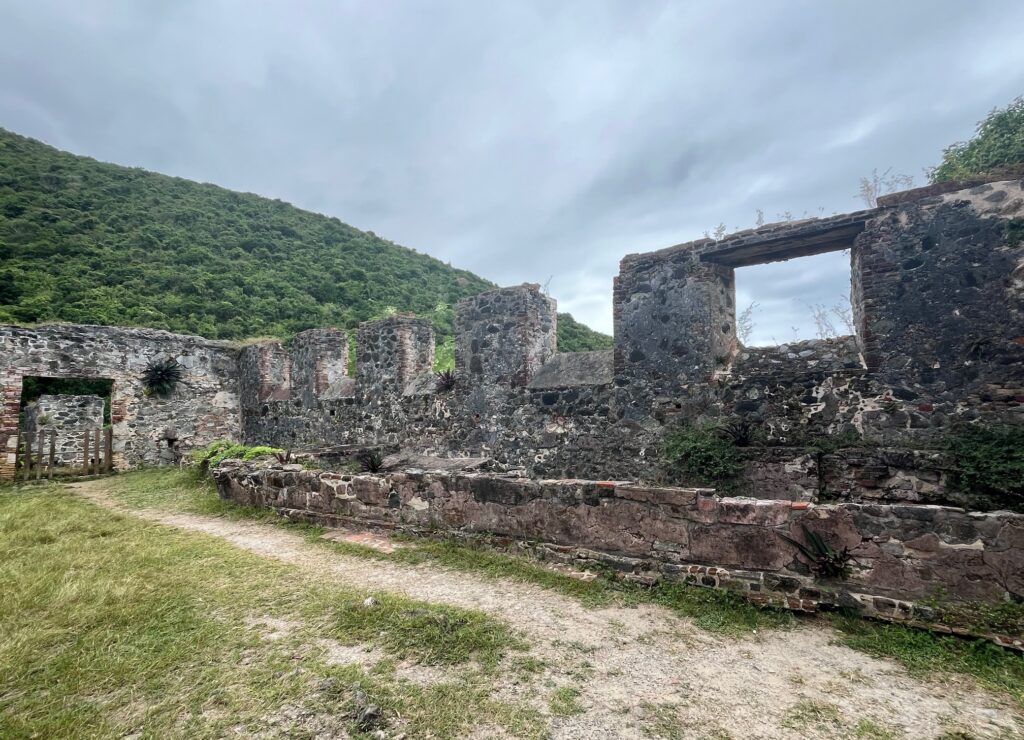
Annaburg ruins

In 1917, the United States bought the U.S. Virgin Islands from Denmark for $25 million (and agreed to recognize Denmark’s claim to Greenland as part of the deal). Private investors later purchased properties and transformed the island into a luxury tourist destination that it is today. Conservationist Laurence Rockefeller, purchased 5000 acres of pristine land, built an “eco resort” and later donated it to the US government to create the Virgin Islands National Park, which today covers 60% of the island. Today the park offers miles of hiking trails, pristine beaches and the preserved ruins of several plantations, including Annaburg.

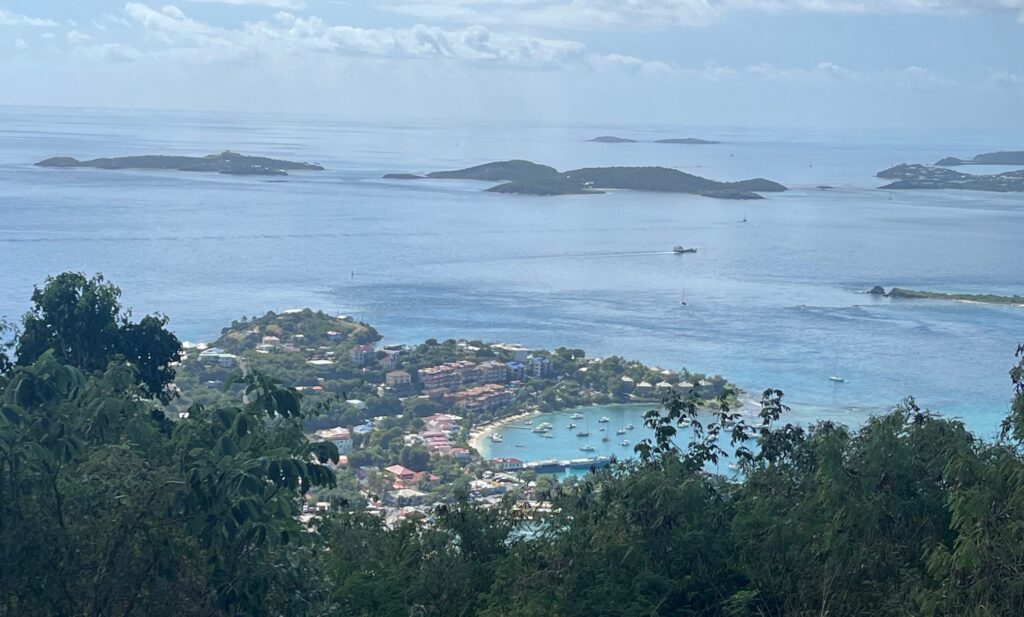
Cruz Bay from the top of St John, USVI
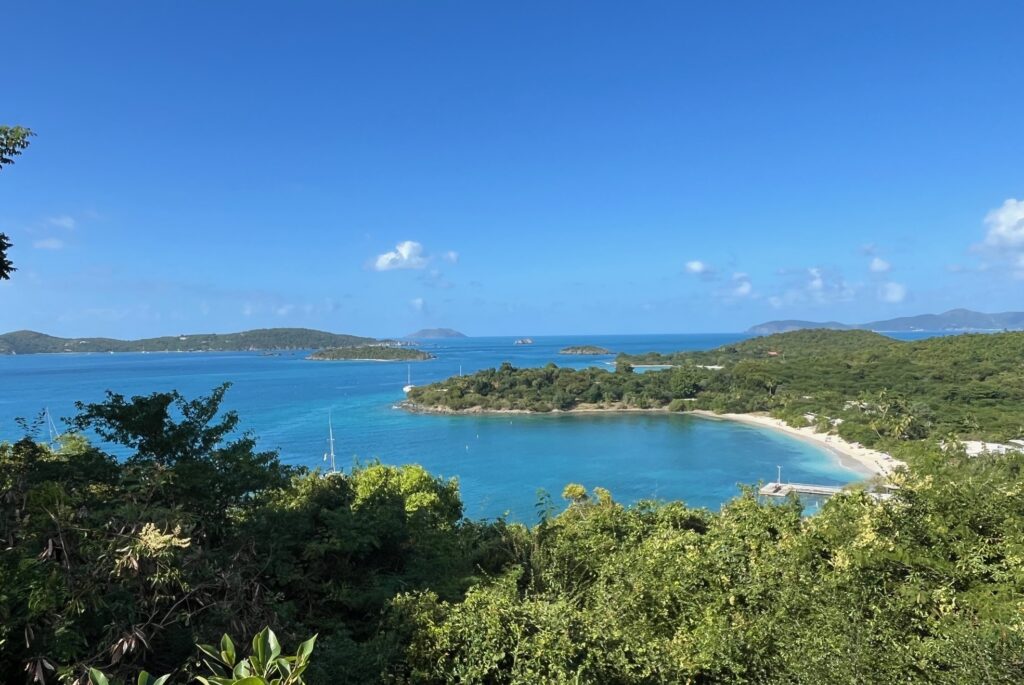
View of Caneel Bay, USVI

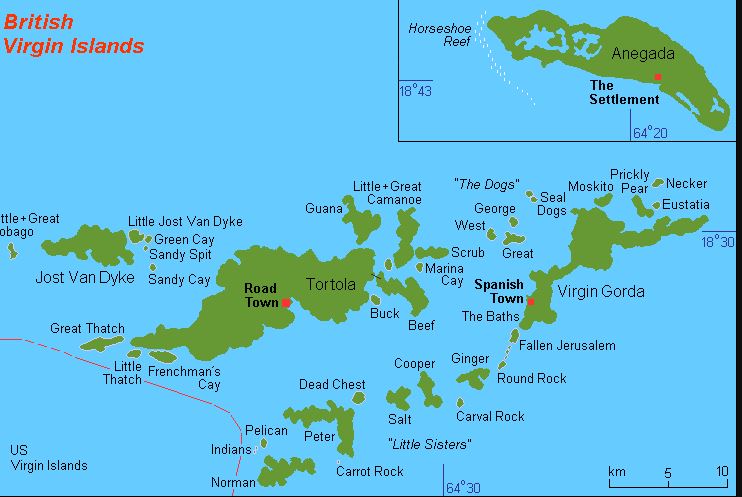
In mid-January we moved on to neighboring British Virgin Islands, BVI, perhaps the best-known Caribbean sailing playground famous for stunning views and gentle sailing conditions. In this land of yacht charters and luxury resorts, you can find striking mountains, calm turquoise water, white beaches and very expensive bars and restaurants.

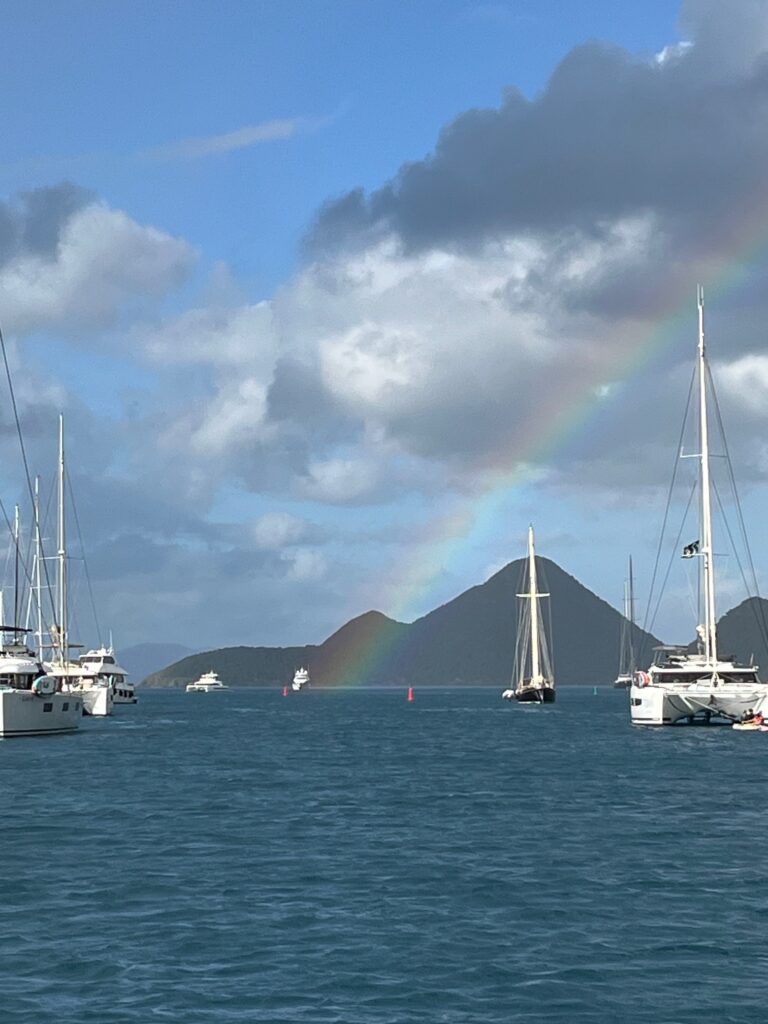
Somewhere over the rainbow….

BVI have a similar history with the USVI and many other Caribbean islands, historically bouncing from empire to empire, from Dutch, French, Spanish, Danish and finally the British claiming the prize in 1672. Like their US neighbors, the BVI prospered from sugar cane production until 1834, when slavery was abolished. Today the BVI remains a British Colony and is one of the wealthiest Caribbean island nations with booming tourism and financial services industries.

We love hosting guests on our boat, but unpredictable weather makes scheduling tricky. Since many people don’t have the flexibility to change vacation dates and flights on short notice, we’ve had just a handful of guests join us in past seasons. However, the BVI changed all that.

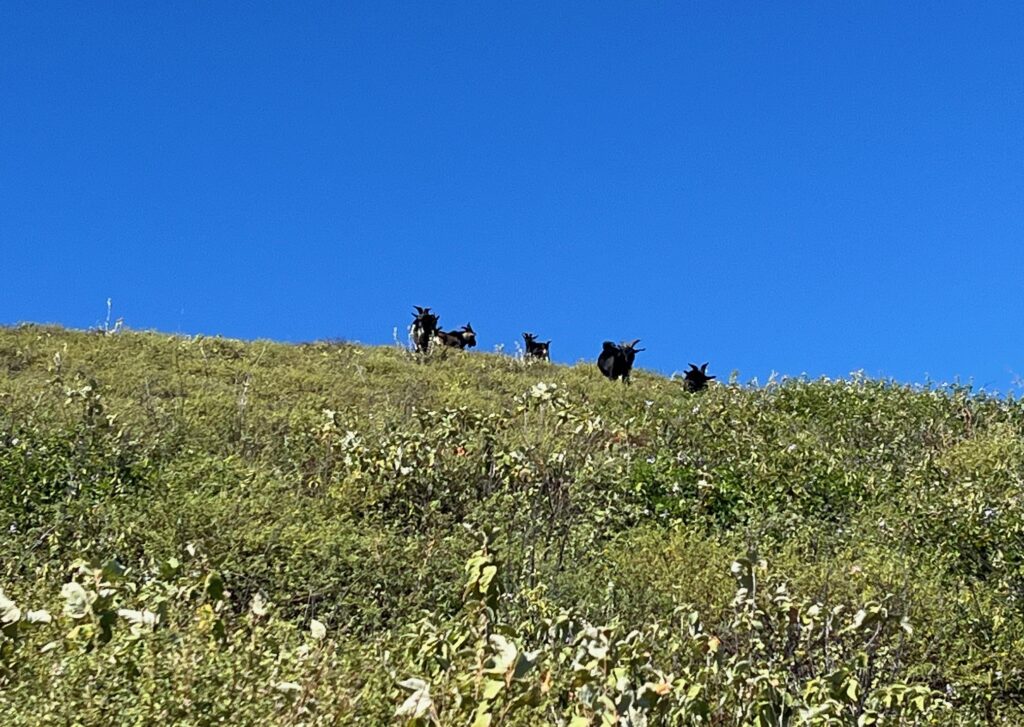
Goats roaming Salt Island
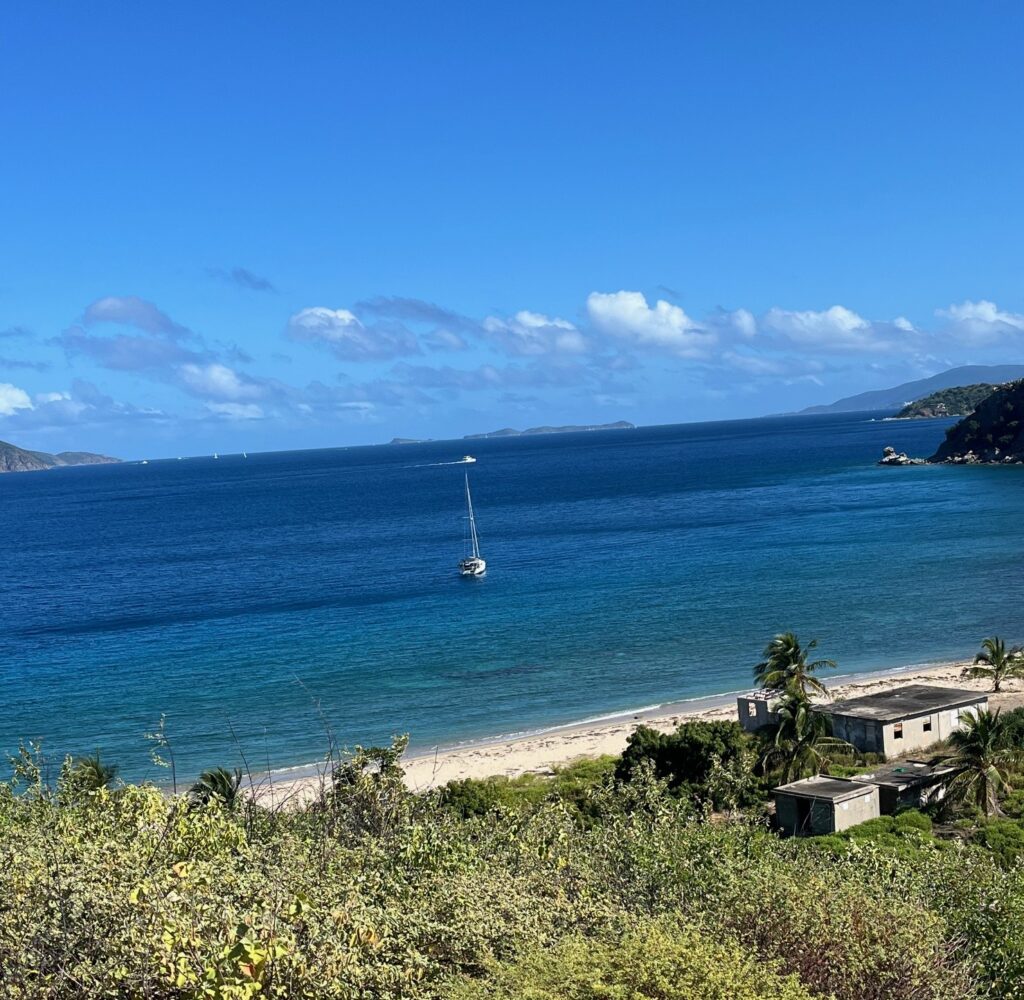
Meshuggana2 anchored at Salt Island

The BVIs consist of over 50 small islands, only 16 of them inhabited, spread across just 25 miles. We can easily sail from one island to another in just a few hours, making airport pick-ups almost effortless. As a bonus, there is a secure mooring ball field right next to the airport – our guests simply exit the airport, walk 10 minutes to the dinghy dock for a quick 2-minute ride to the boat.

Highlights in the BVIs:

Tortola is the largest island and home to Road Town, the capital and largest city in BVI and I recommend you avoid it. Unlike many other Caribbean capitals, Road Town has no charm and there is no reason to go there unless you are catching a ferry, buying groceries, hardware, boat supplies, or need medical care (more about that later).

Two places worth visiting on Tortola are:

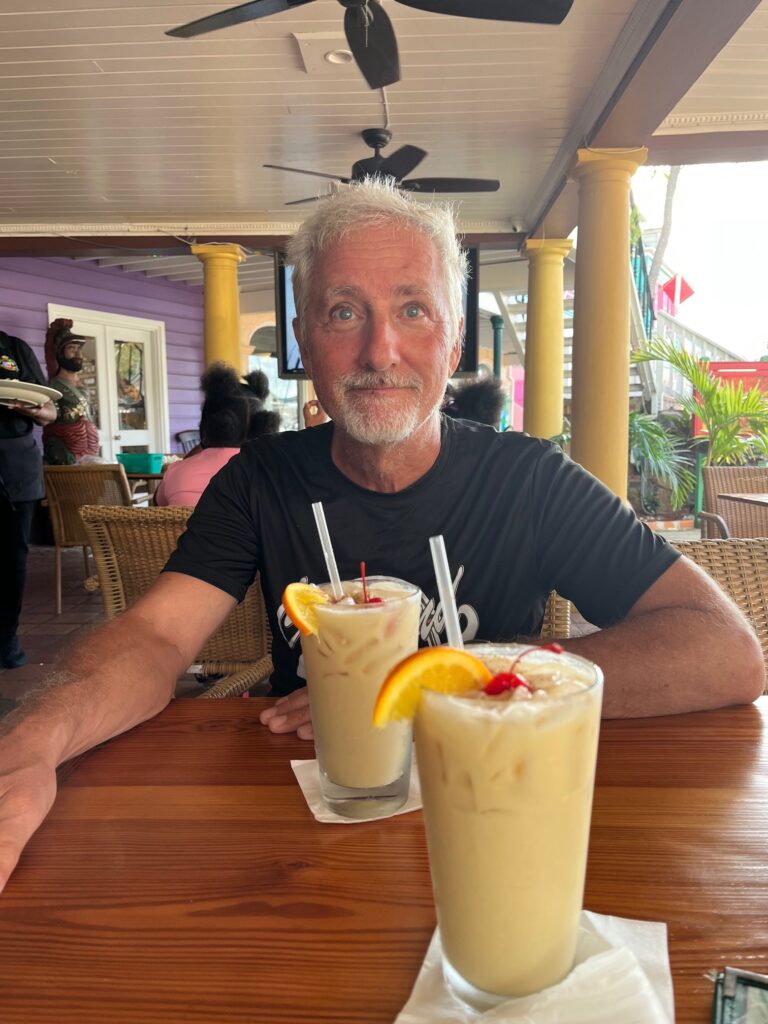
Soper’s Hole – a deep protected bay offering many mooring balls and marina for dockage. It has a grocery store and few small shops, restaurants, including the famous Pusser’s Rum restaurant and bar, featuring their signature BVI cocktail, The Pain Killer.

Pain Killers at Pusser’s in Soper’s Hole

Cane Garden – A huge bay with plenty of mooring balls as well as good holding for anchoring. A casual village with several bars and restaurants, the Callwood Rum distillery and the best laundromat in the BVI made this a frequent stop for us.

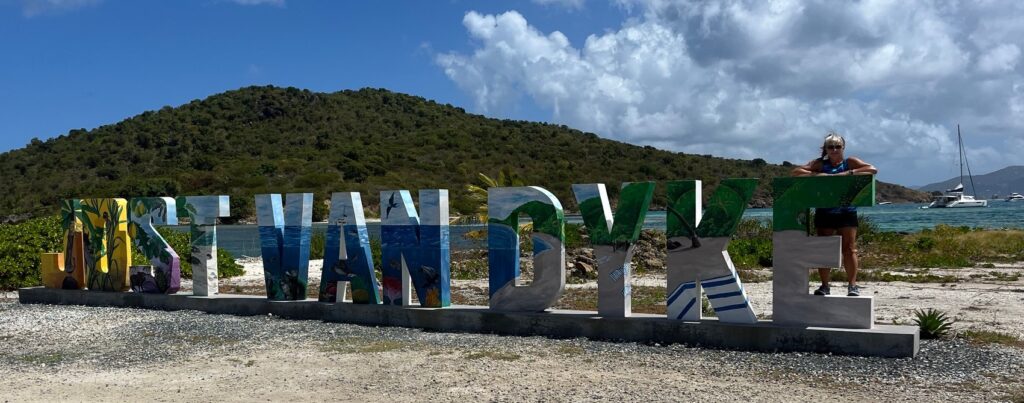
Jost Van Dyke is perhaps the best-known island in the BVIs, thanks to it being home to the bars that put BVIs on modern maps, Foxy’s and Soggy Dollar. When we visited 16 years ago, we swam to shore, drank reasonably priced Pain Killers, added some graffiti to the wall and swam back to the boat. Today both bars have been rebuilt after devastating hurricanes and have become booming commercialized party destinations for cruise ship and charter boaters. Both now have huge gift shops, expensive drinks and have lost some of their charm, but if you’re looking for the party, this is the place.

“Bugs Bunny Island”
Bevvies at the Soggy Dollar

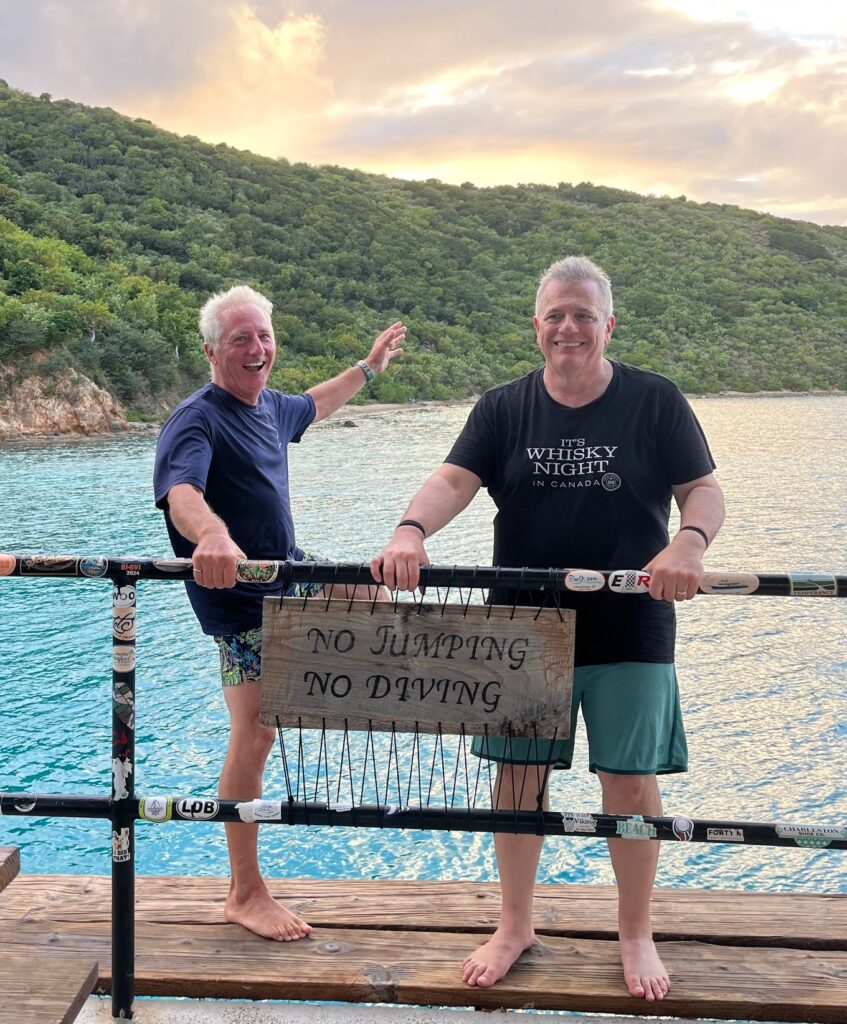
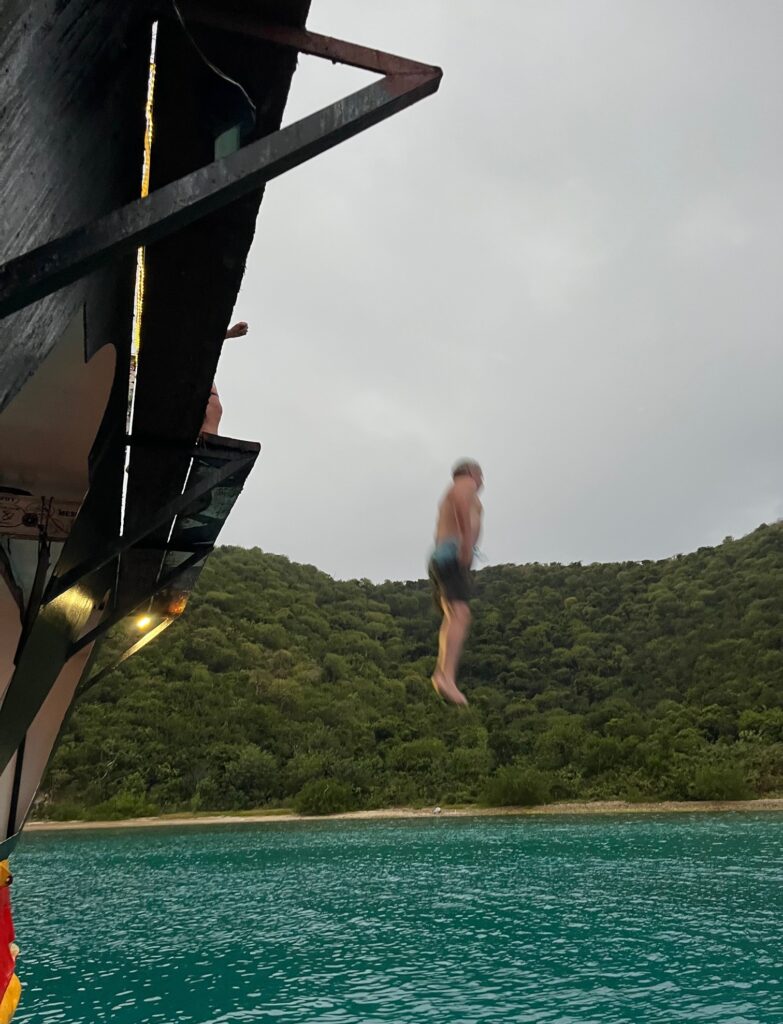
Norman Island – you can’t write about the BVI without mentioning the famous Willie T, floating bar and restaurant. It’s a decommissioned tanker, parked near shore and features a bar, kitchen two decks for drinking enjoyment. Although there is a sign stating “No Diving No Jumping”, of course, it’s the main attraction of the Willie T!

No, we didn’t see anybody jump….

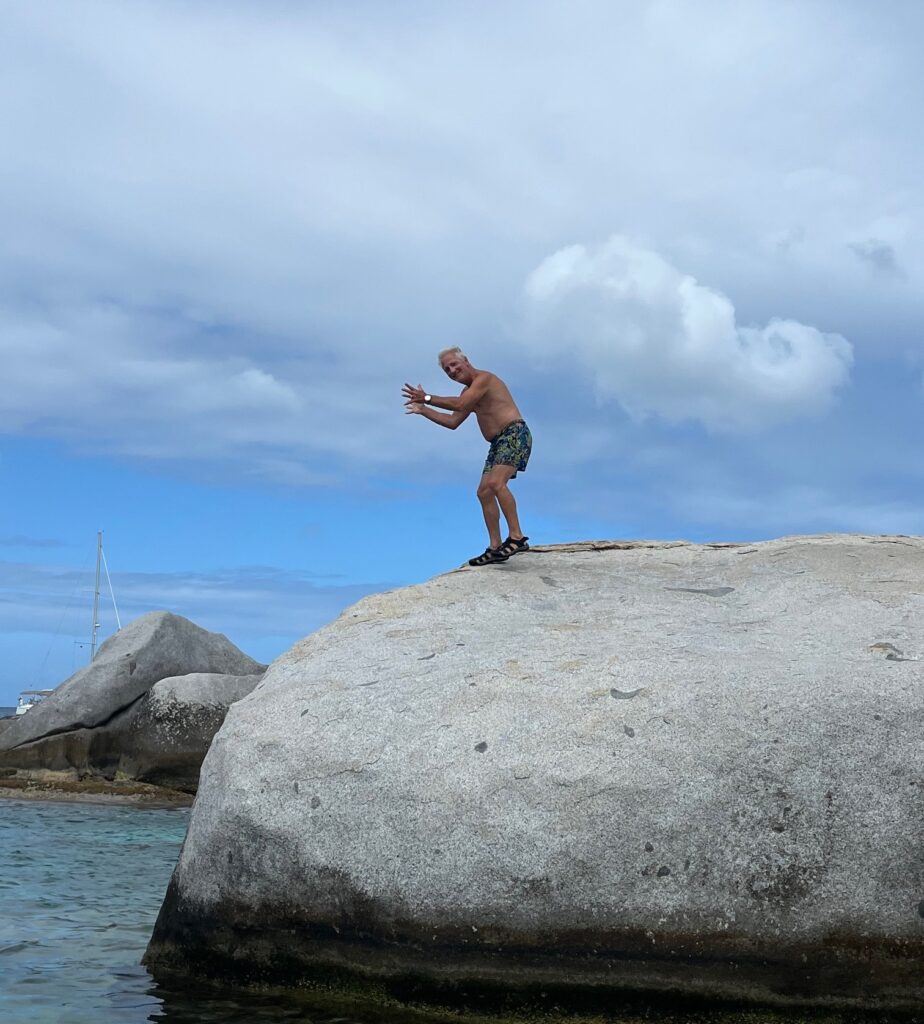
Virgin Gorda is my favourite island in the BVIs because of its diversity. At the southern end are The Baths, a stunning maze of giant granite boulders and hidden rock pools where waves crash dramatically through the gaps. It’s a must-see—just be sure to arrive early to beat the cruise ship crowds.

The Baths

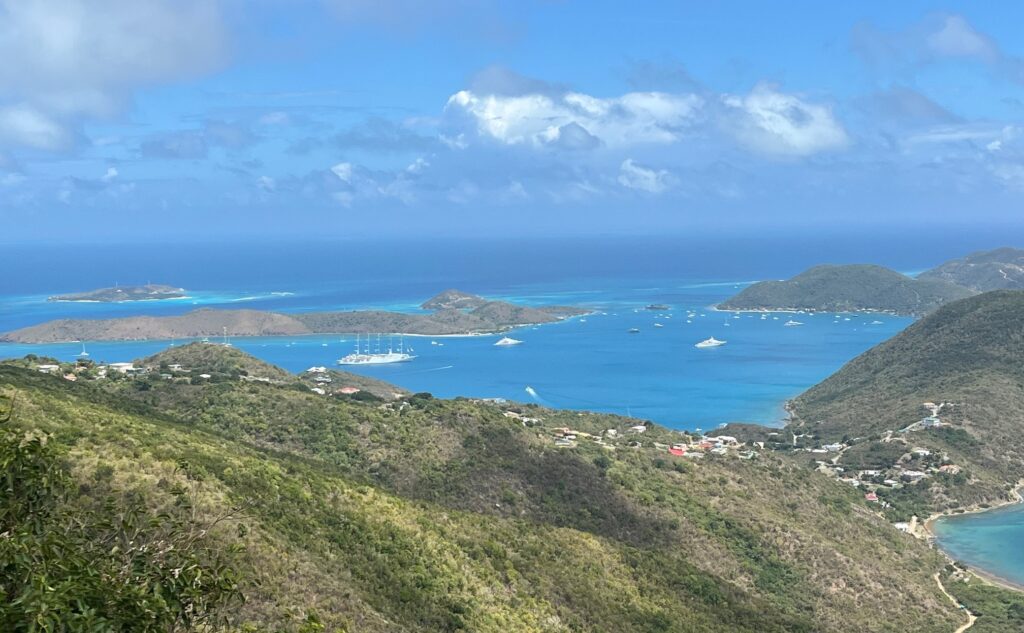
On the north side of the island is The Sound, home to Bitter End Yacht Club, Saba Rock and Leverick Bay, where it’s not unusual to bump into Sir Richard Branson having an afternoon refreshment when he takes a break from his private island next door. The Sound offers tons of safe, protected anchoring, ample room for water sports and a variety of bars and restaurants for happy hour and dining.

The Sound

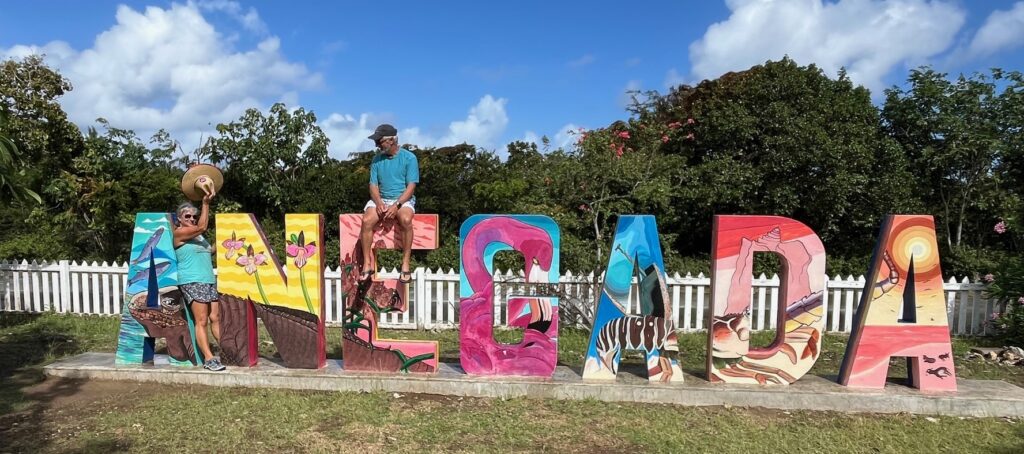
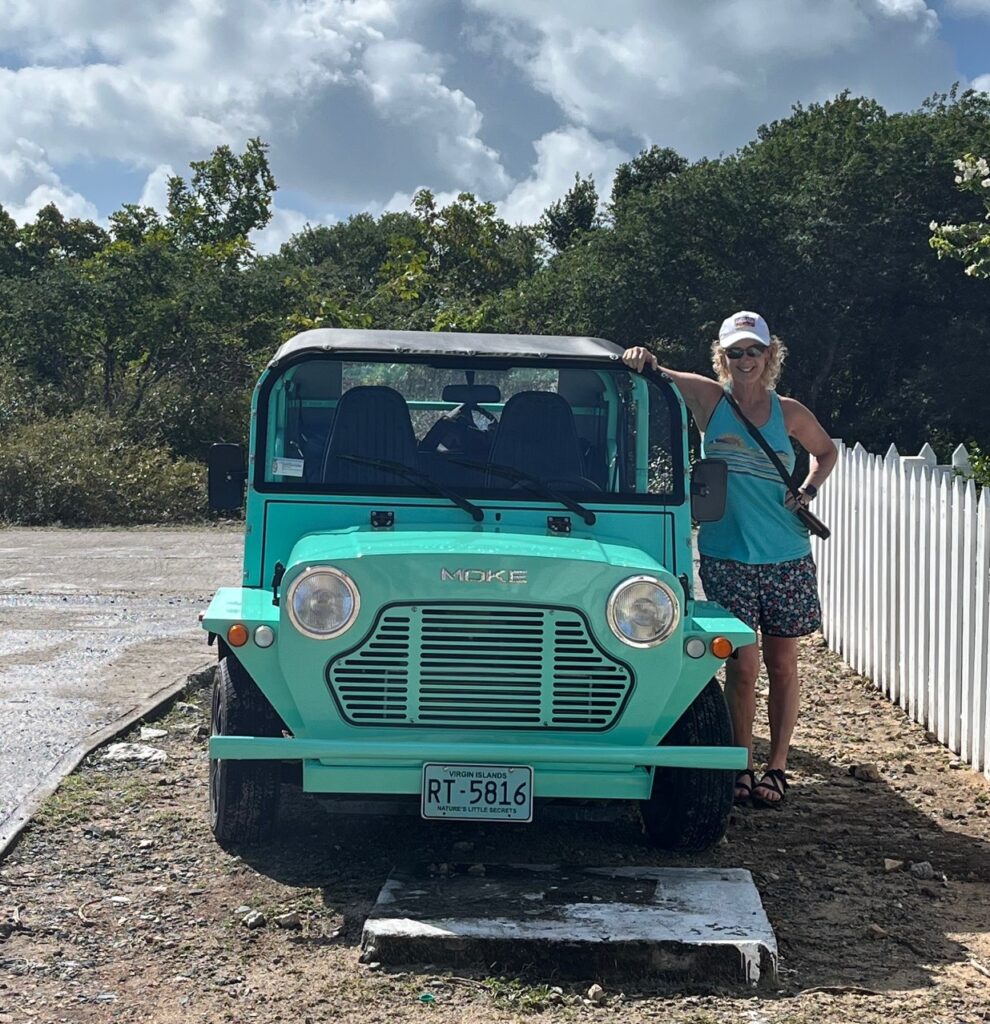
Anagada isn’t as much an island as much as it’s an atoll. Starkly different from the rest of the BVI, it rises only 28 feet above sea level and is made up of coral and limestone. Surrounding reefs are responsible for many shipwrecks, making it a favourite snorkeling, spearfishing and diving destination. These same reefs also make sailing there quite challenging, especially in unsettled weather. Long, flat and sandy, the best way to see this island is by renting a Moke and using plenty of sunscreen.

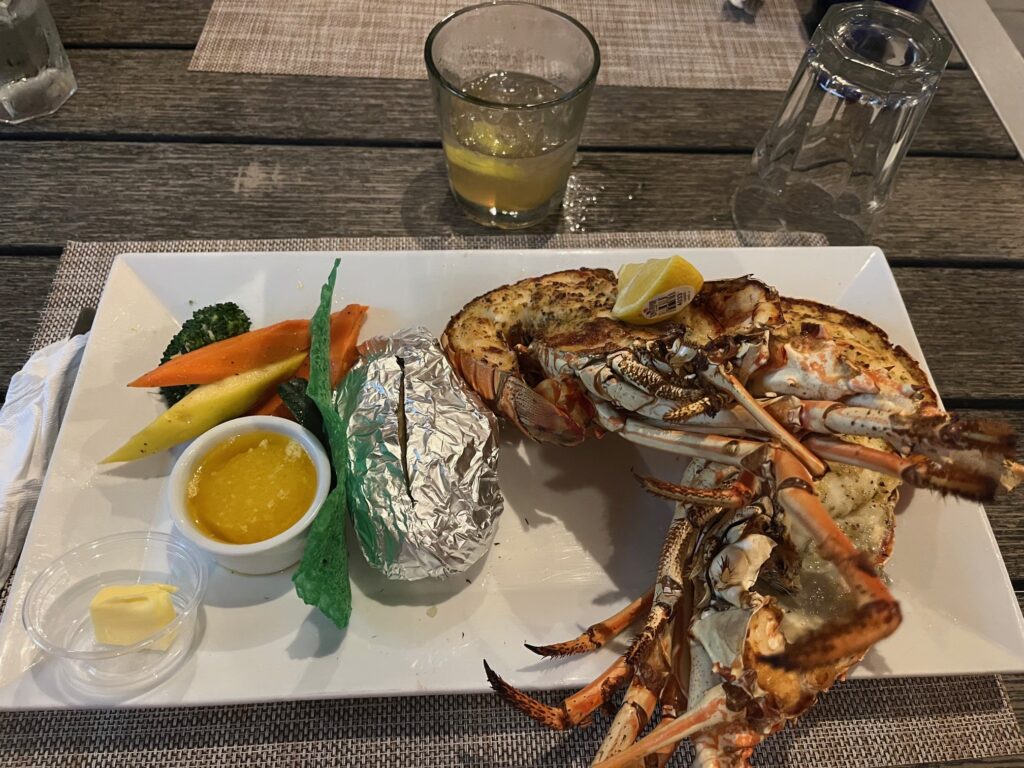
Superbowl Sunday dinner in Annagada – beats wings and chili!
The Moke!

Our BVI season was special mainly because we shared our adventure with friends, some there for the first time, some seasoned BVI-ers. However, my sailing season came to an abrupt and early end due to a medical emergency – a detached retina.

I started worry when I started seeing a sudden increase of “floaters” in my left eye. I searched for a local ophthalmologist and learned there was only one who visited the island about once a month. I booked an appointment about 10 days out and hoped for the best. Unfortunately, things got worse, and I could not wait any longer.

An optometrist in Road Town diagnosed a vitreous detachment, that is not dangerous but needs to be monitored. Thirty hours later my vision turned black and I phoned Toronto’s Sunnybrook Hospital and was advised to get home immediately.

The next 24 hours were a blur of ferries, taxis, and flights, ending in a middle-of-the-night arrival at home and surgery the next day. I then spent a week face down, 23 hours a day—eating, sleeping, reading. Unfortunately, the first surgery failed, I had a second, a vitrectomy, followed by two more weeks in the same face-down position.

While I was going through surgeries and recovery, Allen was left to single-handedly bring the boat back to Puerto Rico and prepare it for the upcoming summer heat and hurricane season. It was a very, very hard time for us, both physically and psychologically, with both of us feeling guilty for leaving the other yet being helpless to help one another.

But we made it. My family and friends all jumped in to help, from shuttling me to doctor appointments, shopping for groceries, making meals and just keeping me company. And Allen received offers from friends to come help with the boat, though at the end he chose to do it by himself with a bit of hired help at the marina.

Meshuggana2 is safely tucked in at the marina in Puerto Rico, Allen is home and endlessly busy with other boat projects. My retina has healed, but I’ve permanently lost most of my vision in my left eye and I am learning to navigate the world with vision impairment.

But life and adventure must go on. We are starting to plan our next sailing season starting at the end of November. This year we will skim through the USVI and BVI quickly, as there so much more to experience in the islands beyond.

Hello Puerto Rico – Part II

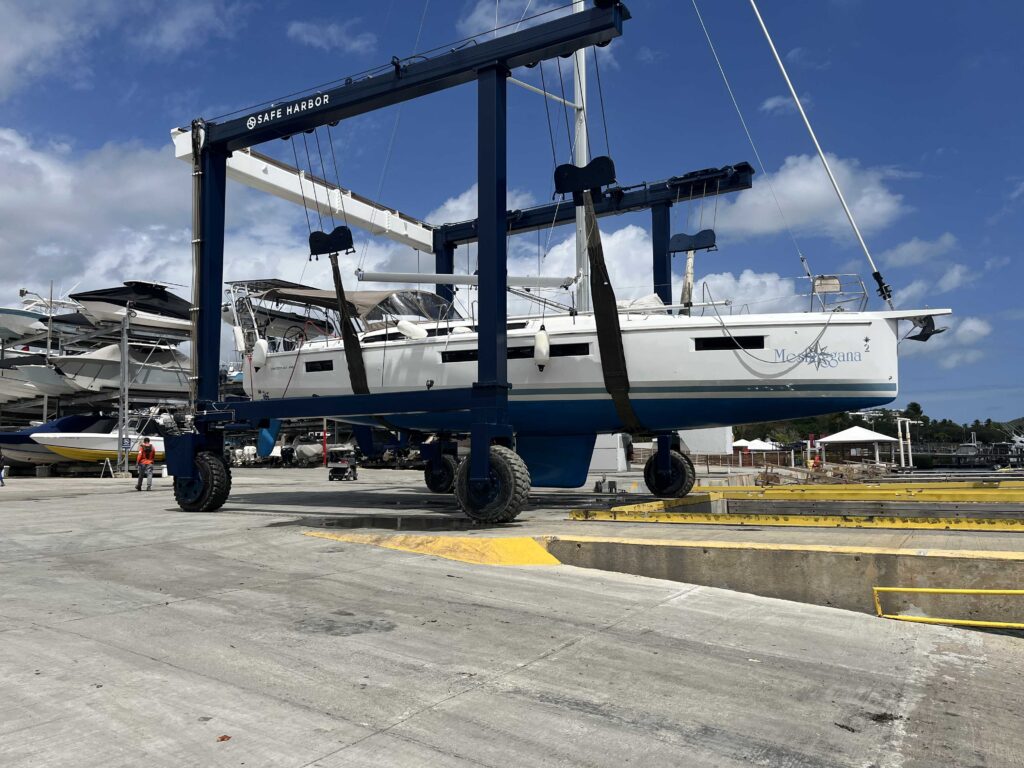
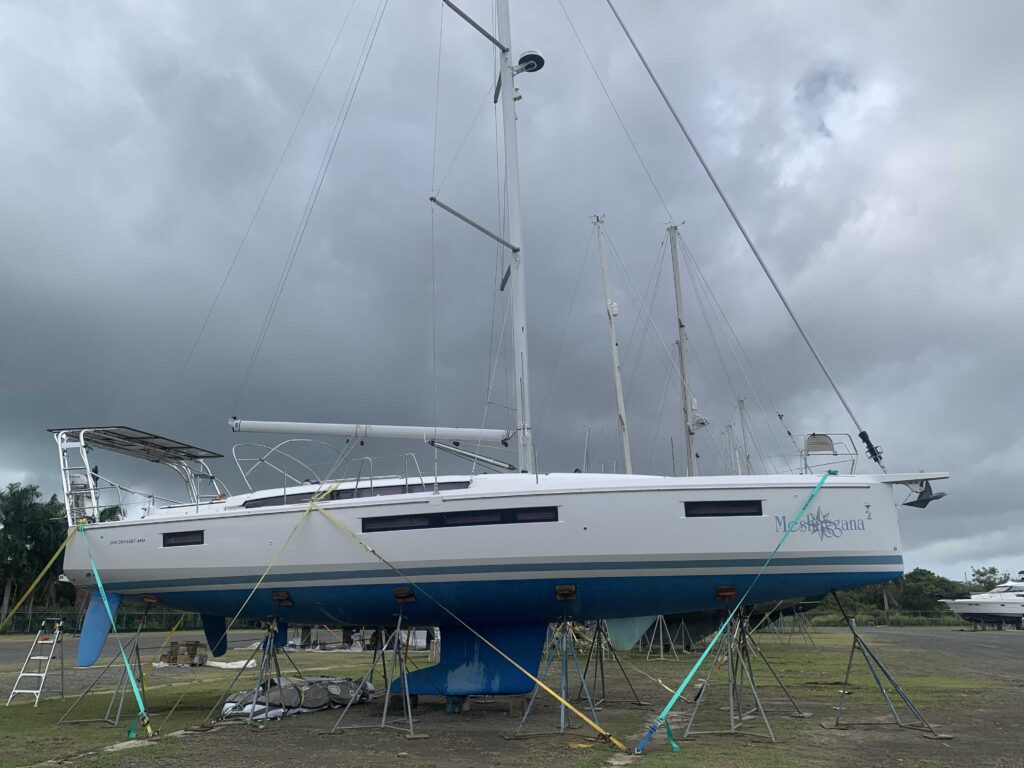
If you read my last blog post, you’ll know that one visit to Puerto Rico is simply not enough. On April 10, 2024, we hauled Meshuggana2 out of the water and spent the next few days preparing her for not only for a scorching hot Puerto Rican summer, but also hurricane season. We know very well how to winterize a boat for cold Canadian winter months, but “summer-izing” is a whole different process.

Haul-out Day
Tucked away and ready for hurricane season

Our main concerns were

  1. Ensuring the boat and everything on her is strapped down tight so nothing can go flying if hit with storm winds.
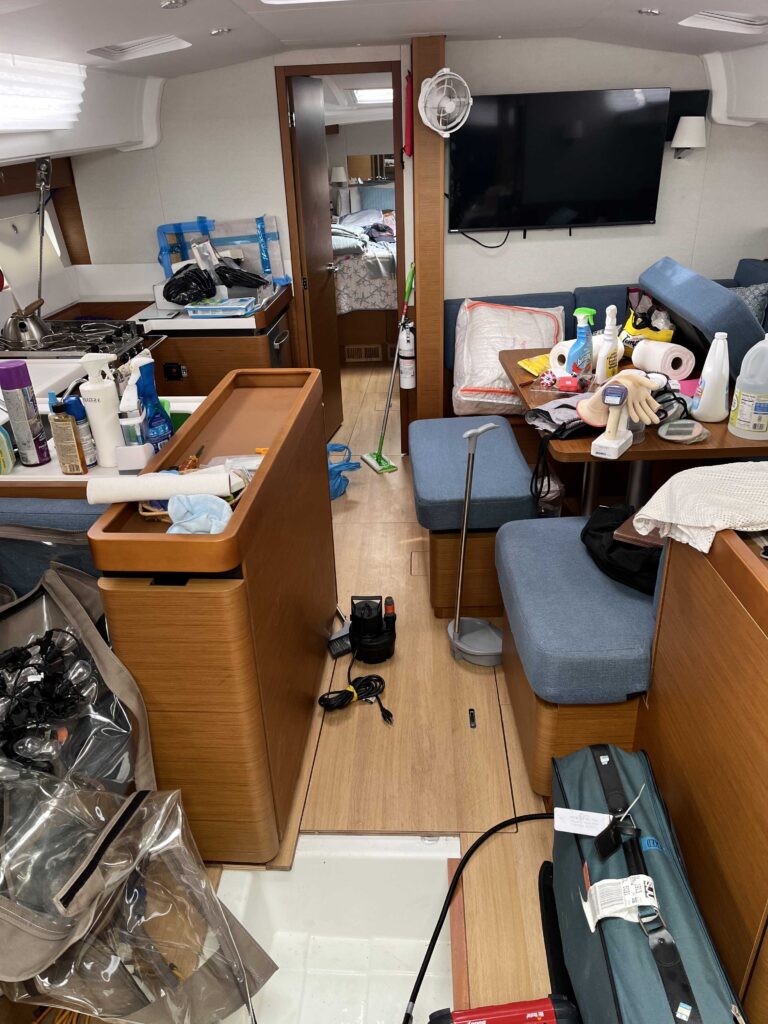
  2. Anything that can explode, spill or bubble over in temps topping 100 F is removed or contained. This includes any aerosols, liquids, gels including cleaning, cooking and toiletry products. I forgot to take home bottle of ibuprofen gel caps and returned to find one big blob!
  3. To avoid insect infestations, all traces of food must be removed and every surface scrubbed clean. We donated what we could to a food bank and the rest was either thrown out or given to local friends who didn’t mind taking half a jar of peanut butter.
  4. All cupboards, drawers and doors were propped open and cushions and mattresses rested upright on their edges to promote air circulation.

That’s a lot of work! And just a few months later, we had to do it all in reverse to get Meshuggana2 back in the water!

Hurricane season runs from June 1 to November 30, with the peak being August through October. Even when we are safely in Toronto, we still pay close attention to what’s happening in the South. Last summer when Ernesto hit Puerto Rico, he wasn’t yet the Cat 2 hurricane he would later become, but he still did significant damage, especially in Fajardo. Most of the island experienced wide-spread flooding and its already fragile power grid gave out, blacking-out most of the island. However, we got lucky that our marina and Meshuggana2 were spared with no damage at all.

Putting everything back – where do I start?!

On November 21,2024, Allen, Ziggy and I flew back to Puerto Rico, and spent several days cleaning, rigging and provisioning Meshuggana2. We “splashed” on November 26, ready for our next adventure – seeing the rest of the Enchanted Island by circumnavigating PR.

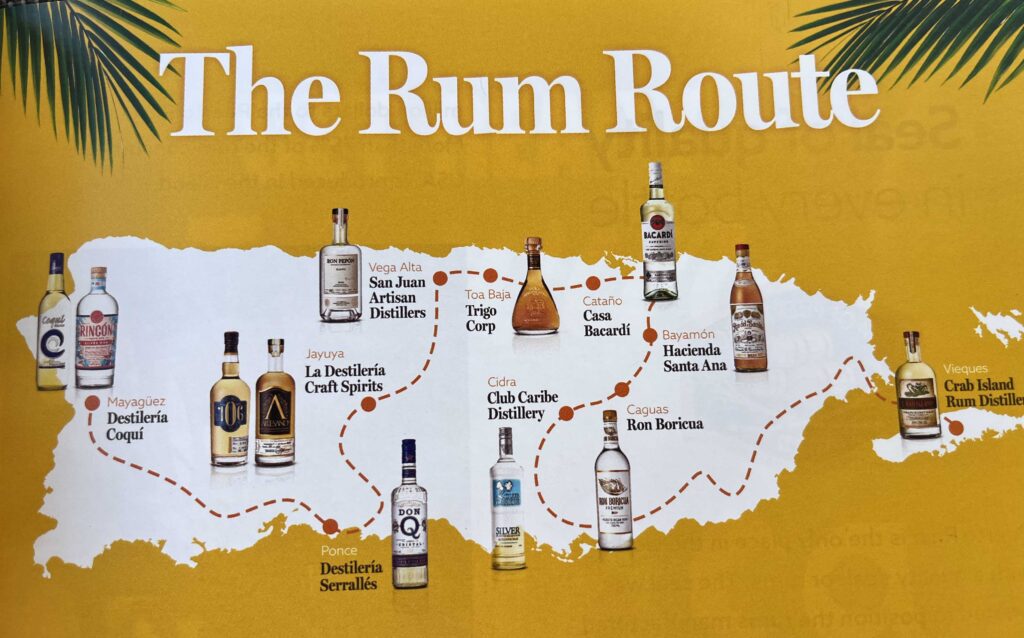
Heading south and then west, we kept PR’s magnificent mountain ranges on the starboard side. These volcanic mountains cover most of the island’s interior and are home to a growing agro-tourism industry including haciendas (plantations) and fincas (ranches) producing, among other crops, coffee, cocoa, pitahaya (dragon fruit), guava, pineapple, dairy and of course, rum.

Rum Route is part of PR’s growing Agro-Tourism industry
Guava plantation

Sailing west along PR’s southern coast is enjoyable, with prevailing winds behind us and good ports to pull into every evening. These small towns all have a beach-town vibe, with beachside bars and restaurants, small shops, at least one convenience store selling a little bit of everything. They all have guest houses and inns, catering to a more Puerto Rican clientele vs the large cities with masses of foreign tourists. However, we were there a few weeks before Christmas, the off-season, so not much was open. One shop owner told us as soon as schools get out for Christmas break, the towns will be swarming with people.

Beach in Patillas

Puerto Patillas – we rated this a 4-Star anchorage! First, it offered good holding for our anchor. A huge reef provided protection from sea swells, and it had a decent spot to beach our dinghy on shore (I’d give it 5 stars if it had a dingy dock).  It’s a cute town with simple, but good restaurants and a lovely public park and large sandy beach. However, the town did get loud on the weekend, with bars and traffic running until midnight – but it kinda made it feel like home – I guess I’m still a city-girl at heart.

Boat Parade

Salinas came recommended by fellow cruisers, and it clearly has a large cruising-resident community inside a massive lagoon filled with perhaps 100 boats. But that’s not our thing, so we spent one calm night at anchor and moved on.

Ponce, named after the explorer Ponce de Leon, is PR’s second largest city. Not nearly as large as San Juan, it still offered many conveniences of a larger town including access to a marina, taxis and Ubers and shopping for everything from large grocery stores to a mall with Sears and JC Penny (I didn’t know they still existed!). Old Town by the port must have been beautiful at one time, with lovely Spanish architecture, and was probably a bustling port city at one time; however, it looks like hurricanes have taken their toll and now many buildings are damaged and abandoned or occupied by auto repair shops or machine shops.

Incredible views of Ponce from Castillo Serrallés
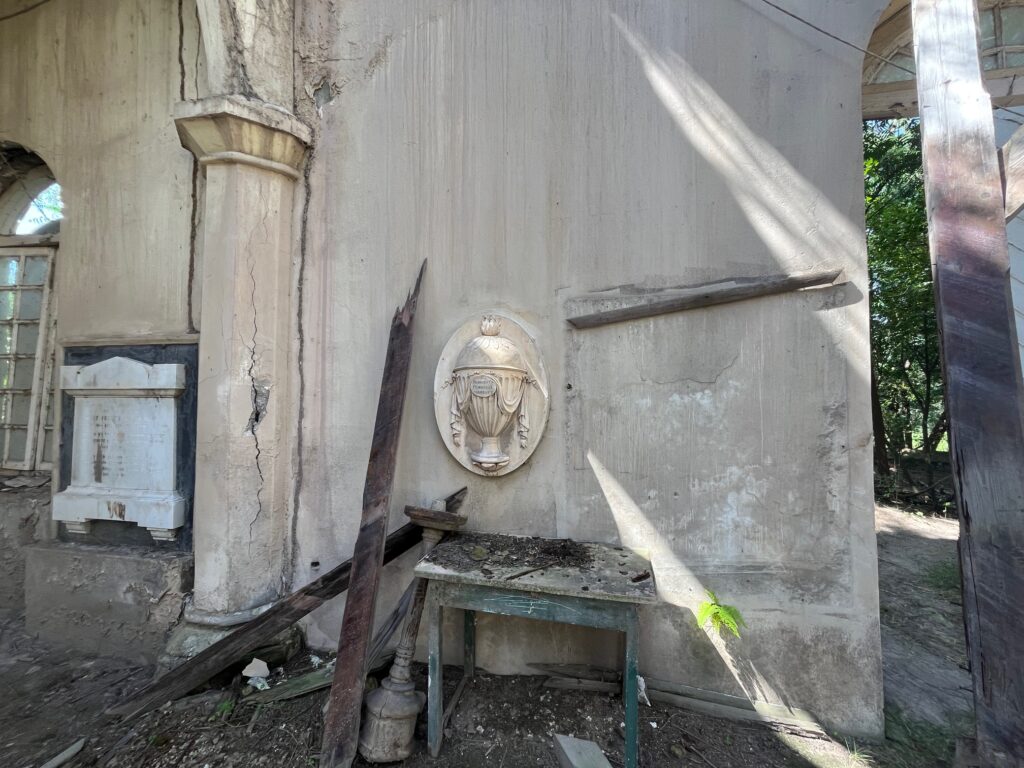
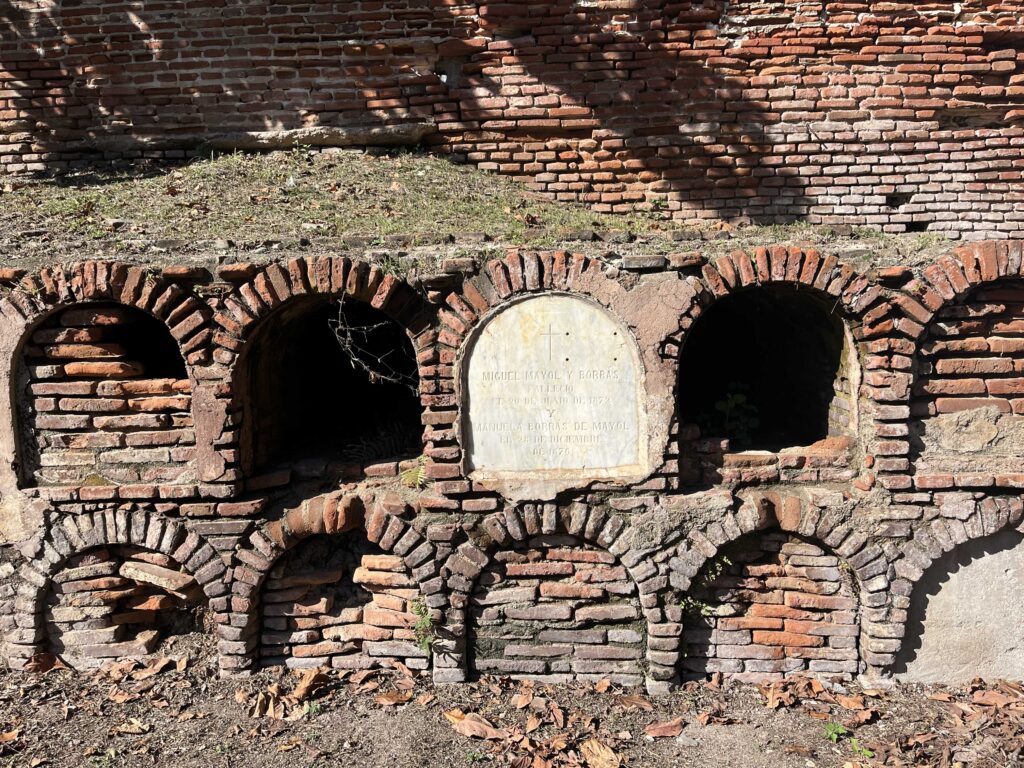
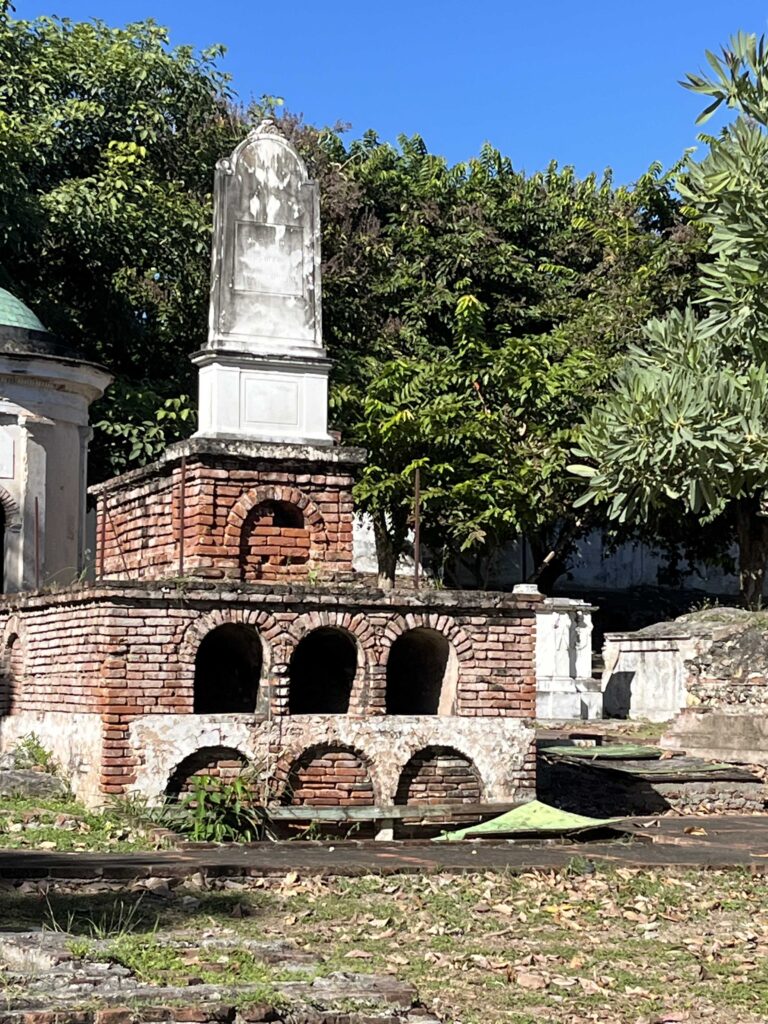
Paupers’ graves in a once-abandoned cemetary in Ponce
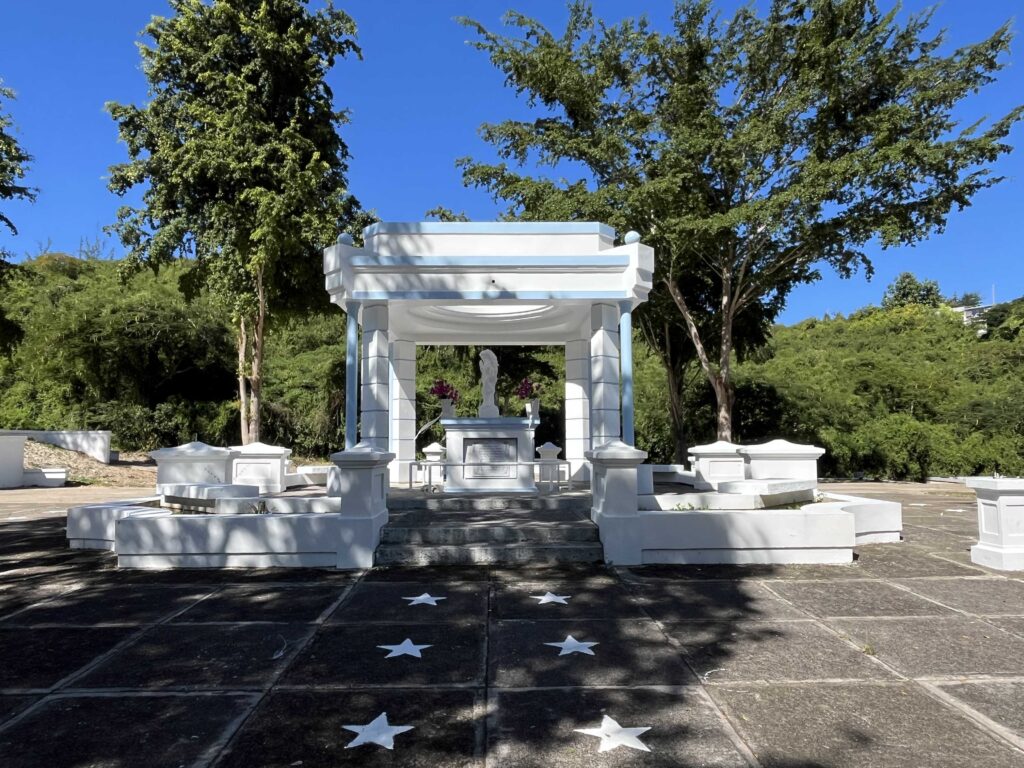
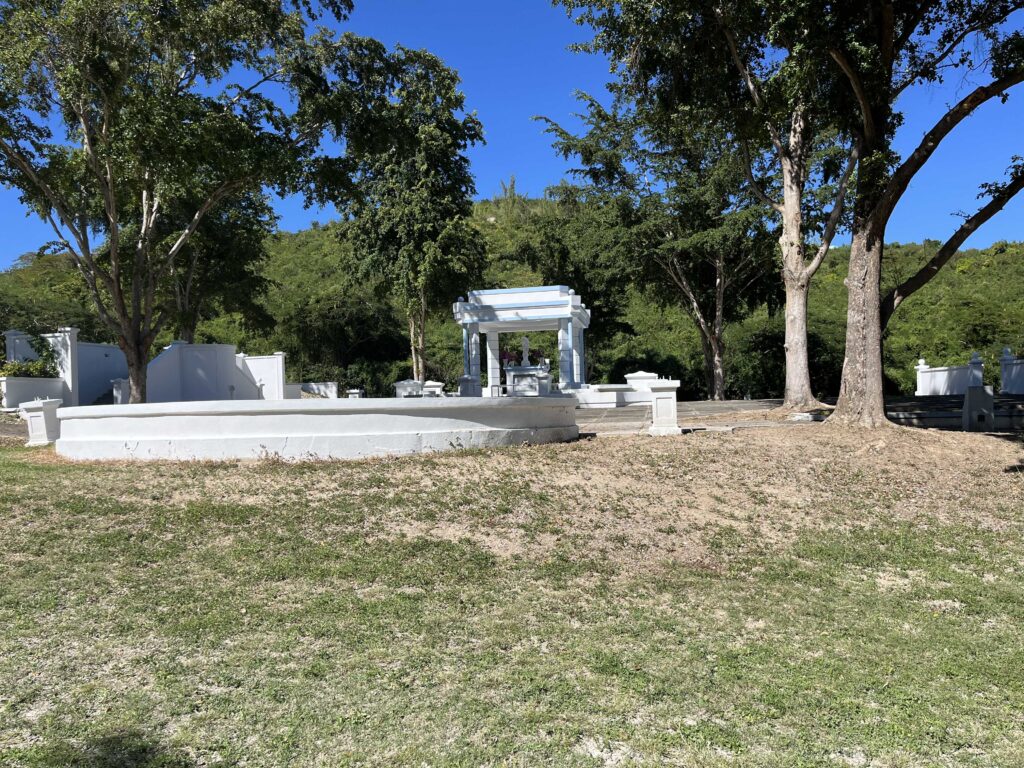
A wealthy family’s gravesite in Ponce

About a mile further inland is another “old town”, completely different. Here you find more lovely Spanish architecture, grand hotels, restaurants, shops, a central cathedral with a large square that hosts concerts, children’s carnival rides and street vendors. We went on a Rum Tour, were driven around downtown and the surrounding mountainside, and to the original Serrallés family home, the founders of Don Q rum. We learned that Don Q is the favored rum in PR (not Bacardi!), and that the Daquiri cocktail was invented in Ponce, using Don Q. Unfortunately, the mansion was closed for a private function and the distillery does not gives tours.

Mameyes Memorial

Our tour took a somber turn as we learned of a tragic event in Ponce’s not too distant past, as we visited the Mameyes Memorial. Mameyes was a community where Ponce’s poorest residents lived and built their homes on a sandstone mountainside. On October 7, 1985 at 3 AM, after days of torrential rain, the mountainside gave way taking with it approximately 175 homes and potentially hundreds of people, although the official death toll is 129. Despite rescue efforts of neighboring communities, local government plus additional assistance from United States, Mexico, France and Venezuela, just 50 bodies were recovered. The area now serves as a memorial and mass grave to victims buried under the mud and rock.

What is most eerie about the tragedy is that just 3 days before the landslide, children in the Mameyes school were asked by a teacher to draw “whatever comes to mind”. Several drawings were not typical children’s art, but were drawn with dark earth colors, featuring crosses and turned over houses, perhaps as a prophecy of the coming disaster. These drawings are now exhibited in a Ponce museum.

Just another beach

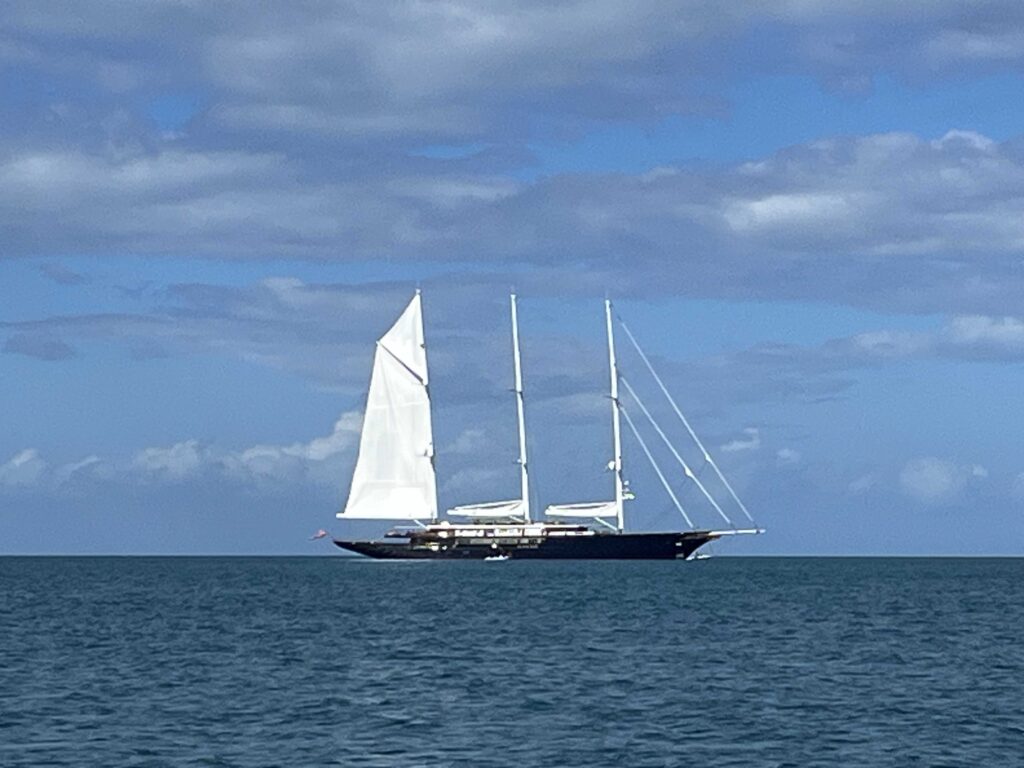
We continued to move west and found two more lovely anchorages, La Paguera with a cottage-country vibe and close to another bioluminescent bay, as well as Boqueron, another small beach town mostly closed before the Christmas holidays. Our big surprise here was an unexpected neighbor dropping anchor nearby – Koru, Jeff Bezos’s more than 400-foot sailboat! We watched their tenders go back and forth to shore all day and evening, so we assumed Jeff was not aboard, but likely the crew had shore leave and were enjoying some beach time.

Koru, over 400′ long
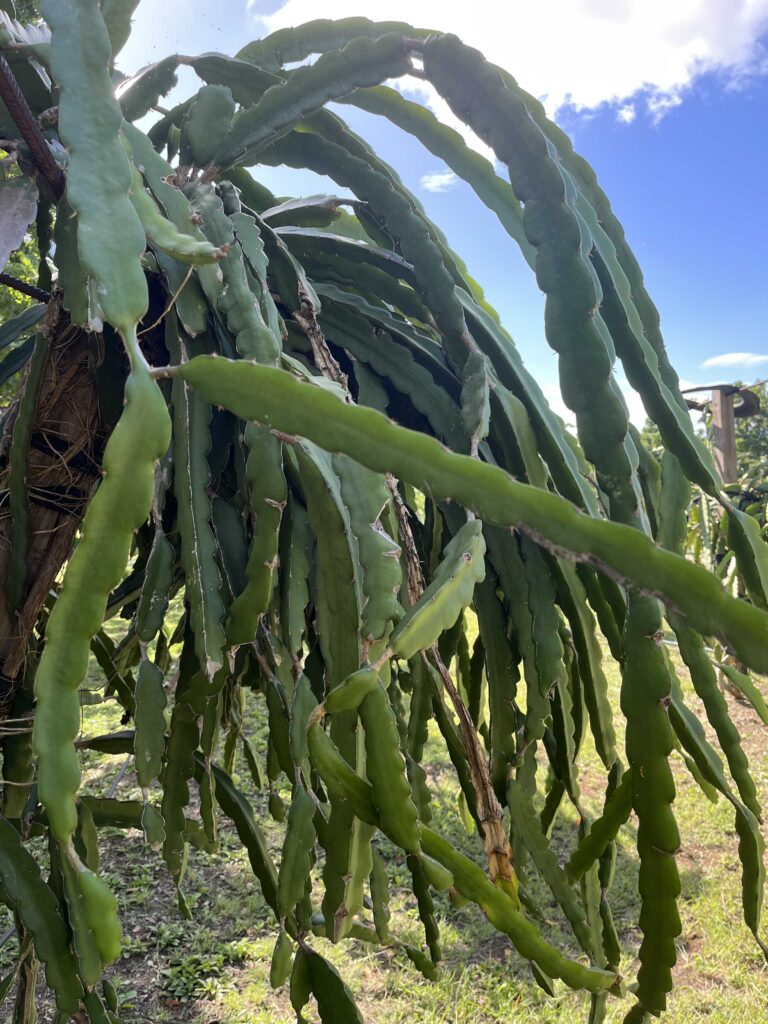
Pitahaya plants only bloom at night

Here we had an opportunity to rent a car and explore beyond the coast.  A highlight for me was visiting and touring Hacienda Verde Tahiti, a farm specializing in pitahaya, better known as Dragon Fruit.  Ingrid, one of the owners, walked us through the farm and the pitahaya fields, as well as introduced us to her sheep and apiary, that will soon produce sheep milk products and honey. Originally the hacienda produced Tahiti Limes, but in 2017 Hurricane Maria completely destroyed the crops. Now, in addition to growing and exporting pitahaya all over North America, the self-sustaining hacienda produces wholesale plants for nurseries and offers eco-tourism “glamping cabins” with ocean views – yes please!

Glamping Cabin in Hacienda Tahiti Verde
Yes please!

As we headed north along PR’s western coast, the Mona Passage was playing her unpredictable games, and we couldn’t stay there as long as we hoped. After another night-time passage, we arrived in San Juan Harbour, this time full of anticipation for my family arriving for the Christmas holiday.  This year, in addition to traditional holiday celebrations, we went on a few family outings to experience more of this fabulous island.  

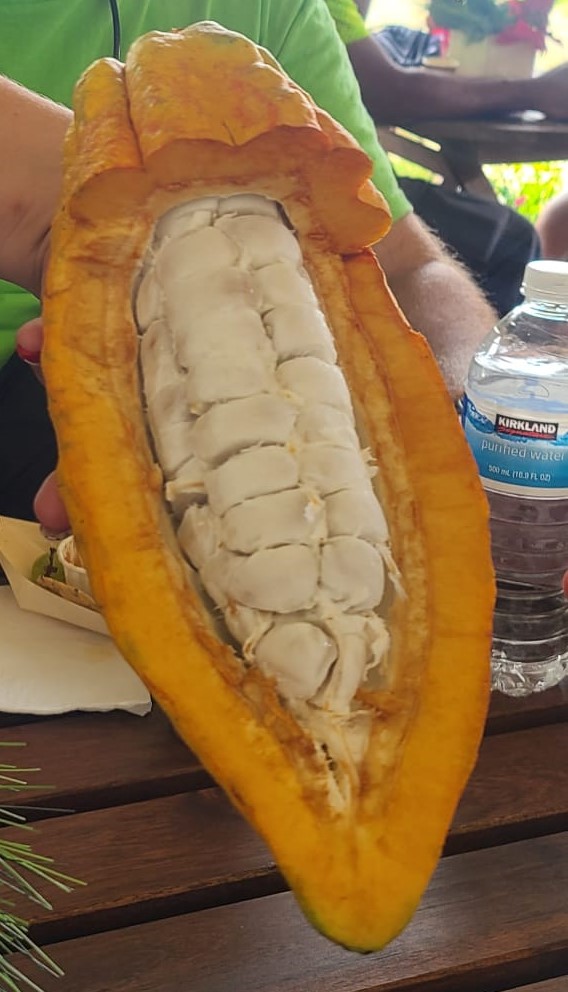
Inside of a cocao pod
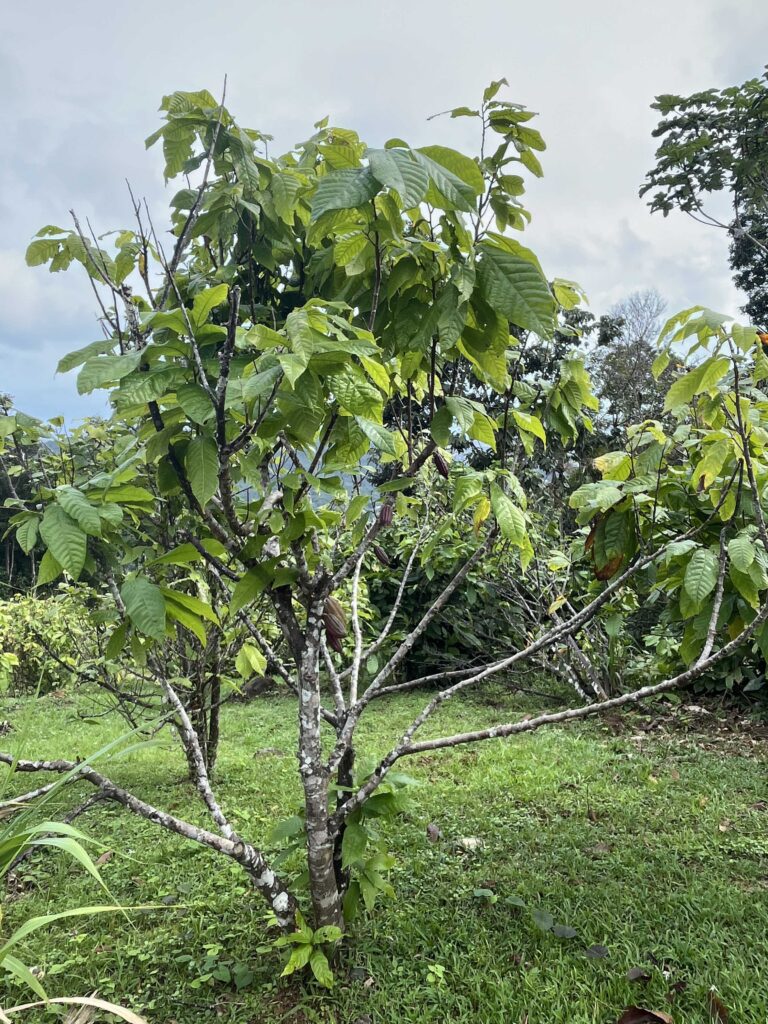
Cocao Tree

After a somewhat scary drive up the side of a mountain on deeply pitted dirt roads in our rented sedans, we reached Hacienda Chocolat, where an ATV picked us up and took us even higher up the mountain to the hacienda. But it was worth the drive as we then walked among cocao trees, learned about cocao production and later sampled cocoa in various refined stages. Fun Fact: almost all ”chocolate bars “commercially produced contain little to no chocolate. Next time you buy a Hershey or Mars bar, read the label and you will find that cocao or cacao powder is typically one of the last ingredients listed, meaning while it might be a delicious candy, it’s not really chocolate. After sampling the real stuff, I agree – there is no comparison

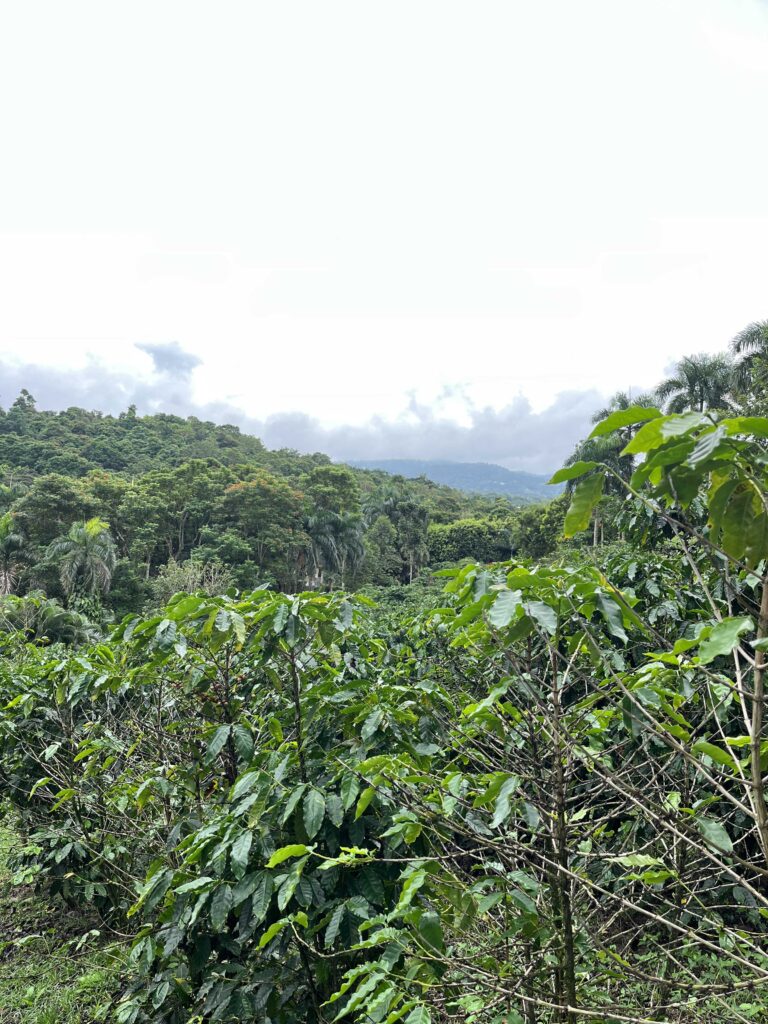
Coffee Trees
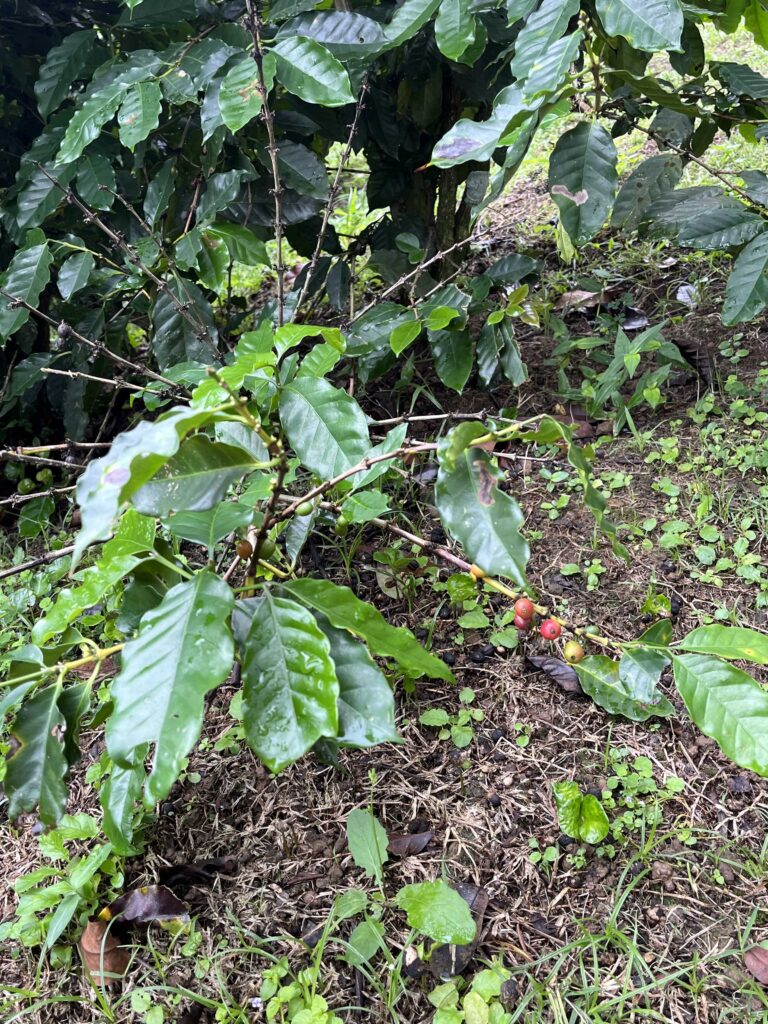
A few coffee beans are ready to be harvested
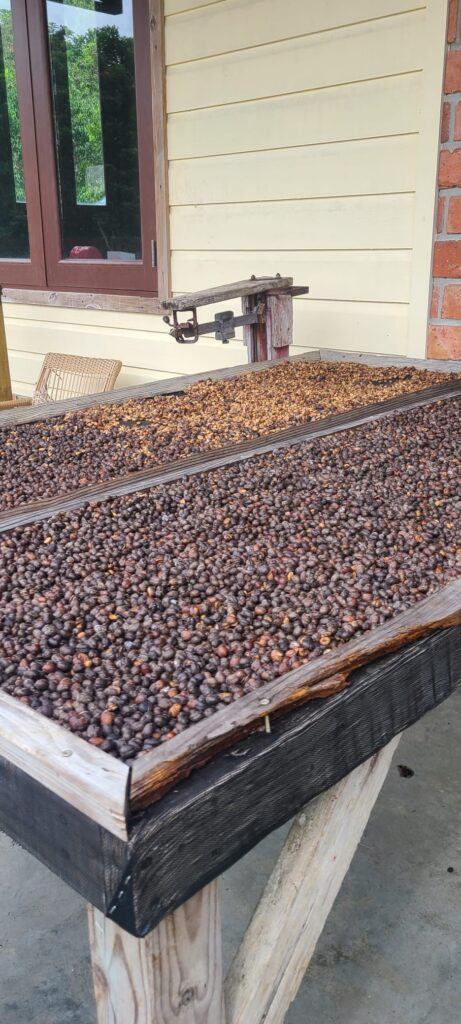
Coffee bean processing

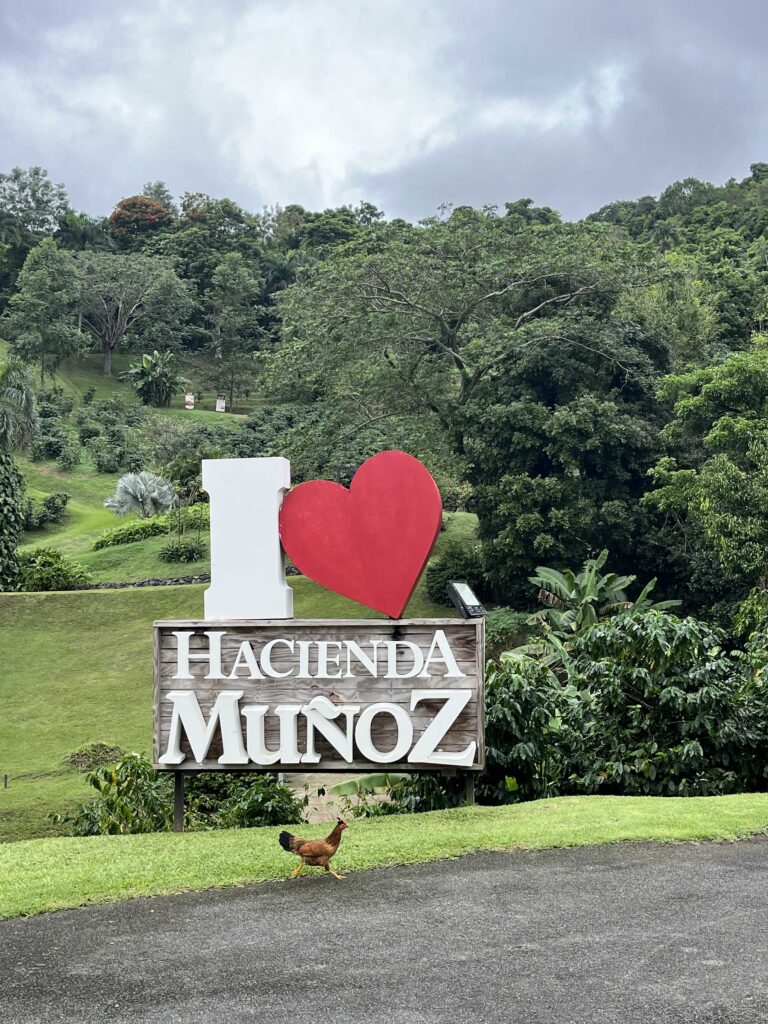
Puerto Rico is known for producing excellent coffee and this means no trip to PR is complete without a tour of a coffee plantation.  After another drive into the mountains, we arrived at the Hacienda Muñoz. Our guide walked us through fields of bush-like coffee trees, and despite it not being peak season, several trees had ripe, red berries. For this reason, all coffee bean harvesting at Hacienda Muñoz is done by hand, as is much of the bean processing. We learned that in PR, brewed coffee is always hot and black, and a real Puerto Rican would never put sugar or cream into their cup. After sampling I agree that this coffee is much better than Tim Horton’s, but I think I still prefer to add some cream to mine.

Family!

This was a tough Christmas for us as it was the first one without my father, but spending time and sharing adventures together with my family made it special, and I’m sure Dad approved. We wrapped up a wonderful week of Christmas family time, but eventually everyone had to go their own way.  And it was time for Allen and me to move east and begin new adventures in new places. We still love Puerto Rico, and will be back again.

Hello Puerto Rico – Isla del Encanto!

The Island of Enchantment was never on our list of must-go destinations when planning this trip and we’ve discovered that PR is not a popular destination for cruisers heading south and most stop in Dominican Republic or continue heading directly to Grenada.  We really did not know much about PR, but chose to end our season on PR’s east coast for entirely practical reasons.

We purchased Meshuggana 2 from a Miami based yacht dealer, who also has an office in Fajardo, PR, inside the largest marina in the Caribbean. Since almost every new boat requires warranty work, and Meshuggana 2 was no exception, we decided to haul-out in Fajardo where we’d have good access to marine services. The marina had excellent reviews, and our insurance company approved land storage here for hurricane season.  We booked haul out for April 10, 2024 and flights home a few days later. But first, we needed to get to the far east end of PR from Samana, Dominican Republic, with the infamous Mona Passage between us as we felt the pinch of time. 

For much of our 2023-2024 sailing season we experienced less than ideal weather conditions and were forced to wait in protected bays far longer than we wanted to be there. There is a saying in the sailing world: plans are written in sand at low tide. We now had firm plans as we pleaded with Mother Nature to be kind.  And this time she granted our wish.

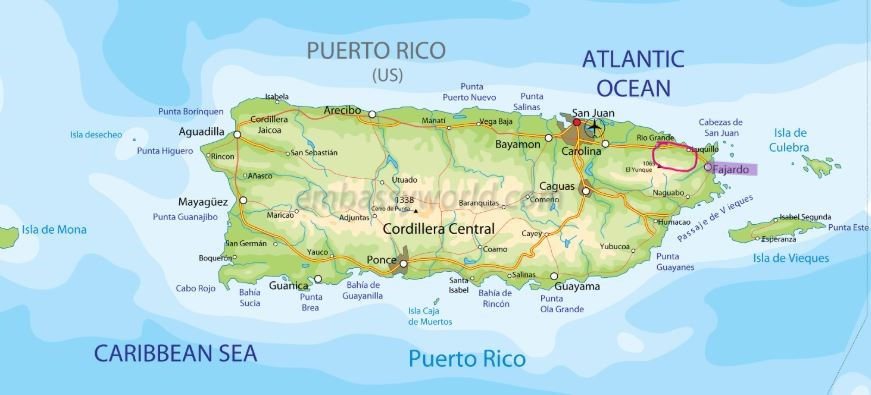
Fajardo on East Coast
El Yunque Rain Forest in red circle

When exiting the Dominican Republic, most sailors turn south and navigate through the Mona Passage, known to be unpredictable at best and treacherous at worst, as it funnels the mighty Atlantic between two land masses, Dominican Republic and Puerto Rico, into the Caribbean Sea. Sailors usually turn east and sail along PR’s southern shore enjoying bluer, calmer, warmer Caribbean waters and many towns and safe ports along the way. The alternative route is the North shore, with big Atlantic swells, north wind and absolutely no ports between Samana, DR all the way to San Juan, making this a more than 24-hour non-stop journey.

As I mentioned, Mother Nature was kind to us and after nearly a week of waiting, we finally got a favorable forecast with gentle offshore winds over a scant 24-hour period. At first light on March 20, 2024, we left Samana, DR and set sail for an overnighter to San Juan.

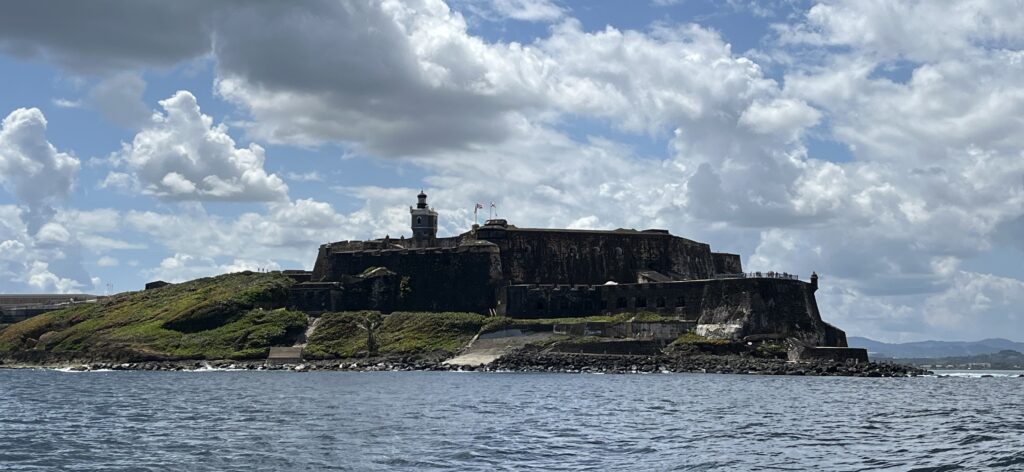
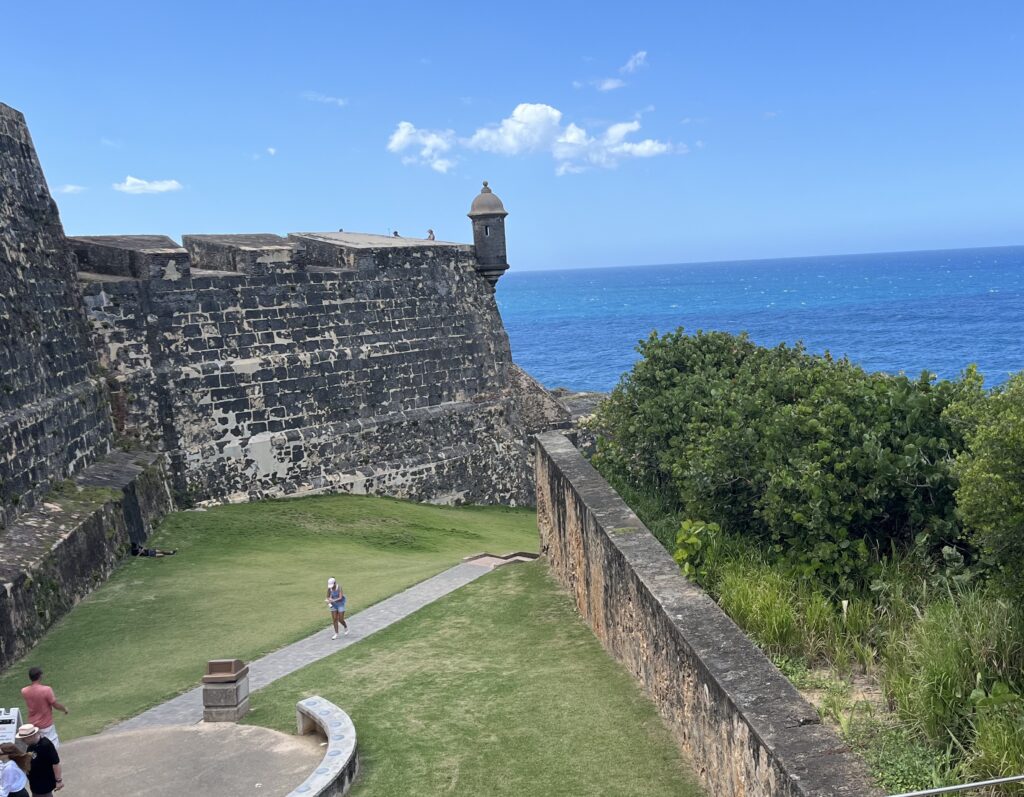
The passage was not an easy one; however, we’ve gotten good at this. As the sun rose, revealing PR’s magnificent mountains and north coast, we almost forgot the rough night. A few hours later we sailed past the imposing walls of El Morro, the fort that has protected San Juan and it harbour for centuries, as we entered San Juan Harbour. As expected, San Juan is one of the busiest harbours in the Caribbean, bustling with industry, freighters, cruise ships, tourist boats and of course, other sailors like us.

El Morro wall
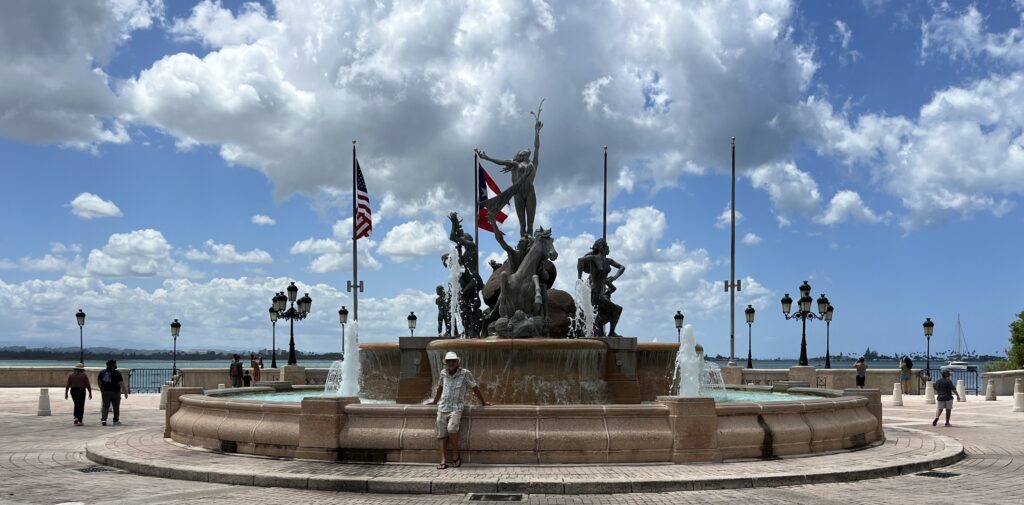
Raices Fountain representing Taino, Spanish and African heritiages
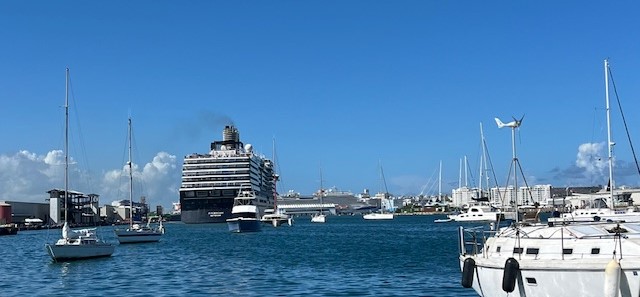
One of many cruise ships in SJ Harbor

Now we had a good problem to solve – Fajardo was only a 5-hour sail from San Juan, and with about 3 weeks before haul-out, we had some extra time. What to do? Explore Puerto Rico, of course!

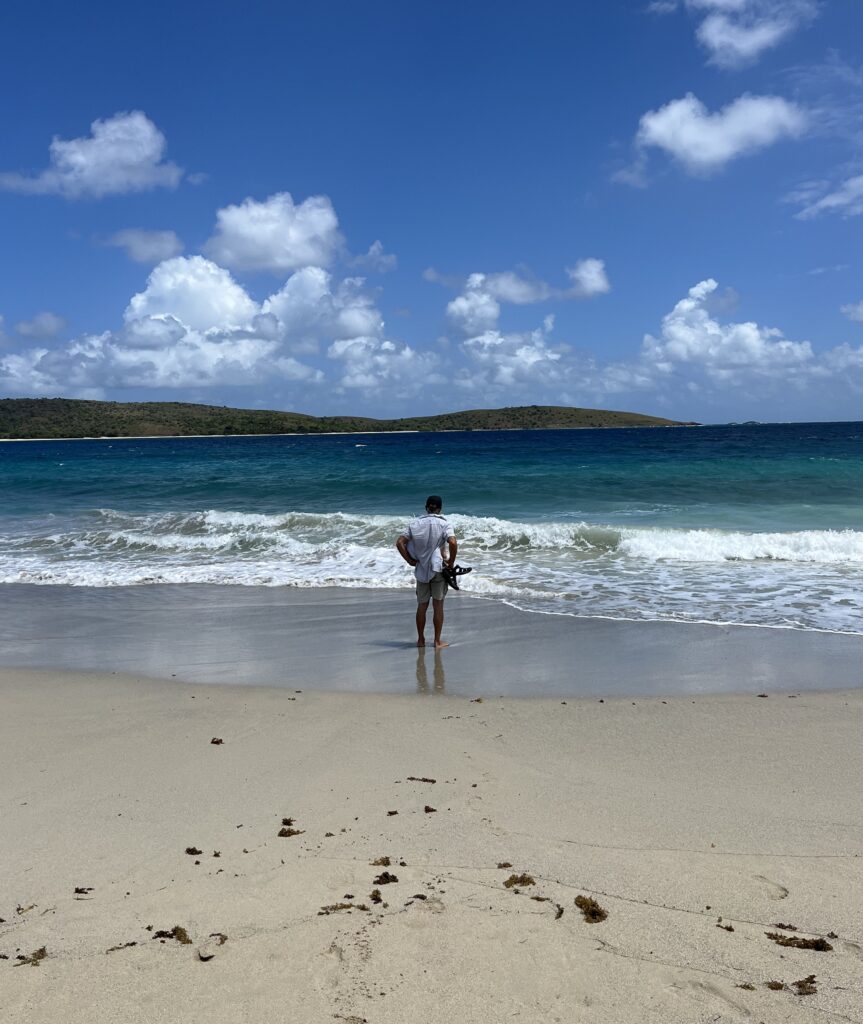
We spent those weeks exploring San Juan, Fajardo and the Spanish Virgin Islands of Vieques, Culebra and Culebrita. After these three weeks, we came to realize this was not enough and we would need to see more Puerto Rico next season.

We hauled the boat as scheduled, flew home and spent Spring and Summer home in Toronto. We returned to Fajardo in November 2024, launched the boat and continued our PR adventures by both land and sea.

I’ll share highlights of our adventures, but first a little history to better understand the island.

Puerto Rico, an island of only 3500 square miles, is in the West Indies. Taino and other indigenous people occupied this land as long as 4000 years ago; however, in 1493 Christopher Columbus landed here on his second voyage and later, in 1508, Juan Ponce de León sailed into San Juan Bay, naming the island Puerto Rico (Rich Port). For centuries PR was part of the Spanish Empire and until 1898, during the Spanish-American War, the United States invaded PR making it a US territory. The following years are a very long and very complicated history between the two. Today Puerto Rico is still mostly self-governed, its citizens are US citizens, but there are many distinctions between a state and a territory.

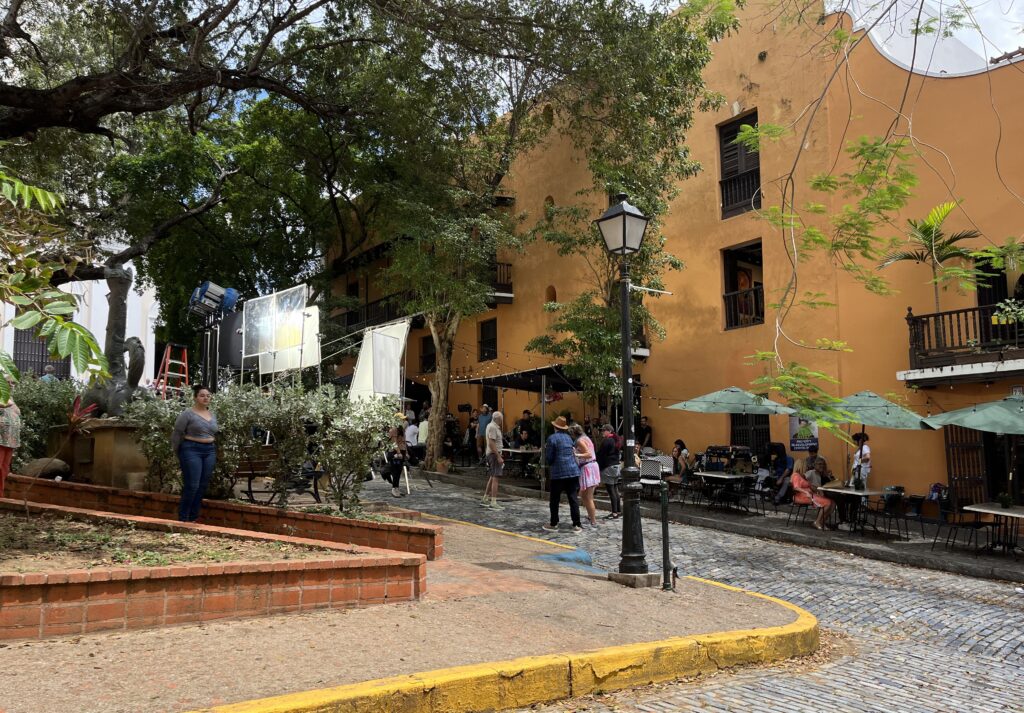
San Juan is the capital city, with many distinct neighborhoods, from the very old to very modern. The heart of this city is Old Town, inside the fortress walls of El Morro. Cobbled streets, steep hills, historic buildings and fort walls ooze history, but the daily cruise ships dumping throngs of tourists into this city every day have spawned cheap souvenir shops and gaudy bars and restaurants.  Old San Juan is still a must-see, but evenings are the best when most cruise tourists return to their ships.

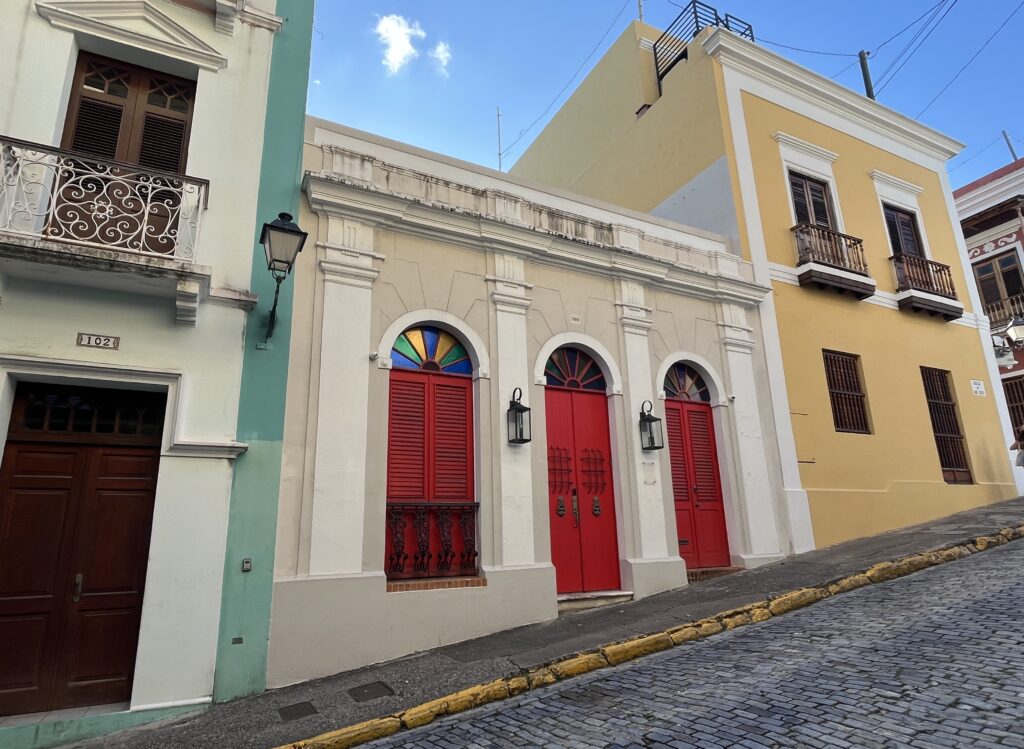
San Juan Homes
San Juan Street
Taking a break on a lovely SJ balcony
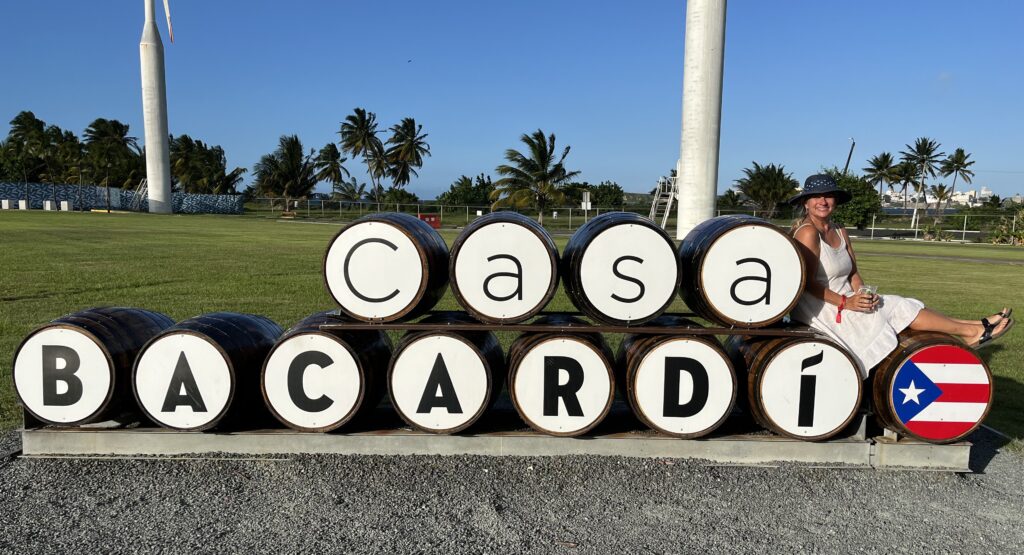
Casa Bacardi
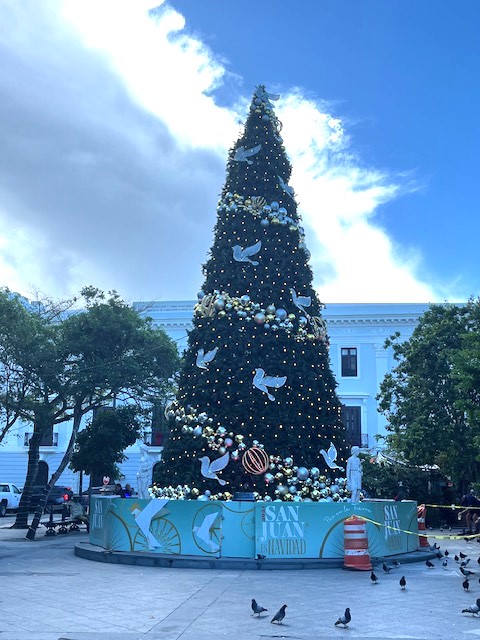
Christmas Tree in San Juan

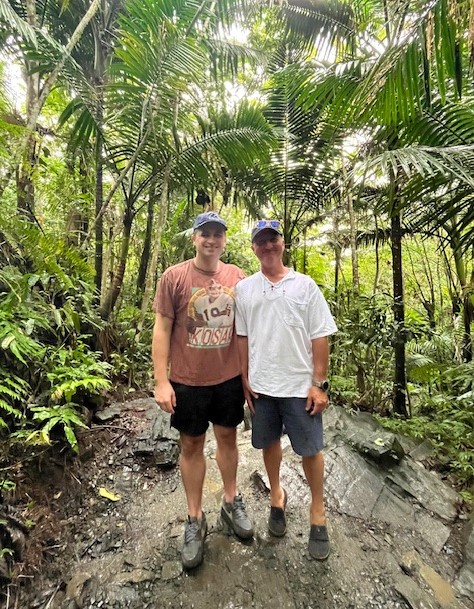
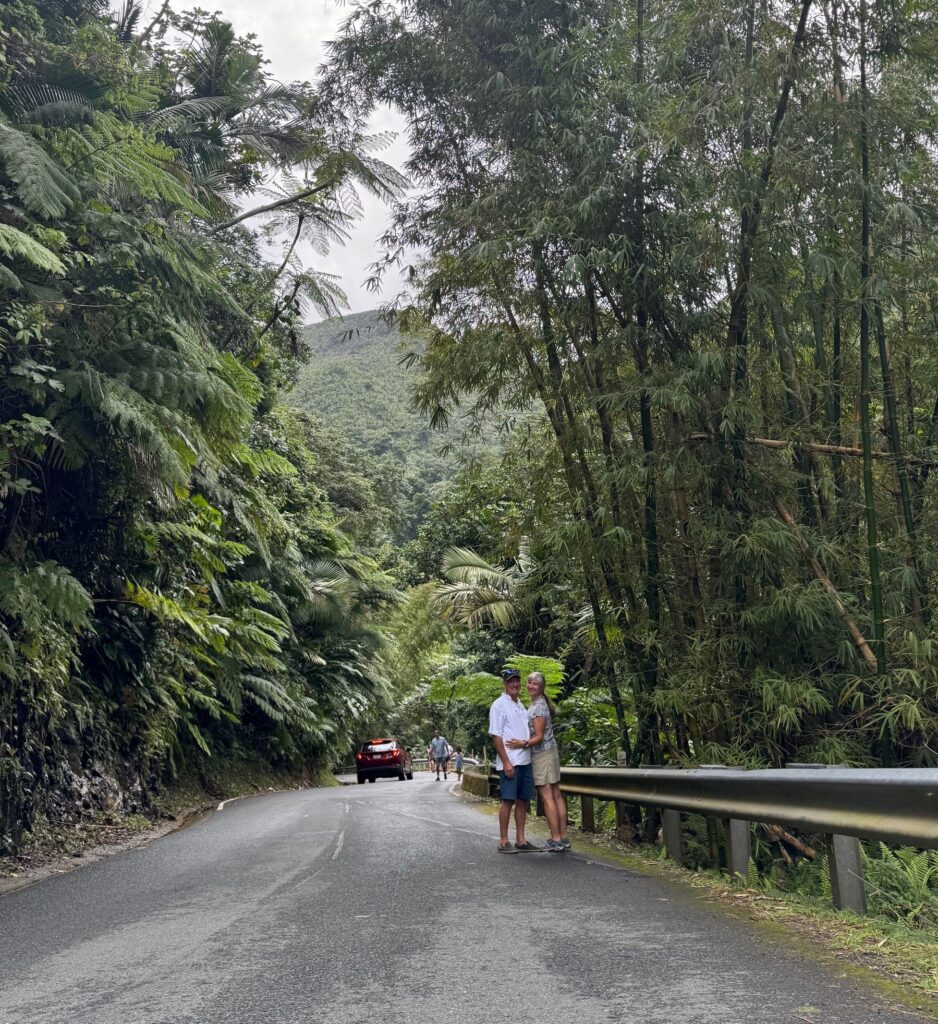
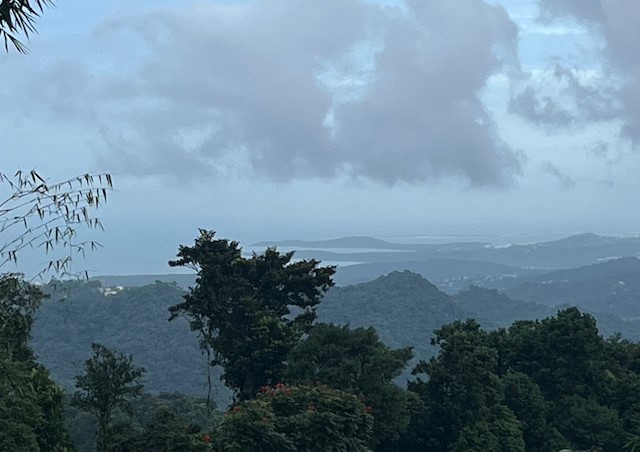
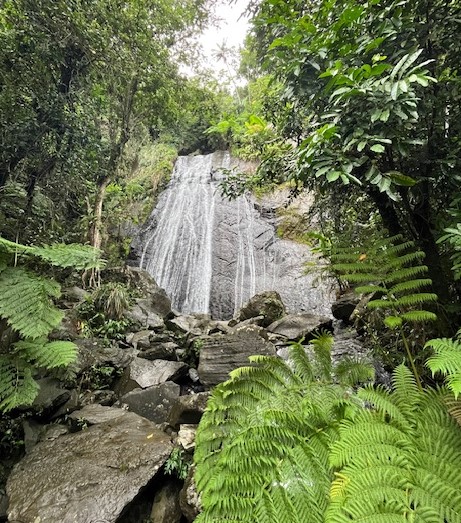
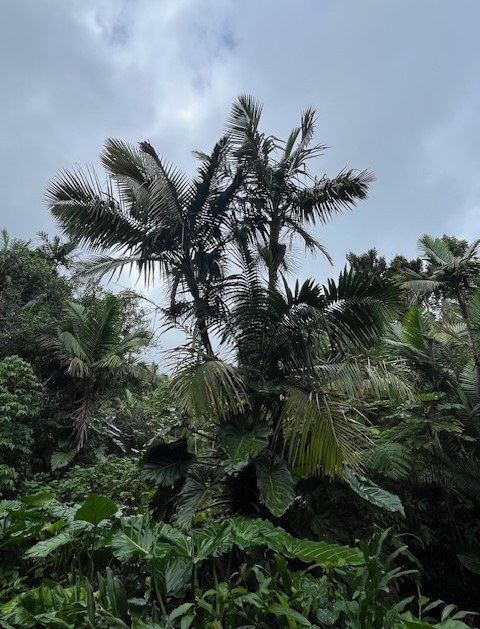
El Yunque Rain Forest is the only tropical rain forest on US soil. It is only an hour’s drive from San Juan, and is a natural wonder with miles of trails to be explored. We chose some waterfall hikes, and hope to return next year for more exploration.

My boys in El Yunque
El Yunque
El Yunque Waterfall, one of many
El Yunque

Culebra, Culebrita and Vieques, known as the Spanish Virgin Islands, are smaller islands off the east coast of “mainland” Puerto Rico. Just a few hours sail from PR, these islands have become one of our favourite Caribbean destinations.

Vieques is home to the brightest bioluminescent bay in the world! We arrived on a moonless night, hiked 20 minutes down a dirt road carrying our SUP, and spent an hour marveling at what can only be described as “magic”. Every splash, every ripple, every fish swimming by glows blue under the water – I felt like I was on a Disneyworld ride! Unfortunately, photos do not turn out well, so you just have to go experience it yourself.

Culebra!

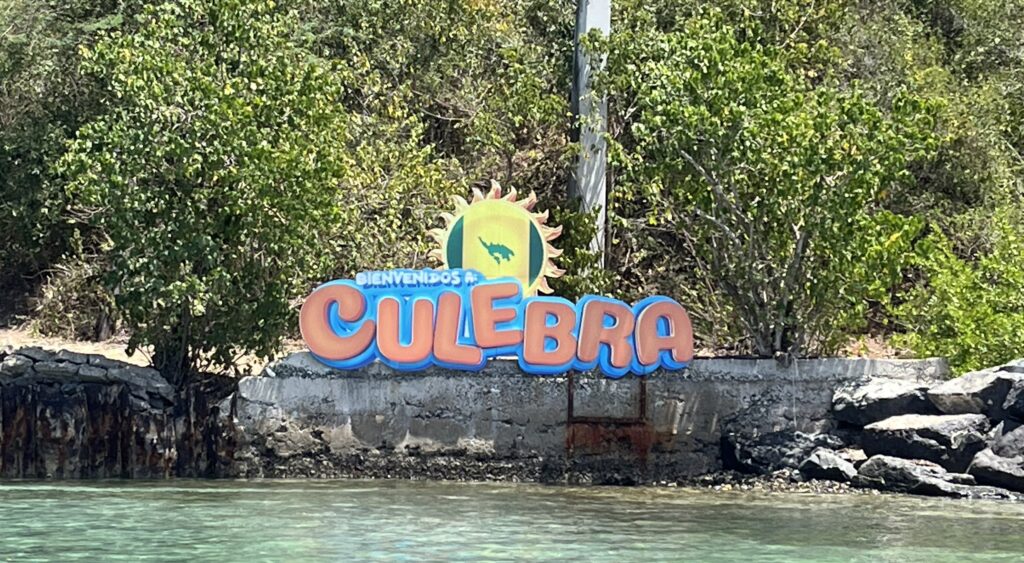
Culebra is the party island where main islanders go to R&R. A large, sheltered bay, several good restaurants, gorgeous beaches, decent snorkeling all make this a great weekend destination. The frequent, inexpensive ferry makes it even better – a one-way adult fare is a mere $2.00.

Beautiful Culebra beach
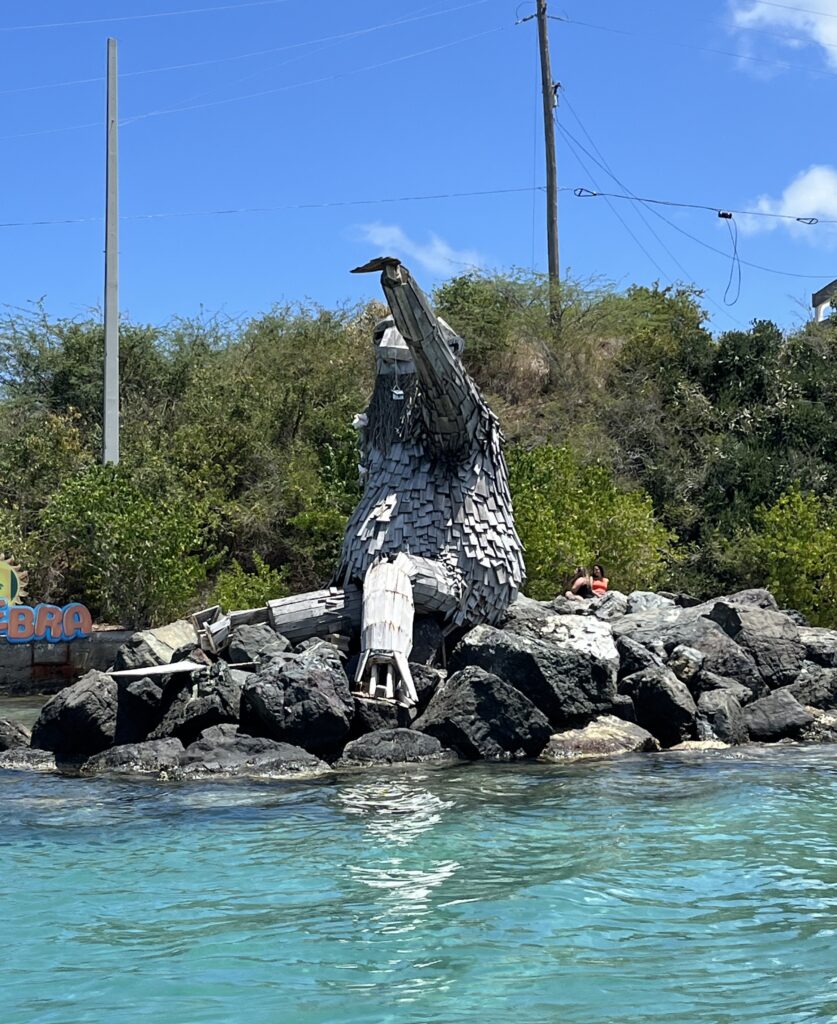
Interesting creature welcomes visitors to Culebra

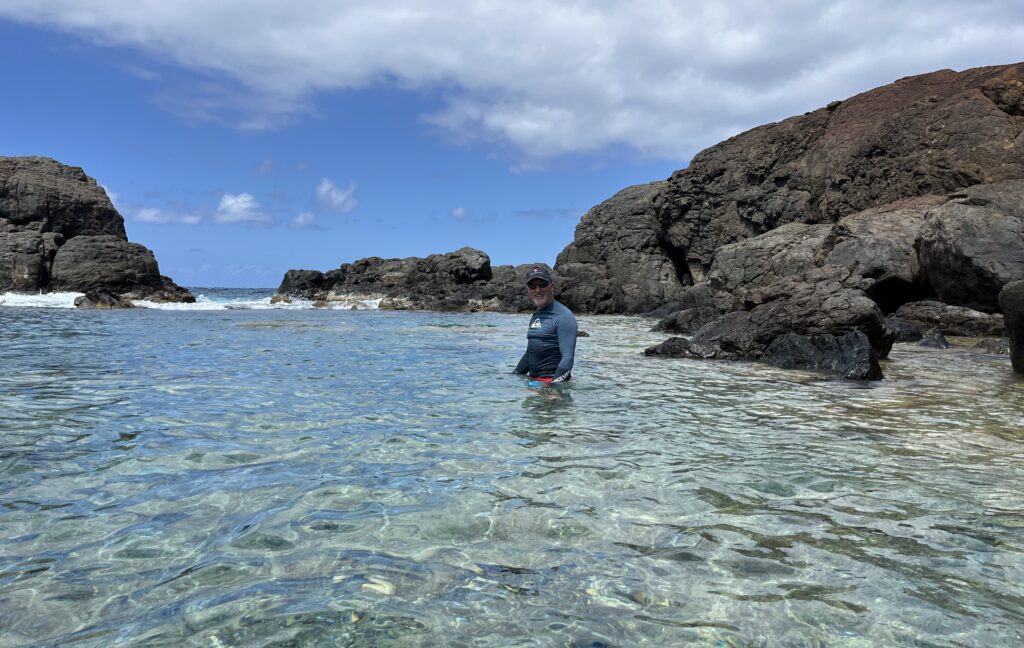
Culebrita is an uninhabited nature reserve next to Culebra. Hiking trails bring you up to an impressive, no-longer used light house with impressive views, as well as a large white crescent beach and bubbling pools where ocean waves power through a natural break wall. Its surrounding reef makes it tough to get inside the bay with a sailboat, but we got lucky and chose a day with calm seas, allowing us to spend few days in this little paradise.

Views atop of Culebrita
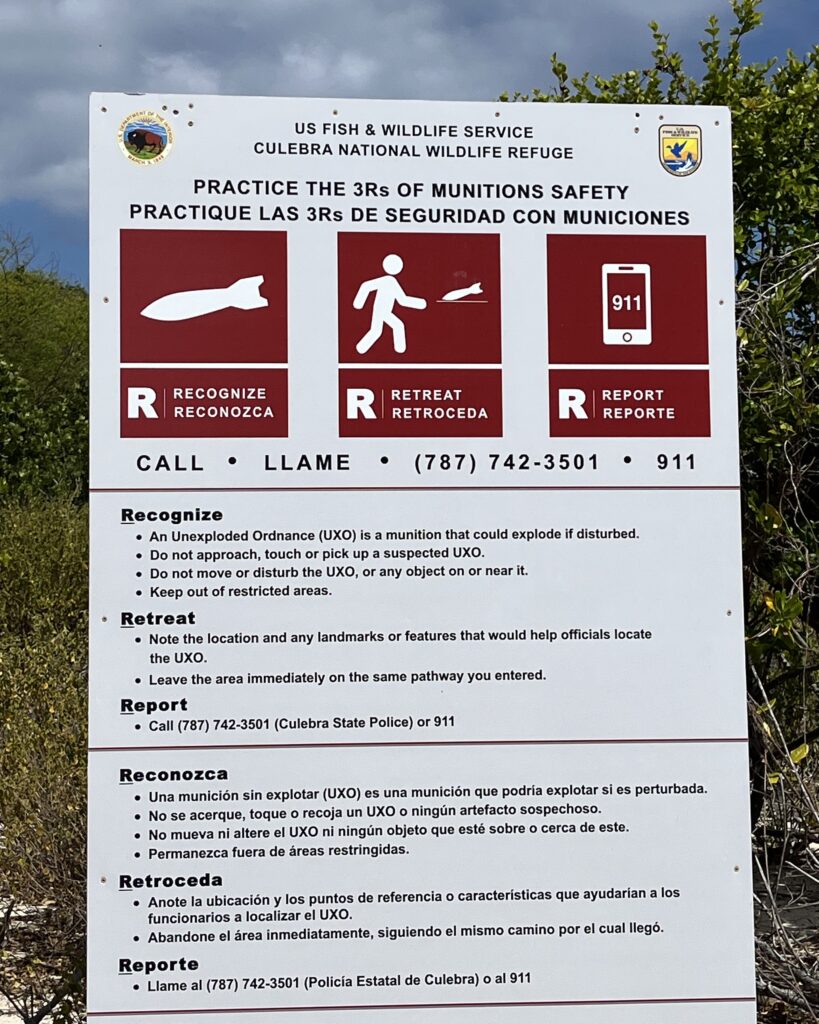
Remnants of the US Navy using the Spanish Virgin Islands as target practise

Phew! There’s still so much to tell you about Isla del Encanto, but I will save that for next time…it really is an Isla del Encanto!

Welcome Meshuggana Squared!

The last time I wrote my travel blog was April 2023, we had just sold our boat Meshuggana, stuffed a storage locker full of miscellaneous stuff, tools and dishes and embarked on a two week road trip from Florida to Toronto, planning to enjoy all the sights from Savannah to Graceland and of course, Kentucky’s Bourbon Trail. Later that summer we flew to France and to explore the Loire Valley and its castles and most importantly, to visit the Jeanneau factory where our new boat was being built, followed by a couple weeks of blasting through the Balkans on a 3-wheeled Can Am motorcycle. We had a blast.

Then back in Toronto, our beloved boat cat, Cat Stevens, crossed the rainbow bridge. He was already a senior when we adopted him, with several health issues, and he will always remain in our hearts as the ultimate adventure cat.

And it feels like a lifetime ago.

We purchased our new boat in October 2022 and it was on-schedule to be delivered to us from France, arriving in Florida in November 2023. But everything changed in early October.

My father, my wonderful, kind, brilliant father, was diagnosed with kidney failure and entered hospice care. Yes, he had already celebrated his 99th birthday, but he was strong, he was bright, and we were all looking forward to one hell of a 100th celebration the following summer. However, fate had other plans as my world turned upside down. My focus shifted from the excitement of preparing for the new boat’s arrival to spending time and caring for my dad. Much of the next 7 months I traveled back & forth to my father’s home in Cleveland, Ohio. Dad passed away in May, just 2 months shy of his100th birthday. I treasure every minute I was able to be with him during those last months.

Arturs Grava 1924-2024
Cat Stevens 2009 (?)-2024

Along with Allen, my dad was my biggest supporter in writing this blog, always the first to read it and provide feedback. I promised him I will continue to write, and it is now finally time to keep that promise.

So here is an entire, eventful sailing season summed up in a few paragraphs:

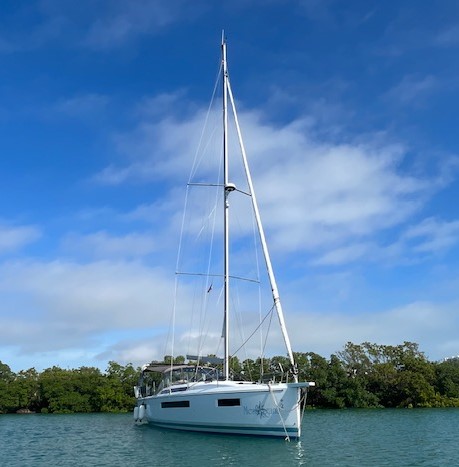
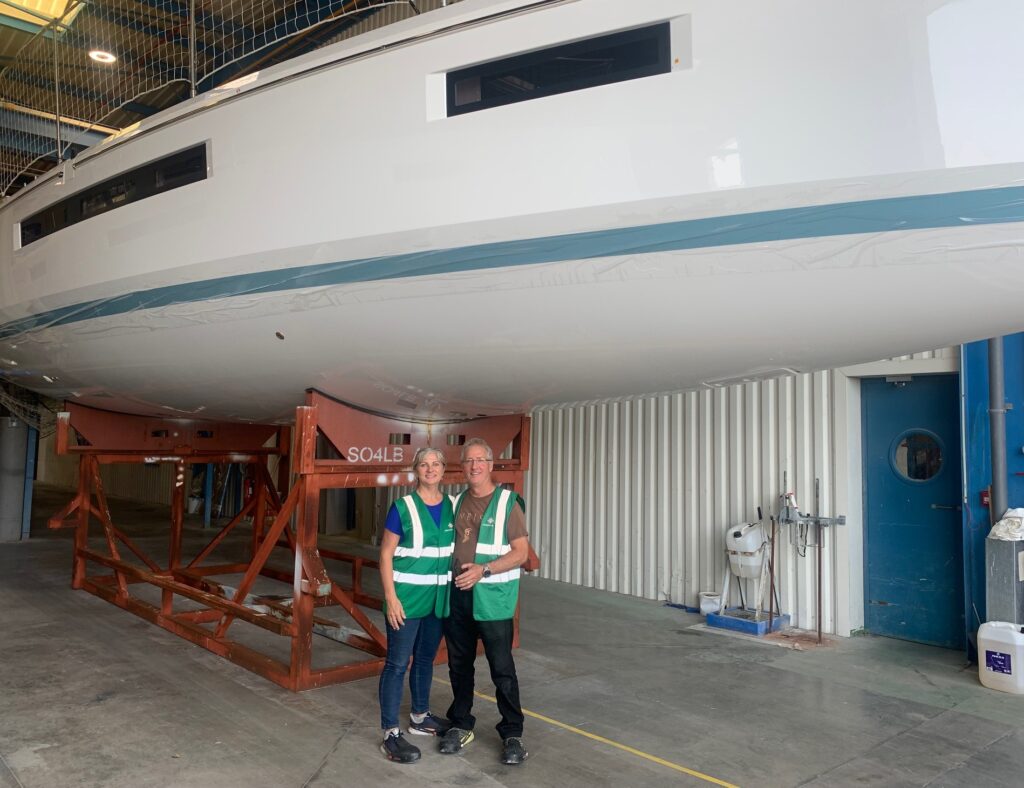
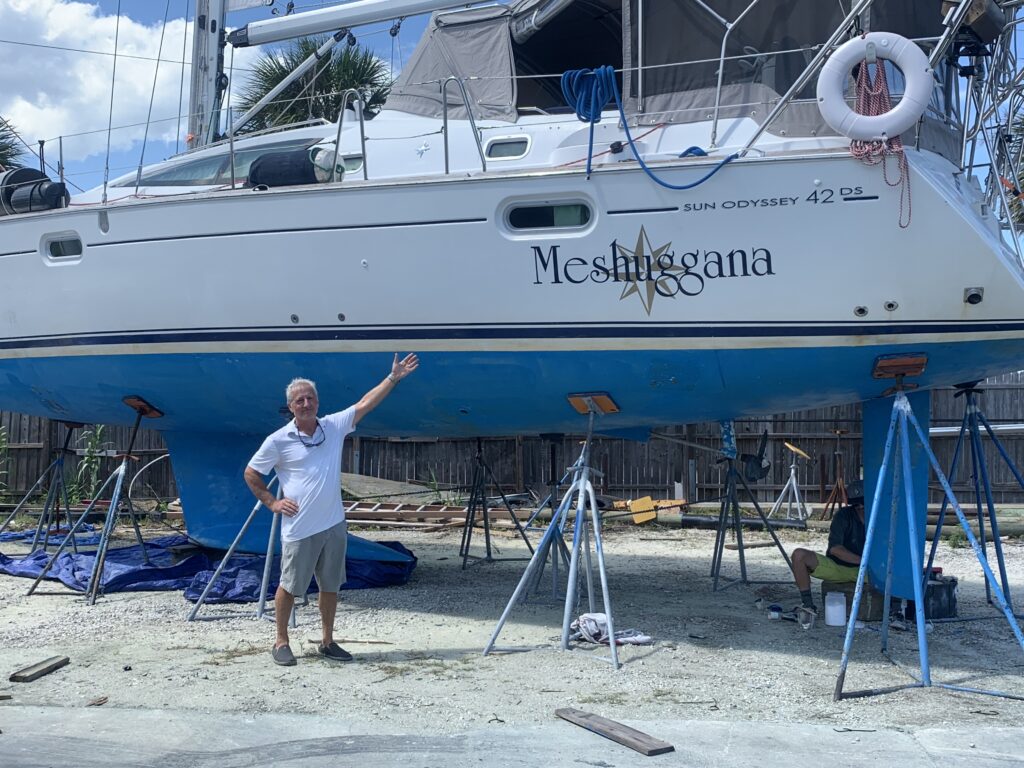
Meshuggana 2 – that’s SQUARED, because we are 4 times as crazy buying this brand-new boat – was delivered in St Augustine, Florida, not quite ready to float. How did it get from France to Florida? No, we did not sail her across the Atlantic.

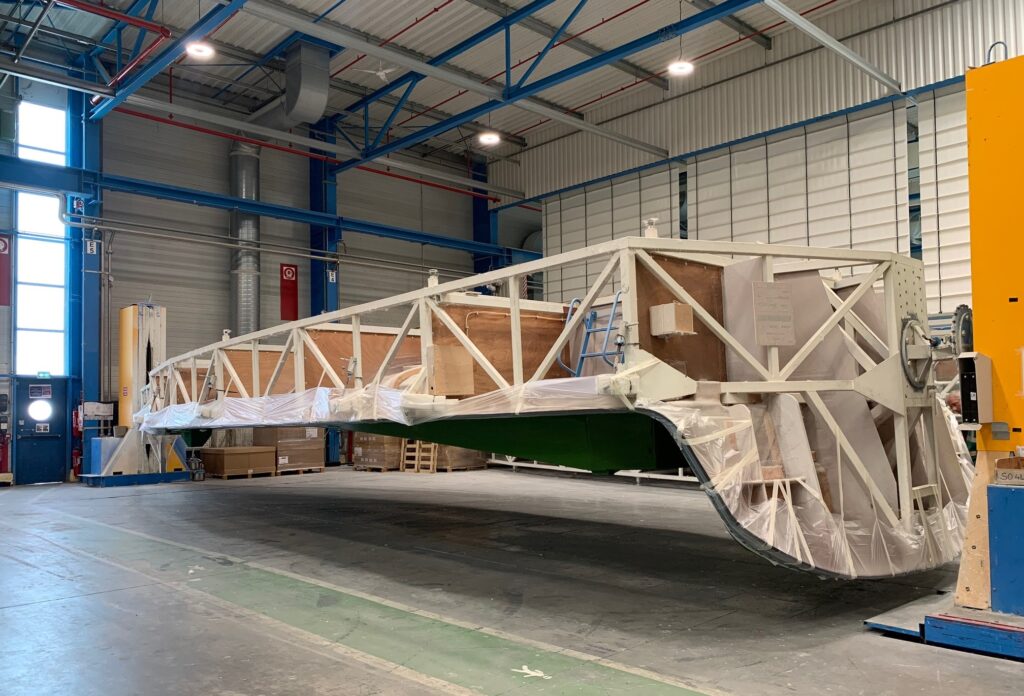
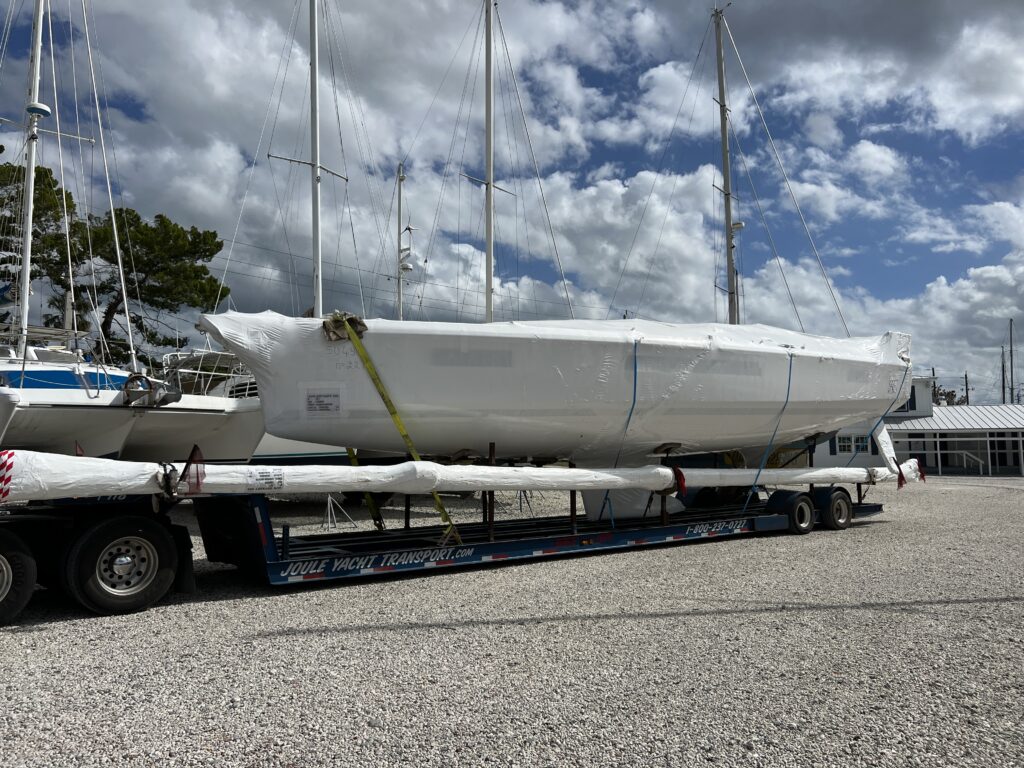
First, everything that is not permanently attached is wrapped in bubble wrap and stuffed inside or strapped onto the boat. Then the boat is put on to a truck and driven about an hour from the factory in Cholet, France, placed inside a shipping container that is then loaded onto an ocean freighter before spending a couple weeks at sea crossing the Atlantic.

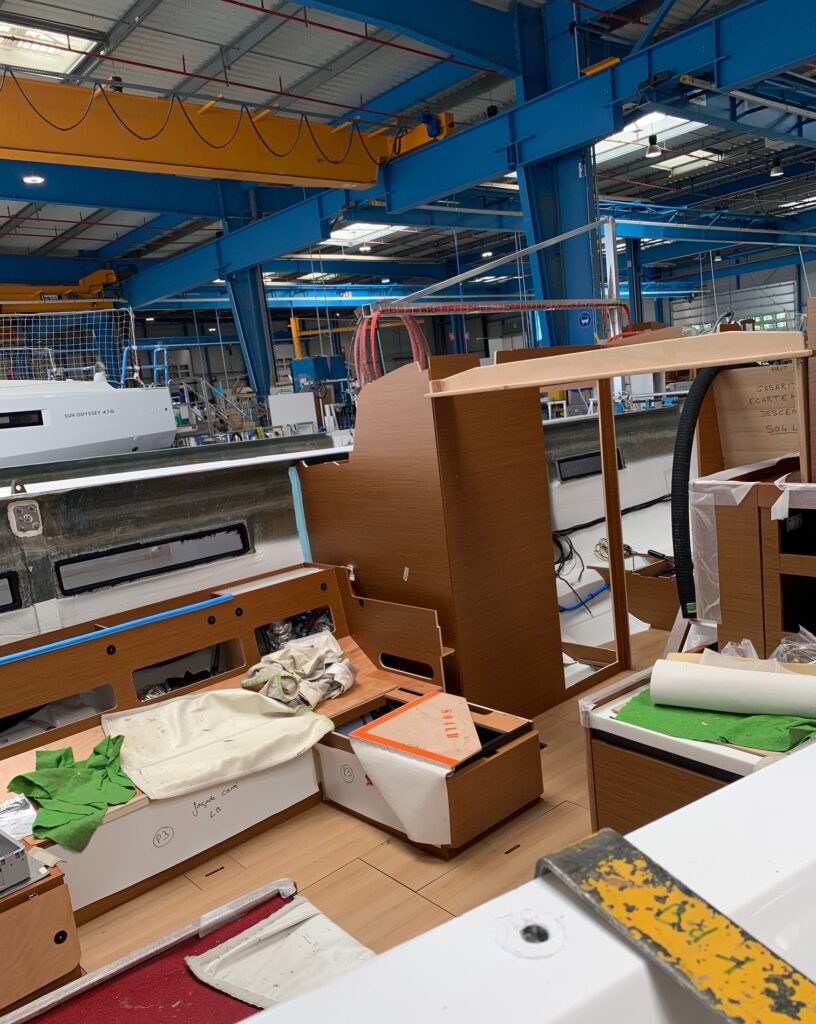
The freighter makes a few stops in North America before its final destination, Brunswick, Georgia, where the boat is transferred to a tractor-trailer and driven about 2 hours down the highway to a marina in St Augustine, Florida. There the boat is lifted off the truck and put onto jackstands inside a gigantic warehouse where it will stay for several weeks while every system is assembled, installed, the bottom is painted with anti-fouling paint and finally, about 4 weeks later, she splashes. Then she sits another week at the dock making sure all systems are working and ensuring she is sea-worthy.

Picking up a new boat is a lot more complicated than picking up a new car and our advice to prospective new boat buyers….DON’T DO IT! It is so much work, so stressful, there are inevitable warranty claims….just buy a new-ish boat that’s ready to go. To make matters more complicated, Allen was on his own for most of this process as I was in Cleveland with my dad.


When we were finally ready to begin our sailing adventures, we turned south, wanting to stay in the continental USA until all the new-boat bugs were worked out:

Florida coast to Key West – revisited a few favorite spots and ventured further to Key West

  • Not much has changed, but it was good to see some hurricane- destroyed boats have been removed
  • The Keys are really difficult to sail – very shallow and local businesses are not interested in serving sailors – few dinghy docks making it difficult, even impossible to go ashore


Back to Bahamas – Bimini, Berry Islands, Eleuthera, Georgetown

  • Again, not much has changed
  • It still has the clearest, bluest water we’ve ever seen


Turks & Caicos

  • Playground of the rich & famous – lovely homes and upscale resorts
  • Lovely marina, good restaurants – we felt like we were on vacation for a few days

Dominican Republic

  • A world away from T&C, more 3rd world, but truly lovely and an a nice change
  • Incredible beauty – sea, jungle and mountains
  • Time to stock-up on provisions – abundant fresh produce at reasonable prices

Puerto Rico! I have so much to say about Puerto Rico, it deserves its own chapter. Come back next time to read about fabulous San Juan, the Spanish Virgin Islands and learn how we ended, and then resumed our sailing seasons in Fajardo PR, home to the largest marina in the Caribbean.

And there’s also new Sheriff in Town….meet Ziggy Stardust!

Farewell Bahamas! Farewell Meshuggana!

So much has happened since I last wrote my blog and it’s hard to believe it’s been 6 weeks since we left Georgetown, Exuma and turned our bow northward to begin our journey home. So much has happened, so many wonderful adventures that I didn’t have time to sit down and write.

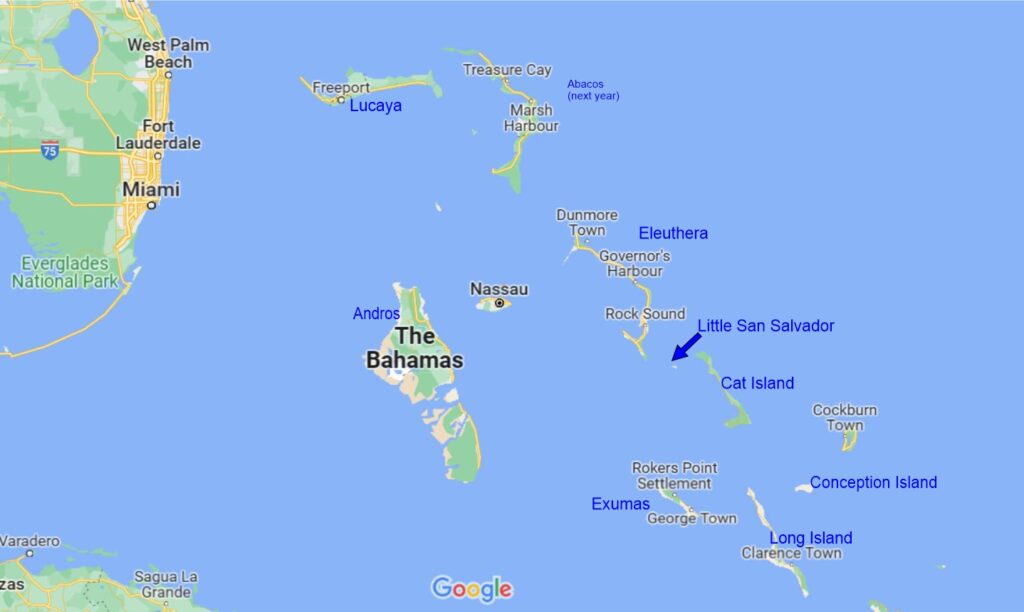
Our return journey took us through some pretty amazing places: Long Island, Cat Island, Little San Salvador and Eleuthera and some of these spots became our favourite islands. Unfortunately, we were running out of time so we needed to fly through these spots, but we will definitely be back next season.


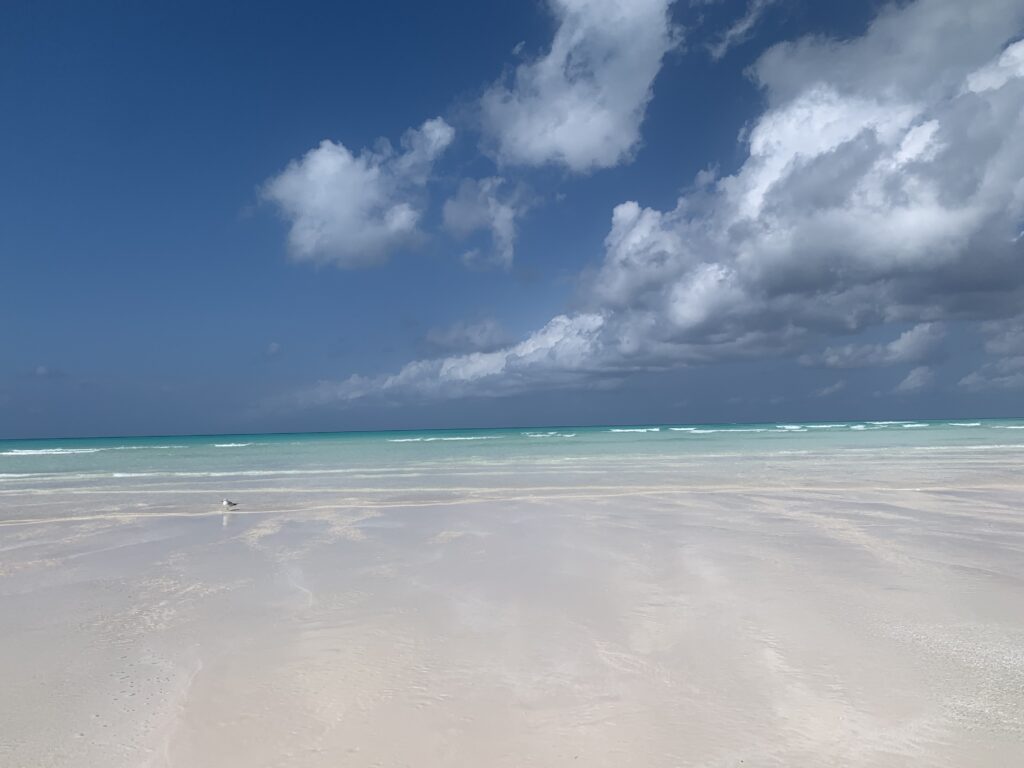
As we pushed north, we made a stop at Half Moon Cay, previously know as Little San Salvador, another cruise ship island. This lovely island, owned by Carnival Corporation, was likely once a tiny gem with white sand beaches and jungle-forests, but is now covered in carnival rides, endless rows of beach chairs and cabanas and has cruise ship tenders running through the bay every few minutes. We timed our arrival for late afternoon, just as the cruise ships were leaving for the day and left early in the morning just as the employees began to arrive for another day of catering to cruise passengers.

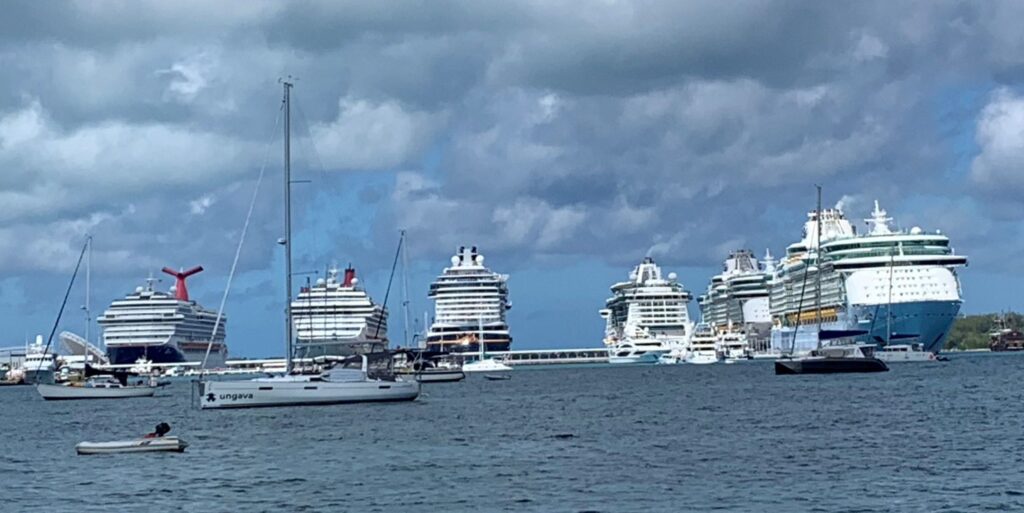
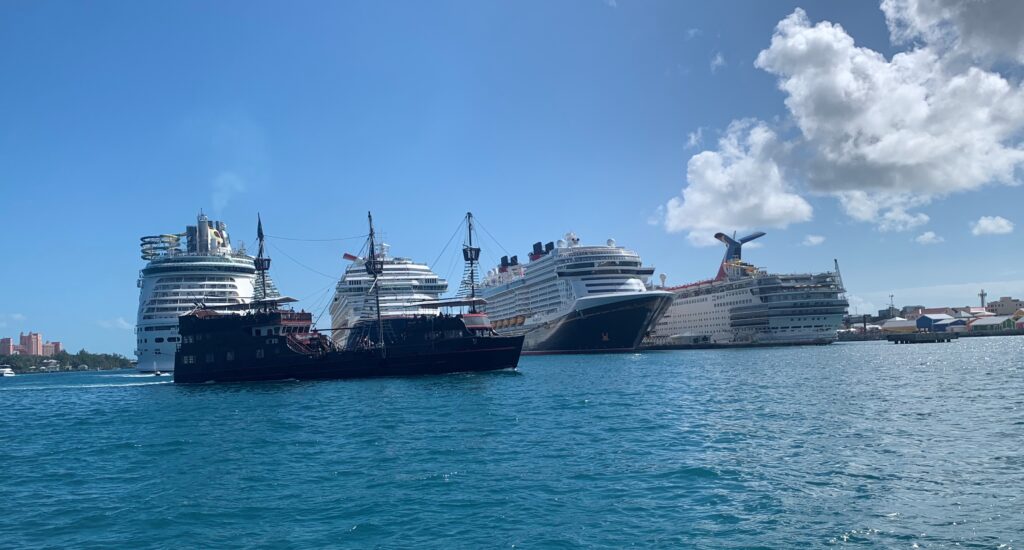
Six cruise ships docked in Nassau

These islands deserve so much more time than we allotted to them, but we were focused on getting back to Nassau to pick-up a very special passenger, my son Davis. Hands-down, the most difficult part of this adventure is missing our family and friends, so I was over the moon when Davis confirmed he was coming to visit. We only had a few days together, so my goal was to give him an appetizer of all the wonderful things the Bahamas have to offer: beaches, blue water, local culture and a bit of the big tourist thing in Nassau.

Marina at Atlantis, Nassau
View of Lizzo show at at Atlantis

With Davis aboard, we set sail east toward Spanish Wells, the northern point of the Eleuthera Islands. We had a spectacular sailing day, with good winds and following seas, but the next day brought us something we had not seen in literally weeks – rain. Lots of rain. However, no rain could spoil spending time with my son, so we moved anchorages as we needed to be more comfortable (waves come with rain) and enjoyed all that Spanish Wells has to offer. Another great destination, and again, we’ll be back.

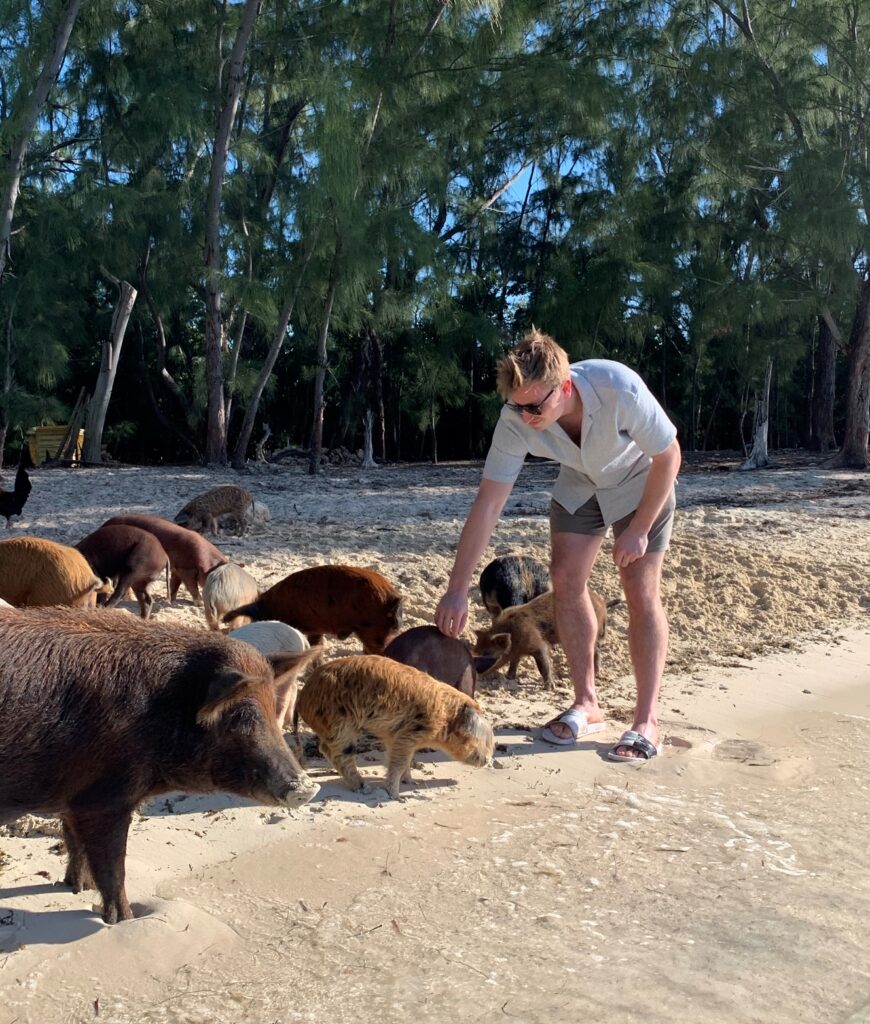
Davis with swimming pigs
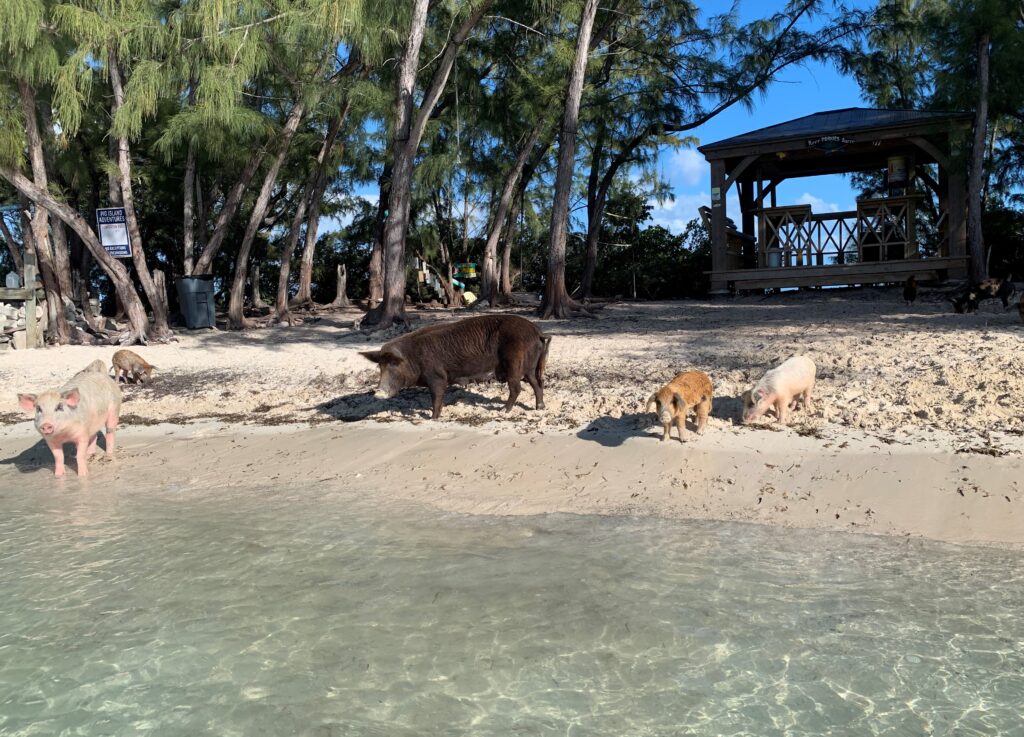
Swimming pigs in Spanish Wells
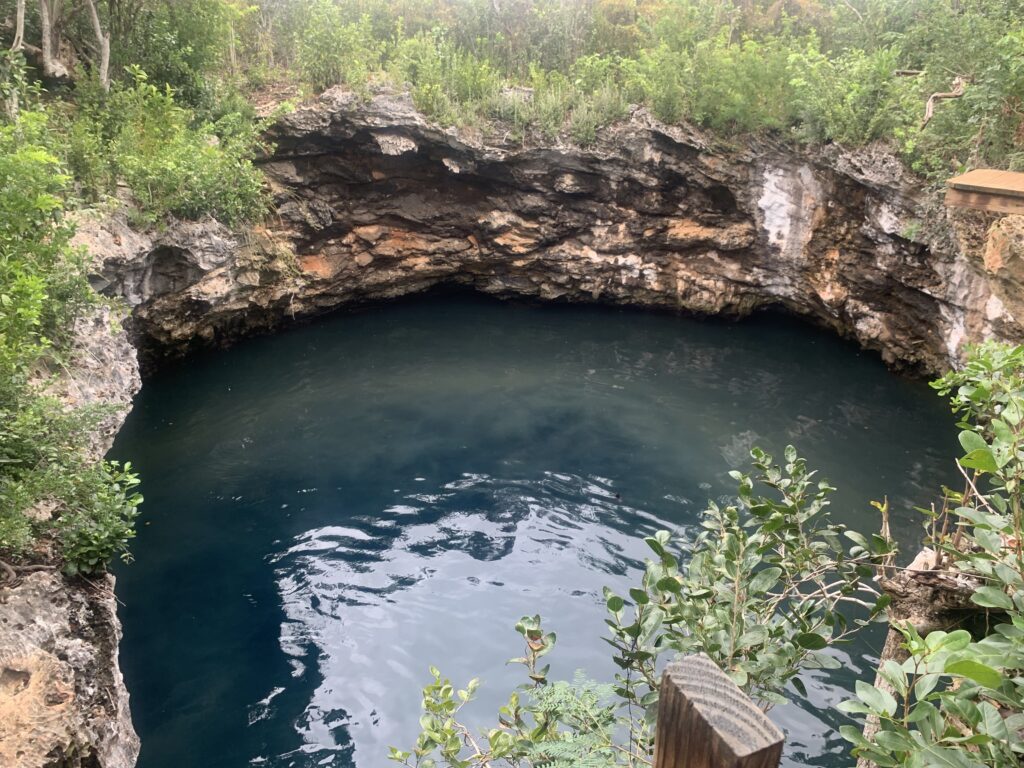
Blue Hole near Spanish Wells

While the airplane returned Davis to Toronto in about 3 hours, our journey home would be much longer and take a lot more planning. Our journey westward would again take us across the Gulf Stream, meaning intense monitoring of wind and wave forecasts as well as more complex route planning. Many sailors choose to sail to Bimini, the westernmost Bahamian island, and then cross to southern Florida; however, we wanted to take advantage of the strong Gulf Stream current to take us further north, closer to our end destination, Daytona Beach.

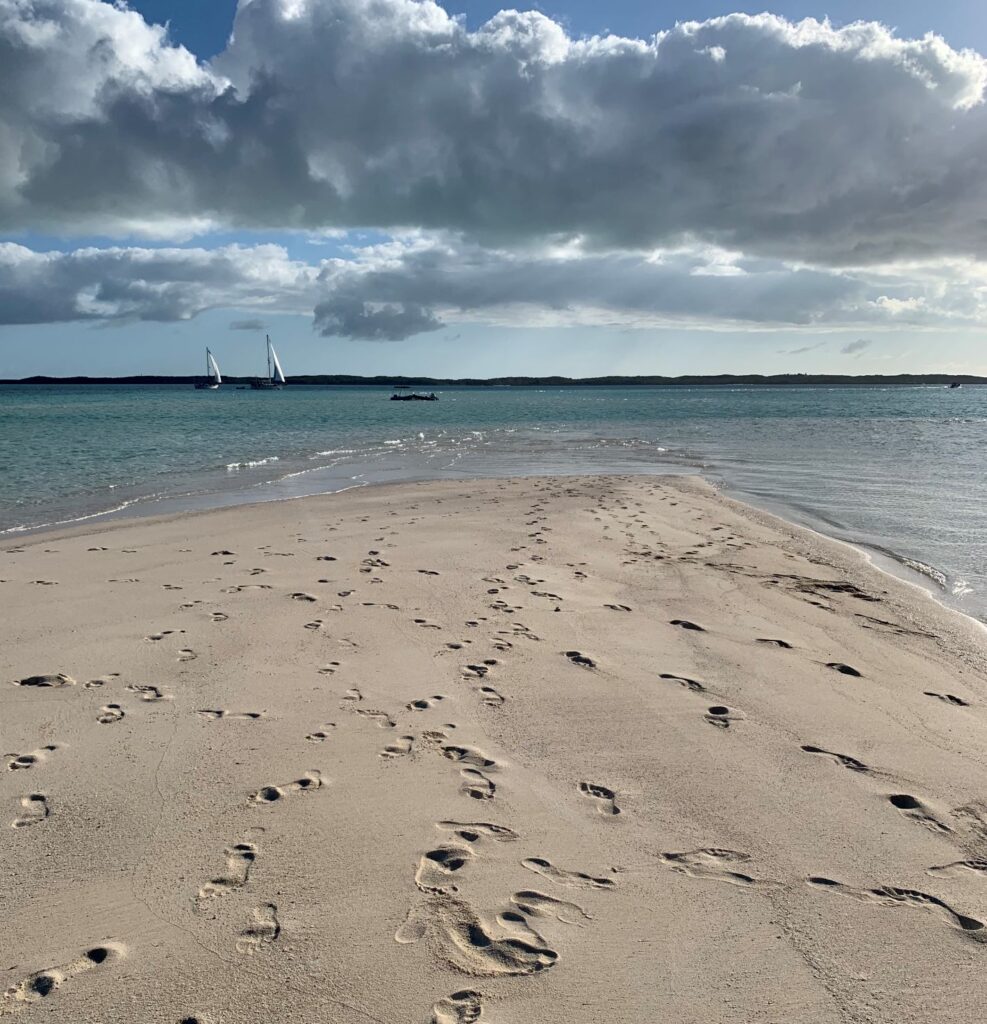
Spanish Wells sandbar at low tide
My boys near Spanish Wells
Waving starfish

After days of watching forecasts, we left Nassau for Lucaya, Grand Bahama (near Freeport), returning to one our favourite marinas on Taino Beach, to again sit out some big wind and waves. We enjoyed the safety of the marina and its private beach and lazy river pool until we finally got a sliver of good weather and sailed to West End, the northern most point of Grand Bahama, where we could stage a Gulf Stream crossing. At 1:00 am on April 1, we pulled up anchor for the last time in the Bahamas, and set course for Ft Pierce, Florida. At 3:00 pm, we dropped anchor in Ft Pierce, cleared US Customs, and were now on the home stretch of this adventure.

Gorgeous sunset shows rough weather ahead
Mega-yacht in Nassau (see the helocopter?)


Back in Florida and back in the Intercoastal Waterway (ICW), we continued to push north to our final port, Daytona Beach. This journey was bittersweet – it was a relief to be back in familiar waters and safe anchorages away from huge ocean swells an unpredictable currents; however, these would be our last days aboard Meshuggana, our second home for so many years. Meshuggana was conditionally sold and was scheduled to be hauled out of the water to be surveyed and handed over to her new owners.

Farewell!

Meshuggana passed her inspection with only a few minor repairs needed, and we began the immense job of emptying every locker, cupboard and bilge, then lovingly polishing her up for her new family. For the last 9 years Meshuggana has been our home, she has taken us on countless adventures over 8000 miles and kept us safe throughout our journeys. She will be missed…fair winds, old friend.

Hello George Town!

Wow! I knew George Town, the biggest city in the Exumas, was a popular cruising destination, but I did not expect 370 boats to be anchored here. Cruisers from across the globe gather in George Town’s Elizabeth Harbour every winter, some for a few days and some for the entire season. Many have been coming here for decades. While most of the boats come from the US and Canada (it seemed the majority were Canadian), several crossed the Atlantic or came up through the Panama Canal from the Pacific. And the reasons are obvious: a large semi-protected harbour with excellent holding in deep sand (for the anchor), miles of white beaches, a couple reefs for snorkeling plus a town that caters to the cruising community with 2 grocery stores, a hardware store, laundromat, numerous restaurants, gas station, local businesses and tradespeople with boat repair skills as well as an airport with daily flights from Nassau and Florida. Add a few hundred boating enthusiasts, and you’ve got a thriving community and one hell of a party!

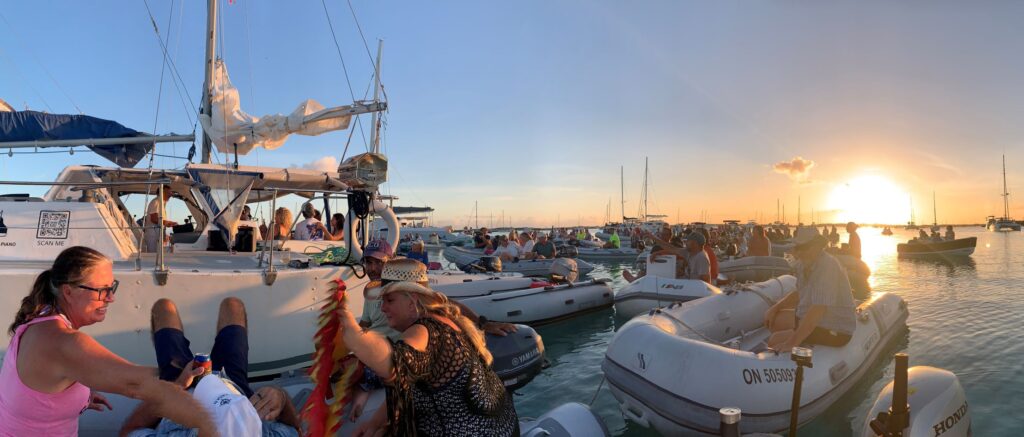
On-water sunset concert hosted by Dave from Sailing Piano


Among this community are a group of volunteers that organize various events and activities in the George Town area. A “Cruisers Net” is broadcast every morning over VHF channel 72 – just turn on your radio and listen to the latest news about weather and goings on in the area. The Net is hosted by one of the boaters and begins each day with emergency call outs (thankfully no emergencies while we were there), then weather then on to various topics including saying farewell to boats departing the harbour and welcoming newcomers, buy/sell/trade items or services amongst boaters, shout-outs to local businesses, assistance requests for anything from refrigerator repair to sourcing parts for an outboard motor. We tuned in every morning, and while most days we just listened, a couple times we jumped on and were able to help other boaters with a spare part, an iPhone adapter and I even scored a stove-top toaster.

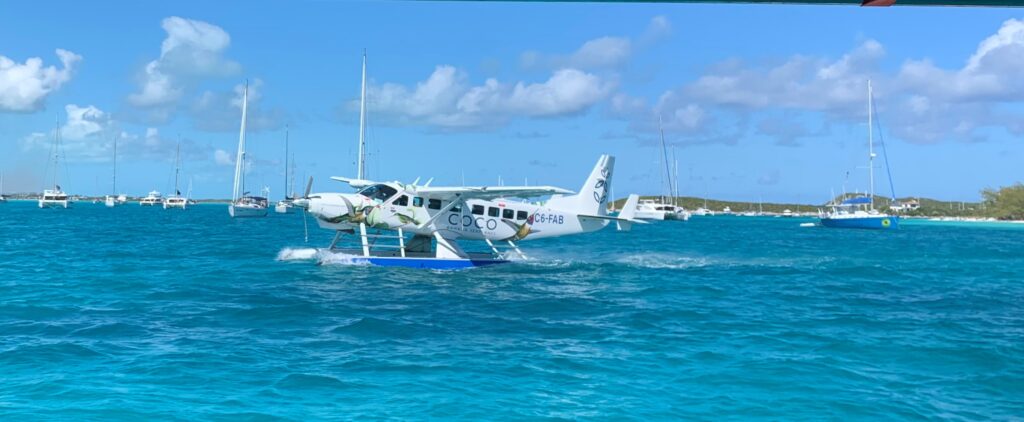
Sea plane delivering guests to resort in George Town
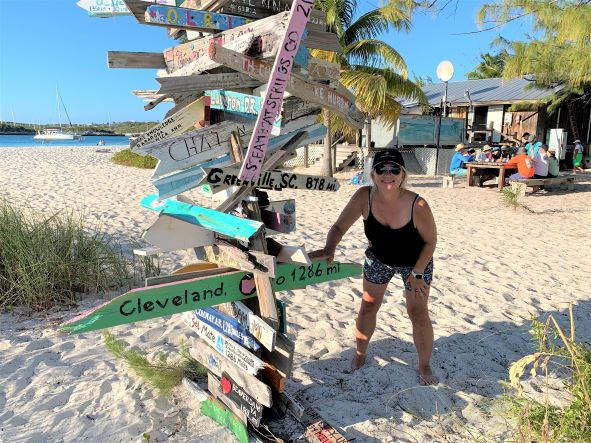
How many miles to Cleveland?
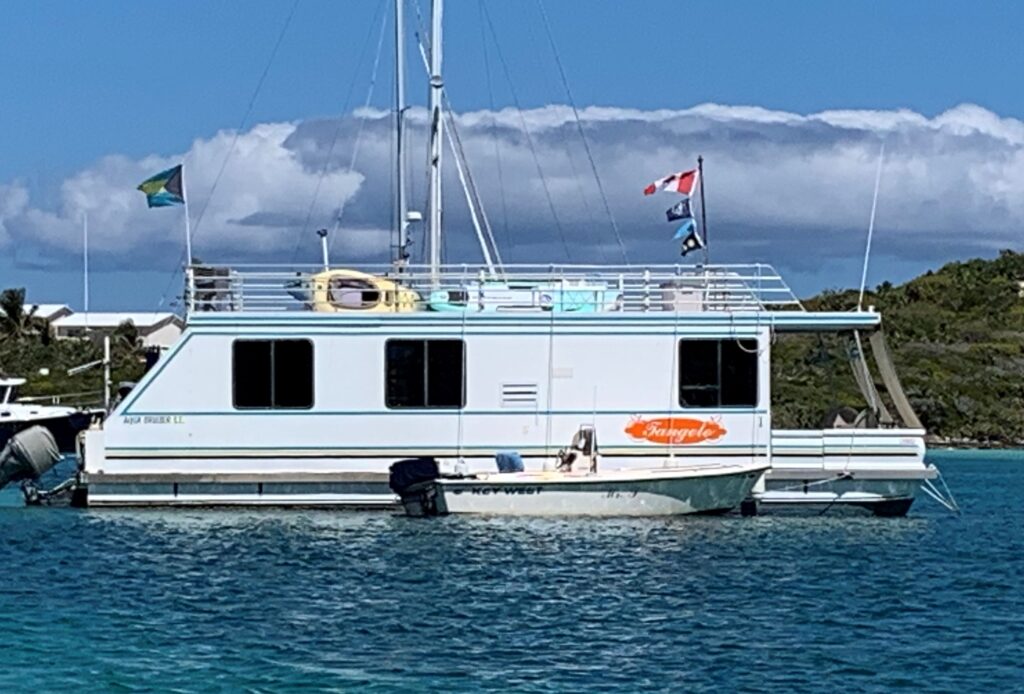
One of several houseboats docked in George Town (Alled did the graphics for the
former owners)
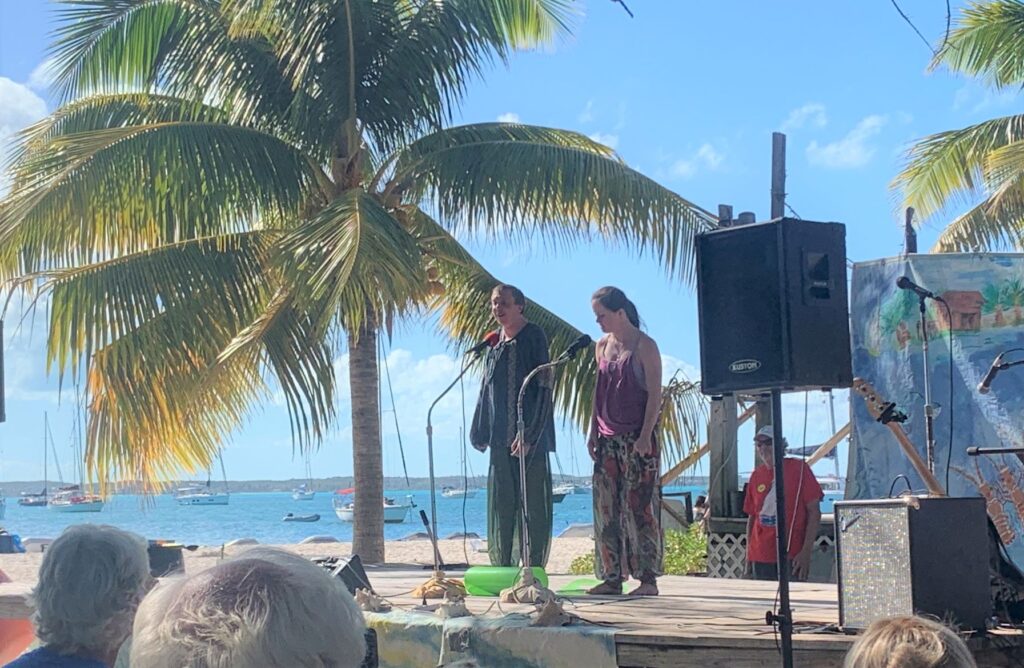
ABYC’s David and friend Alicia perform at the Variety Show

The timing of our arrival in George Town was impeccable – we arrived one week before the famous George Town Exumas Cruising Regatta, a 67-year tradition that resumed this year after the pandemic forced its cancellation in 2020. We learned in previous years the boat count averaged 250-275, but this year it was over 370 (someone actually tours the harbour each week and counts boats). The Regatta runs for two weeks and includes a couple traditional regattas (sailboat races), but also daily events from competitive volleyball tournaments to the silly coconut challenge where participants compete to pick-up floating coconuts with just their paddles. The Regatta festivities kicked off with an almost 3-hour variety show that included music, skits, stand-up comedy and a book reading, but my favorite act was my Allen playing and singing The Boxer on stage – he won’t let me post the video, but he was fabulous!

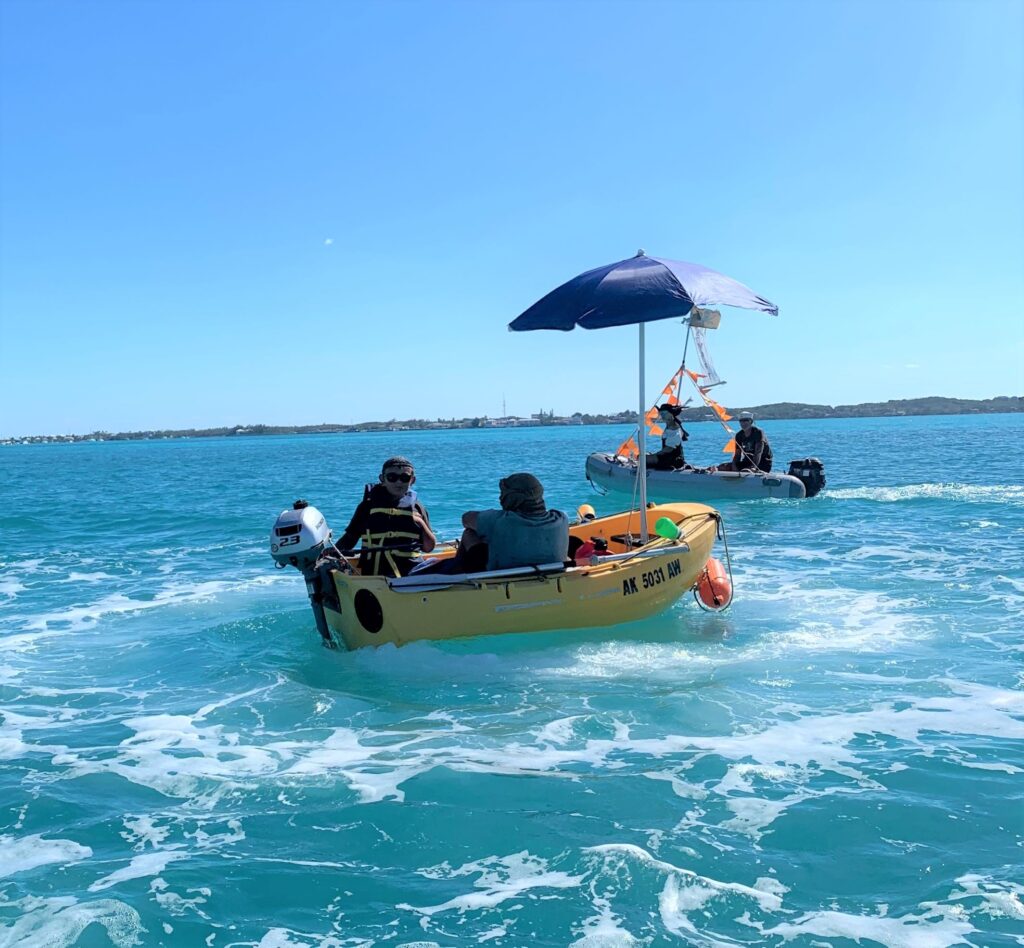
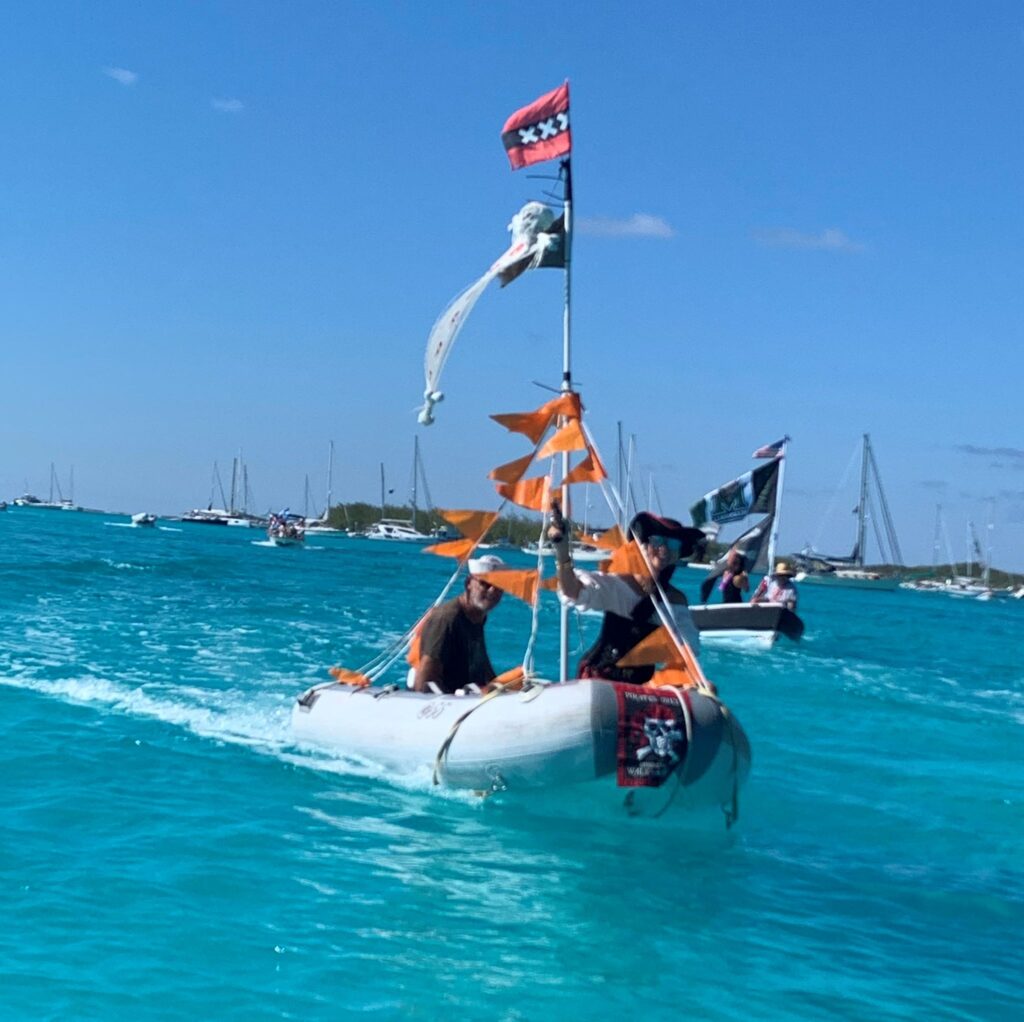
Dinghy parade
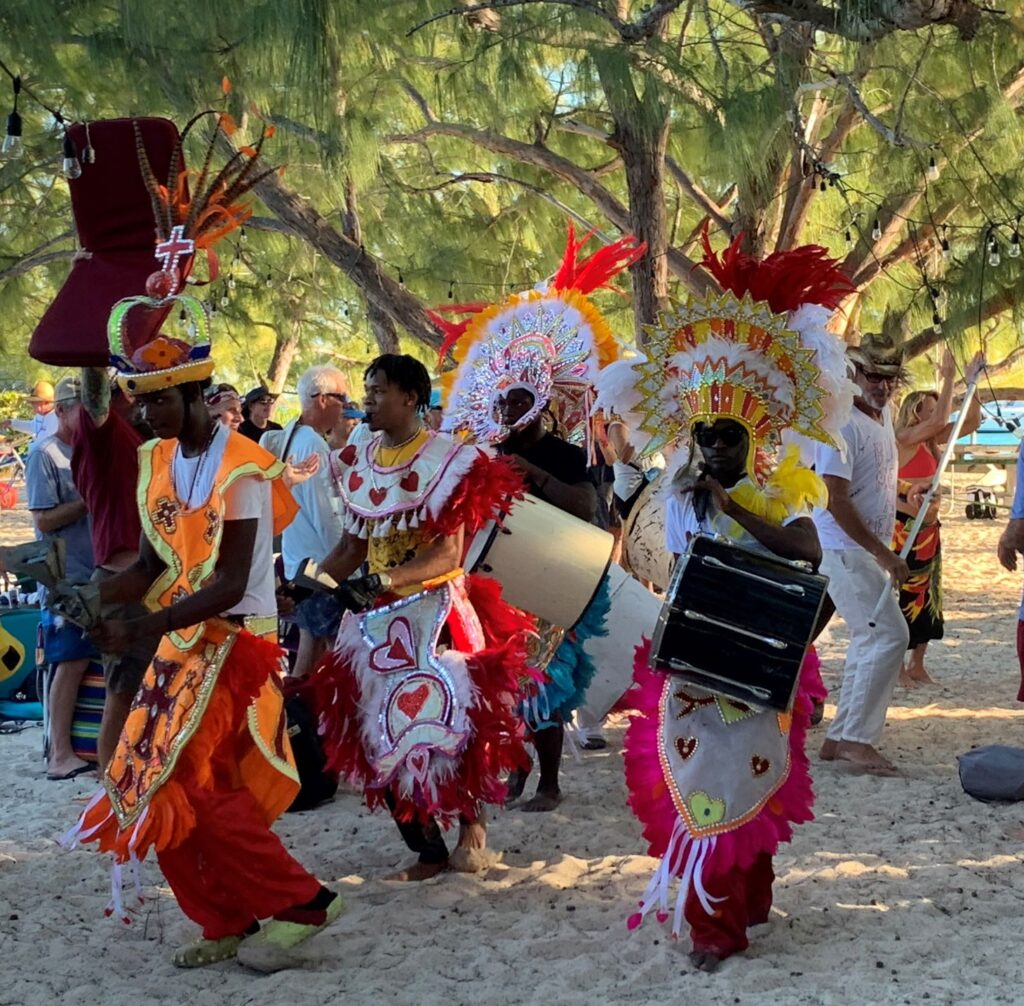
The Junkanoos performing at the Variety Show
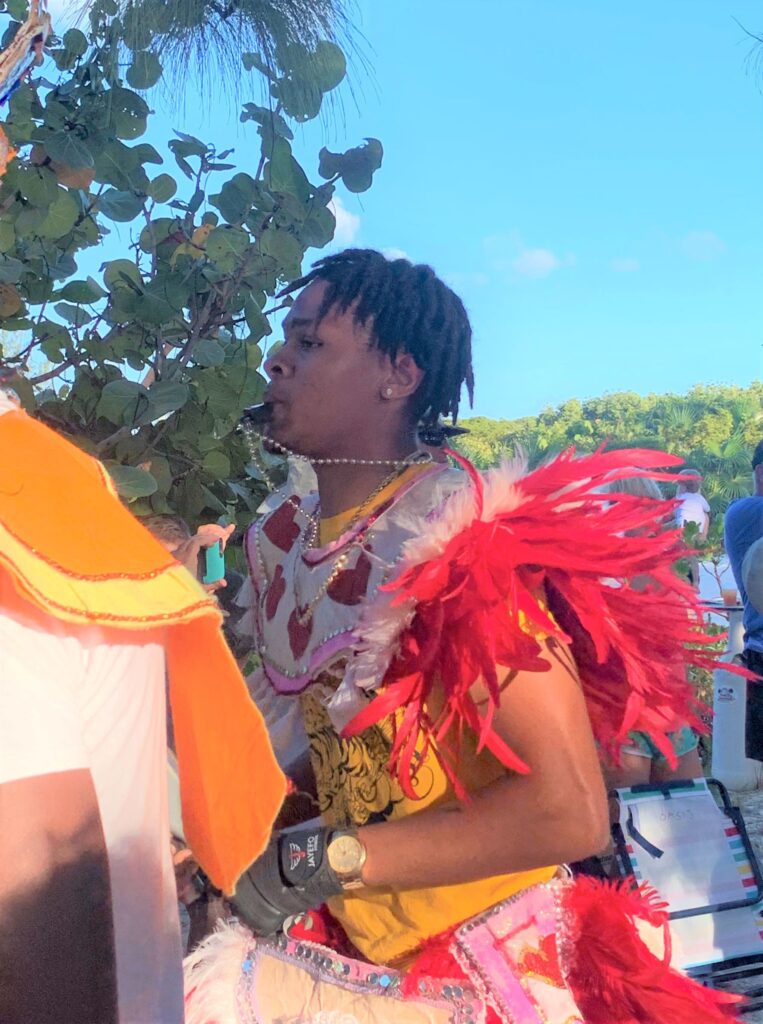
Junkanoo performer

George Town also offered a place to just sit and rest for a while. From the beginning of this adventure, back in July, we’ve been constantly on the move…hiding from storms and outrunning the cold, from jumping onto weather windows to getting to airports on specific dates. In George Town we were able to just relax and savor the Bahamas – the sunshine, the beaches, the ocean, the snorkeling. We enjoyed the company of friends and fellow cruisers, bid farewell to two of our favorite stow-aways, we restocked the fridge, read books, took naps, played in the surf and ate in restaurants – we finally felt like we were on vacation. But after two weeks of down time, we grew restless again, time to move.

George Town beach
Enjoying playtime
Sailing Piano concert with Cathy & Fabian
Snorkeling with Teri and Craig from Cala II

After hauling anchor in George Town, we turned our bow northeast and headed to Long Island, known for great anchorages, an inland blue hole and generally a great place to explore. We didn’t have time for a long stay here this season, so we had a “Long Island Appetizer” – one night in a lovely bay. We dinghied around the bay and up an estuary surrounded by mangroves and to our delight, a 5-foot shark (nurse or lemon?) shot-through under our dinghy as it swam against the strong current. Gorgeous place, we’ll be back.

Conception Island anchorage

Next was Conception Island, an uninhabited island, part of the Bahamas National Trust, a protected park. The water surrounding this island is an impossible blue – so clear it looks like a swimming pool. Even at night with a full moon, I could see pebbles and ripples in the sand, under 15 feet of water. The island itself is a mix of white/pink sand beaches, rocky cliffs, scrubby bushes and jungle. With no buildings on the island, the only source of artificial night-time light were a half dozen anchor lights in the bay, giving us a magnificent view of Venus and Jupiter playing in the sky.

All by myself at Conception Island
Conception Island
Conception Island all to ourselves

When the winds shifted to the South, we hoisted our sails and moved further north to Cat Island. This long skinny island east of the Exumas is sparsely populated, but is known to be welcoming to cruising boats. It does not have many services, but the few restaurants and shops offer excellent food and friendly service. I found delicious home-baked coconut bread and gorgeous field tomatoes at the local bakery, and a promise from the proprietor that she will have fresh peppers and organic eggs later this week.

Cat Stevens taking the scents of Cat Island
Cat Stevens admiring the clear water at Cat Island

On Cat we were able to go to a Fish Fry, a small-town Bahamian tradition, and one of our favorite things in the Bahamas. Fish Fry consists of small food shacks on a beach near a town. They are open whenever the owners decide to open, some for lunch, some for dinner, but not every day. Traditionally they all open on one or two evenings a week, usually a Friday or Saturday. The festivities start at dusk when food is put on the grill, usually fresh local fish, and the cold beer is accompanied by live music and dancing in the streets. The food is delicious, the beer is cold and the mosquitoes are out in force, but it’s always a fun, friendly way to mingle with local Bahamians and fellow cruisers.

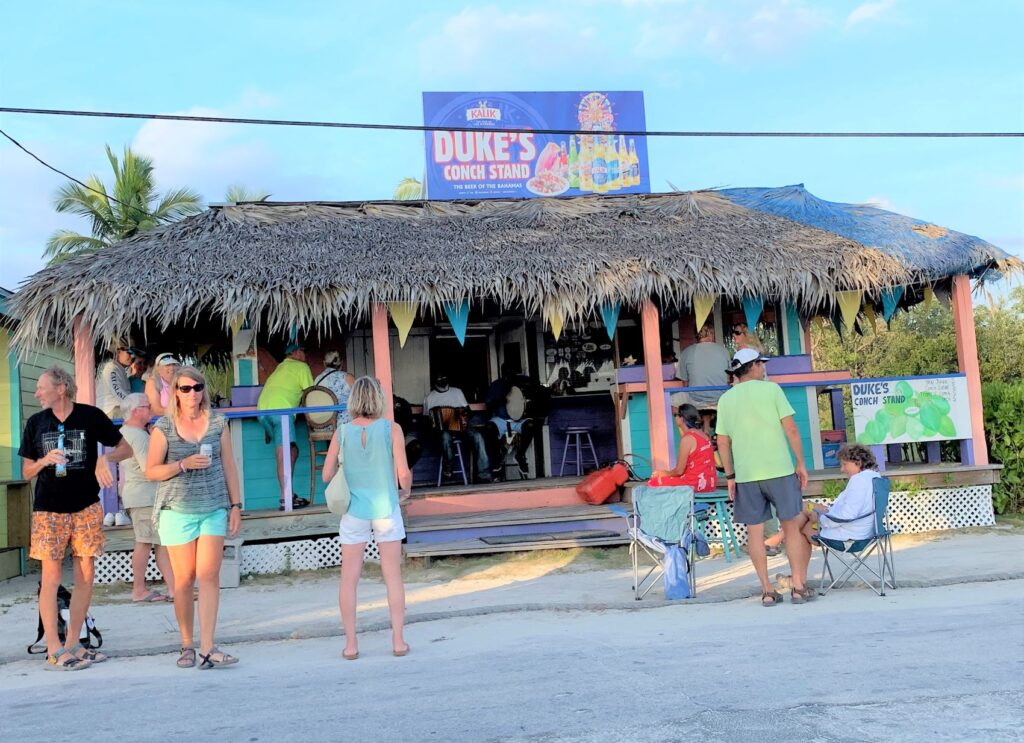
Dukes,in Bight Settlement, hosting Fish Fry


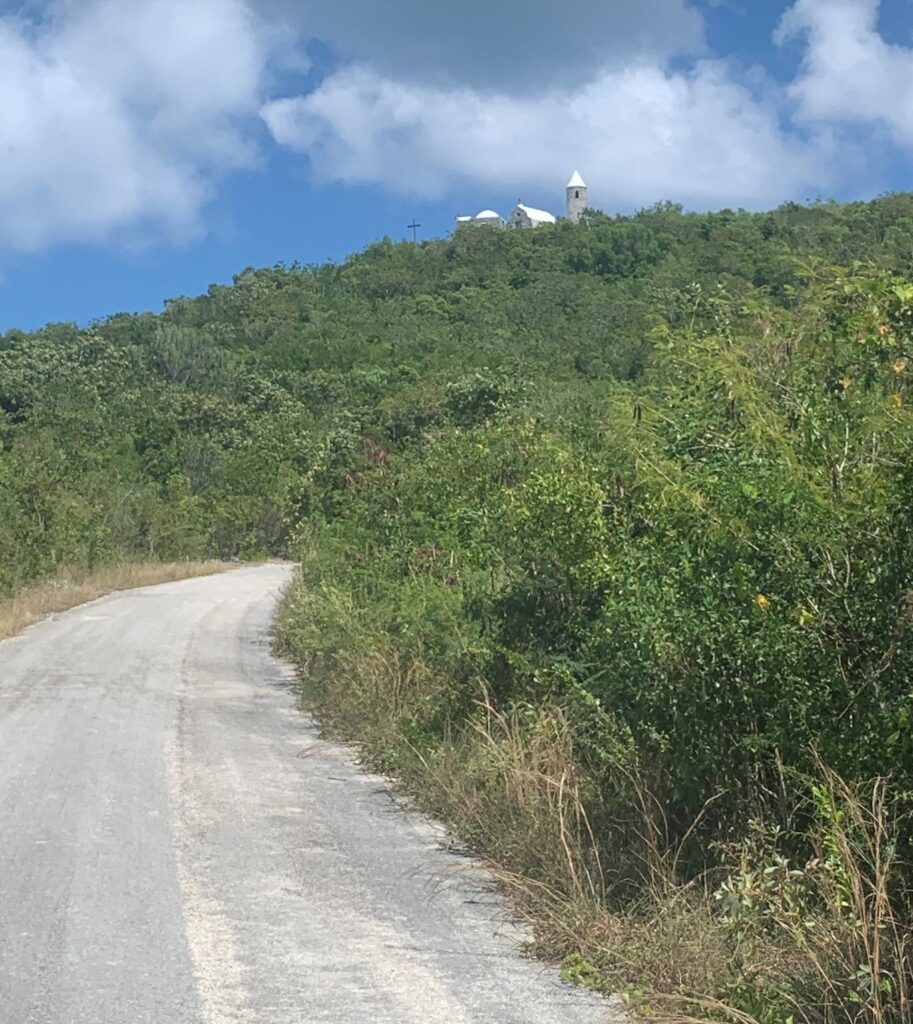
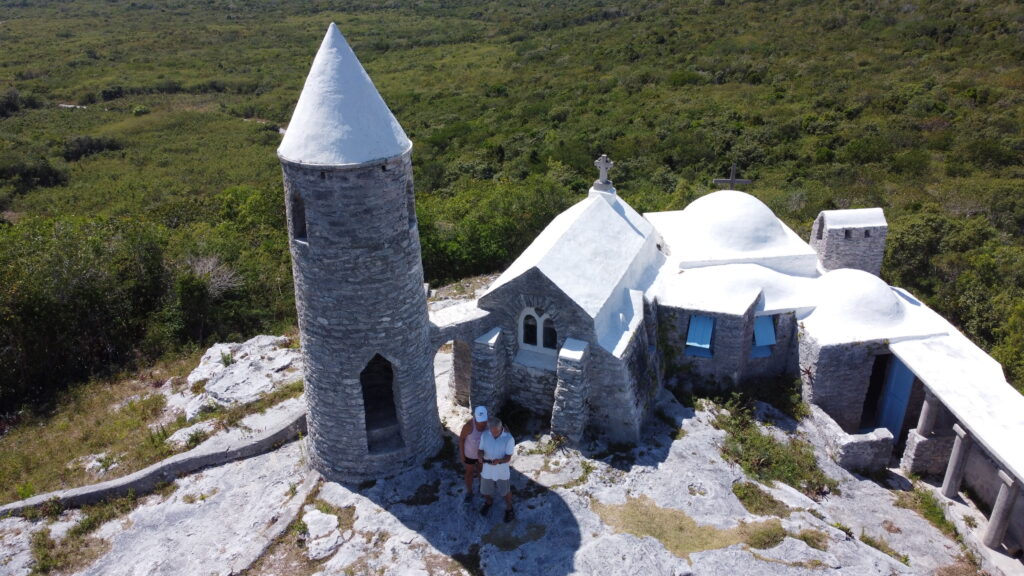
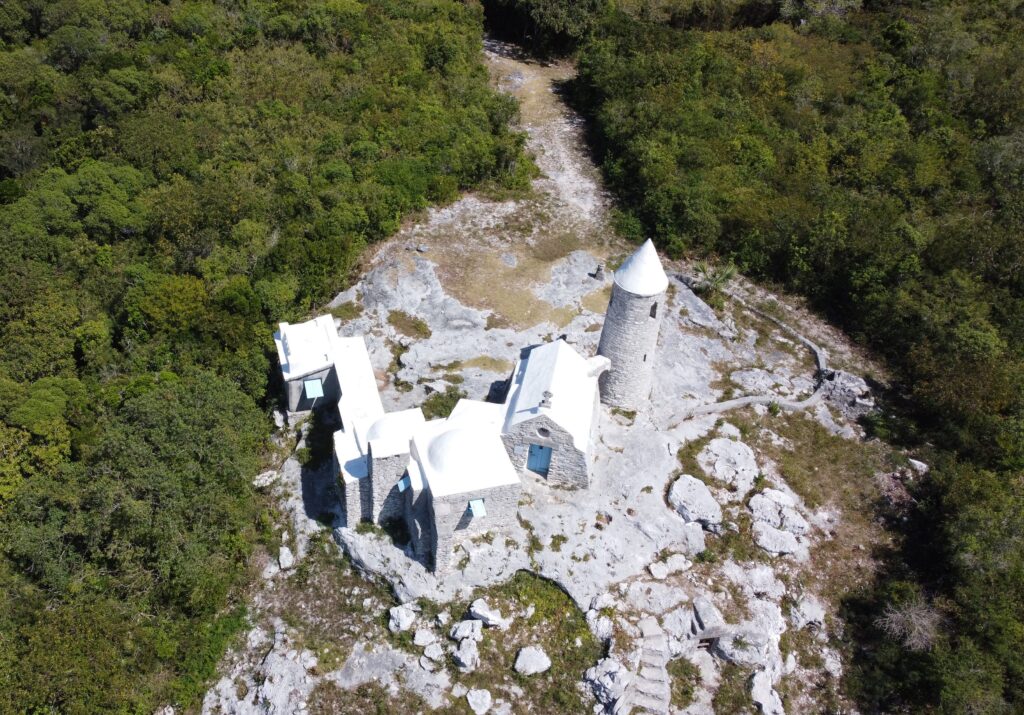
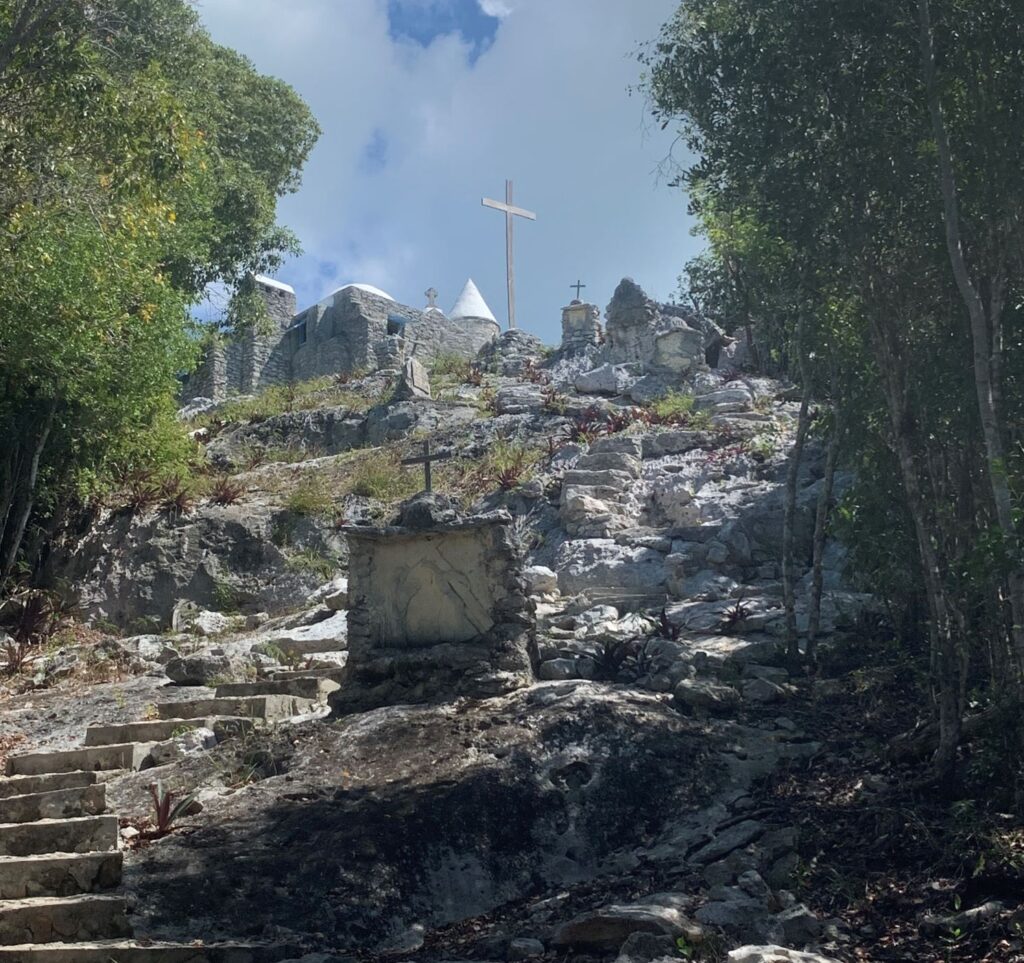
Near Bight Settlement on Cat Island, is Mt. Alvernia, also known as Como Hill, the highest elevation in the Bahamas at 206 feet above sea level. On Mt. Alvernia sits the remains of a small stone medieval hermitage built in 1939 by a Roman Catholic priest, Monsignor John Hawes, known as Father Jerome. Born in England in 1876, Father Jerome was an accomplished architect before becoming a priest and traveling the world before settling in the Bahamas, where he preached and built churches, clinics and schools until his death in 1956. He was beloved by the local people and per his request, was buried in a cave under the hermitage he built. Today the hermitage is owned and maintained by the Catholic church, and is open to anyone who hikes the 20 minutes up the mountain…it was so worth the hike in the searing mid-day heat to visit the hermitage and take in the views.

Road to hermitage
Hermitage on Cat Island
Stairway to hermitage, Stations of the Cross

It’s now March, and we have arrived at a critical milestone in our journey – the turn-around point – time begin the journey home. As much as I’ve loved this adventure, I am not sorry to come to this point. We still have several weeks of Bahamas adventures ahead of us, but I am happy to be homeward bound. I miss my family and friends. I also miss the conveniences of living on land – easy access to groceries and services, having a safe place to sleep no matter the weather outside, not constantly checking if the refrigerator is staying cold (marine refrigeration is notoriously unstable), and stepping out for meal when I just don’t feel like cooking. I believe in balance, and the city-girl is saying “it’s time” while the sailing-girl is saying “see ya next season”; however, as we hear about the latest “snowmageddon” in Toronto, I am still happy with this view:

Hello Nassau and Exumas!

New Providence Island, home to the capitol city of Nassau, is a stark change from quiet, rural Andros Island.  New Providence occupies only 80 sq. miles, but more than 70% of Bahamians call it home. In addition to serving as government seat of the Bahamas, Nassau is home to over 400 banks and trust companies and has a bustling tourist industry, catering to cruise ships and their thousands of passengers. While anchored in Nassau’s harbour, we watched 4-5 cruise ships dock every day, each carrying 3000-5000 passengers, sending about 15,000 people into Nassau every day.

Cruise ships lined-up in Nassau
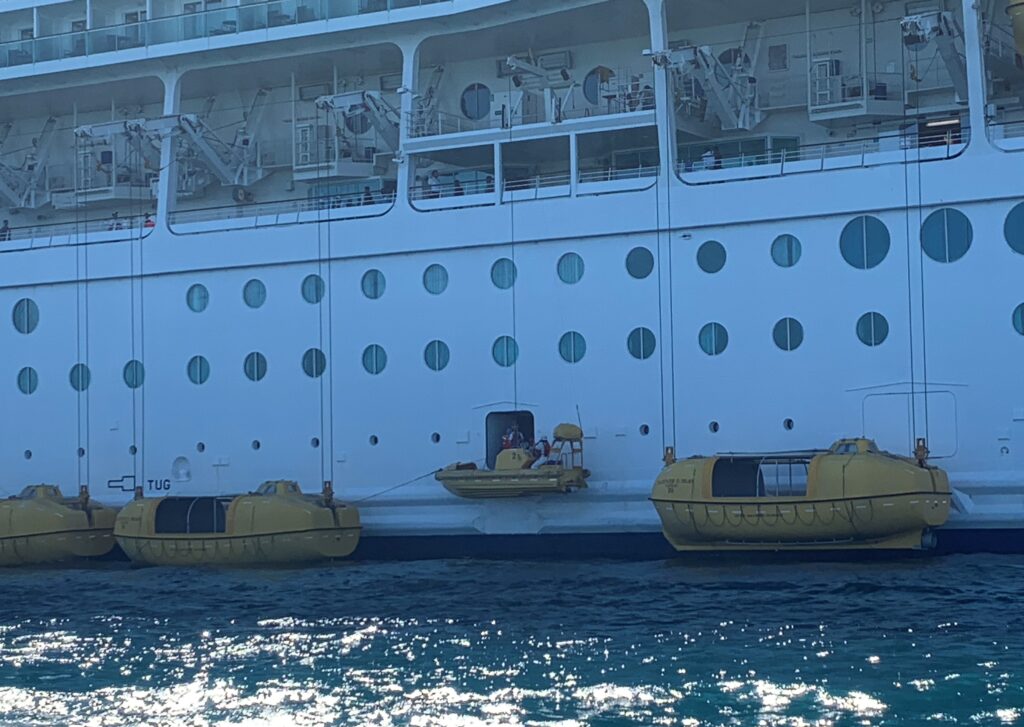
Checking life boats
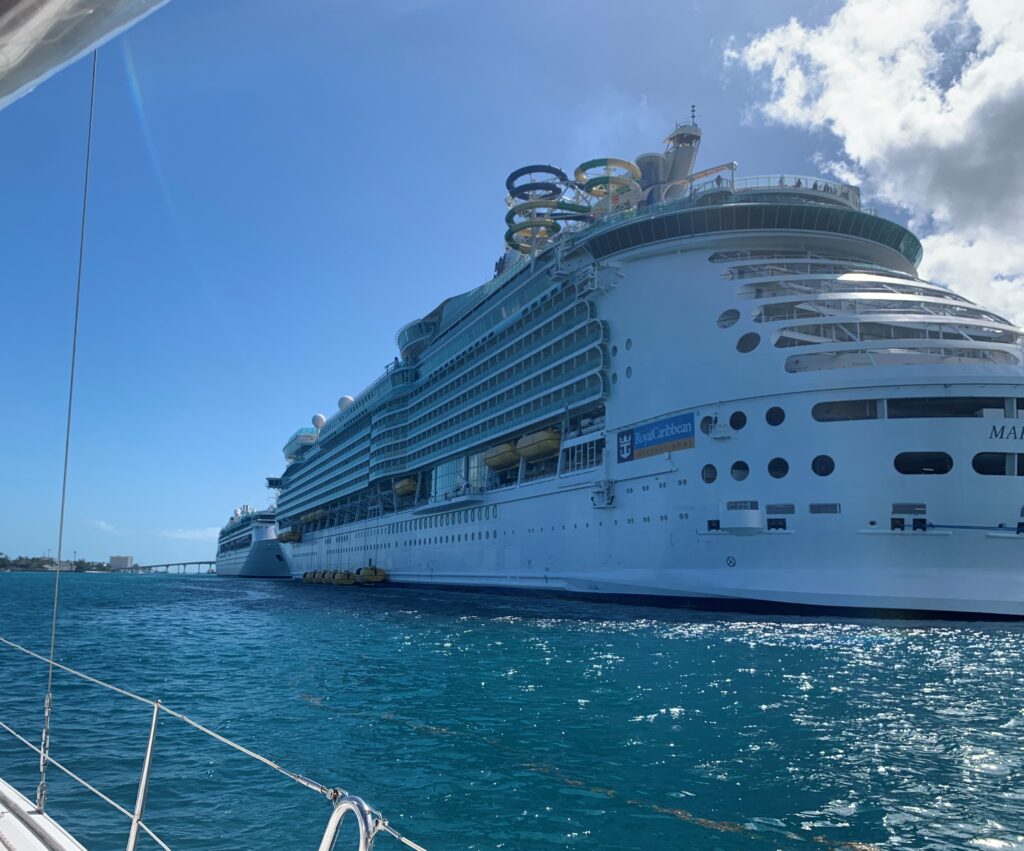
That boat is huge!

Nassau was founded in 1670 by they British and has a long history involving the Spanish, French and Americans, but perhaps the most interesting residents were Pirates. In the early 1700’s Nassau became the home base of over 1000 pirates and their leader, Thomas Barrow, declared himself the Governor of New Providence. In 1718, King George I of Great Britain finally put an end to the pirate rule by pardoning “reformed” pirates and threatened execution to any pirate who did not comply.

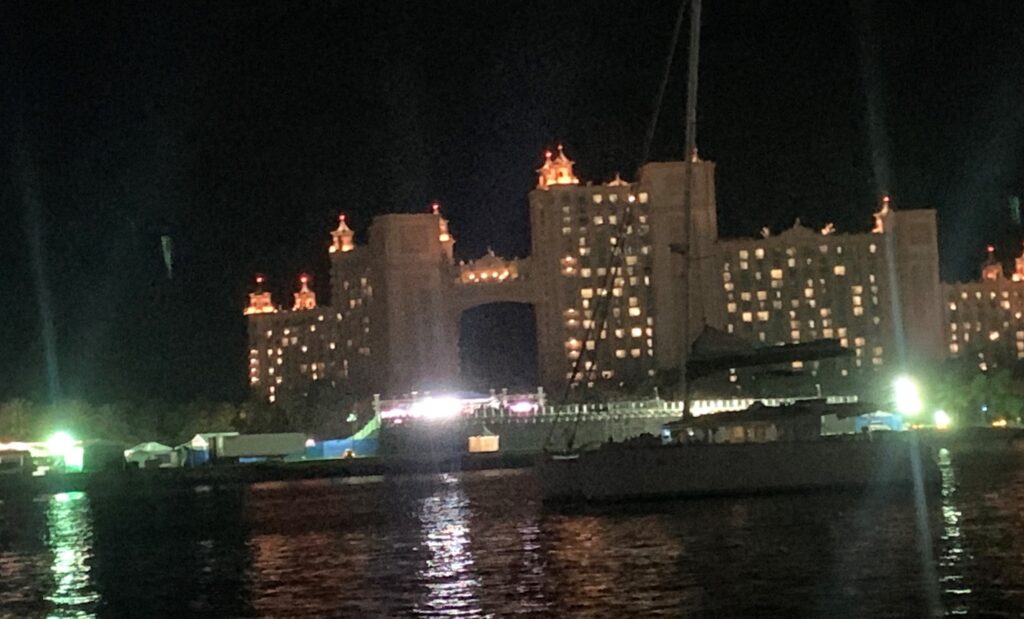
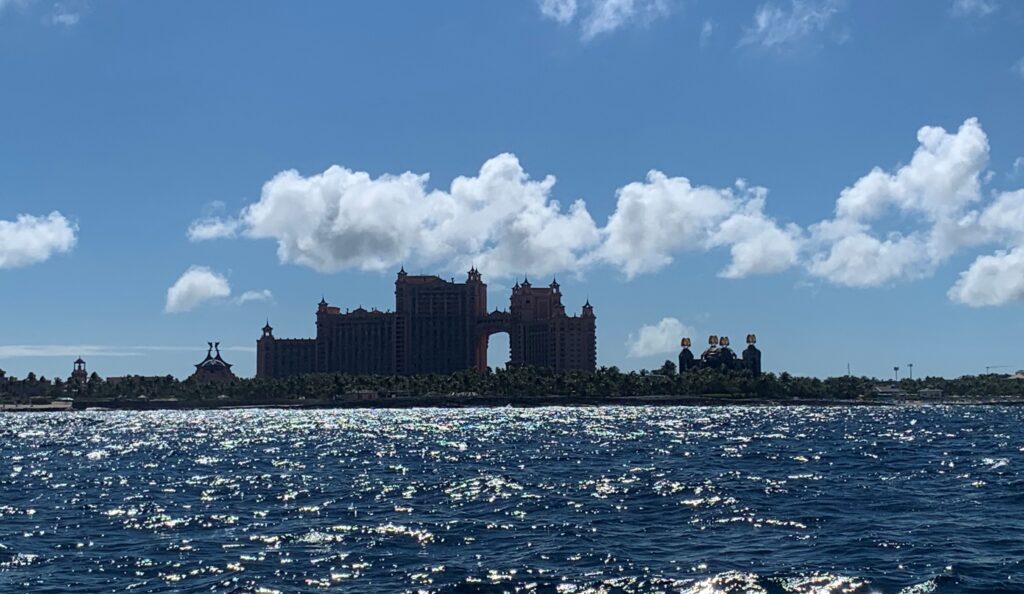
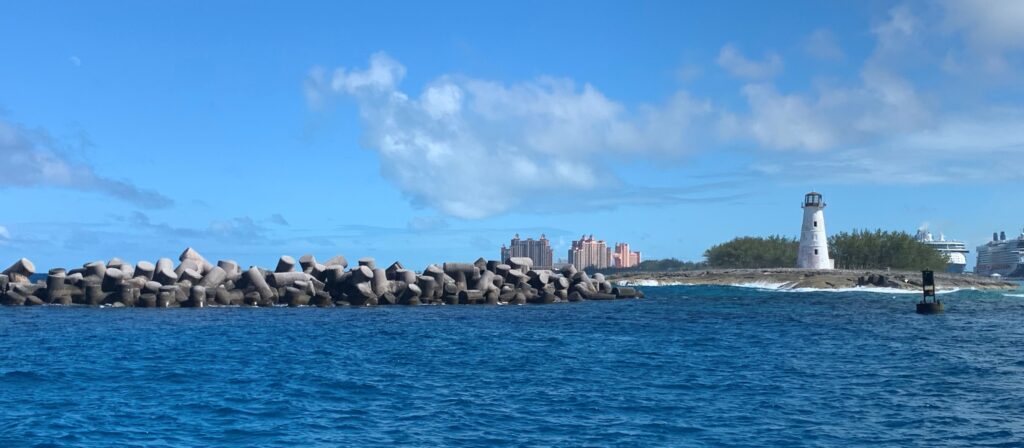
Atlantis Resort on Paradise Island, across from Nassau
View of Atlantis from our anchorage

Nassau and the Bahamas played a major role during the American Revolution and the American Civil war, serving as a port for blockade runners and offered resettlement for Loyalists and slaves. Nassau enjoyed prosperity during the Prohibition era as a smuggling center for booze and by the 1920’s Nassau was a well-established vacation destination for wealthy Americans. Several well-known movies have been filmed in the area, including James Bond’s Thunderball, Never Say Never Again, Casino Royale (2006) and For Your Eyes Only. Sean Connery fell in love with the Bahamas while filming here and made Lyford Cay his home until his death in 2020.

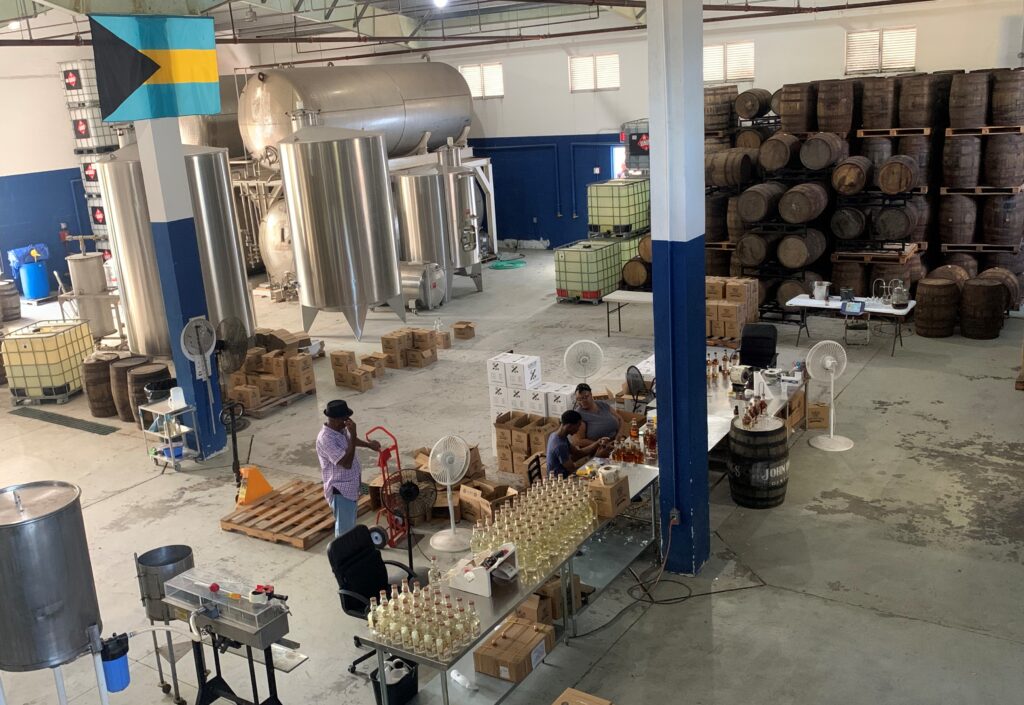
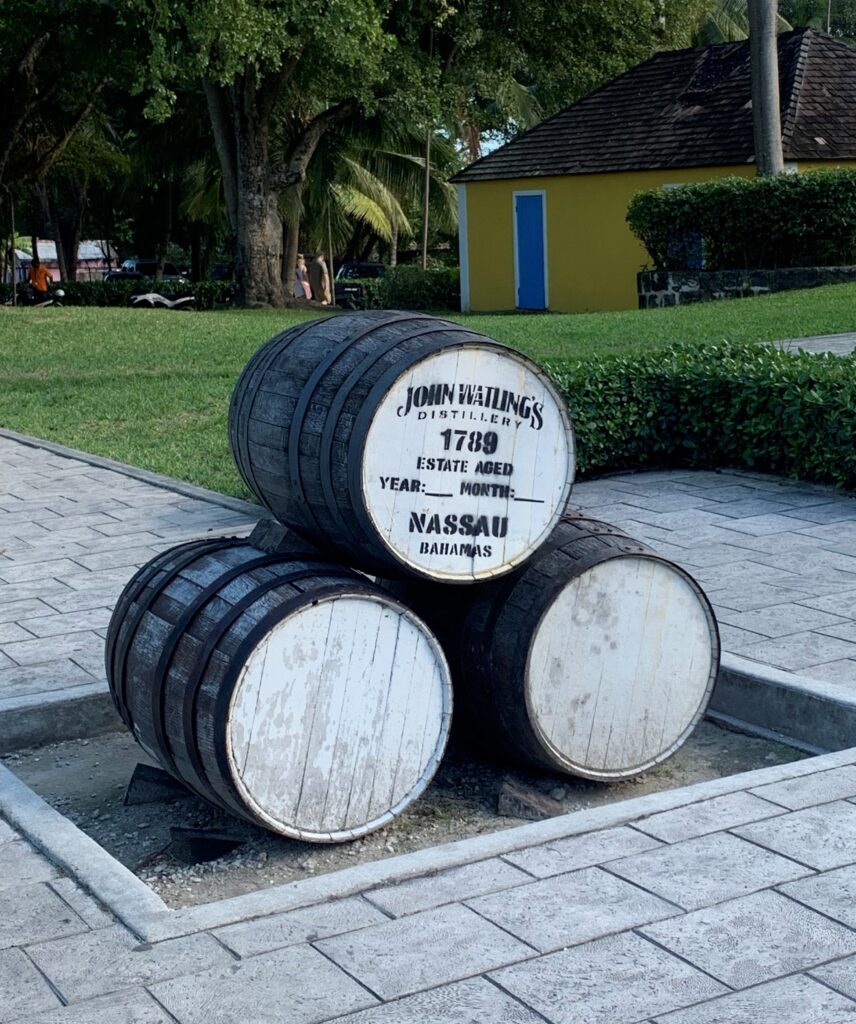
Rum manufacturing is still a thriving industry in the Bahamas
Rum factory

Nassau was a welcome opportunity for us to fill-up and restock supplies. We spent one day in the historic core, filled with beautiful old buildings and rich history, but it was teaming with thousands of cruise ship tourists and souvenir shops, expensive bars and restaurants vying for their tourist dollars. One day was more than enough and we were happy to move on to the “suburbs” where we could shop in well-stocked stores for groceries, hardware and sporting goods. While I love the small islands and their little shops, it was good to go to modern stores to get everything we needed, including a Starbucks latte.

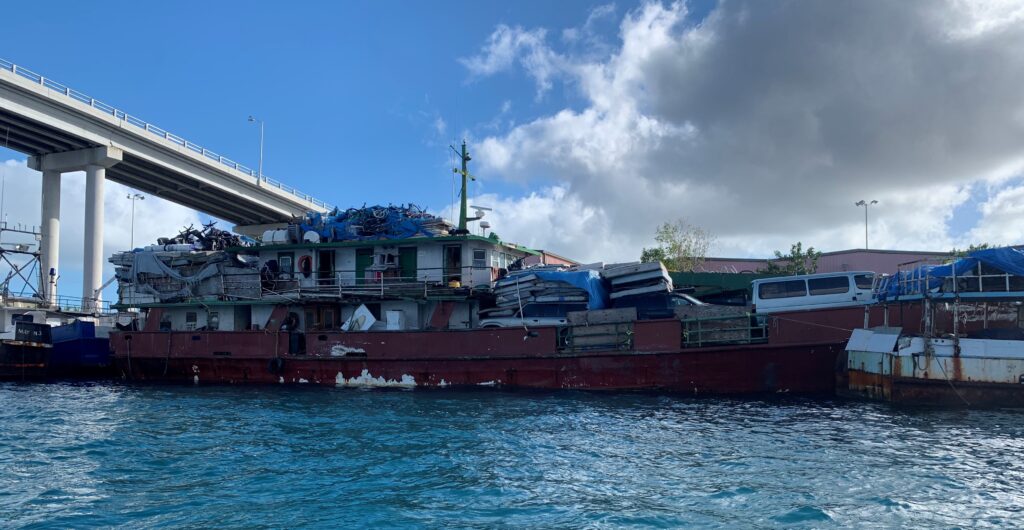
Barge in Nassau Harbor
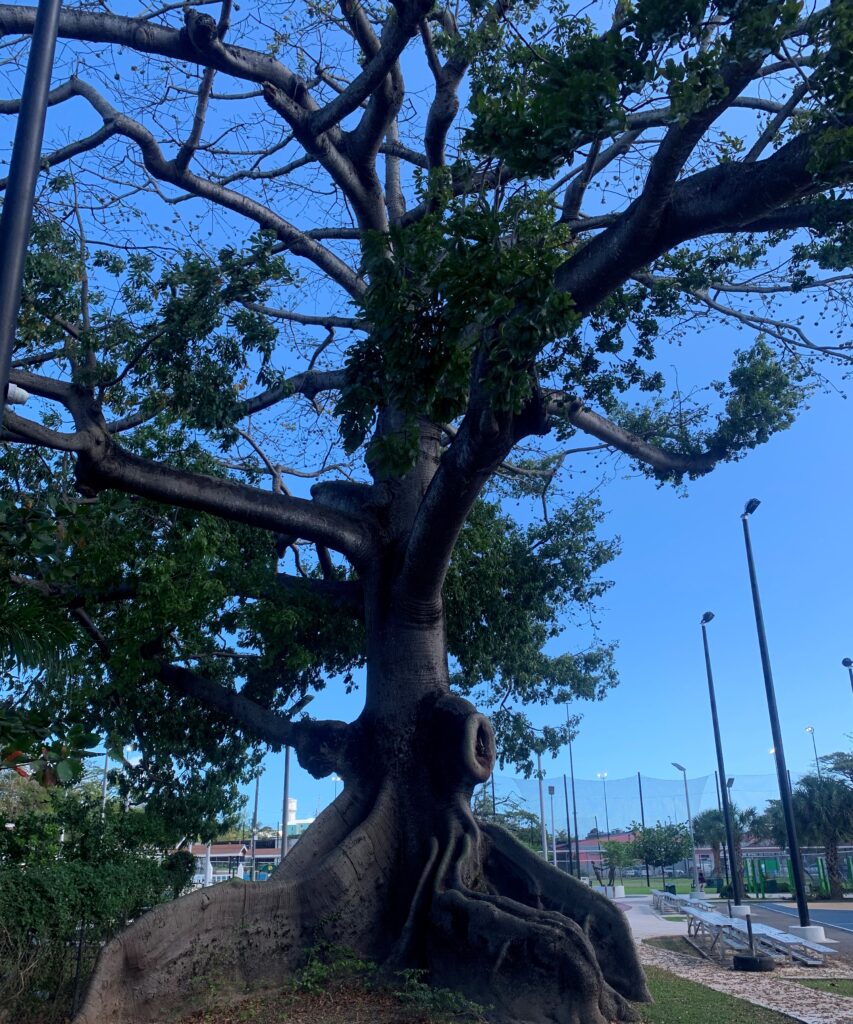
Gigantic trees near Nassau

Nassau’s international airport has direct flights to many US and Canadian cities, making it a convenient spot to pick-up guests, and we had guests coming in! Cathy and Fabian, our friends from Newfoundland, the people who “adopted” us during Hurricane Larry in 2021, experienced North Atlantic sailors, were coming to spend some time aboard Meshuggana. With our new crew onboard, we left Nassau harbour, pointed the bow south and set sail for the jewel of the Bahamas – the Exumas.

Relaxing by the pool while doing laundry
Palm Cay Marina near Nassau

The Exumas consist of over 365 islands, or cays, and has long been a favorite destination of cruising boats. The water is warmer, bluer and clearer than the northern areas, or at least that’s how it felt to us. Many rich & famous people own property in the Exumas, including David Copperfield, Aga Khan, Nick Cage, Johnny Depp, Eddie Murphy and Faith Hill & Tim McGraw, so there has to be some truth to it.

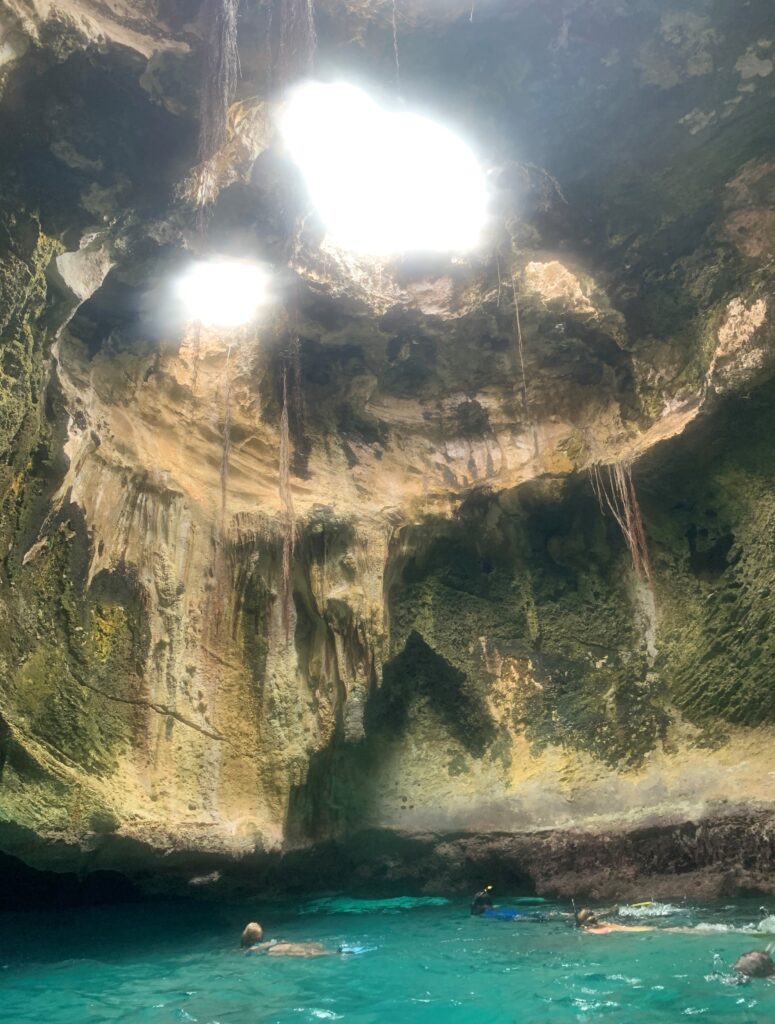
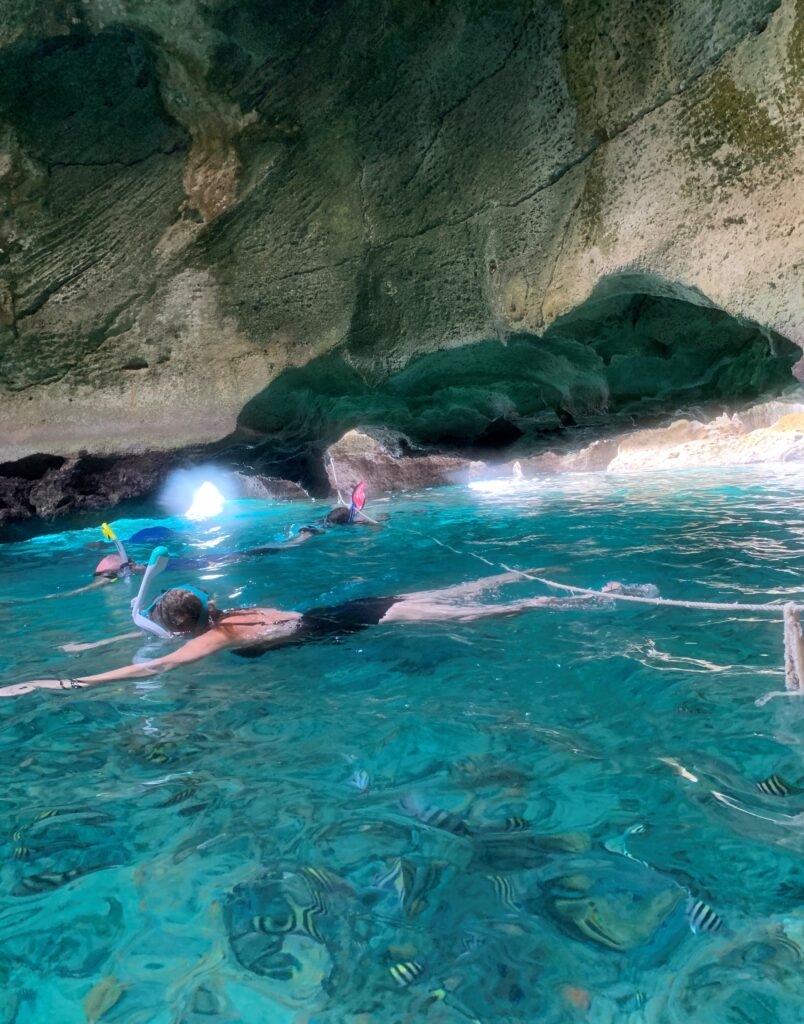
Thunderball Grotto, where the James Bond movie of same name was filmed
Fantastic snorkeling in
Thunderball Grotto

A large area of the Exumas are in the protected Exuma National Land and Sea Park, part of the Bahamas National Trust. The park is open to the public and offers mooring fields for cruising boats, some by reservation, some first come-first served, for $40 per night and includes the $10 per day for park access. Fishing, removal of any natural materials and waste dumping is strictly prohibited and strictly enforced. We spent several days in Warderick Wells, exploring the park, both on land and sea and were amazed at the magical beauty. We watched the mighty Atlantic waves crash the walls of rocky cliffs on one side of the cay, and on the other we marveled at the surreal shades of serene, blue water. We took the dinghy inland up a crystal blue river, only to realize it was low tide and required quite a bit of portaging, but the exercise was good!

River in Warderick Wells at low tide
Warderick Wells – water so blue it didn’t seem real
Warderick Wells, watching waves crash
Cathy & Fabian exploring a cay

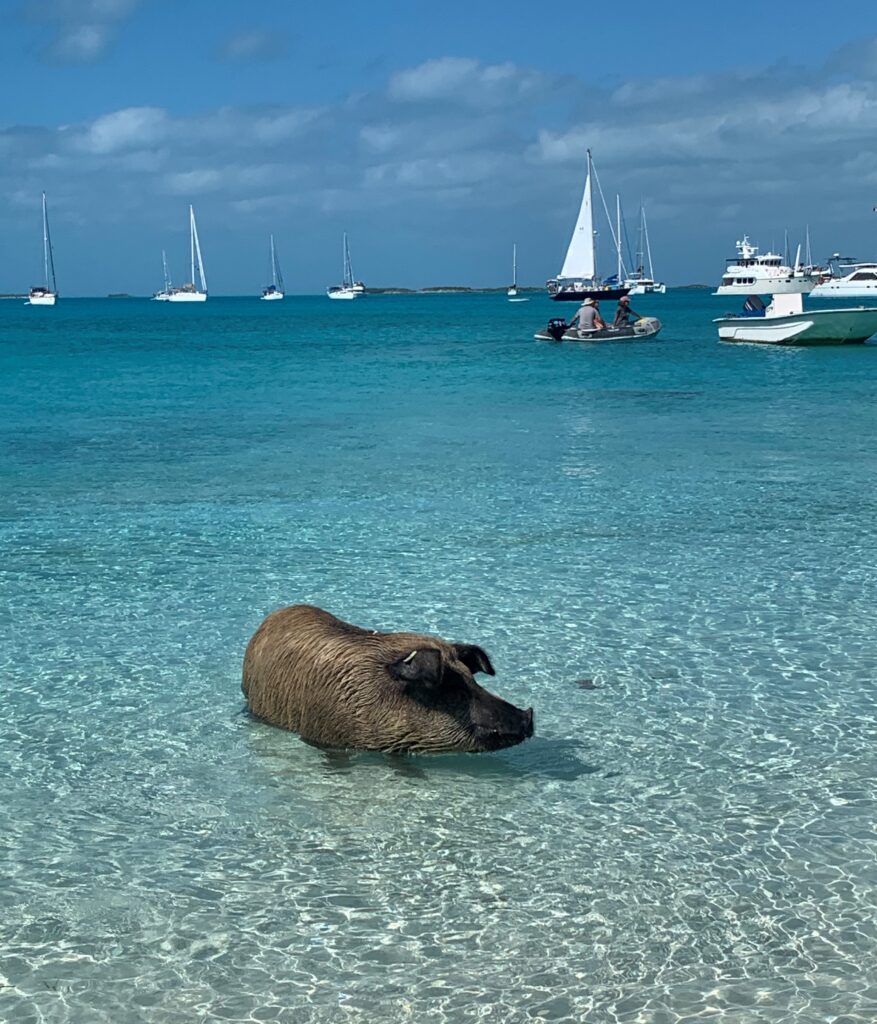
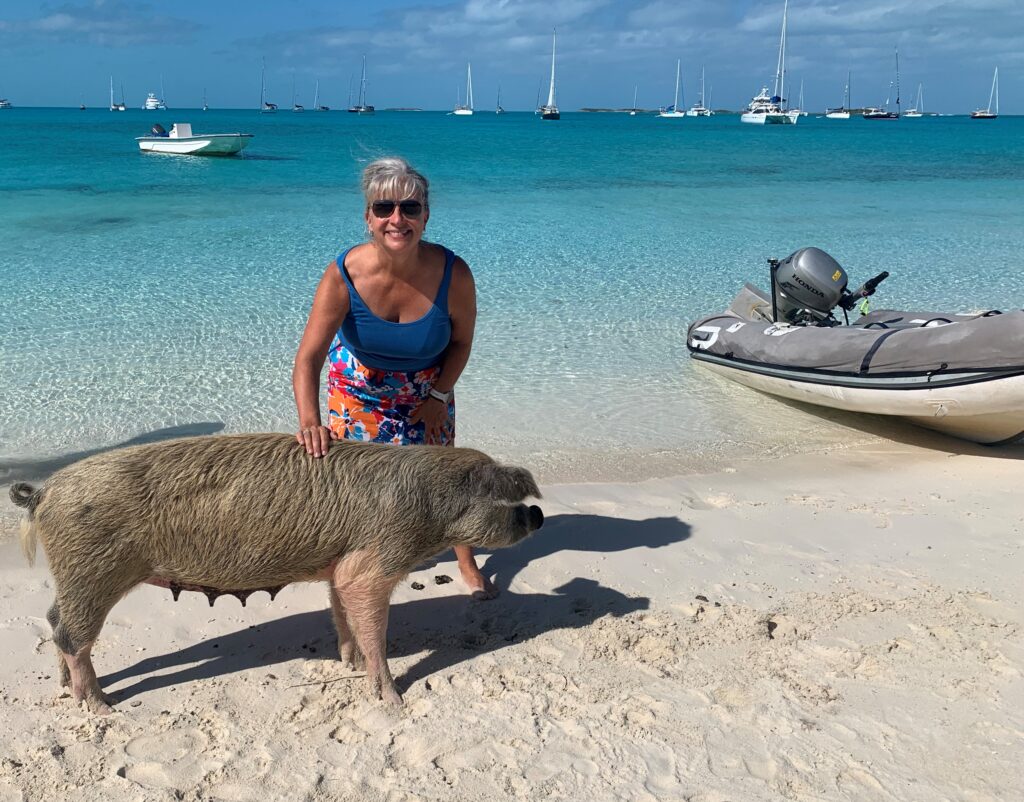
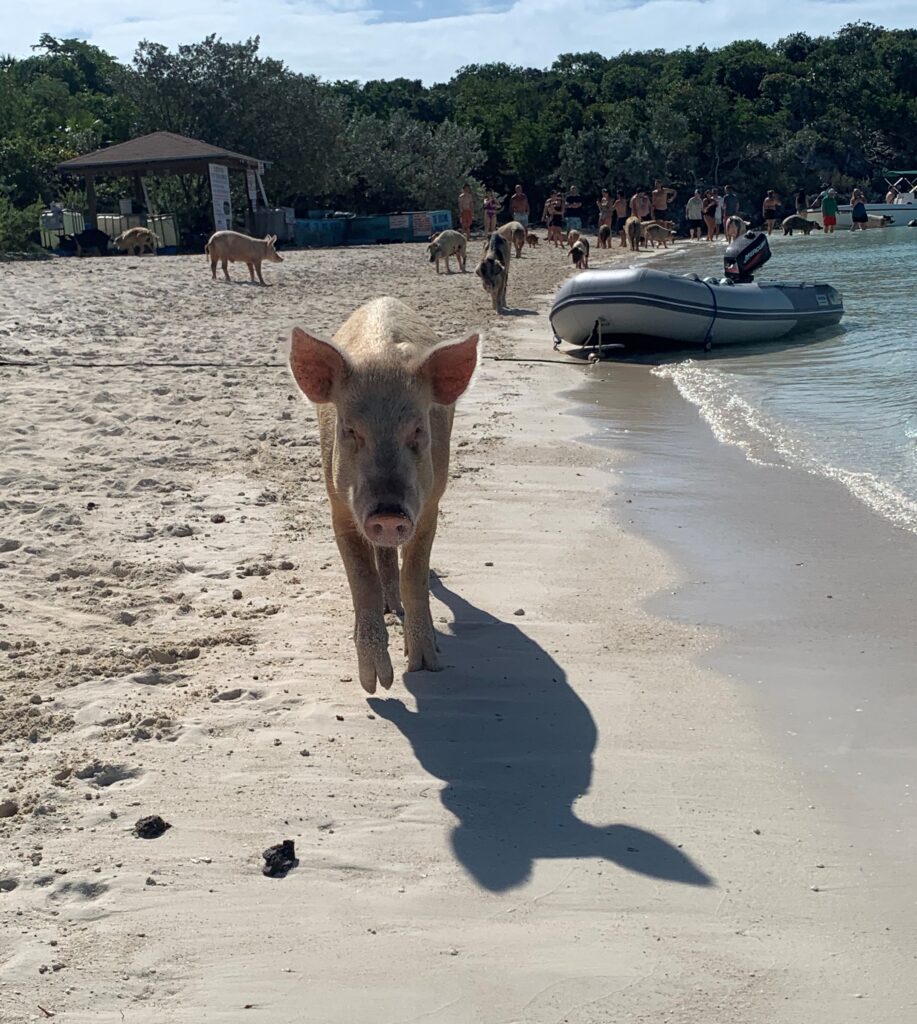
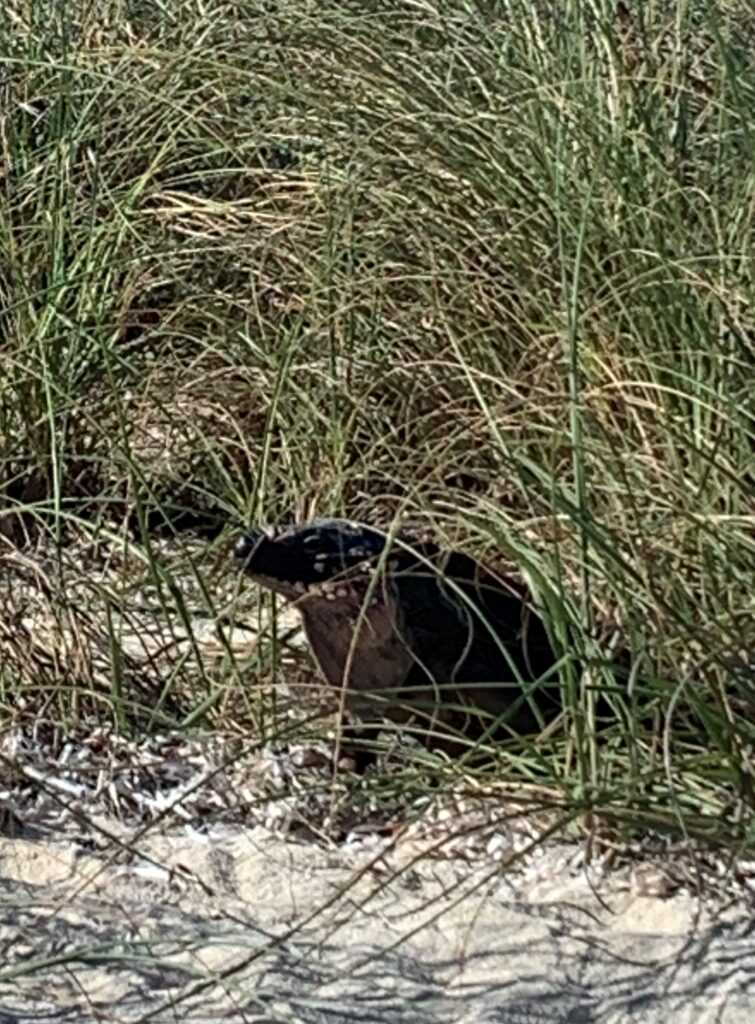
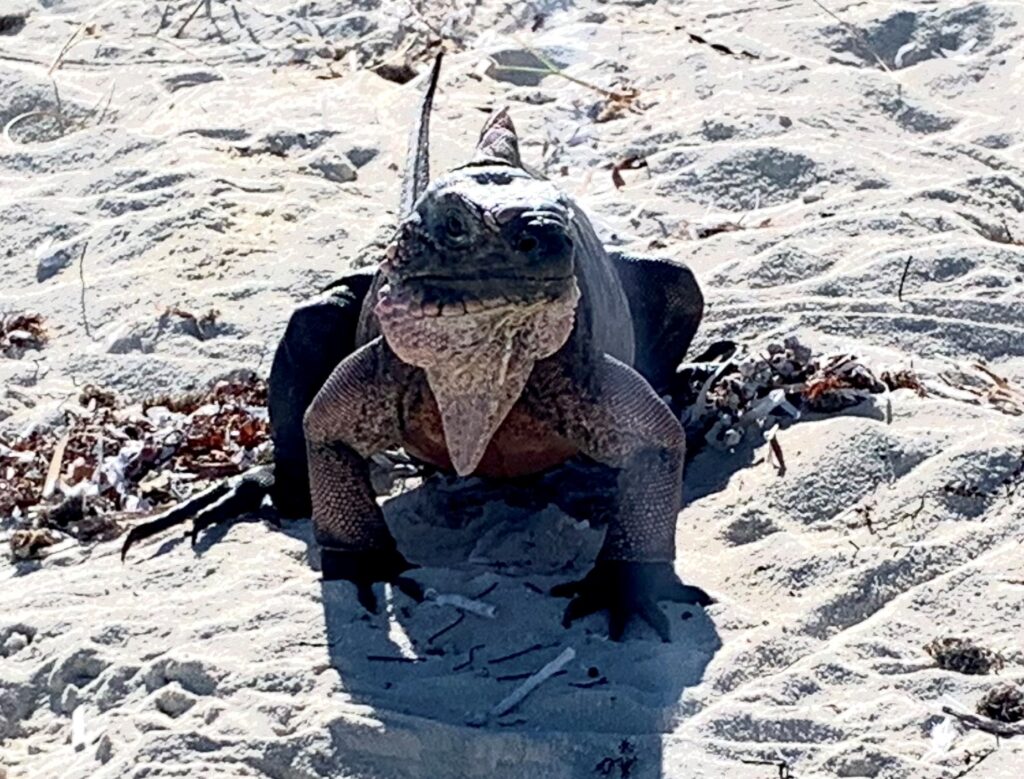
The Exumas are well known for non-aquatic wildlife as well, especially the famous swimming pigs of Staniel Cay and the Bahamian Rock Iguanas of Allen’s Cay (how could we not go to Allen’s Cay?). While these animals are supposed to be wild, they have become accustomed to constant tourist traffic and humans luring them with food, so now they come running as soon as a boat arrives. We did not feed these lovely creatures, but we did enjoy visiting with them.

Famous swimming pigs of Staniel Cay
Big pigs!
Friendly
Allen’s Cay iguanas are looking for food, but tend to be shy
This one was a little bolder than his buddies

For the last few weeks we’ve enjoyed warm temperatures and sunshine, but we’ve also endured nearly constant strong winds. Yes, sailors need and love wind, but when its consistently blowing more than 20 knots and gusting up to 30 knots, it’s not a lot of fun.  Add huge ocean swells and strong currents often going in the opposite direction, it can be dangerous.

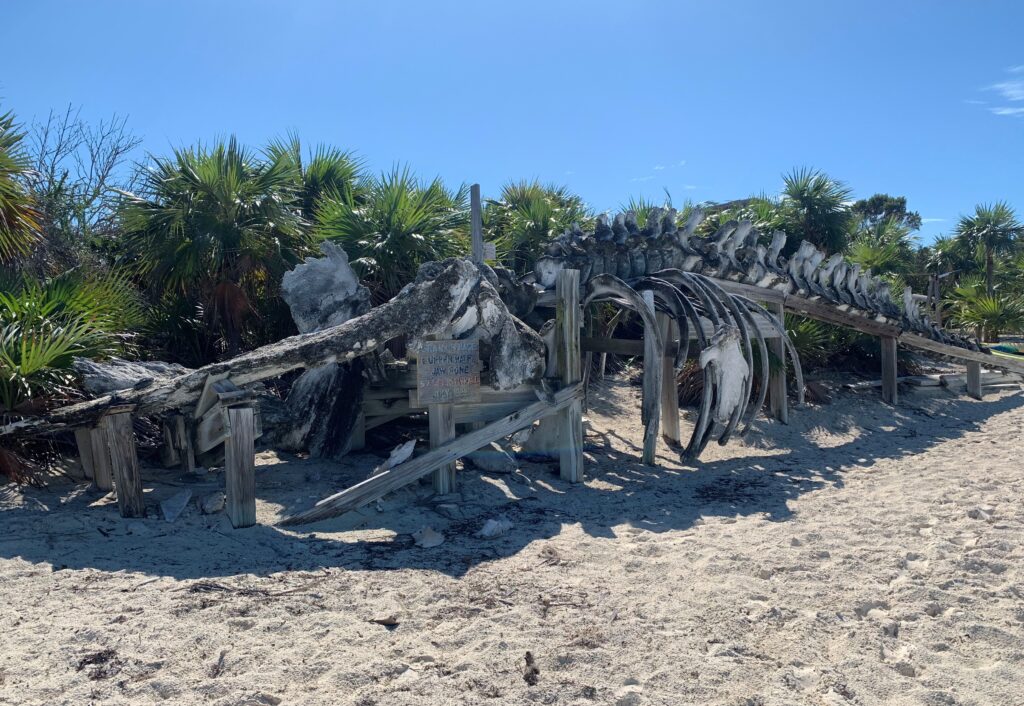
Whale skeleton in Warderick Wells. This whale perished after consuming plastic waste – a reminder that we need to be kinder to our oceans
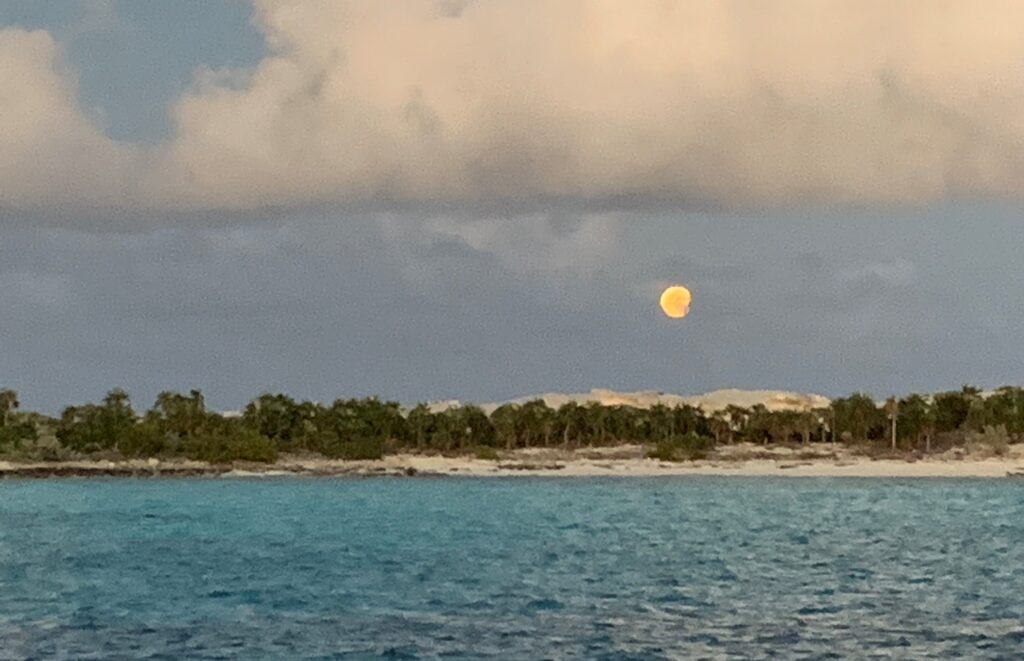
Moonrise in Warderick Wells

We’ve had a couple close calls during this leg of the adventure, the first in Shroud Cay. With the forecast calling for big winds, we tucked into the bay at Shroud Cay to pick-up a mooring ball. Most of the balls were already occupied, but we found one fairly close to shore that likely was available because the lanyard that is normally attached to the ring was missing. In Ontario many mooring balls don’t have lanyards, so we picked it up and attached our own lines including a safety line to the ball. It was a bouncy night, but we felt safe, secured to a ball, and slept well. I awoke early the next day, with my inner voice twanging…. something was telling me to get up. I went upstairs, checked that the dinghy and kayak were still attached to Meshuggana, relieved they were still there, I turned around and saw that we were just a few feet away from our neighbors – both our mooring lines had ripped and we were drifting towards the rocks! I sent an alarm through the boat and Allen, Cathy and Fabian came running and together we got the engine going, ripped lines pulled-in and anchor safely dropped before we hit a reef or another boat…another few minutes of drifting could have caused catastrophic damage.

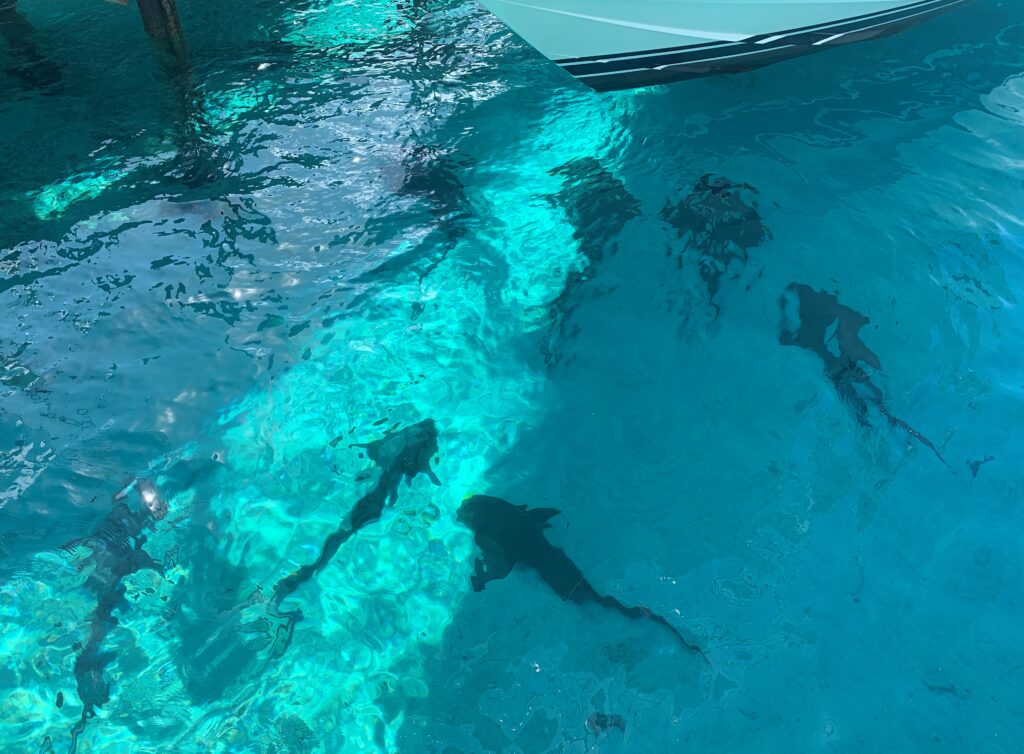
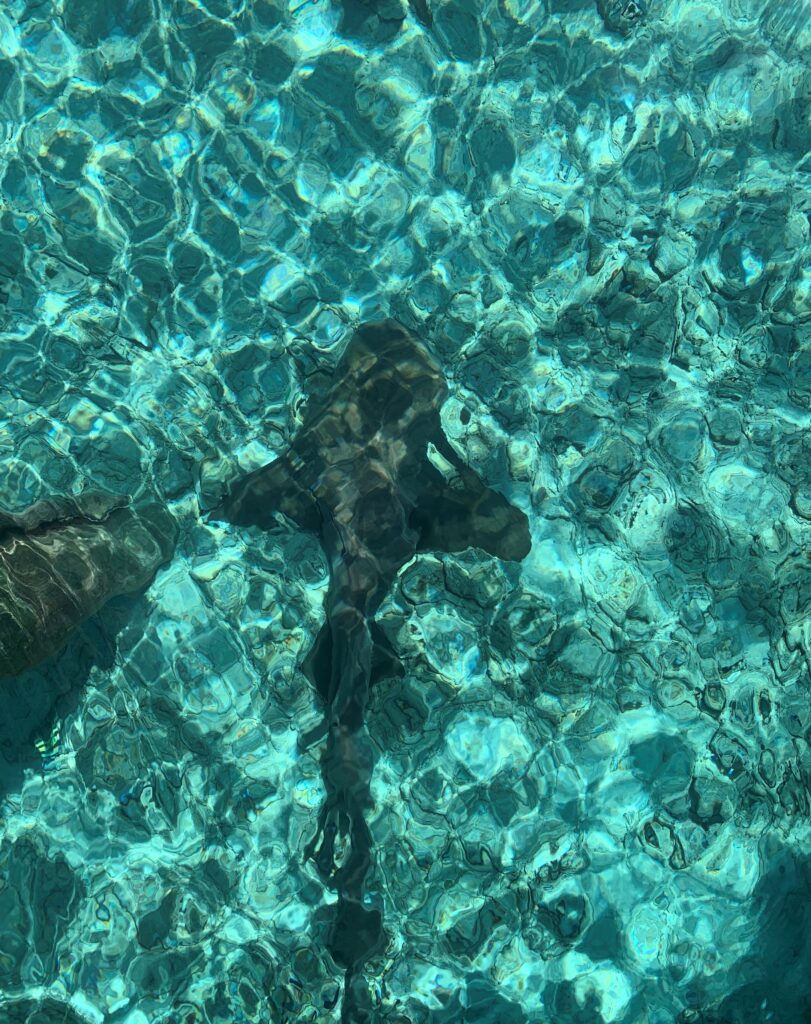
Staniel Cay Yacht Club Nurse Sharks are treated as pets. These docile
animals pose no threat to humans
Nurse Shark at Staniel Cay

Another close call came a few days later in Lee Stocking Cay, where we had ducked in after a few hours of miserable sailing conditions enroute to George Town. The anchorage was shallow, but we had at least a foot below the keel at low tide and we were in the company of two other monohull sailboats. The current running around the boat was strong, but the anchor was holding well so we settled-in for the night.  A couple hours after sunset, in full dark of night, the boat heeled significantly to one side and stayed that way. Assuming the tide had gone out and we were grounded, we checked the depth sounder – we still had 3 feet of water under the keel, but the anchor chain was slack. The next thought was terrifying – did the anchor chain wrap around the keel as we turned with currents? For the next two hours Allen sat on anchor watch and the rest of us listened for tell-tale sounds of metal on metal (chain on keel). By 11pm Allen determined that the chain was not wrapped around the keel, but the currents were so strong that they held us abeam to the wind and applied no force on the anchor chain. We were safe, but were happy to get out of there at first light.

Our Exumas adventures culminated with our arrival in George Town, the largest city in the Exumas.  George Town is a wildly popular destination for cruising boats, some spend their entire cruising season here. It’s easy to see why, with a moderately protected harbour and excellent holding, easy access to groceries, hardware, restaurants, even an airport, and this season there are about 350 cruisers anchored in the George Town area. There is a strong sense of community amongst the cruisers, with daily get-togethers and various activities for all. After some rough cruising, it’s good to be back in good company with cruising friends, old and new.

Hello Berries and Andros!

The Bahamas are made up of hundreds of islands and cays over 5359 square miles, with many grouped into chains. Names such as the Exumas or Abacos refer to island chains, or regions, much like one refers to the Midwest, or Maritimes in North America. We’ve been in the Bahamas nearly a month and so far we have visited Grand Bahama Island, home to the large industrial city of Freeport and where we checked into Bahamas Customs & Immigration, then sailed to the Berry Islands, sparsely populated and so tiny that when anchored on one side, you can hear the ocean waves crashing on the other side of the island. Next was Andros, the largest Bahamian island by land mass, yet a not a popular tourist destination. As I write today, we are on New Providence Island, by far the most populous Bahamian island and home to the capital city of Nassau, and yet again, we’re in a marina waiting out a windstorm (beginning to see a theme?).

If you’ve ever taken a Caribbean cruise, you will know that cruise companies often offer a day on their private island as part of a cruise itinerary. You may wonder where these private islands are located, and I can tell you that the Norwegian Cruise line’s private island is the northern most island in the Berry chain. It was quite strange to see 3 or 4 gargantuan ships anchored next to a tiny spit of land, barely above sea level, with rows and rows of beach chairs and a giant water slide and roller coaster as a backdrop. We sailed by as quickly as we could – not what we came here to see.

Hoffman’s

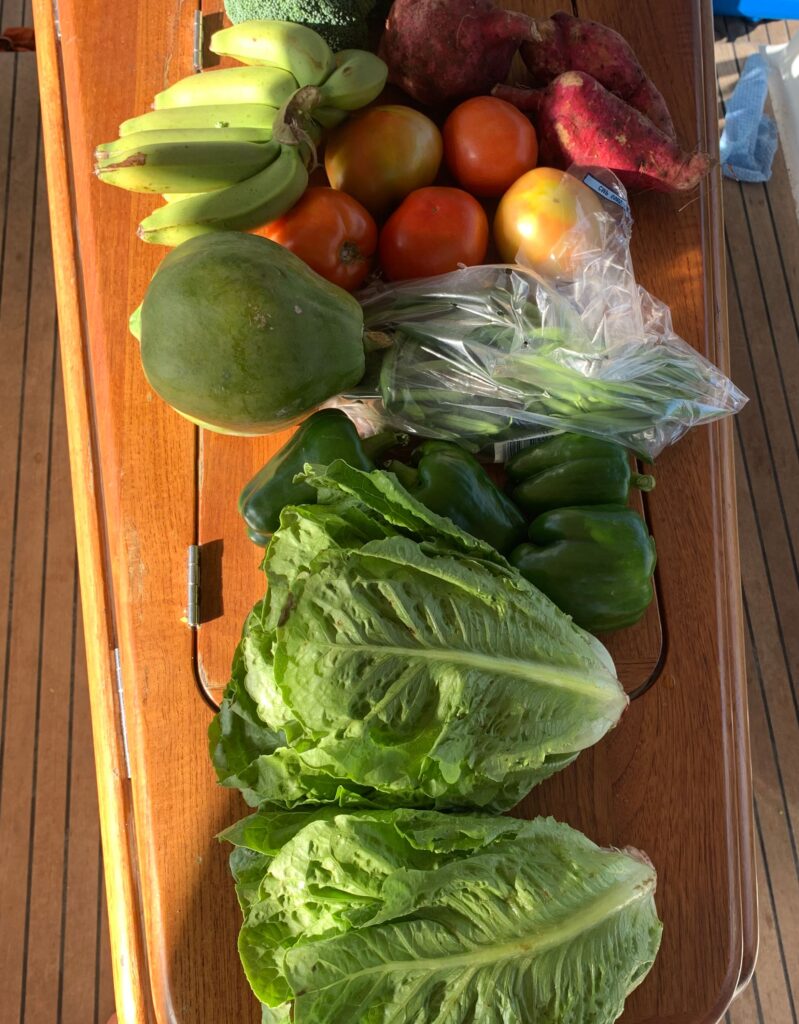
We continued sailing south through the Berries to Bullocks Harbour, where we stayed in a marina to wait out a dangerous windstorm. Many cruising boats sought shelter there and we passed the time with friends old and new, worked on boat projects, washed laundry and walked around the island, visiting beaches and a village to pick-up a few provisions. Provisioning in the villages is hit or miss – one day the only fresh products available were potatoes and onions, but a day later, after the mail boat arrived, we were able to buy tomatoes, bananas, cassava, broccoli and even coffee cream.

After 4 days the wind and waves subsided and we continued sailing south to explore the unpopulated cays of the Berries. A cay, pronounced “key”, is a low bank or reef of coral, rock or sand and is often a sand island on top of a coral reef. They are beautiful and the Bahamas are full of cays!


Our two favorite spots in the Berries are Hoffman’s and Bond Cays. Finding the cays is not difficult, but accessing them can be tricky as they often lie on the other side of the island and the inlet leading to the cay is narrow and shallow, requiring extreme caution. To safely navigate the inlets, we aim for high tide, then Allen keeps his eyes on the chart plotter to monitor depth and forward-looking radar, while I stand on the bow, with my polarized Maui Jims, scanning the water for obstacles such as rocks or coral. It’s stressful, but it is so worth it when I see the anchor land with a poof of white sand in crystal clear turquoise water just a few yards from a pristine, white beach.

Hoffman’s Cay
Anchorage at Hoffman’s Cay

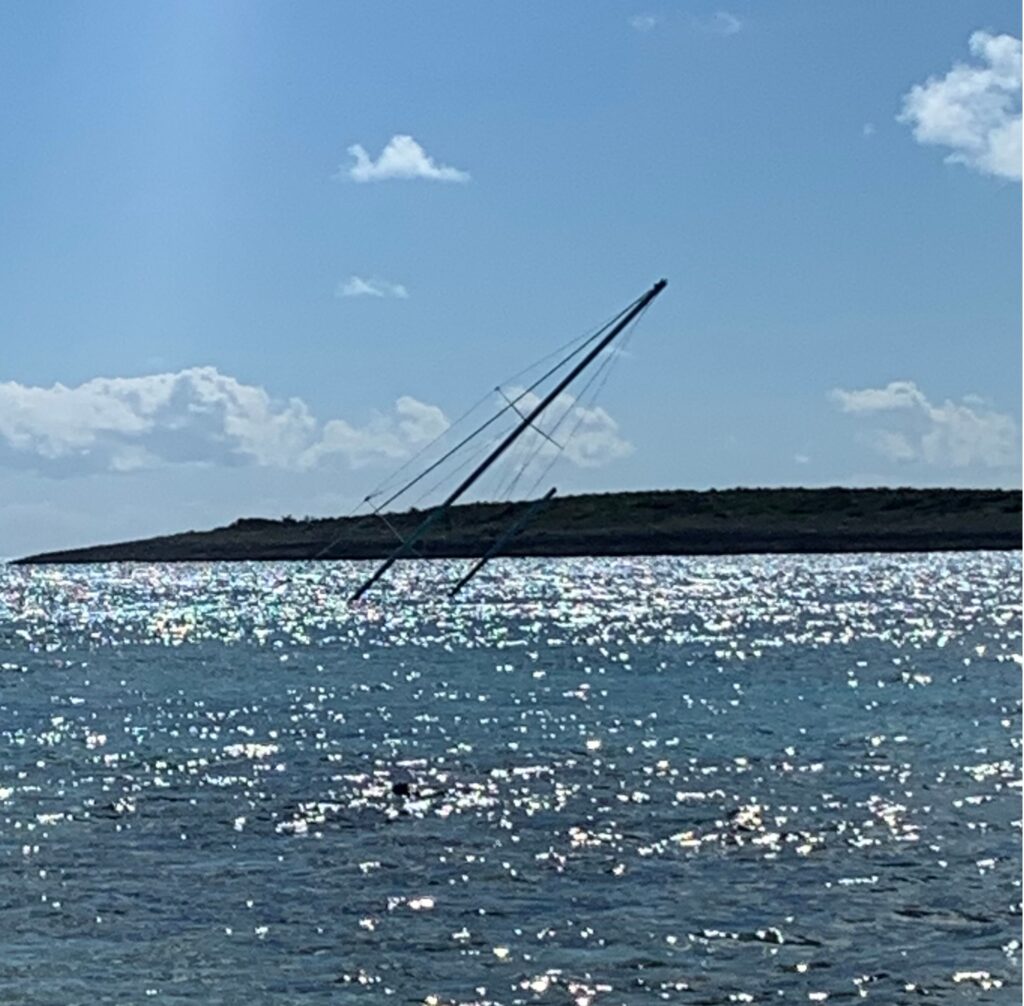
Hoffman’s Cay is amid several small islands, some with inaccessible rock walls and others with lovely beaches that provide a nice spot to land the dingy and go ashore. It’s a large, popular anchorage and we were there with about 20 boats. Unfortunately, there was also a victim of the recent windstorm, a ketch (a 2-masted sailboat) whose anchor slipped in the winds and the boat wound up on the rocks. We heard from other boaters that all aboard were safe, but the boat sank. It’s always hard to see wrecked boats, a stark reminder that we can never, ever underestimate the power of wind and water.

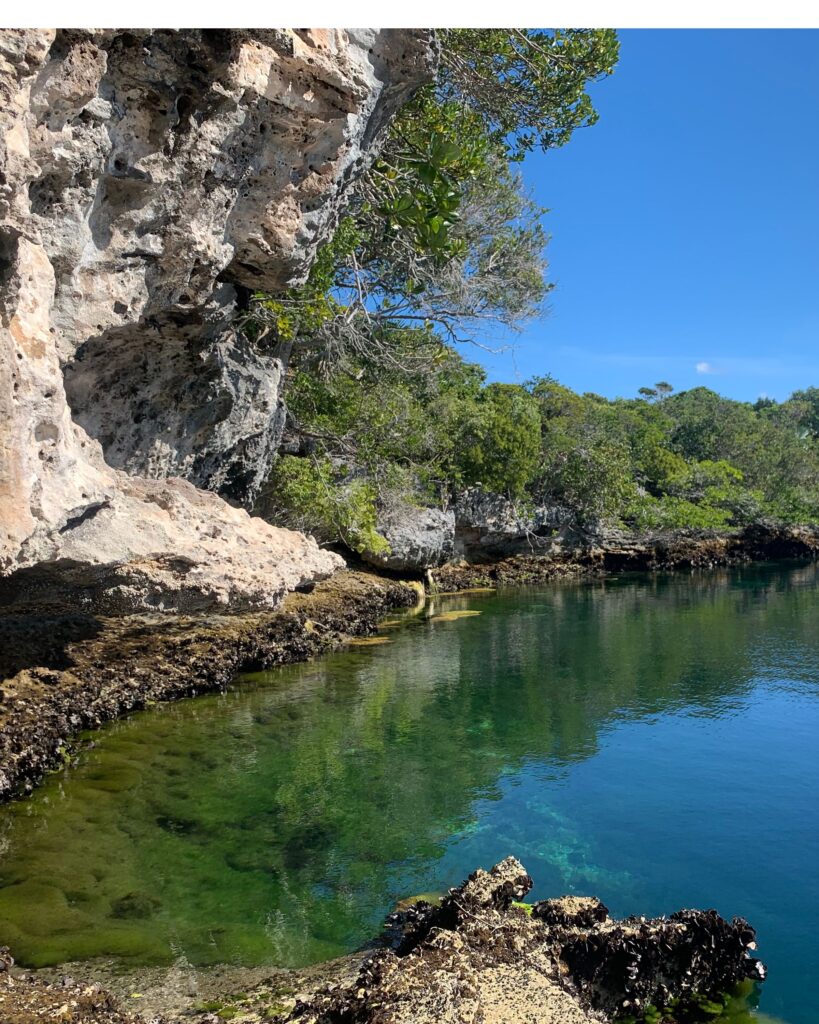
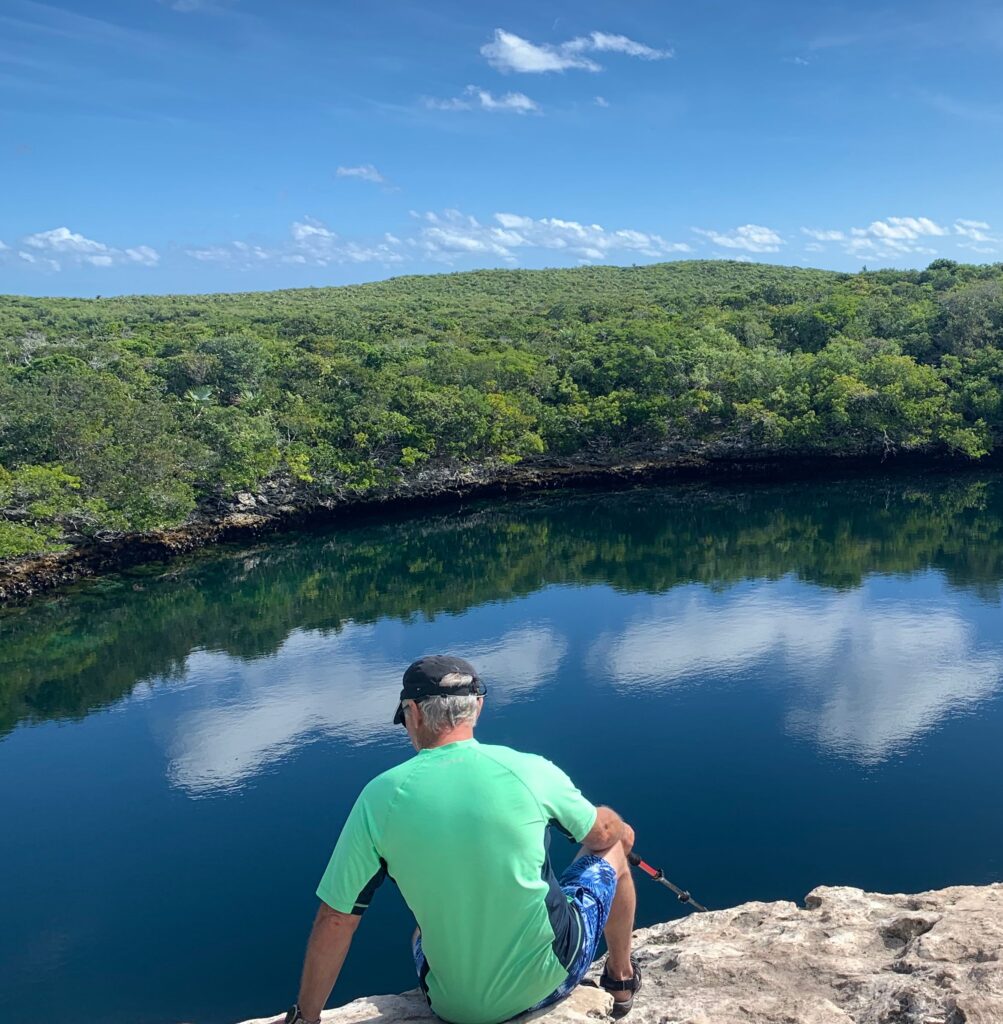
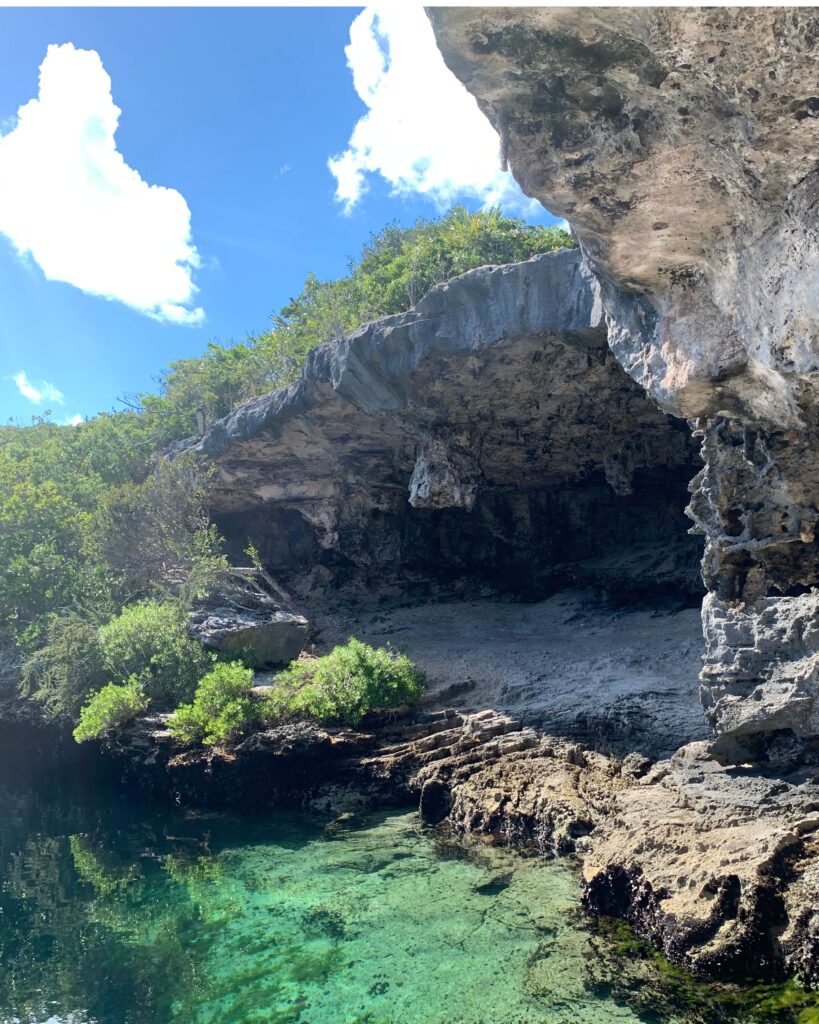
On a happier note, Hoffman’s has a Blue Hole, just a short hike along a jungle path to the center of the island. As a bonus, we had the place all to ourselves and enjoyed a cool dip in the salty inland lake. Hoffman’s was a lovely stop, but the forecast showed winds shifting switching from east to south-east, and would send wind and waves down the channel right into our anchorage, so we needed to find a new cay.

Blue Hole near Hoffman’s


Bond Cay, on the west side of a Berry Island, provided perfect shelter from south-east wind and waves. We navigated an especially narrow inlet, but were amazed as it opened up to deeper water (a whole 8 feet deep!) and a spectacular beach surrounded by every shade of turquoise water. Bond Cay is big enough to hold 100 boats, but it was just us and our buddy-boat, One Day, for 3 whole days. The water was so calm on the west side of the island we almost felt like we were on land, but we could hear the surf crashing on the east side of the island. This was the perfect opportunity to finally inflate the paddle board and get some exercise while exploring the cay. I soon discovered this cay was home to several Nurse Sharks, docile, shy animals that pose no threat to humans, barracudas (also no threat), and a couple dolphins. Our few days in Bond Cay were magical, but soon the winds would shift again, this time to the west , so we had to move and find better protection.

Bond Cay
Nurse Shark in Bonds Cay
Bond’s Cay sunset

When it was time to move on from the Berries, we chose the road less travelled – Andros Island. Typically cruisers head east to New Providence or the Eleuthera chain after exiting the Berries, but we like to visit places a bit off the beaten track. Andros is 104 miles long by 40 miles wide, and is the largest Bahamian island and the 5th largest island in the Caribbean; however, most cruisers don’t visit Andros. Without resorts and large-scale attractions, tourists do not flock to this island…perfect!

Morgan’s Bluff, Andros


Andros’s native inhabitants are called Androsians, and there are about 8000 living on the island. They are decedents of freed slaves and Seminole Indians and their lifestyle is tied to both land and sea. In addition to the fishing industry, Andros has a thriving farming industry thanks to its fresh water aquifers. The fresh, potable water is so abundant that not only does it make farming possible on the island, Andros exports its fresh water to other islands and supplies about half of the fresh water used on New Providence Island, home of Nassau.

Although you shouldn’t feed wild animals, this manatee is a regular, getting fresh water in Morgan’s Bluff

We spent several days in the northern town of Morgan’s Bluff, where for $6.25 per day, we could tie-up to the wharf inside a well-protected harbour, and although they don’t have electricity at the docks, we did have access to unlimited fresh water to fill our tanks, shower and wash the boat. An Esso gas station, a lovely restaurant and white sand beach were all just a few minutes’ walk away, so we enjoyed some down time. We also indulged in a half-day trip to do a little sight-seeing and hired a car and driver (they drive on the left side here – yikes!) to take us to Androsia, a family-run batik fabric factory and store, about an hour from the docks. There we took a self-guided tour, chatted with employees as they applied wax dies to the fabric, then submerged it into bathtubs of dye, and eventually cut and sewed it into garments and home textiles that are exported throughout the world. Of course, I needed to buy a few items and love that our purchase supports a local Bahamian business that produces beautiful merchandise and contributes to its community.

Wax dies for making batik
Appling wax to fabric
Bathtubs are used for dying
The floor is coated with dripped wax
A few souvenirs


The Androsia factory wasn’t the only highlight of the day…we also made a stop at a Mennonite farm to stock up on fresh produce. I’ve mentioned before that we can almost always get basics, but fresh produce is rare and expensive, so I was like a kid in a candy store picking-up fresh, locally grown romaine lettuce, green beans, tomatoes, broccoli, papaya…a huge haul for a very modest price. It was a good day indeed!

Veggie haul!


Our last Andros adventure was watching the “mail boat” arrive in the harbour, unload passengers, vehicles, hundreds of pallets containing anything from house plants to beer to cleaning products, and then watching the boat be reloaded with more passengers and pallets of outgoing goods. We had the unique vantage point of being docked right next to the boat and essentially being blocked in; however, we were in no hurry. These twice a week boats are a lifeline to all the islands’ residents, and we loved having front row seats to the Bahamian supply chain at work.

Mail boat day – Meshuggana is docked to the right


Soon it was time to move again, this time to the busiest Bahamian island and Nassau, but someday I would love to return to the laid-back charm of Andros.