
As August rolled along, it was time to put some miles behind us and get closer to St. John’s, the endpoint of this trip. As our friends and family back home suffered through an exceedingly hot summer, we’ve been enjoying cool sea air and often experience several seasons of weather in just one day. This also means summer is short in Newfoundland and it was time to make some concrete plans to wrap up this adventure.
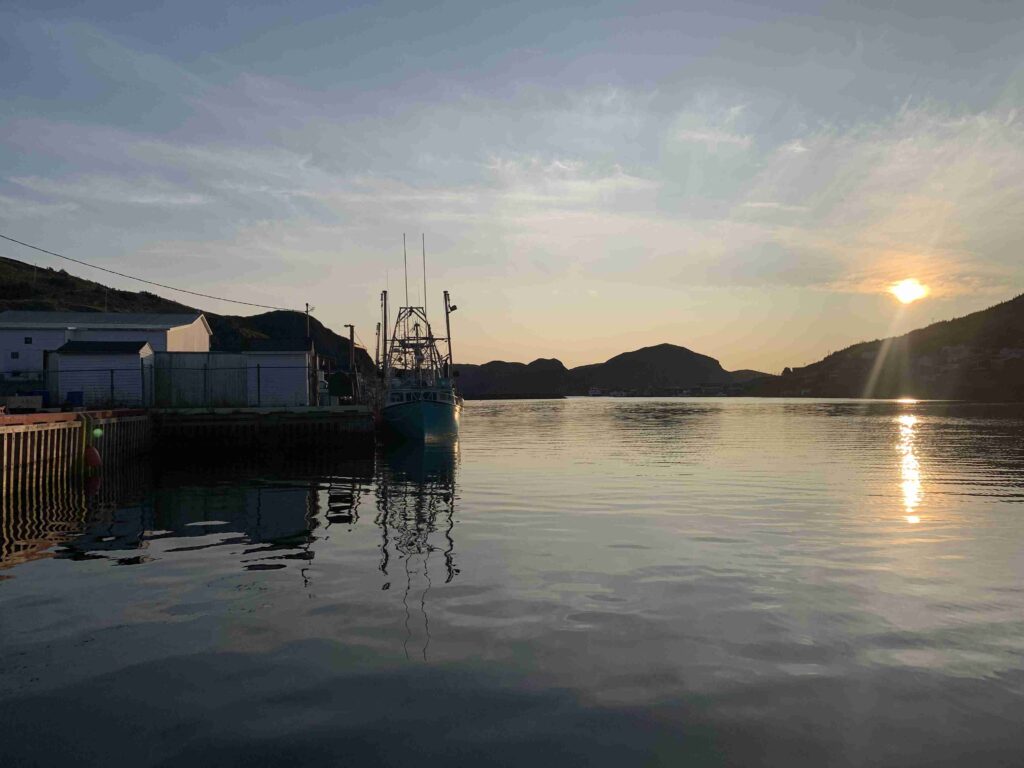
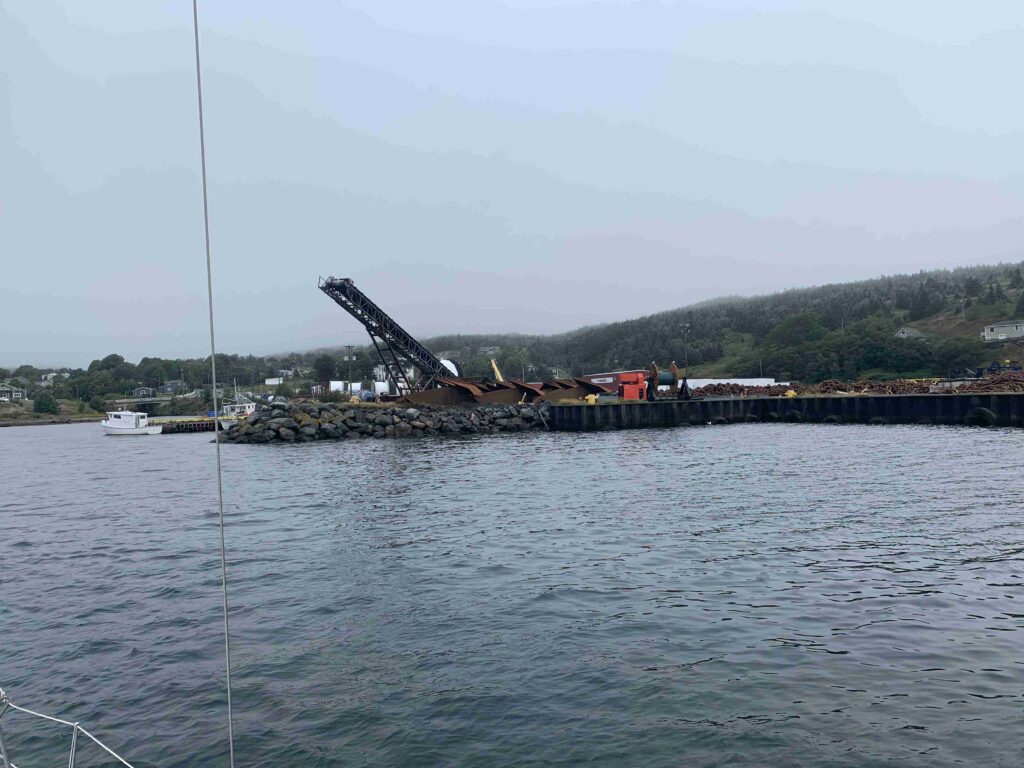
Harbour Breton, a town with a population of about 2000, was a good place to land for a couple days to get some practical things done. As a larger town, it has good resources as well good cell reception and steady internet signal. The harbour is large, with several commercial business operating from the wharf in addition to large, but crowded public dock. We spent a few days in Harbour Breton, restocked, refueled and made the final arrangements for hauling out the boat, purchased airline tickets back to Toronto and began wrapping up the adventure.
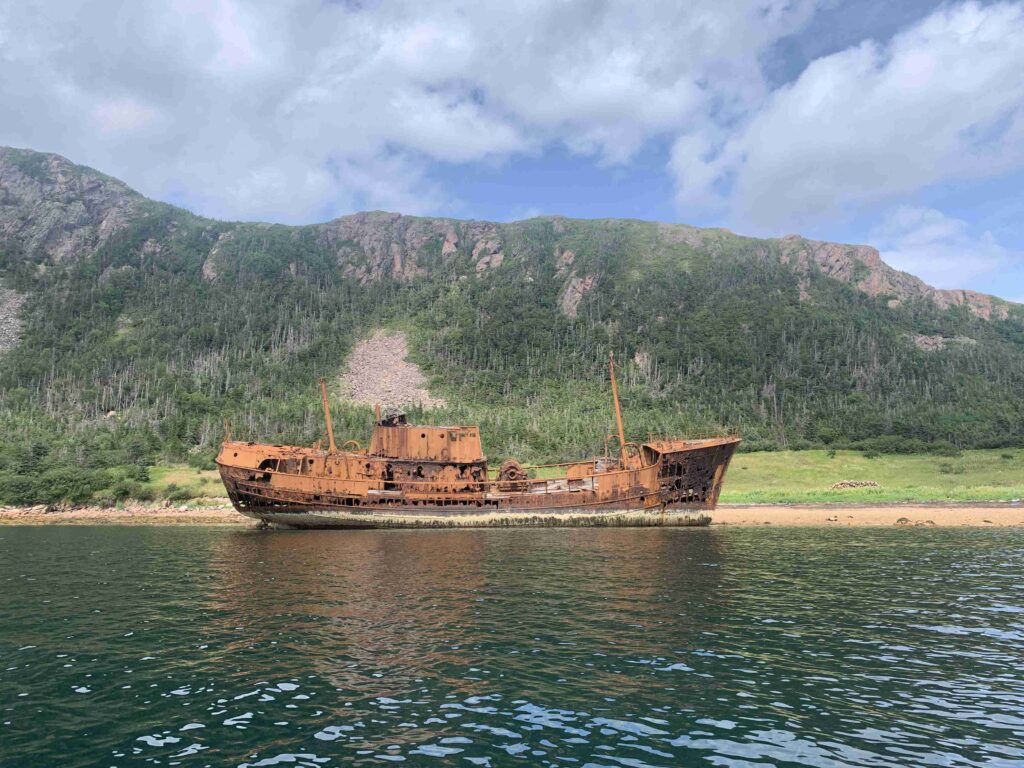
As we travelled east, the soaring mountains were replaced with tall cliffs with grassy tops. The distance between harbours increased, meaning longer days on the water, with no options to pull-over if conditions changed. At the end of these long days we would reach our port exhausted and hoping the harbour offered safe dockage because there was no Plan B.
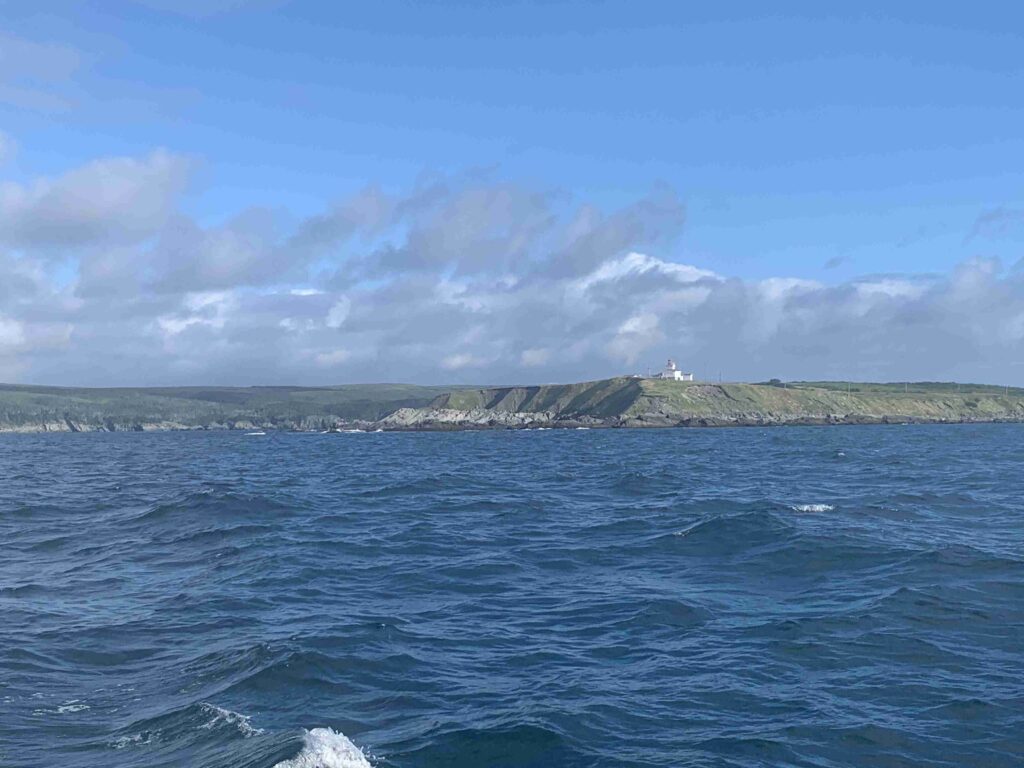
We were no longer in the Gulf, but in the Atlantic Ocean where the seas were bigger and winds a less predictable. Planning was more critical than ever and we went from checking weather daily to several times a day. For two days we rolled along with 6–10 foot swells, riding a roller coaster with walls of water higher than the boat (mast not included). This was not dangerous or even rough, but it took some getting used to. And drugs. All three of us were medicated against sea-sickness.
We were fortunate to find secure dockage at the wharves every night; however, the wharves are massive wood and concrete structures designed for commercial boats. To protect our boat from damage from the rough wharf walls, we added fender boards, simple 2×6 boards laid across the outside of the fenders. The board prevents the fenders from getting stuck between the wooden piles as the boat moves with waves and tides.
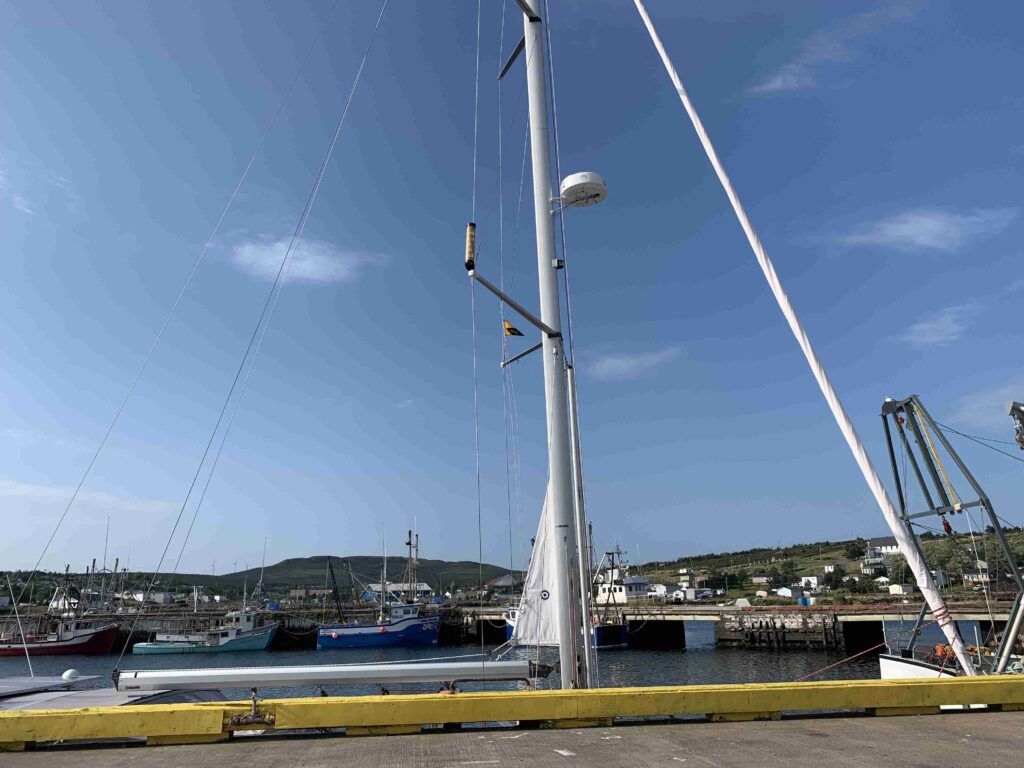
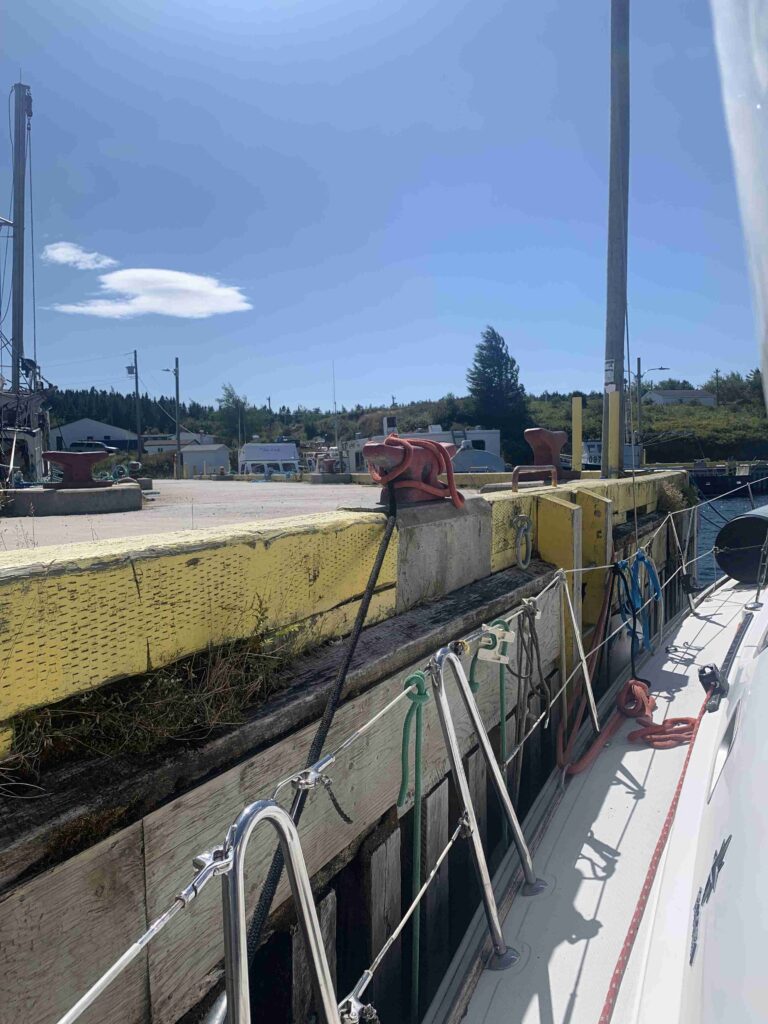
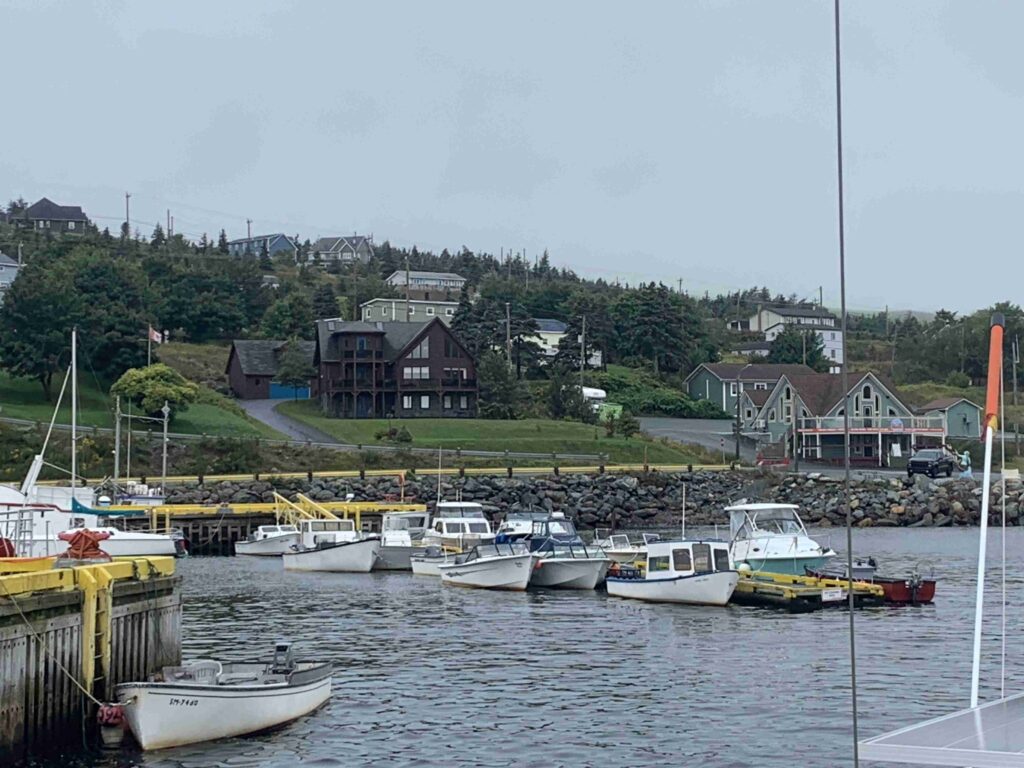
Dockage rates are very reasonable, usually less than $10 a night, including electricity and sometimes freshwater is available; however, other facilities like washrooms and showers are not as common and fuel is available only by jerry can from a gas station a few miles away. Most of the villages have a diner and a small general store selling just the basics. All the towns east of Harbour Breton are a reasonable driving distance to bigger cities that have big-box stores like Canadian Tire and Walmart, so the local stores don’t carry much. The only thing that I could not find and dearly missed was fresh produce, and when it was available it was usually past its prime and very expensive.
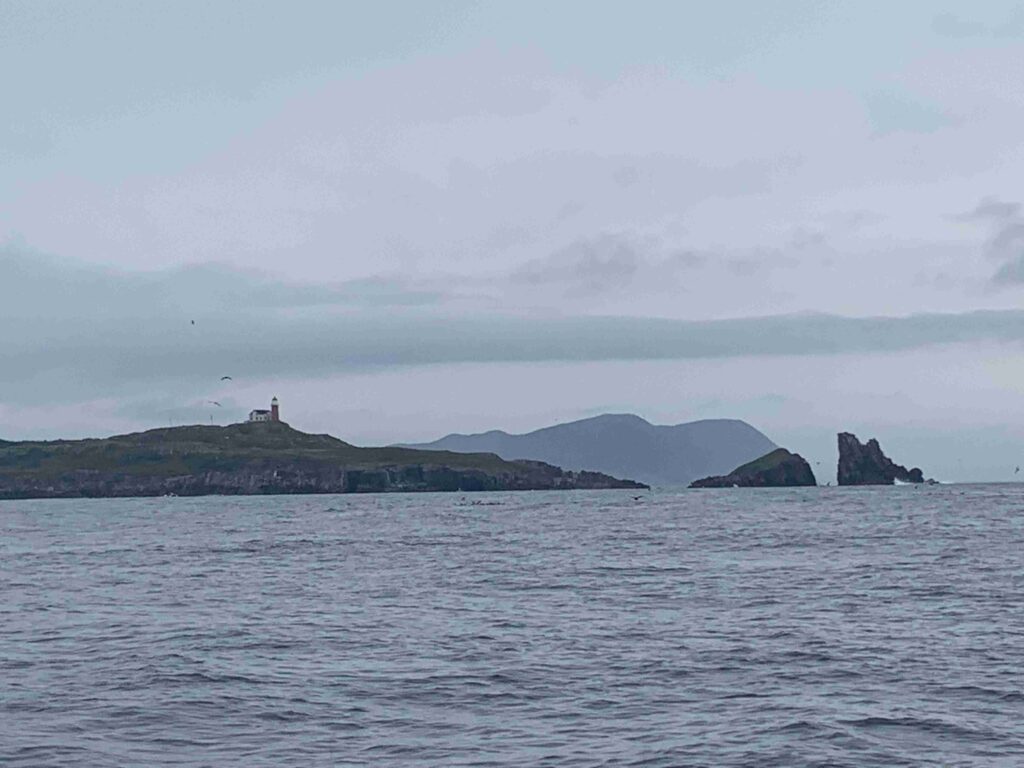
Grand Bank is a pretty village with a couple restaurants and an active fish plant that seems to operate 7 days a week. We had lunch at charming diner, with a long line-up as it was the only place open on a Sunday. The town has a couple inns and a museum so it appears to be trying to attract tourism, but most businesses were closed for the season.
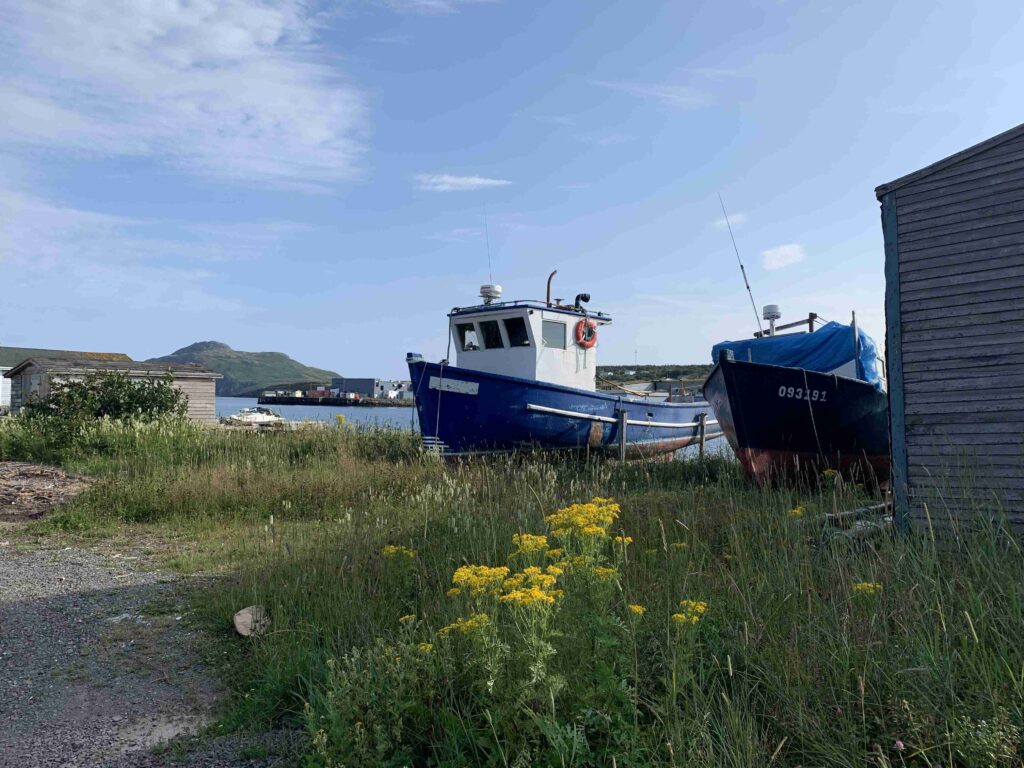
St. Lawrence was our shelter from Hurricane Henri. Although the hurricane fizzled-out well south of us, strong winds were predicted so we tucked into this commercial fishing port with its massive pier. St. Lawrence has a population over 1000, three restaurants, a motel and the main industry is a large fish plant. This busy harbour bustled with activity as the large fishing boats offloaded their catch and the tractor-trailers waited to haul it away for processing.
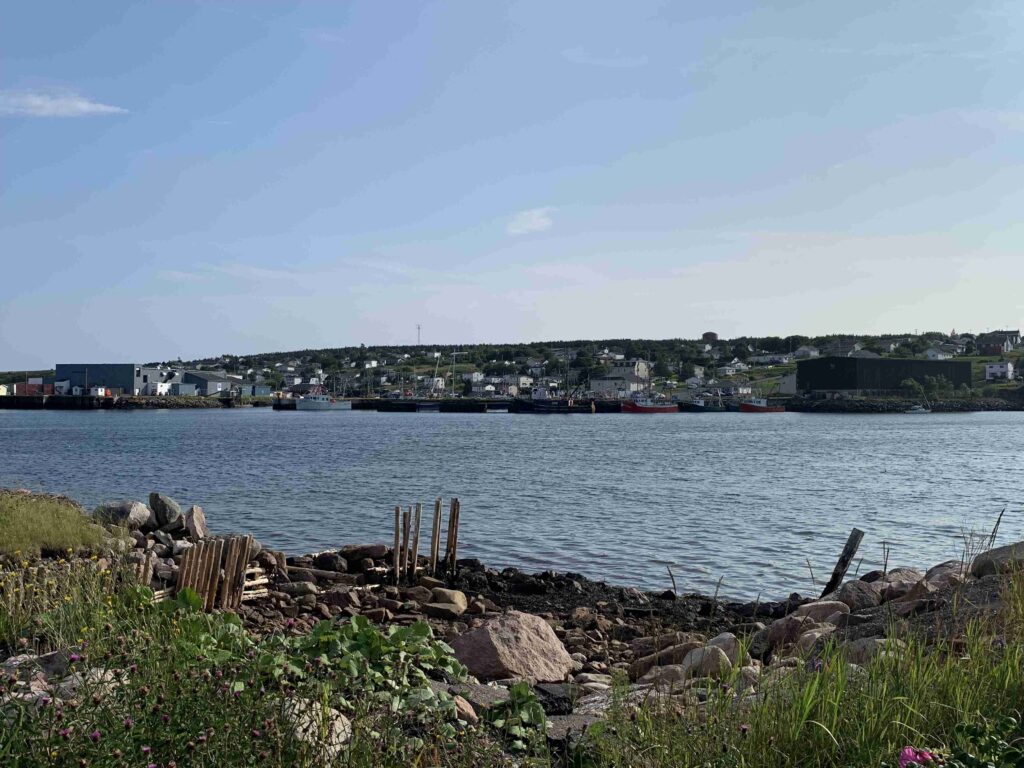
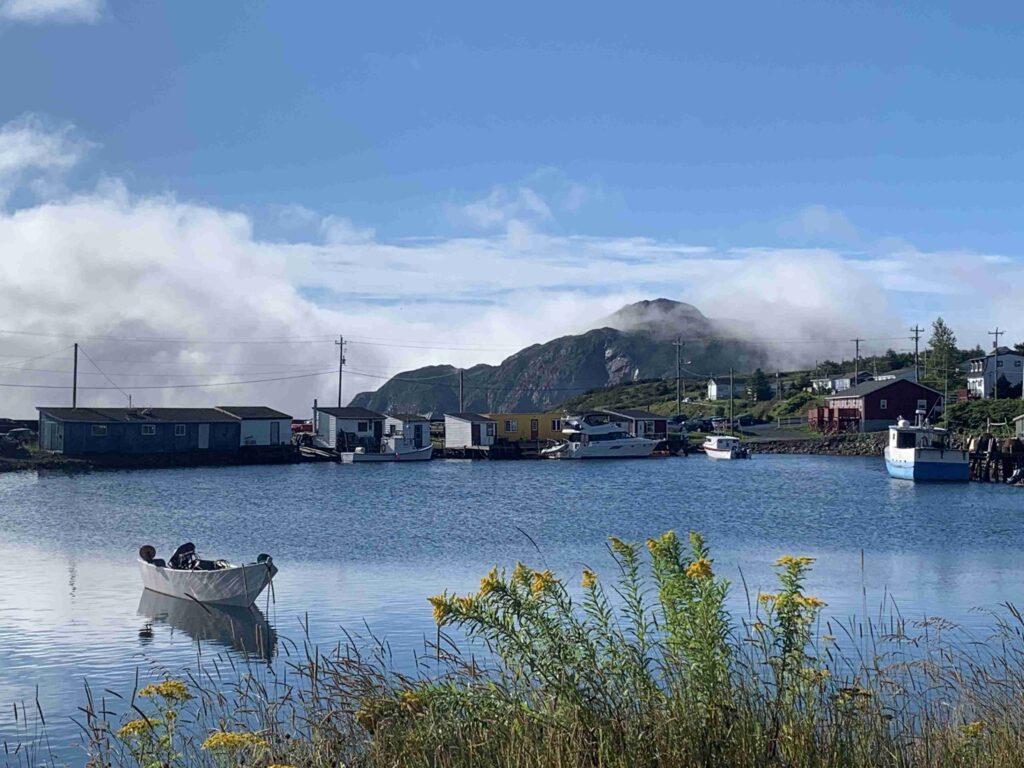
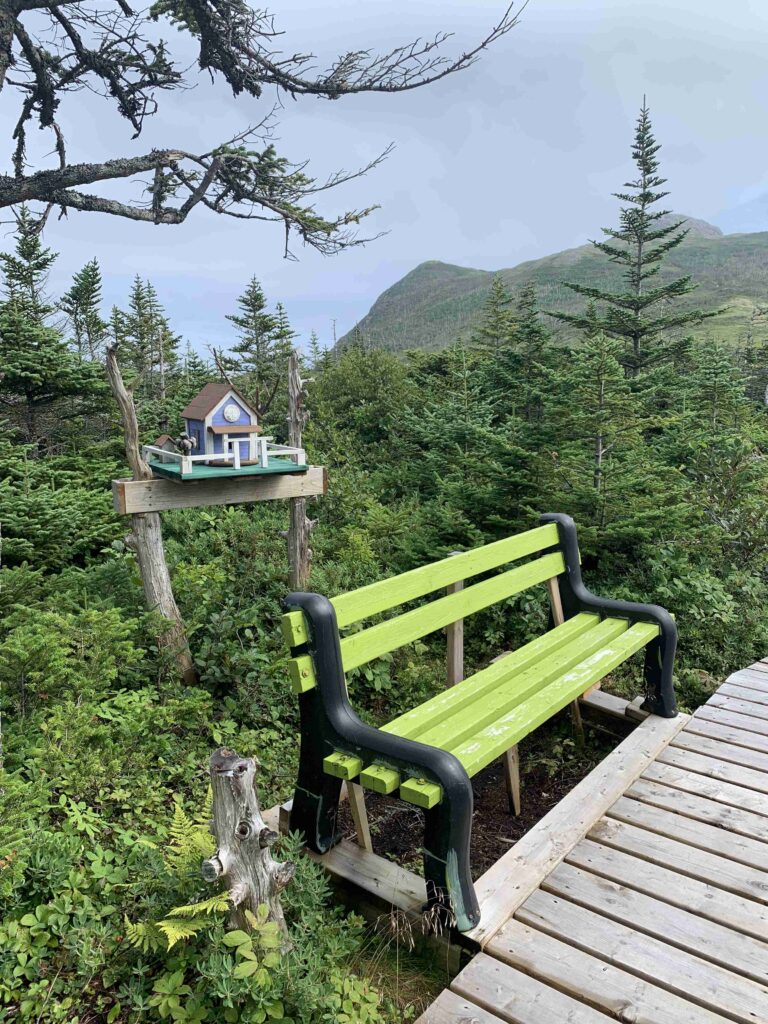
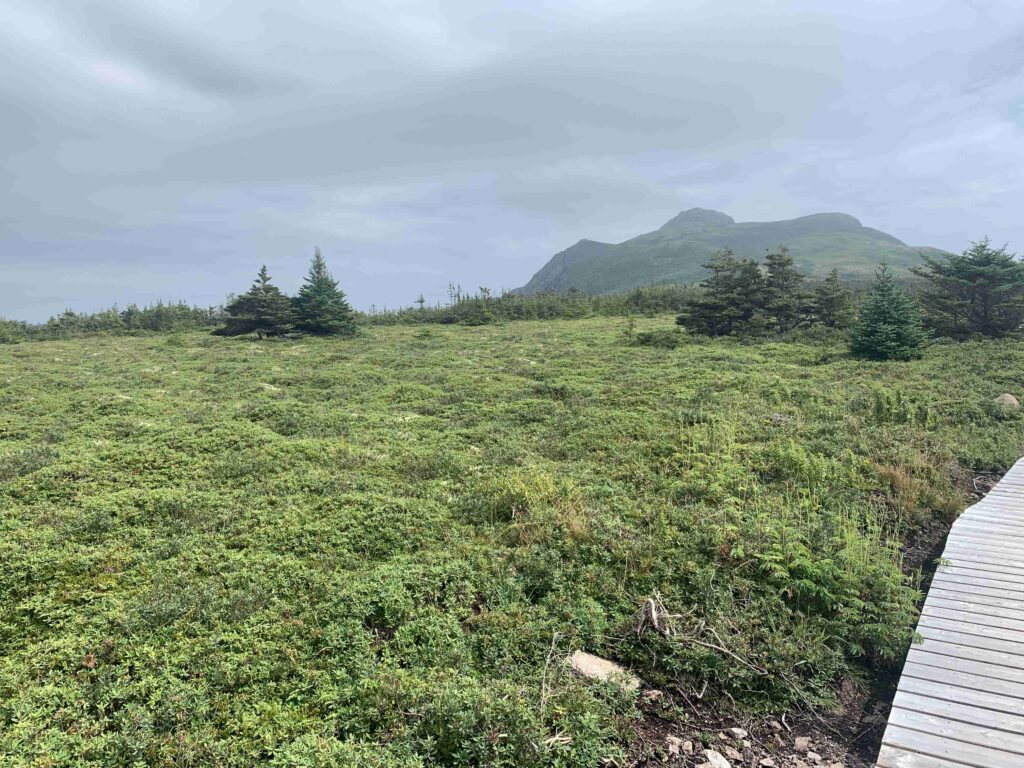
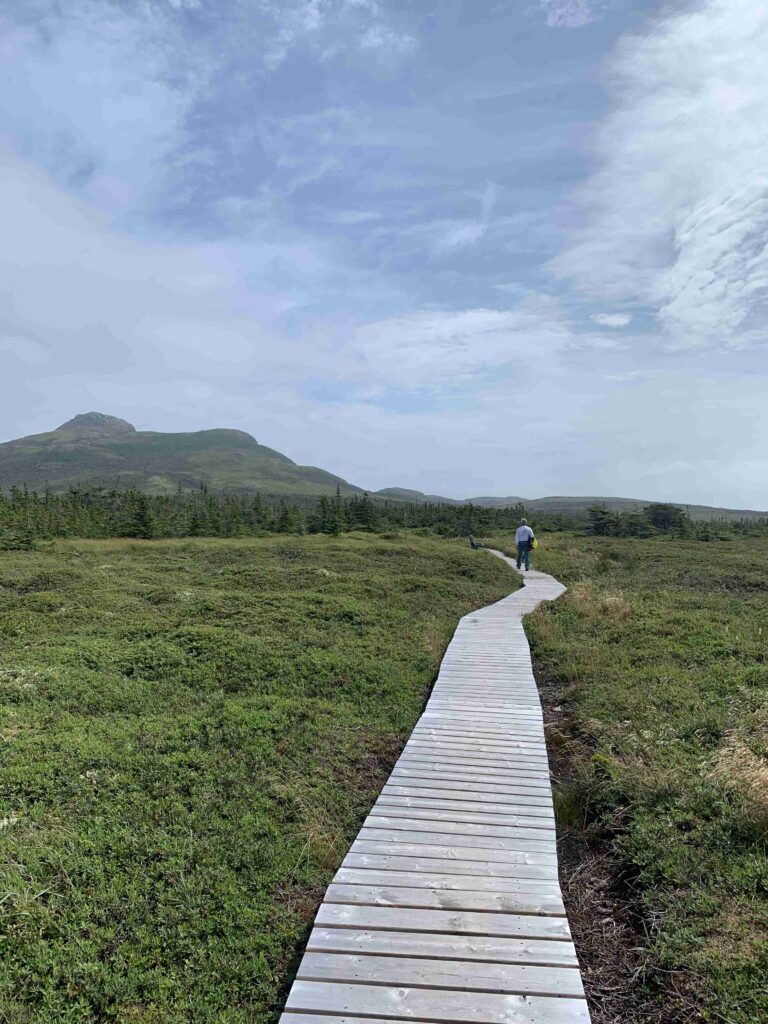
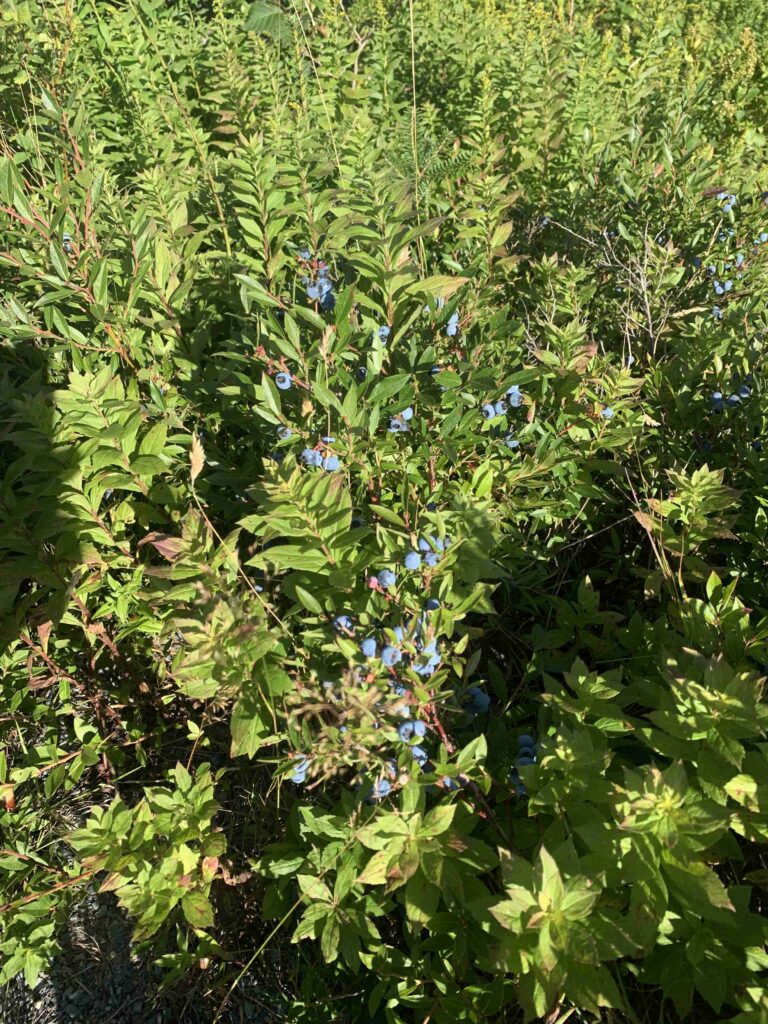
With two days in this port, we were able to do some hiking along the cape trail. Like in Ramea, this town has invested in several kilometers of boardwalk going through forests and marshes, but most notably, blueberry bushes! Wild blueberries, in season now, grow like weeds here, so I have begun carrying a mesh produce bag in my pocket when we hike. Allen complains when I make him pick berries with me, but he doesn’t complain about the fresh berry cobbler I make later.
St. Brides is a tiny village with a wharf packed with commercial fishing boats. We got lucky and found spot on the wharf, as well as a friendly fisherman who gave us a lift into town so we could eat at the diner. There’s not much else here, but it was a good stopover after crossing Placentia Bay.
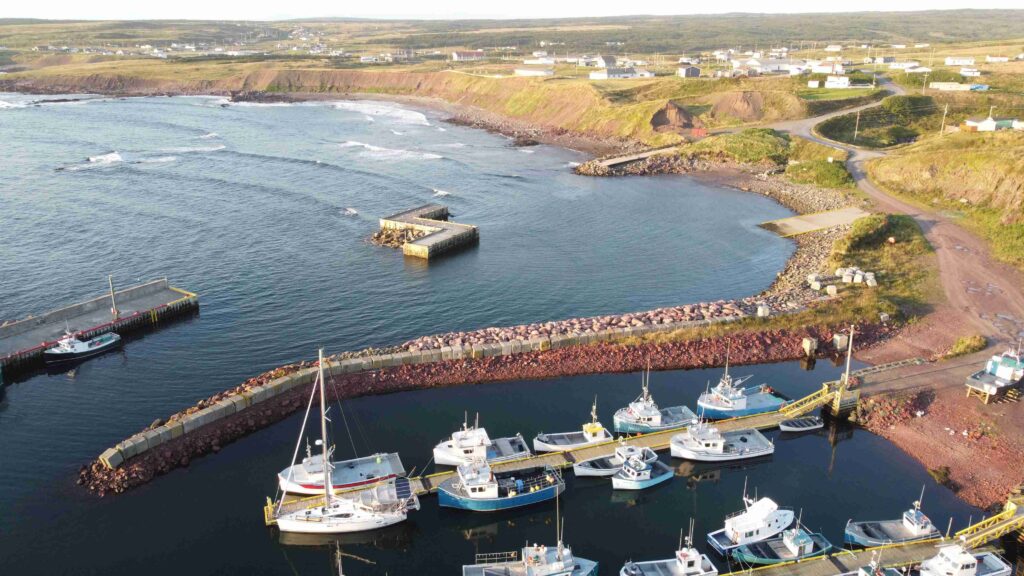
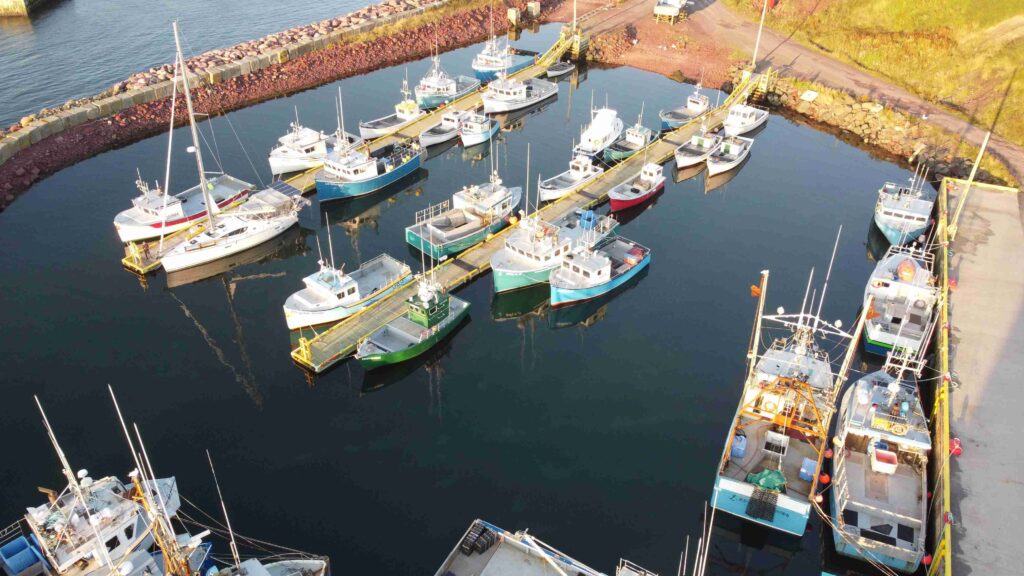
While Hurricane Henri turned out to be just bit of strong wind for us, there was a new storm brewing in the North that we needed to watch carefully, and to watch a storm, we need an internet signal. This brought us to Trepassey. This town offers very little in terms of resources or beauty, but it does have a secure pier that sheltered us from big Atlantic swells and winds, and with a strong internet signal, it was a good hide-out for a couple days.
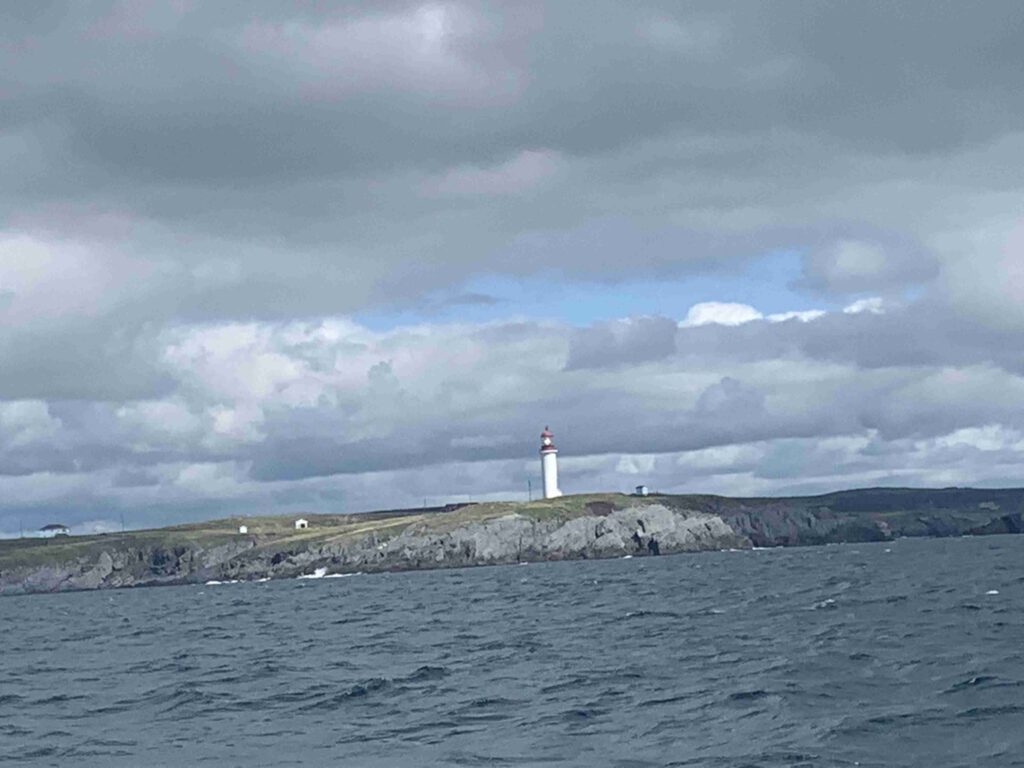
We hit a milestone as we rounded Cape Race, the southern point of Newfoundland and turned the bow north. However, we needed to move fast to our next destination because that northern storm was not over, it was just taking a short break and we needed to get into a protected cove by afternoon.
Fermeuse has been described as a fortress, with wharves in 3 different coves, providing exceptional protection from ocean surges and winds from any direction. With winds starting to pick-up again, we arrived in Fermeuse, found a secure spot on a wharf and hunkered down for 3 full days of massive winds. An added bonus was 4 bars of internet signal, miles of the gorgeous East Coast Hiking Trail and the beginning of wild blackberry season – more cobbler!
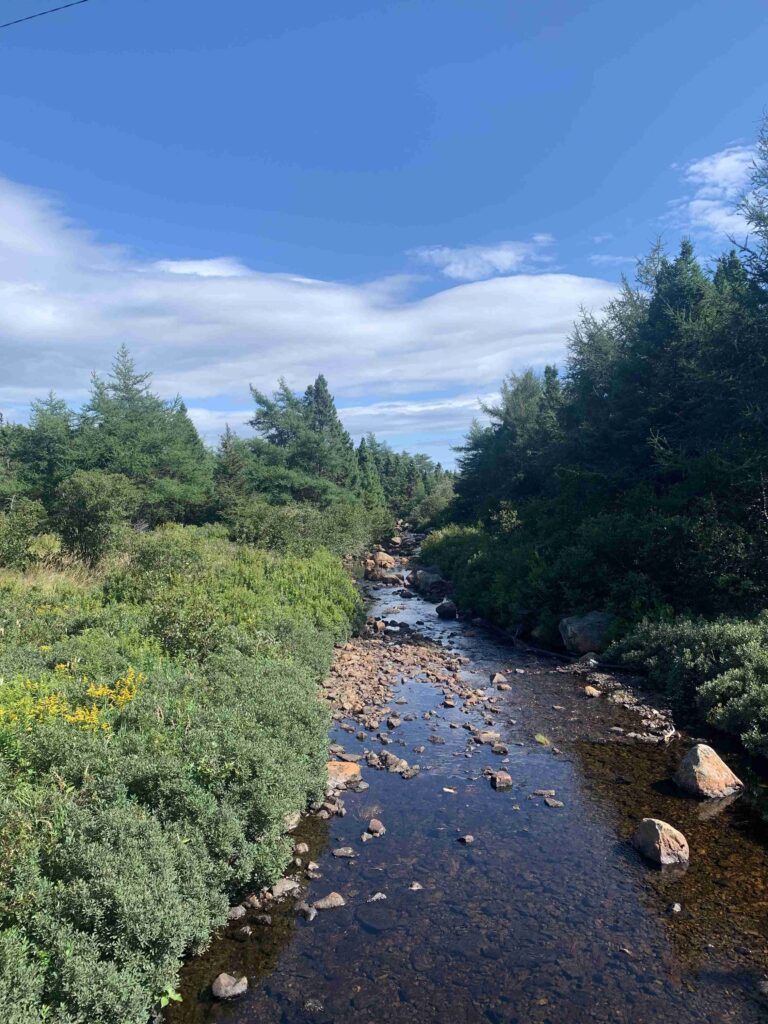
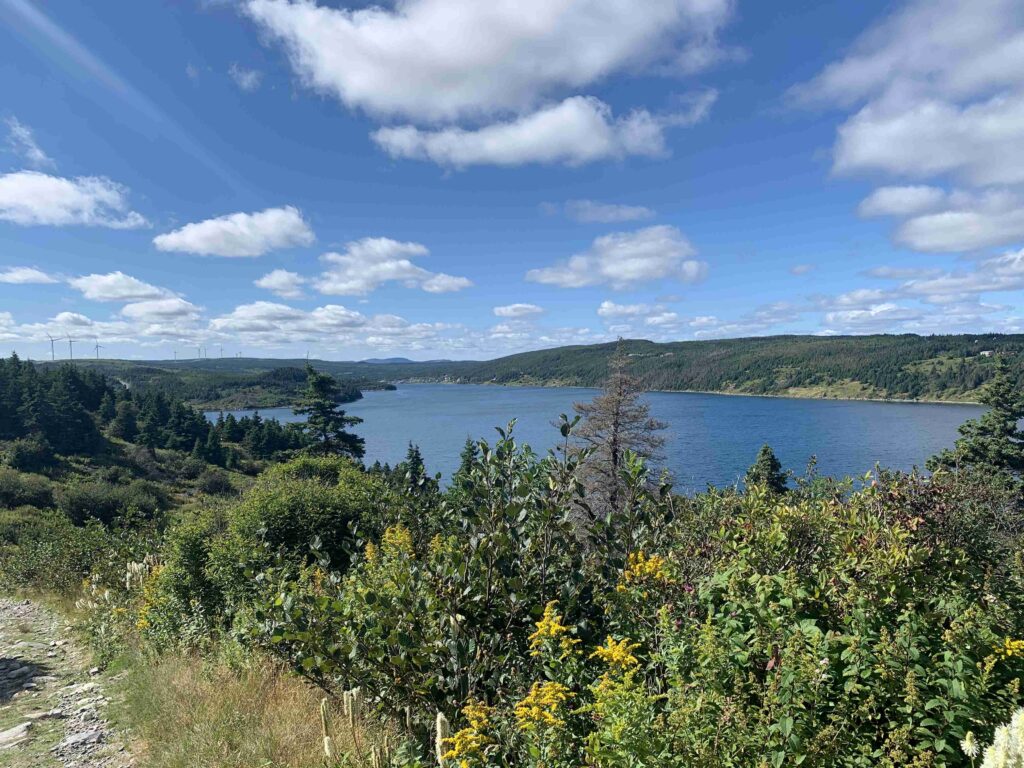
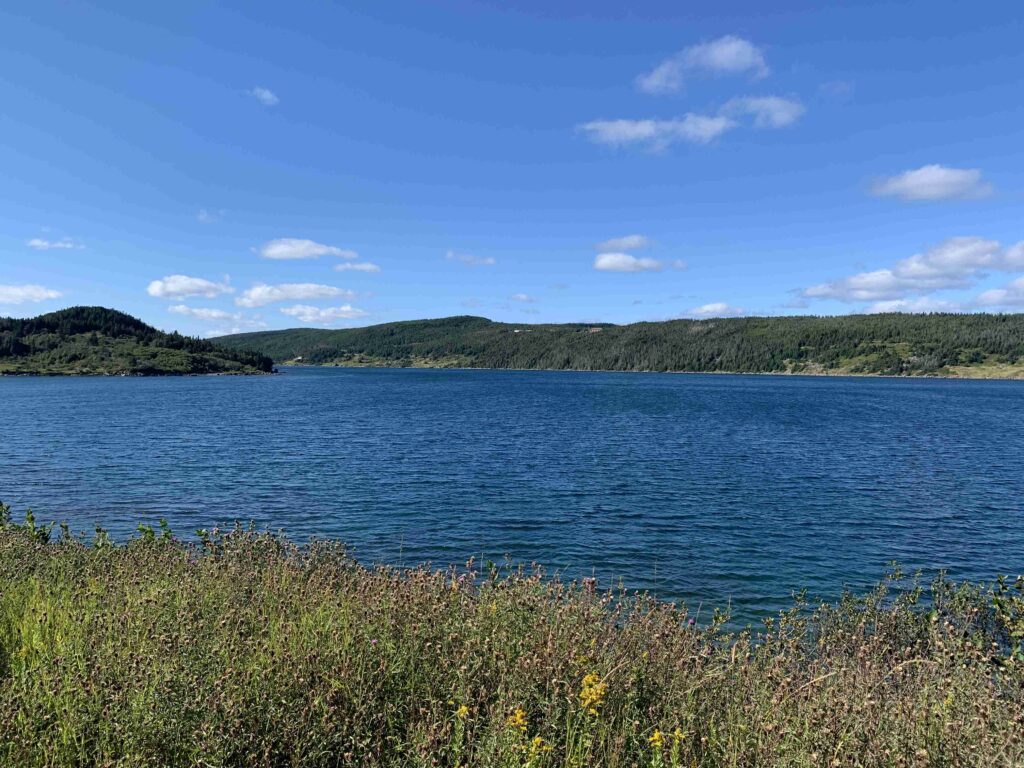
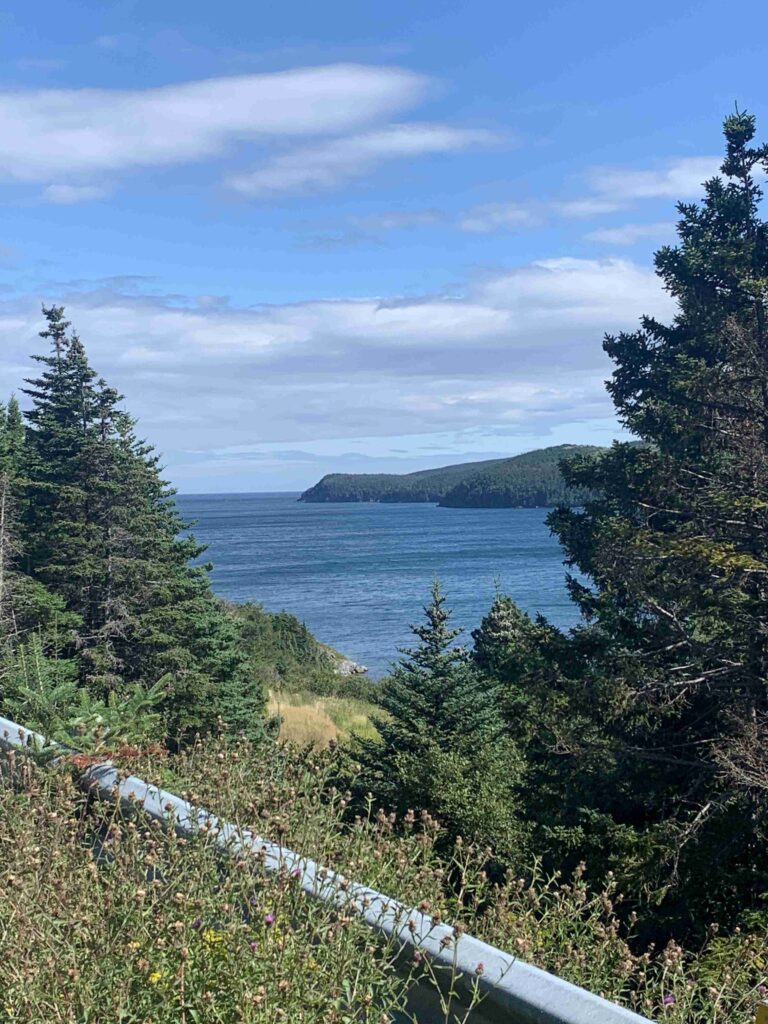
Our last stop on this leg was Bulls Bay, a town that feels like cottage country for St. John’s. The oil industry has operations here and the hillsides are littered with large, modern homes and the harbour has more recreational boats than commercial fishing boats. Several of the whale/iceberg/puffin watching tourist boats dock here at the end of the day. We met the owner of one of the bigger boats and asked him what whales we could see now – “None!” was his answer. So if you’re in St. John’s considering a whale watching expedition, save your money.
Sounds like one roller coaster ride port to port.
Hope you’re safe now in St John’s.
Was Meshuggana on land when Hurricane Larry hit?
Anne and Gary Oliver
Meshuggana was docked at RNYC during the hurricane. Fortunately we were invited to spend the night in a nearby home so we were safe. Larry hit Newfoundland as a Cat 1 hurricane. Although we had multiple lines and an anchor out, Meshuggana did sustain some damage, although it is fixable. I will write all about it and post next week.
Everything looks so beautiful 🙂