
Leaving Québec City marked the beginning of a very new adventure. Up until Québec City, finding anchorages and marinas was not a great challenge because that stretch of the river has several larger cities, and cities mean boat traffic and all the resources that go with it like marinas, fuel and restaurants. As we moved east of Québec City, we encountered far fewer boats (interestingly, those we did see were mostly sailboats) and fewer marina and anchorage options. This is also the point where the river gets wider, deeper and saltier and our planning skills needed to come up a notch because now we were traveling greater distances each day and if a marina or anchorage that we were aiming for was not suitable, we had very limited options on where we could spend the night.
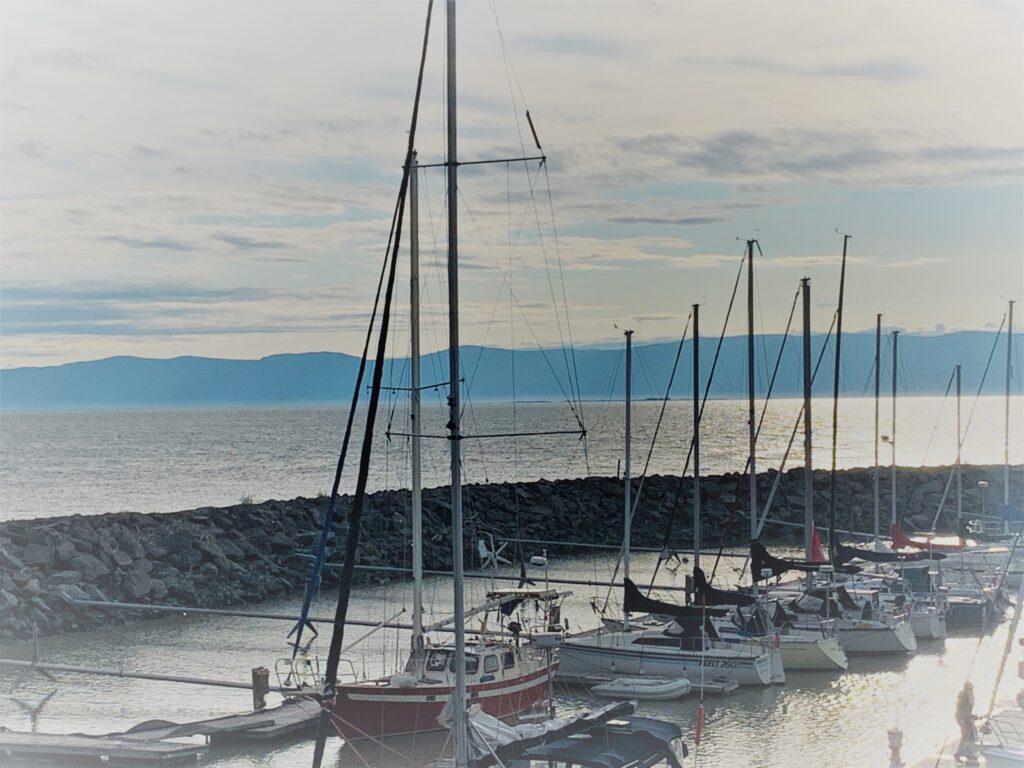
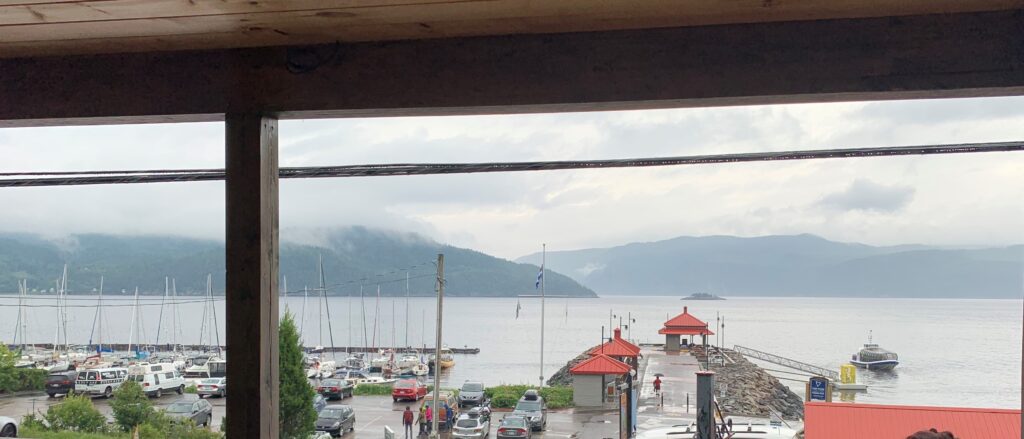
Our first stop was the town St. Jean Port-Joli, a lovely touristy-cottagey town on the south shore of the St. Lawrence with a small marina that looks out onto the river and the Laurentian Mountains. We made a reservation and were given a specific arrival time, 3pm. We made good time and were happy to arrive a bit early, at 2:30, but were told we may not enter until 3pm. We complied and then learned 3pm is not an arbitrary check-in time, but it is high tide and had we attempted to enter the harbour earlier we would have grounded and been stuck in the mud. This also meant that we needed to plan our departure for the next morning so that we could leave the without getting stuck. This type of planning has now become our daily norm.
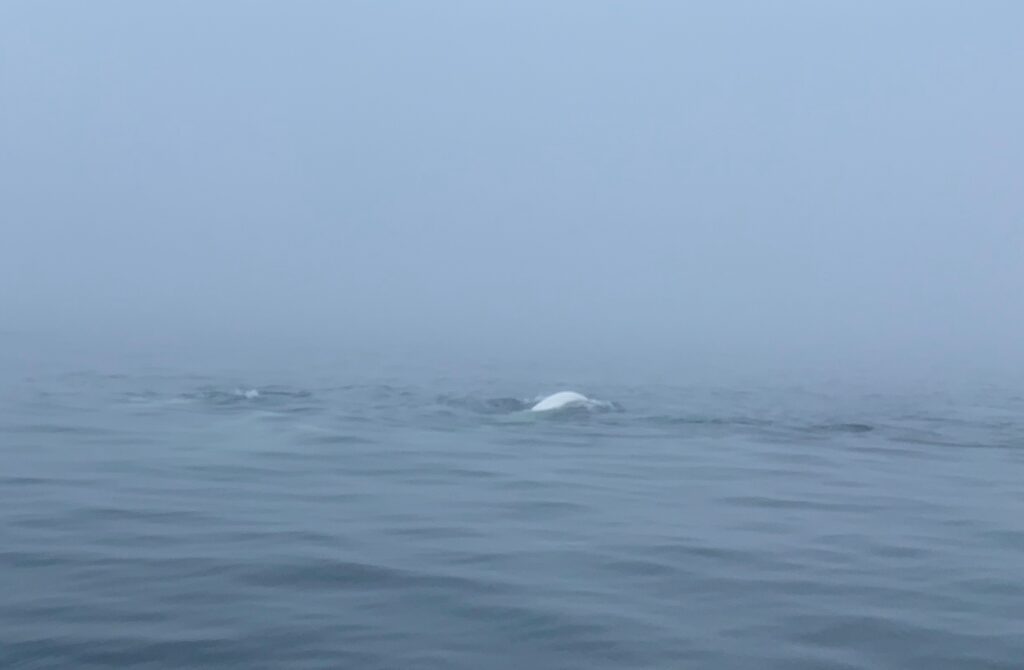
Leaving St. Jean Port-Joli brought a new, exciting element to our adventure because we were entering whale territory and as special welcome, two Belugas greeted us as they swam about 100 feet off our beam. The lower St Lawrence River, Gulf of St Lawrence and Maritimes are home to 13 species of whales, 3 of them endangered: Belugas, Blue Whales and Right Whales. By law we must maintain at least a 400-meter distance from the endangered whales and at least 100 meters from the other whales; however, whales are intelligent and curious mammals and like to come by to check us out. This has happened to us twice with Belugas and when they approach, we are to maintain course and speed until they get bored and swim away. But wow, they are incredible animals and we hope to see many more as we travel east.
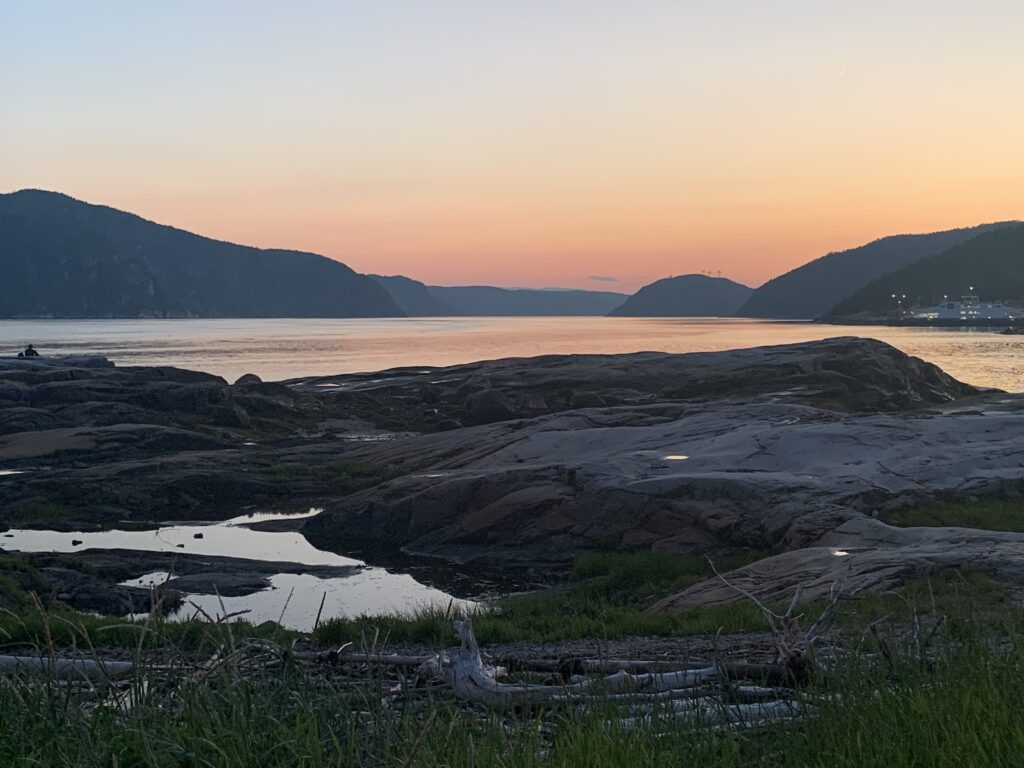
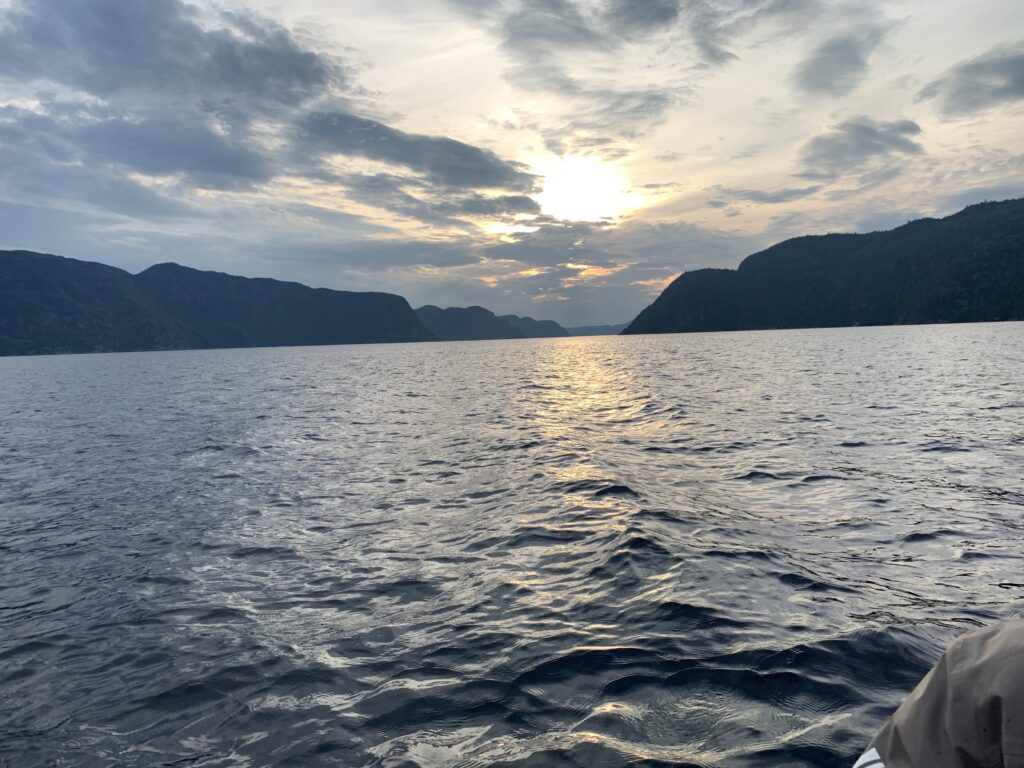
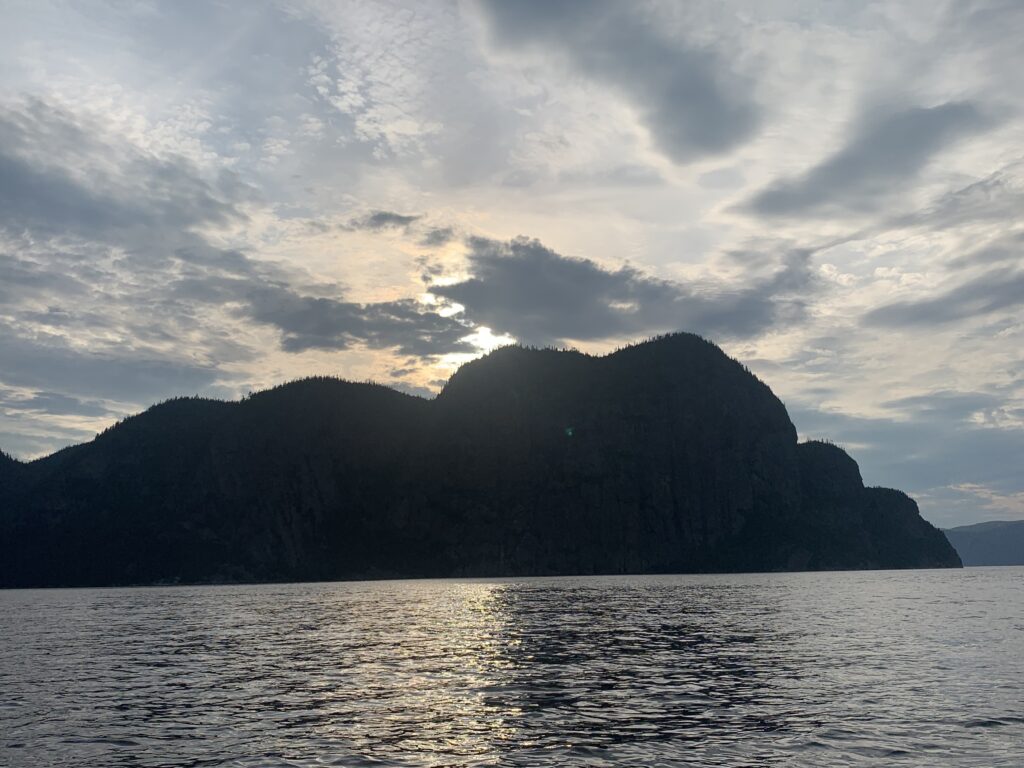
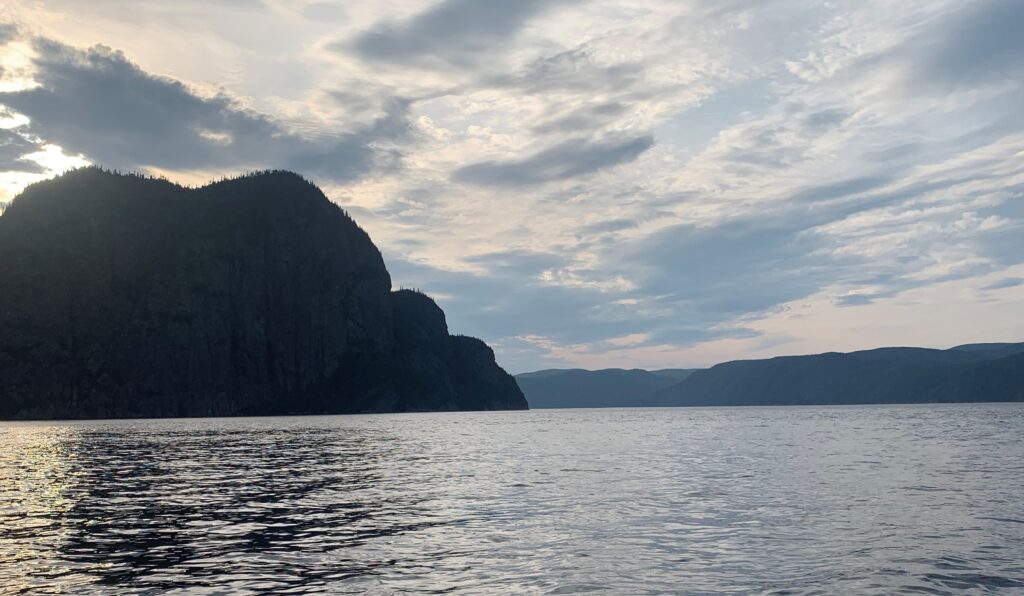
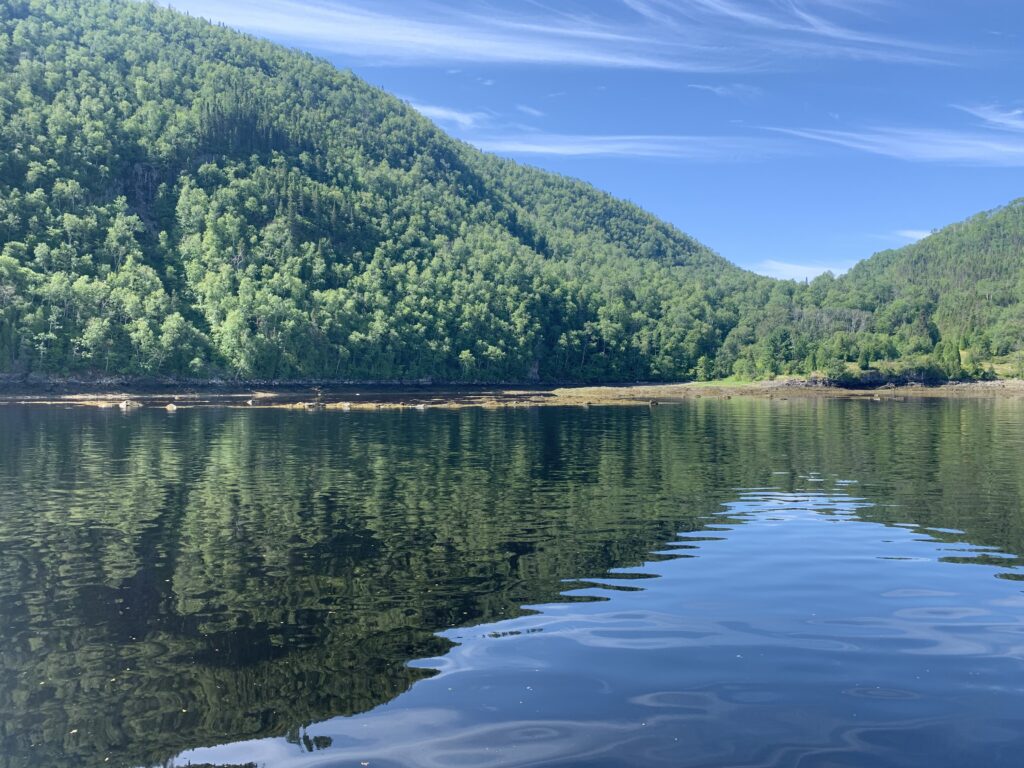
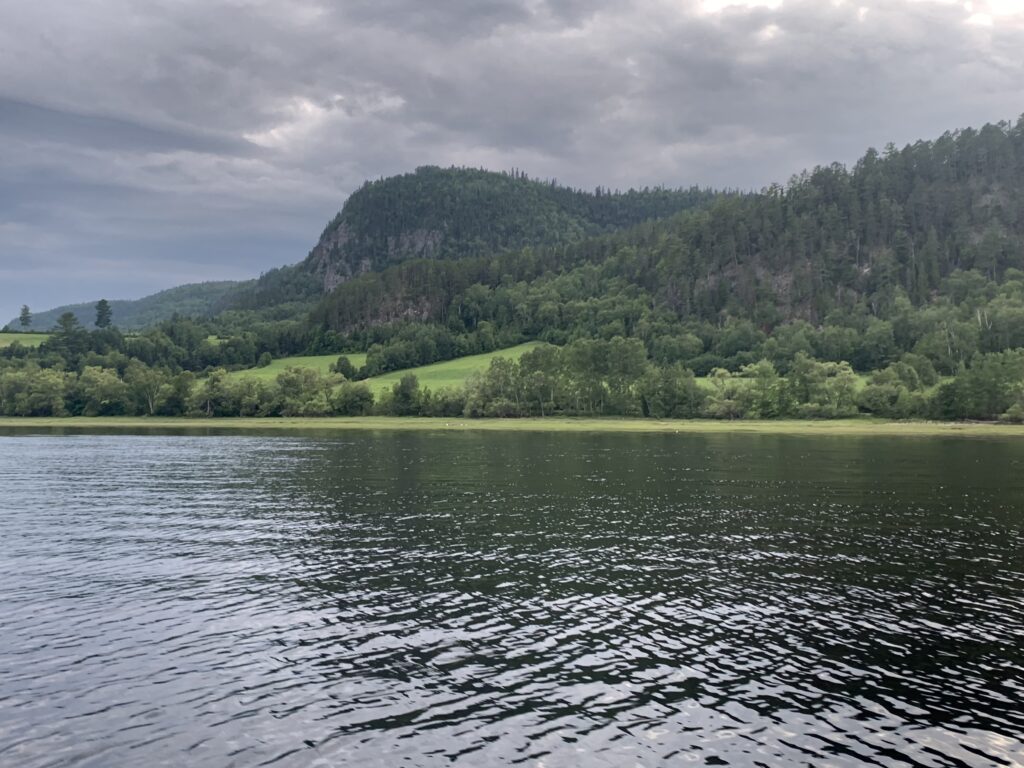
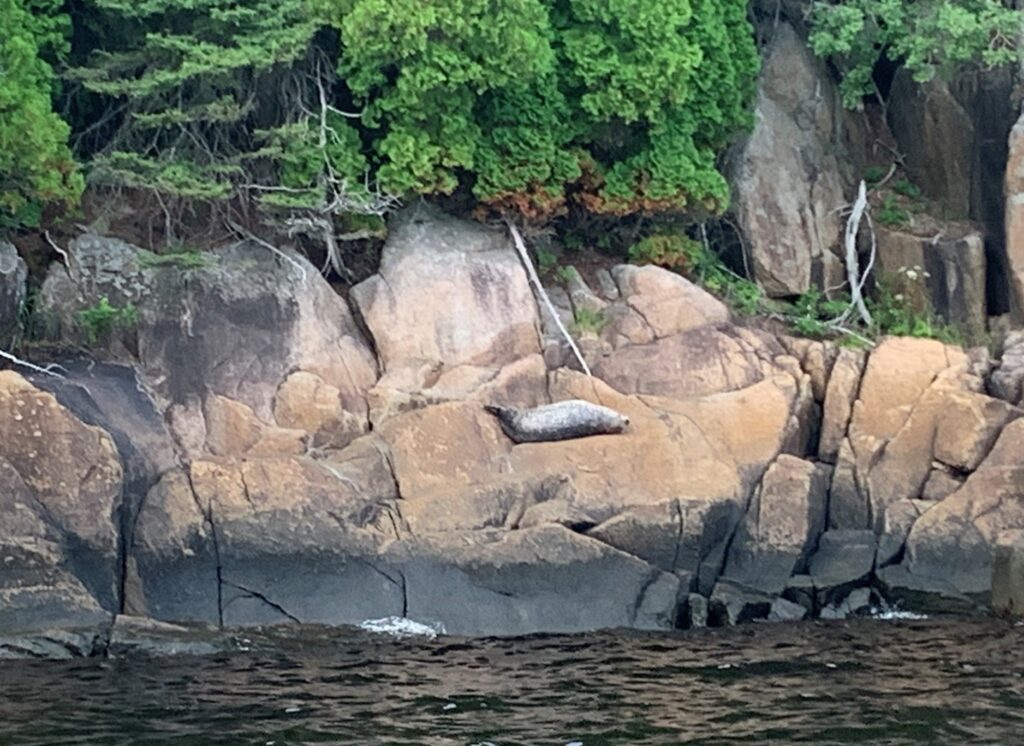
We crossed back to the northern shore of the St. Lawrence and arrived in the town of Tadoussac. This mountain town is busy with restaurants, a microbrewery and plenty of shops catering to tourists coming for whale watching. This is where the fresh water of the Saguenay River flows into the salt water of the St. Lawrence, creating a mixture of fresh and salt waters that make this the perfect feeding ground for whales. Belugas like it cold so they live here year-round, but the other whales live here for a few months to fatten up and then leave for warmer waters. Tadoussac also marks the southern entrance of the Saguenay Fjord. The fjord is 105 km (65 miles) long and within it is the Saguenay Fjord National Park. The river is deep and cold, with an average depth of 210 meters (690 feet)! It is deep all the way to the shore, often 100 feet deep just a few feet from land, which makes anchoring nearly impossible, although we did anchor one (stressful) night and then stayed at the marina the next night.
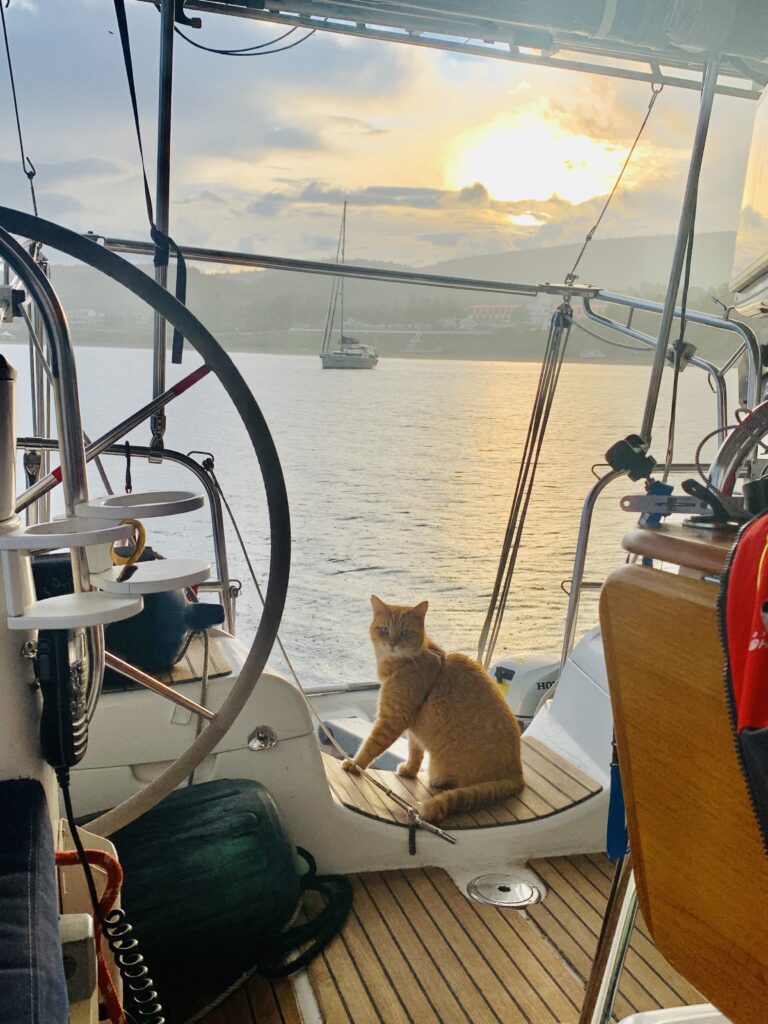
I do not have the words to fully and adequately describe this amazing place so I will let the photos do it for me, but I will say this – put this fjord on your bucket list! Come see this magnificent wonder for yourself!
I would love to see this. The pictures are gorgeous. I am sure the reality is much better yet. Happy for you. What an adventurous life you are leading!
Wonderful adventures! Thanks for giving us a glimpse of thes3 treasures.
Gorgeous!! Love that you have your own private whale watching tour. So funny about the high and low tide.