
As we sailed out of the Saguenay Fjord, I was feeling a bit melancholy because it was hard to imagine that anything else could rival the experience of having the fjord to ourselves for 3 whole days. I think the Belugas may have sensed my mood because as we departed Tadoussac in a dense fog with visibility less than 30 feet, Belugas surrounded our boat. They were on port, they were on starboard and one swam by our stern so close that I could have reached out and touched it (but of course I did not). I did not snap any pictures, they were so fast, but I was just grateful to experience a special Beluga send-off.
The fog did not lift as we spent the next 6 hours crossing the St. Lawrence River back to the south shore and we were very thankful for radar keeping us safe during this passage. We did, however, have a good laugh when we noticed that we were being followed by other boats and soon figured out they were whale watching excursions, probably full of tourists, hoping to see the big 42-footer their radar picked-up. We dashed their hopes with a blast of our air-horn and felt their wake as they sped off to find the real whales (likely our Beluga friends).
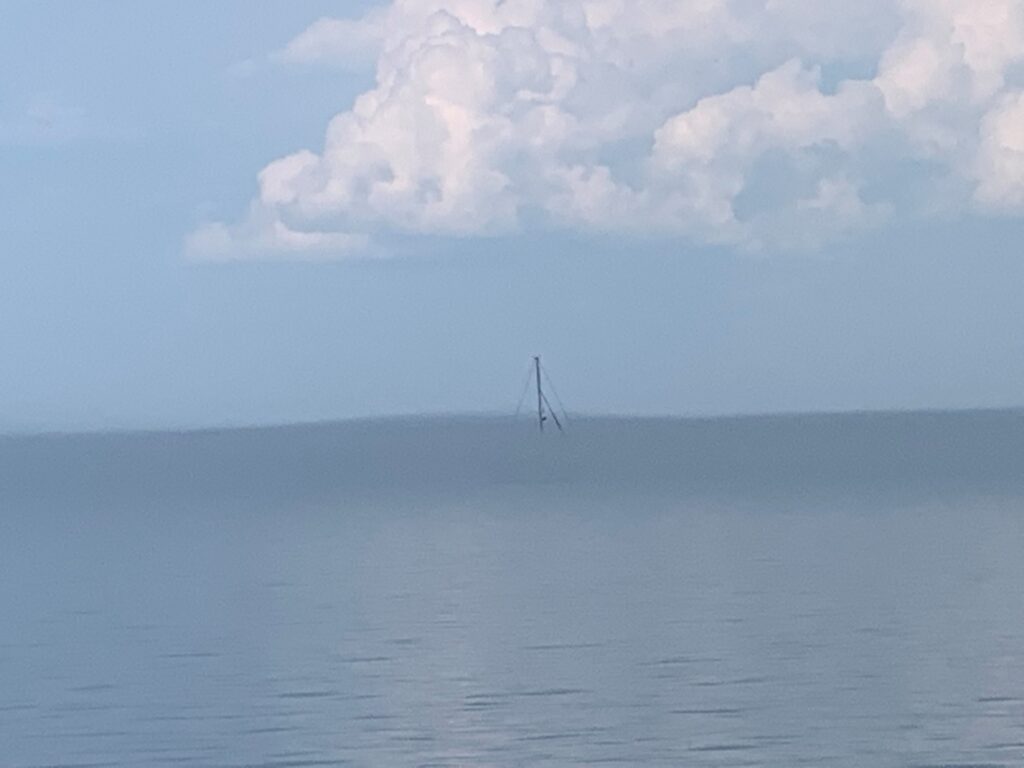
We landed in a bay near Bic National Park. Fog was still thick, so we relied on sonar to scope the area and picked a spot to drop the anchor. By evening the fog cleared, we were pleased with our spot and surprised to see another boat in the bay with us (now we can add fog to currents and tides to the list of new things we have learned). We anchored near Bic for 3 days and had hoped to go ashore and hike the park, but there was not a good place to land our dinghy on shore so we spent the entire 3 days relaxing on the boat.
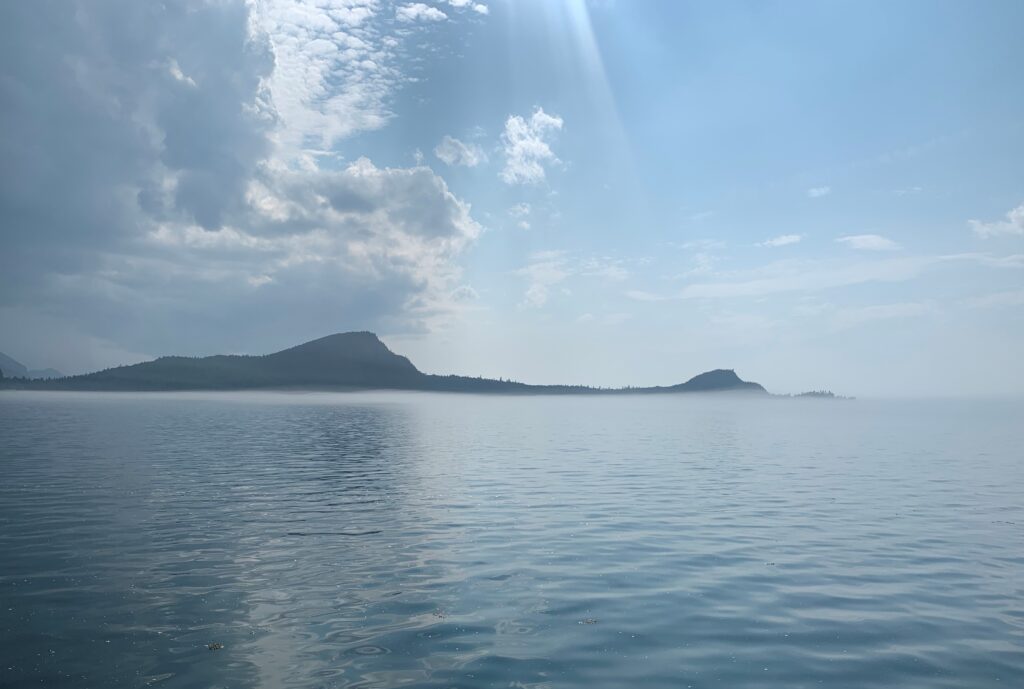
The next stop was Rimouski, a good-sized city with a modern marina and all the necessities (grocery and hardware stores) within walking distance so we were able to stock-up, fuel-up, pump-out and begin the next leg of this adventure.
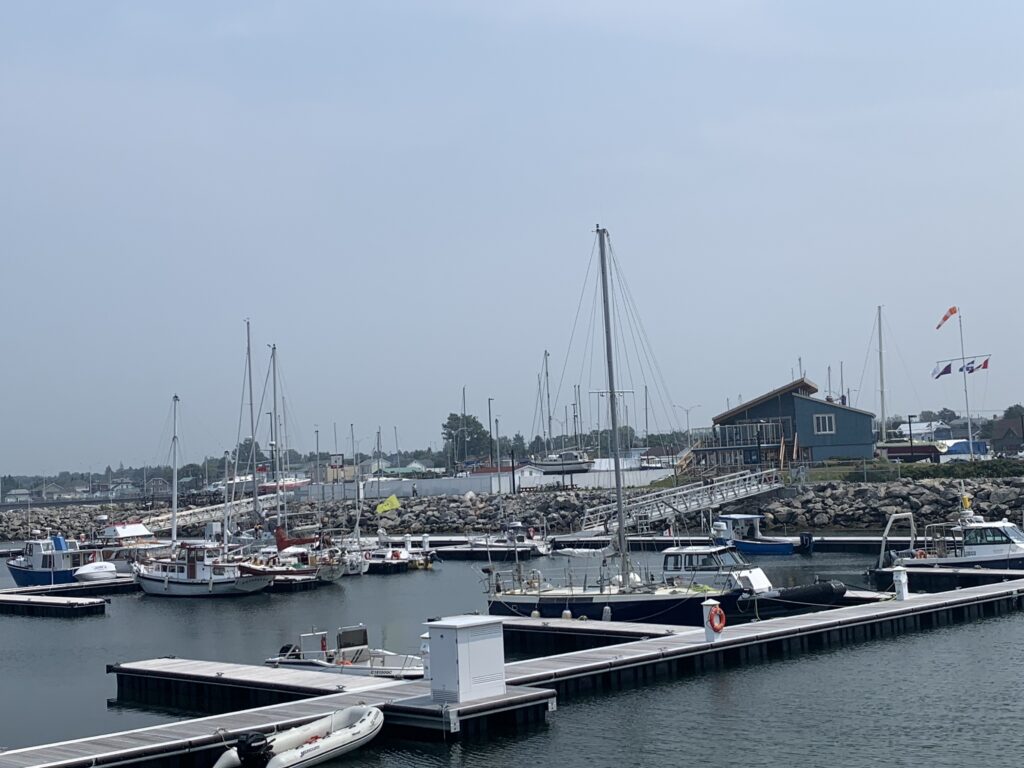
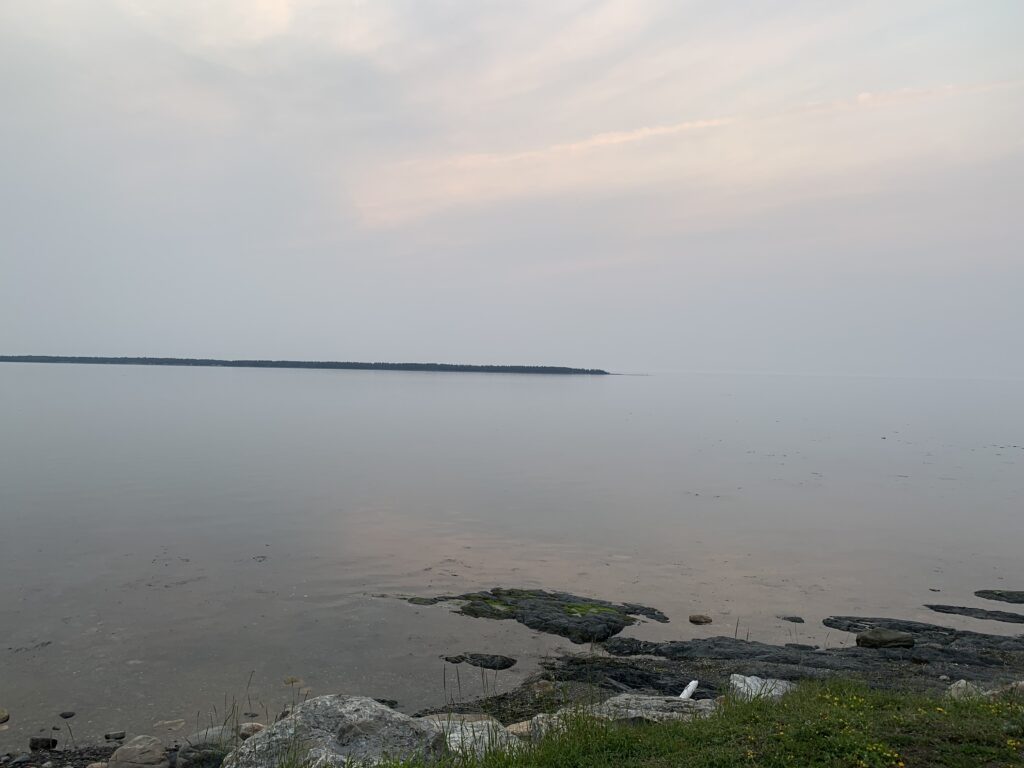
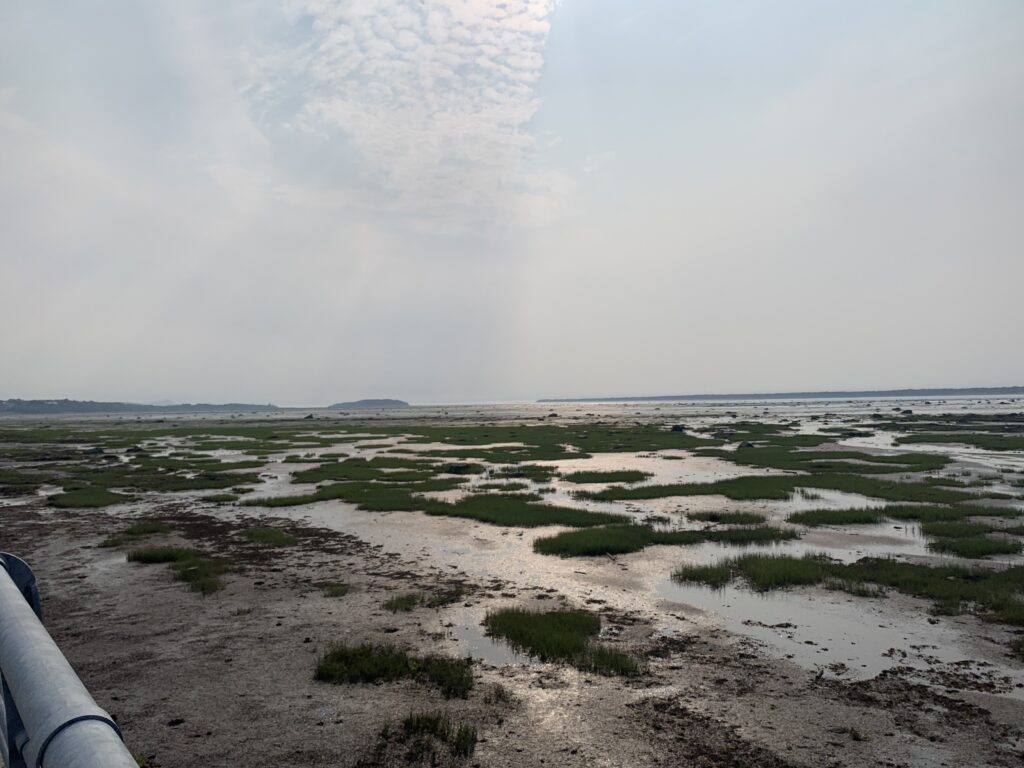
In the next few days we took advantage of the good weather and focused on putting some miles behind us. This section of the Quebec coastline is pleasant with hills, small villages and farms, but otherwise unremarkable. We found a couple nice anchorages and then pulled into a small town, Matane, to wait-out unfavorable winds. We knew Matane had a channel that became impassable at low tide, so we timed our arrival perfectly. What we did not expect was for the marina’s water level to drop significantly during low tide, and at low tide our keel sank 1 foot into the sand & clay bottom. The local sailors assured us that’s just the way it is and we would be fine. And we were.
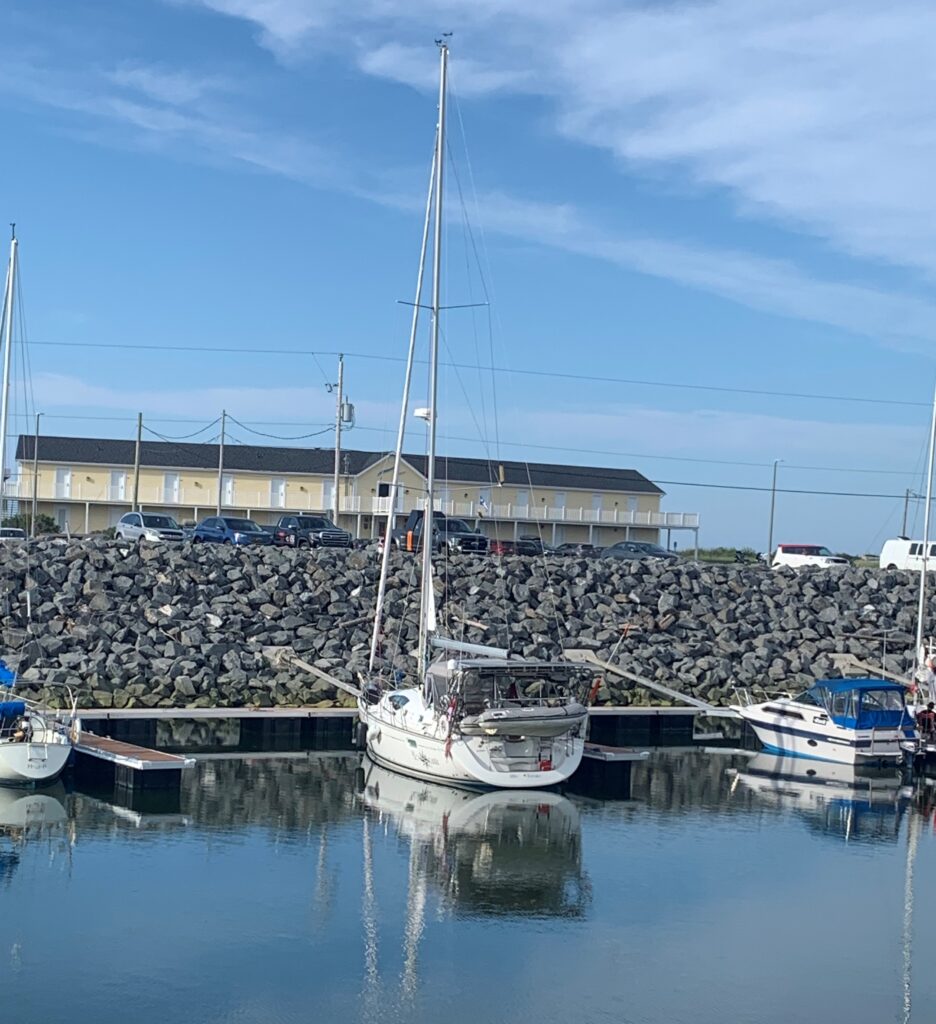
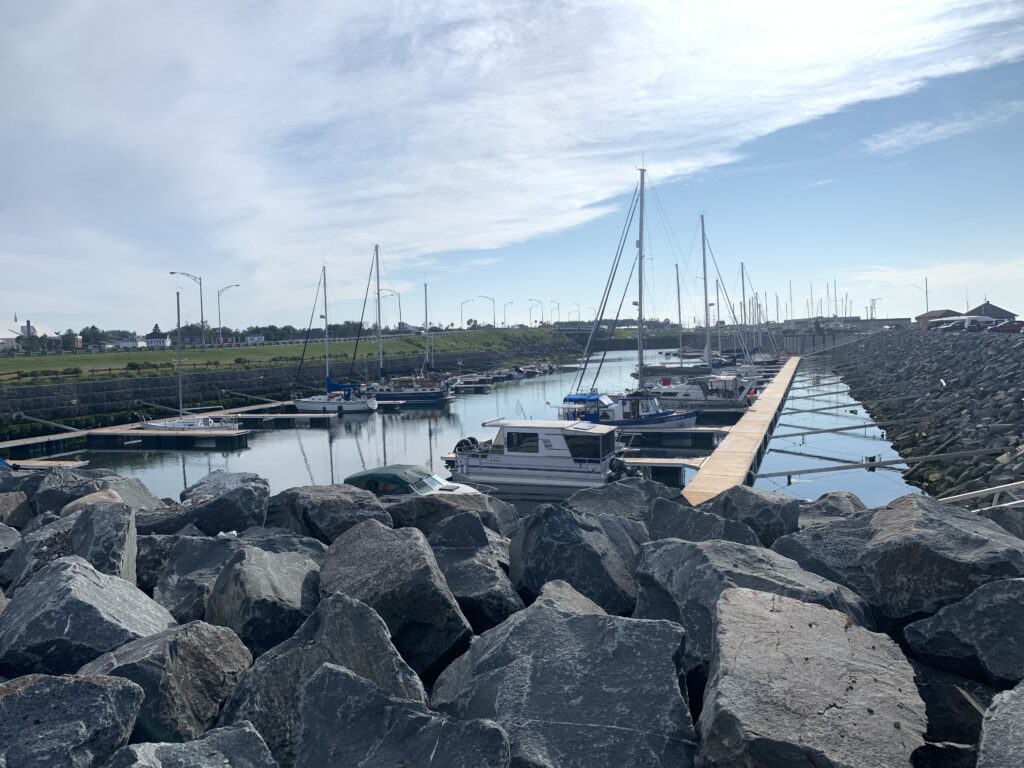
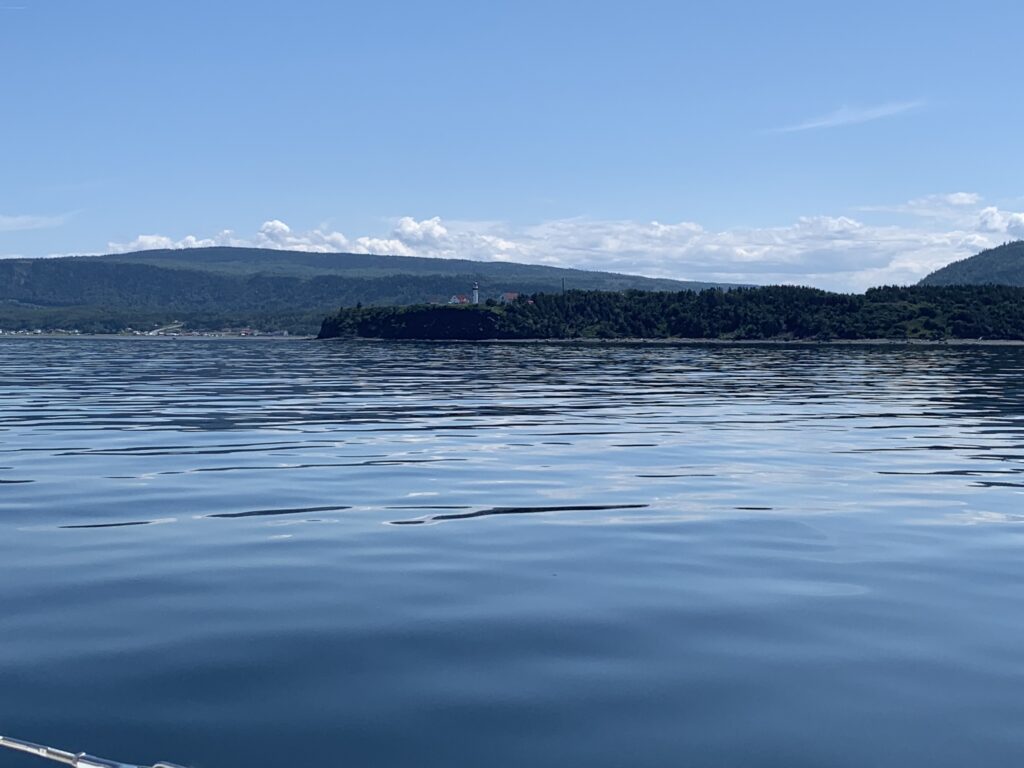
After Matane the landscape shifted again. The river widened and we could no longer see the north shore and the southern shore became taller, rockier and the farms became fishing villages. Remember my first sentence? The one where I said I was not sure anything could rival the fjord? I should not have worried – our journey has taken us to the Gaspé Peninsula, or just Gaspésie, and the northern edge of the Appalachian Mountains!
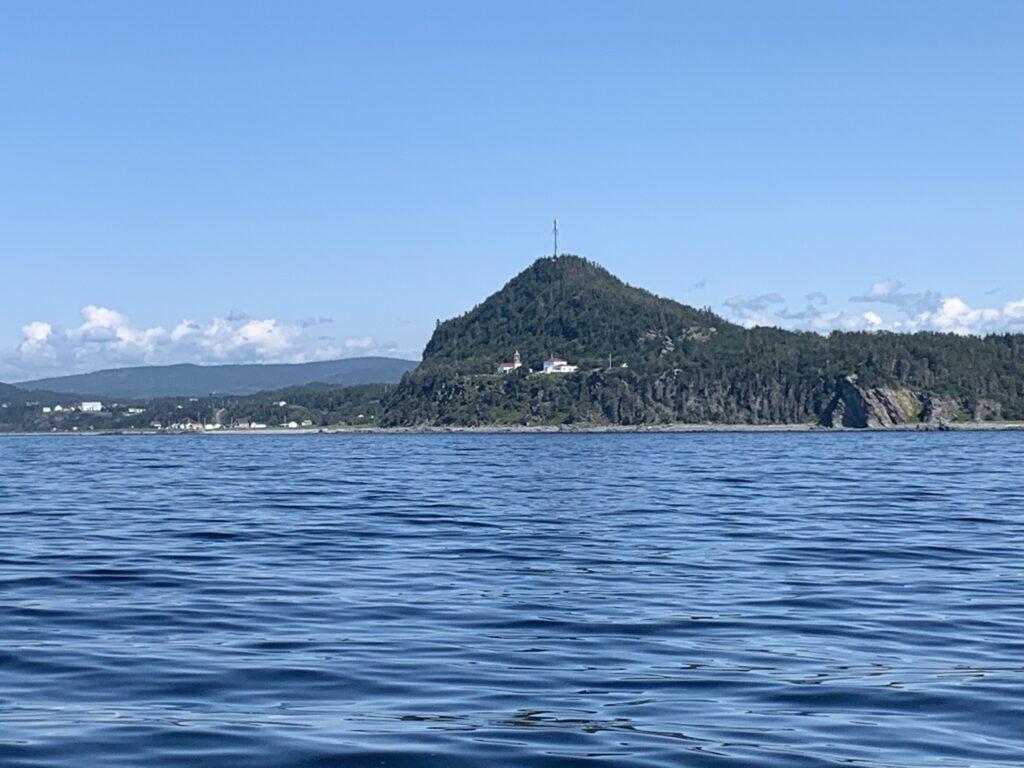
I am not quite sure where the St. Lawrence River ends and the Gulf of St. Lawrence begins, but it is right around here. The water is big, deep and fast. It is also a Katabatic Wind country. These winds are a nighttime phenomenon caused by an air mass that falls down into the mountain valleys as the temperature changes and then blows out to sea at 30+ knots. Several times we anchored in a calm bay, looking forward a peaceful night and good sleep, only to be awakened around 2 am to a pitching boat and howling winds, but a few hours later, as the sun rises and warms the air, all is calm again.
We are seeing new wildlife – seals and huge sea birds, almost the size of swans (no, they are not swans), and watching them hunt for fish is quite amazing – they seem to be coasting along and suddenly go into a kamikaze dive into the water, kick-up a 2 foot splash, disappear under the waves, emerge and fly off again. I can watch them all day long.
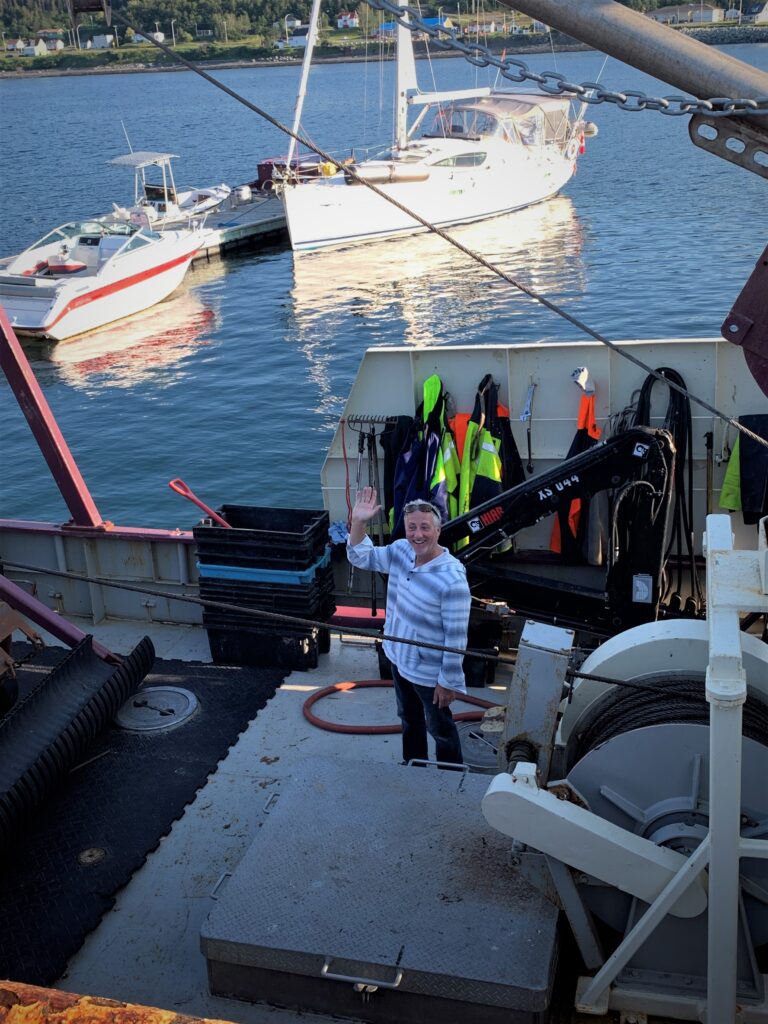
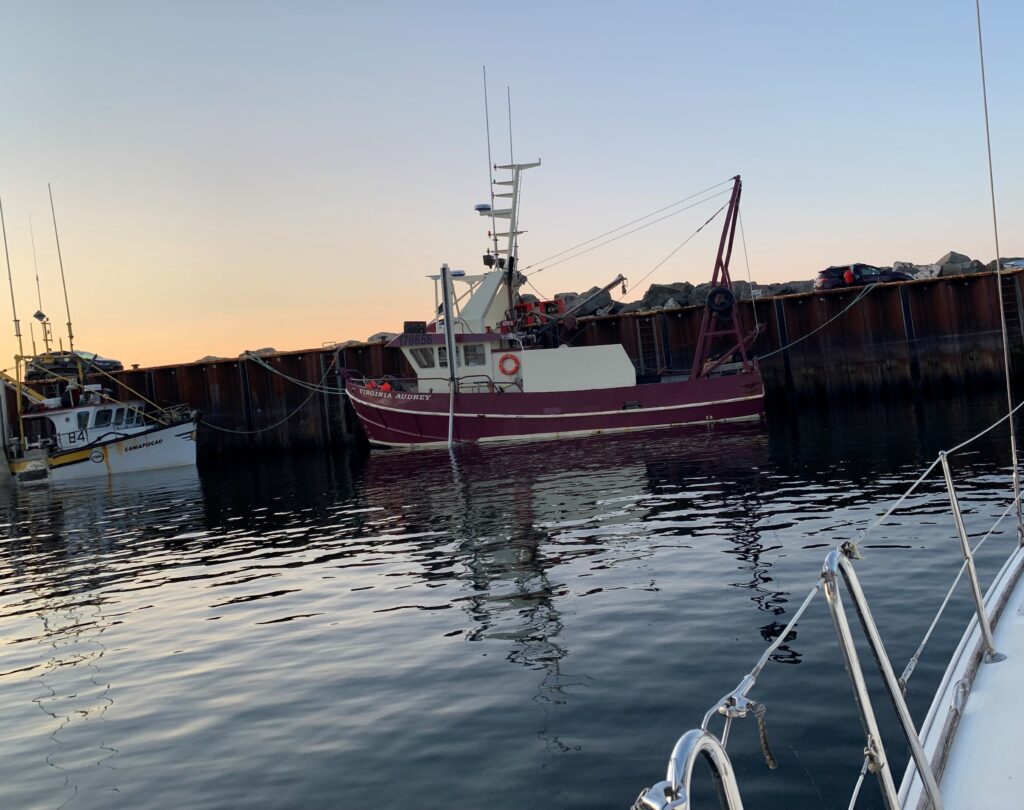
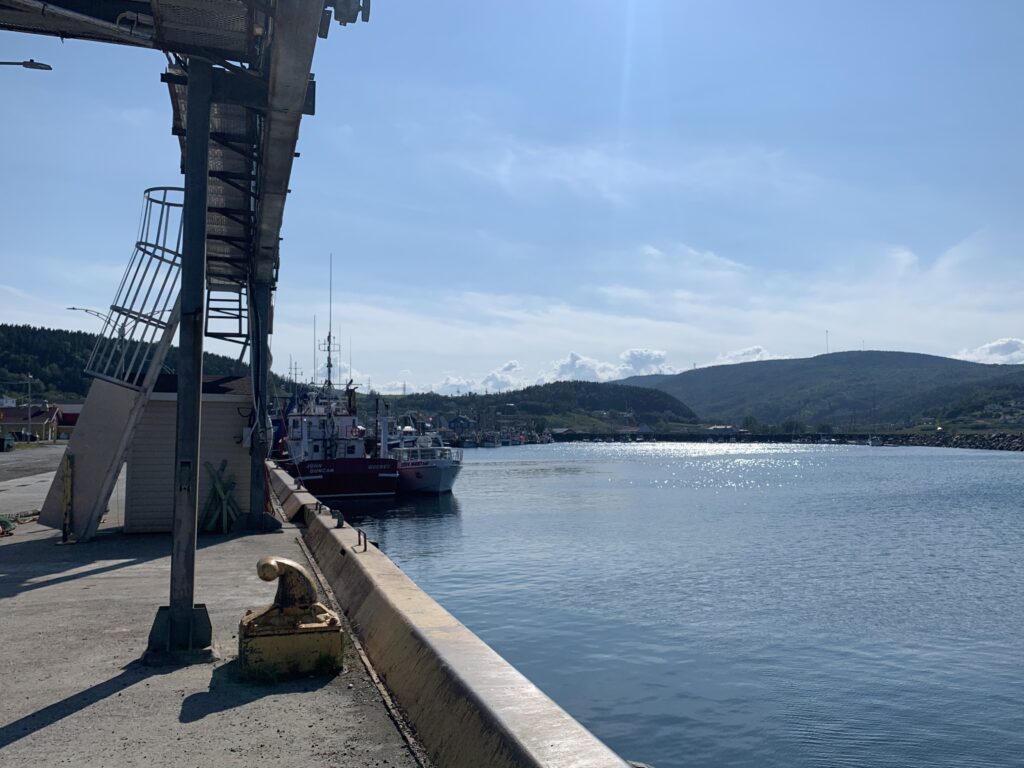
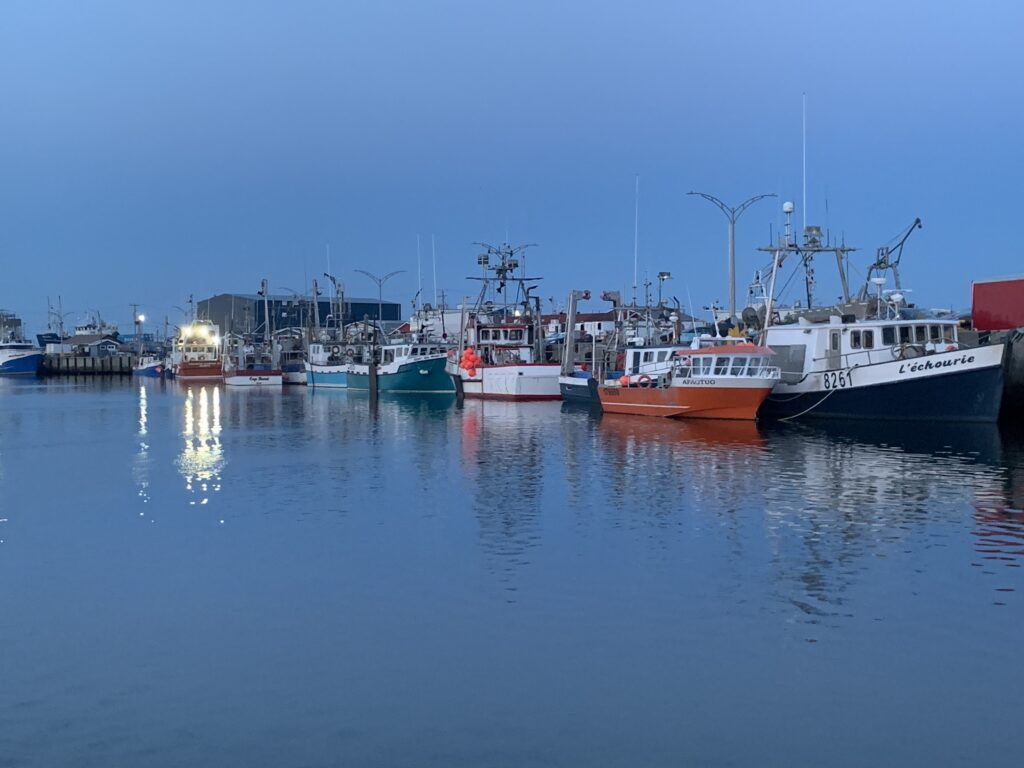
The ports different here as well. We now stop in small fishing villages with 20-foot-high concrete breakwalls sheltering metal walls where commercial fishing boats tie up, and not marinas that cater to pleasure craft. We are allowed to tie up on the wall if there is space. When there is no space on the wall, we may anchor in the harbour as long as we stay out of traffic, but this can leave us exposed to winds and currents. Another option we’ve heard about, but have not tried yet, likely because my limited high-school French did not extend to such subjects vs lack of opportunity, is asking permission to raft off of a commercial fishing boat. But I’m sure we’ll do that too eventually.
So amazing that you were surrounded by beluga whales!!
So amazing that you were surrounded by beluga whales!! Good luck with the crossing!
I want more info on Cat Stevens! But I guess you guys are all right too. 😉