
Chapter 6 – Gaspésie
We have been in the Gaspésie (the Gaspé Peninsula), for just over 2 weeks and will soon move on to the next big adventure, the jump across the Gulf of St. Lawrence to the Madelaine Islands, but first let me tell you some more about Gaspésie.
The city of Gaspé is the largest city in the peninsula and is approximately a 9-hour road trip through the mountains to Quebec City. Gaspé has an airport with service to larger cities and was the last opportunity to get catch a flight back to Toronto. This was important because we were waiting on a little girl – Allen’s granddaughter was due on July 29, Allen’s birthday, and he wanted to go home to meet her. Lucy arrived one day early, safe and sound, and Allen was able to get back to meet his sweet little granddaughter. Since I had to stay with the boat and Cat Stevens, Gaspé was a good choice with a full-service marina, close to amenities, where I would be safe and comfortable alone on the boat for a few days.
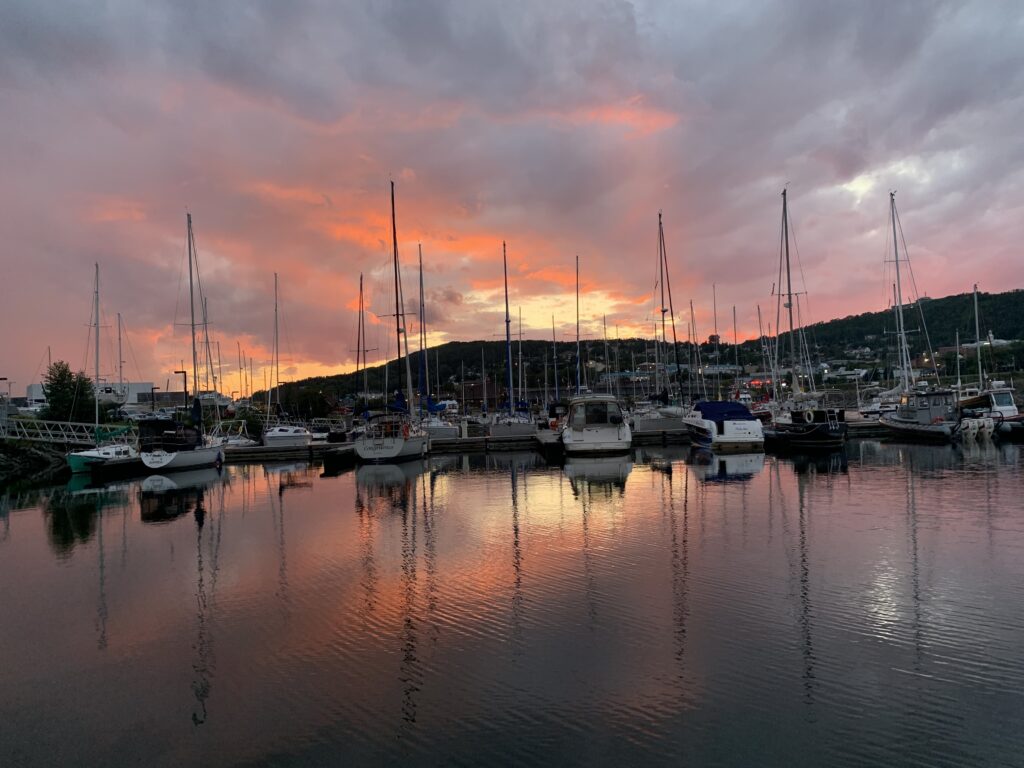
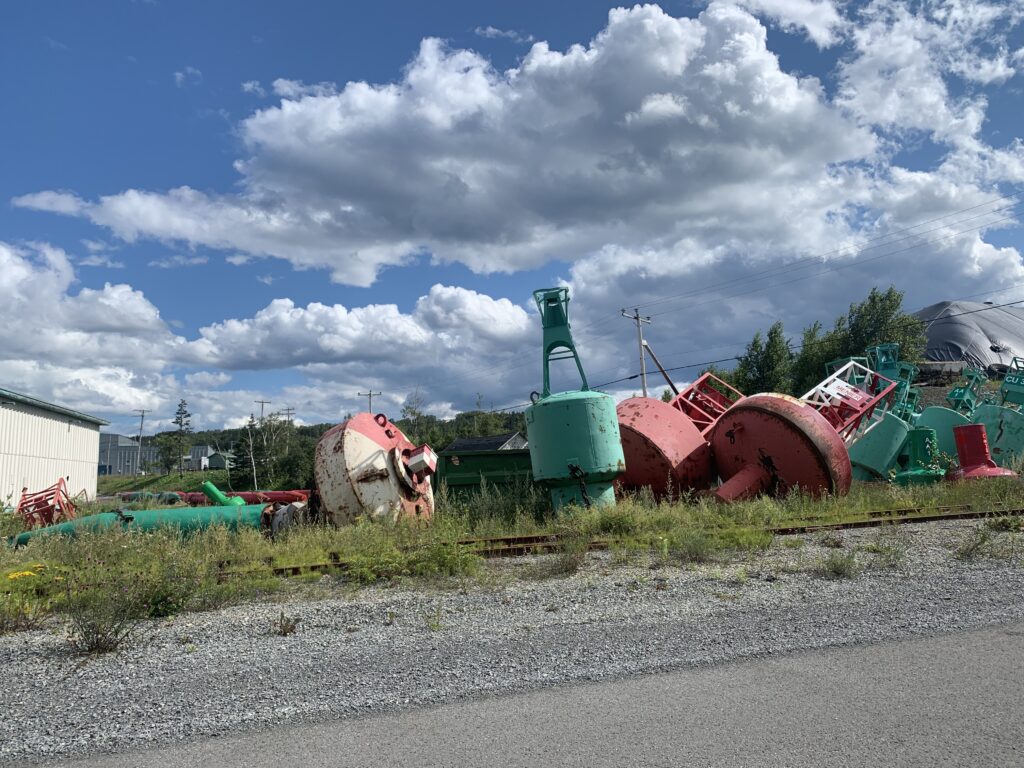
It’s hard to know where to begin describing Gaspésie as there is such variety and so much to see. The main attraction to this area is nature: the forests, the mountains and of course, the sea. The coastline is dotted with small fishing villages, farmland and the Chic-Choc Mountains, the northern beginning of the Appalachians. I wanted to thoroughly explore this area and since I had some time on my hands, I rented a car to do some land-based exploring. Here are some of my favourite parts of Gaspésie:
Percé Rock and Bonaventure Island:
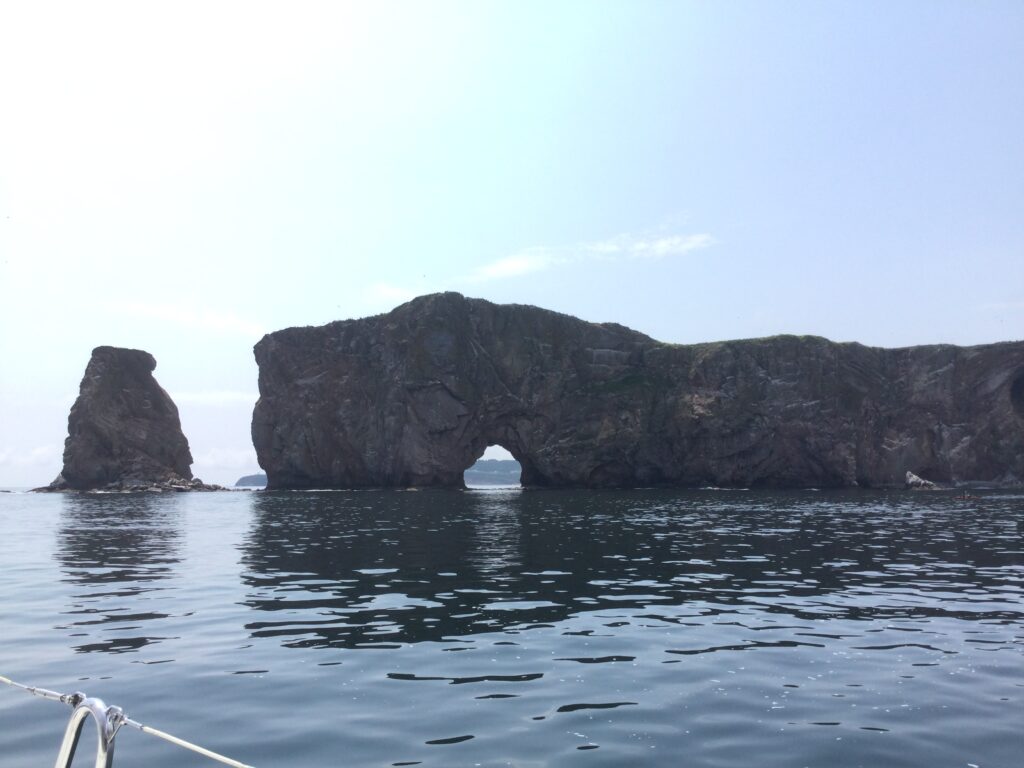
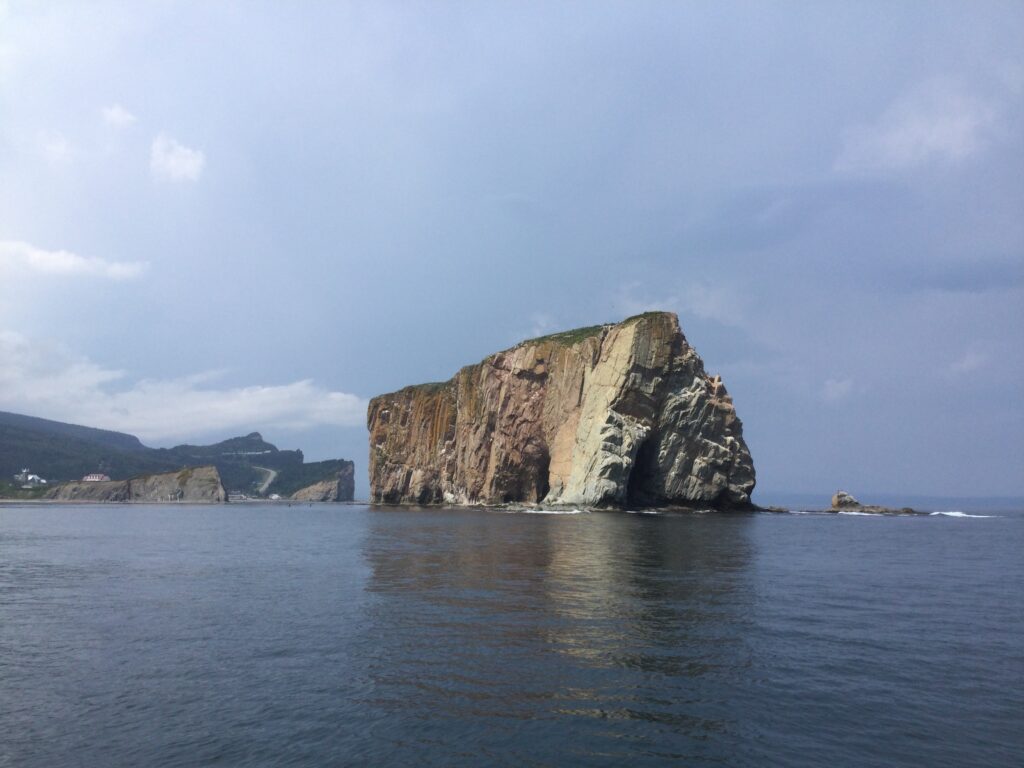
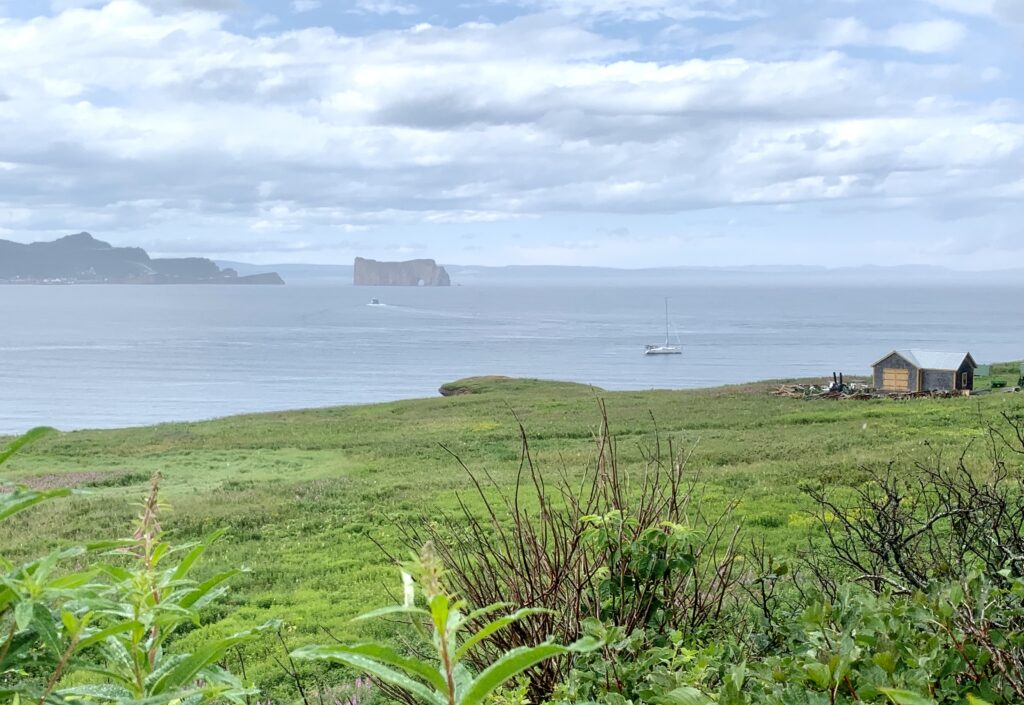
Before we sailed into Gaspé, we made a stop here, one of Canada’s most famous natural landmarks. It is a huge natural rock formation and one of the world’s largest natural arches located in water. The water surrounding the rock is deep, making it possible to get quite close, although it is not possible to take a boat through the arch because the bottom is jagged rock. At low tide brave souls are able to walk along a rocky path to explore the rock, but I preferred to view it from the comfort of our boat.
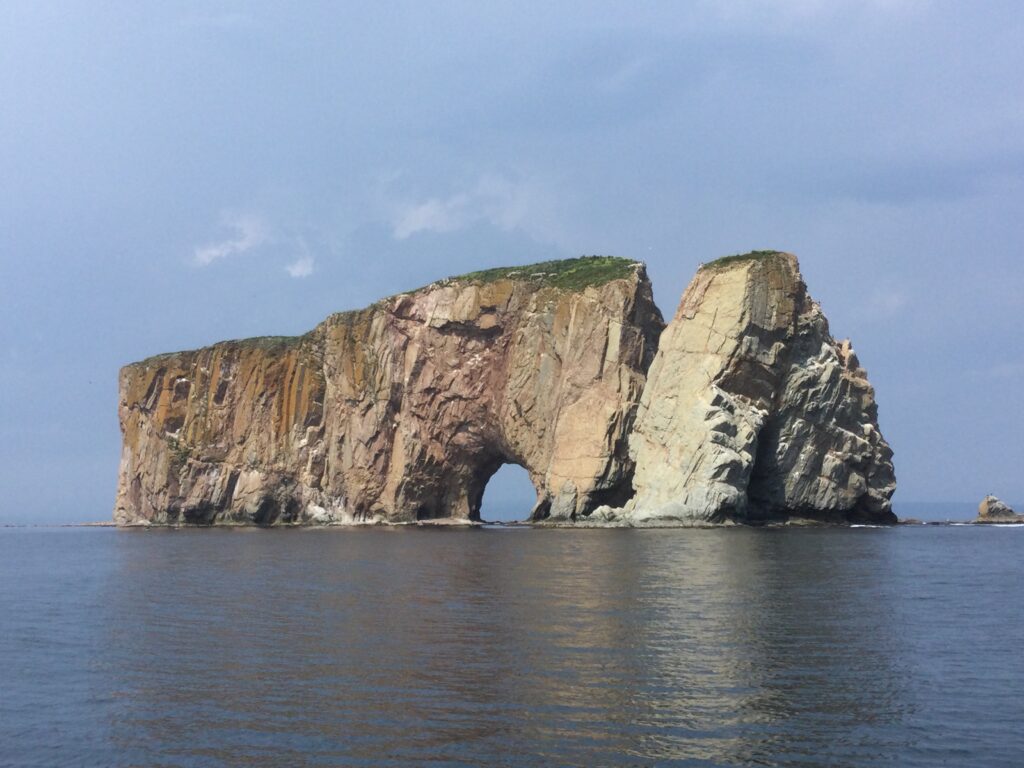
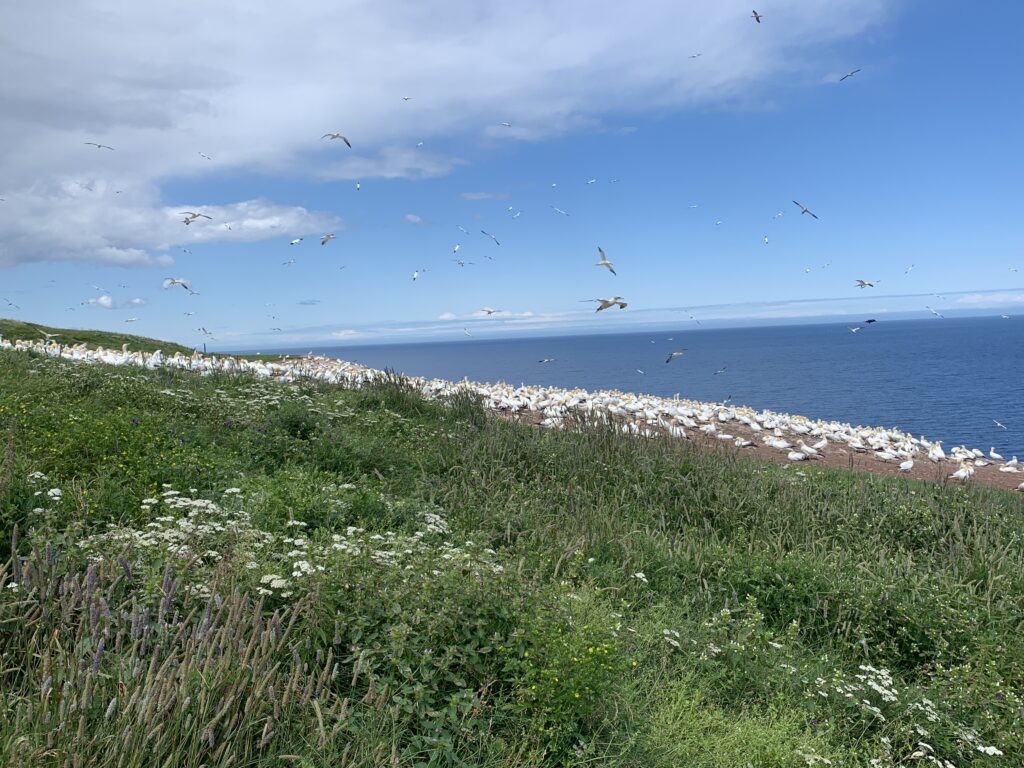
Bonaventure Island, a national park, is just a short distance from the rock. It is a bird sanctuary, home to over 200 bird species, but most impressively, about 100,000 Northern Gannets make Bonaventure Island their home. These are the same birds we observed earlier, dive bombing into the sea to catch fish from incredible heights. The island was once, but is no longer inhabited by humans and has a series of hiking trails through the forest, along the cliffs and of course the trails take you to the gannet colony. When approaching the colony first you hear them, then you smell them and then you see them….a truly awesome sight to be just a few feet away from thousands and thousands of birds.
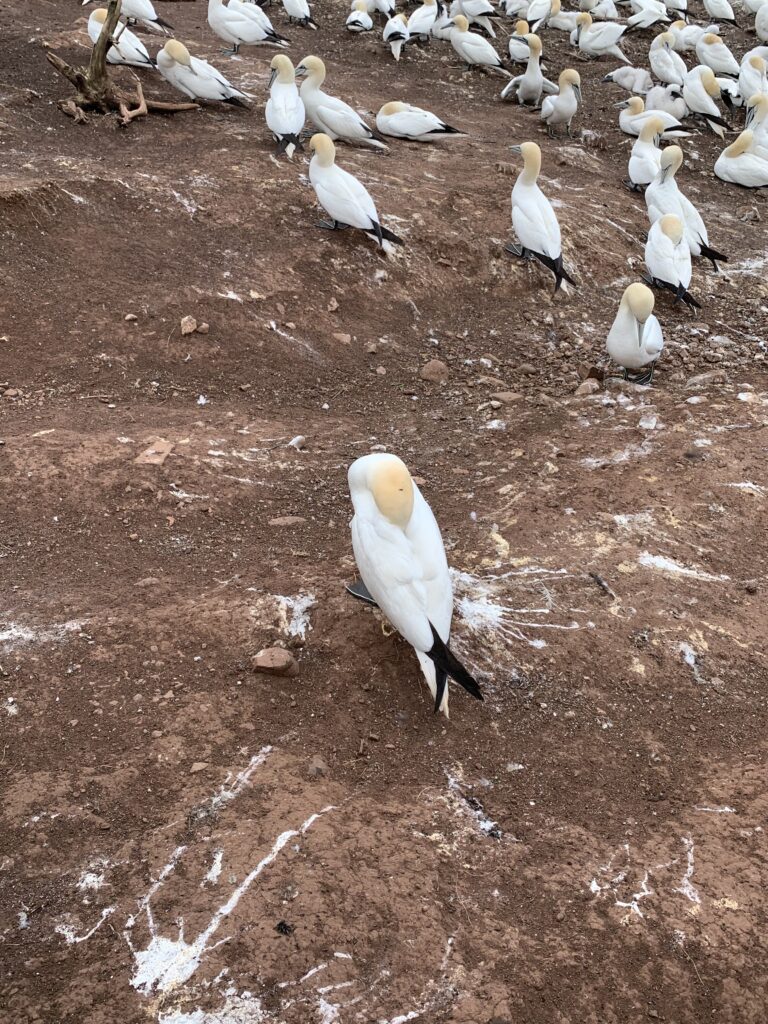
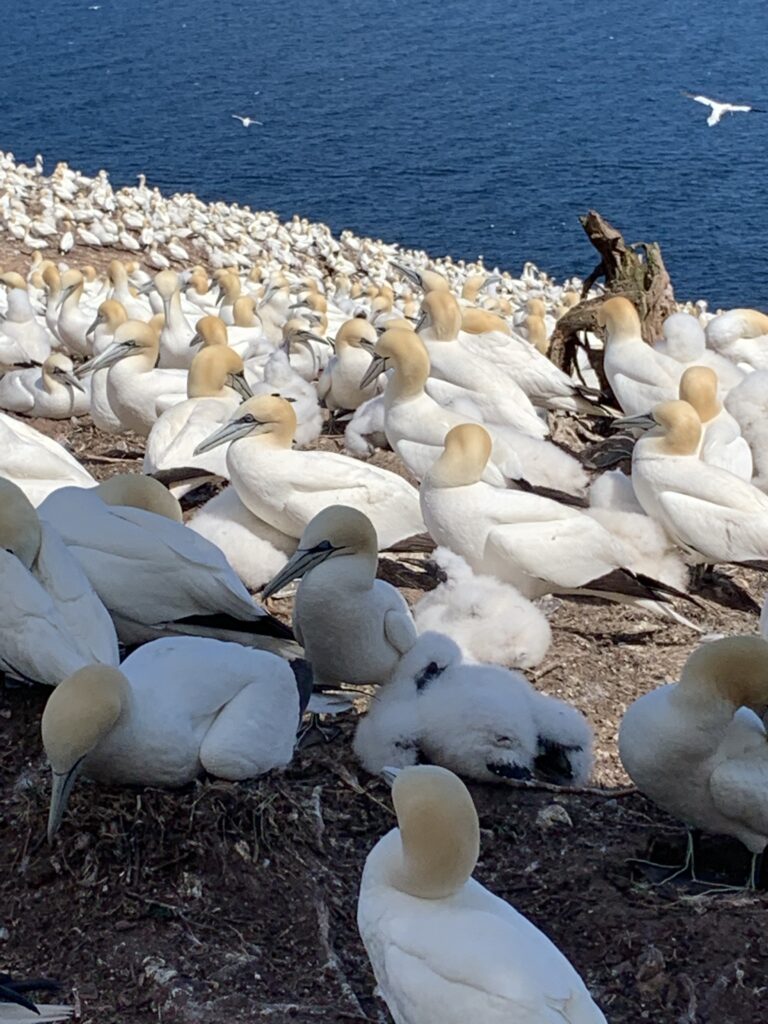
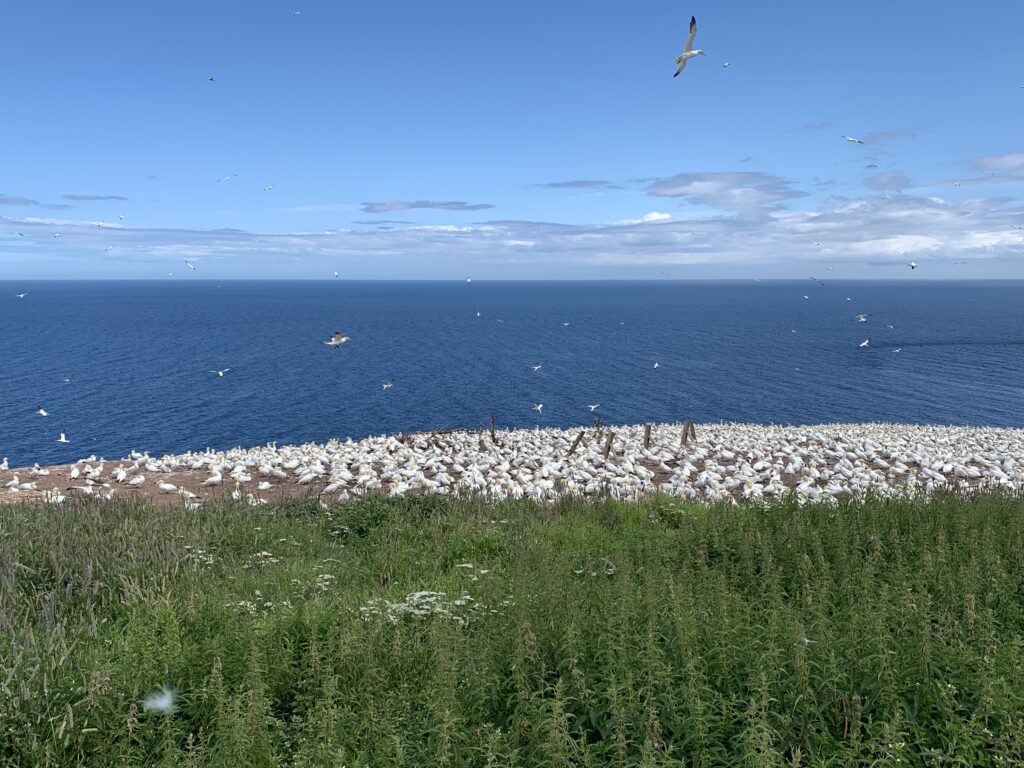
Birds everywhere…
Forillon National Park
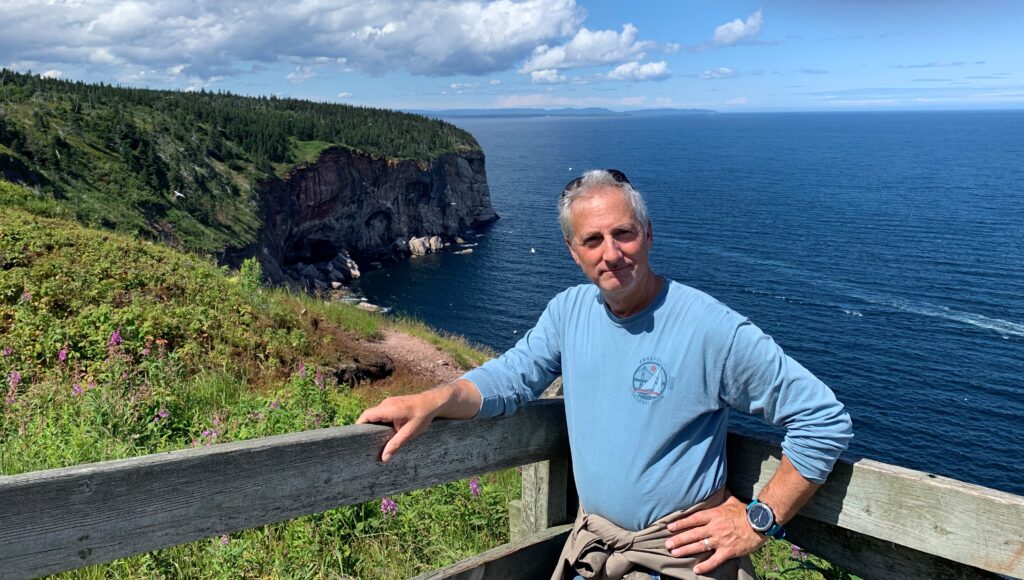
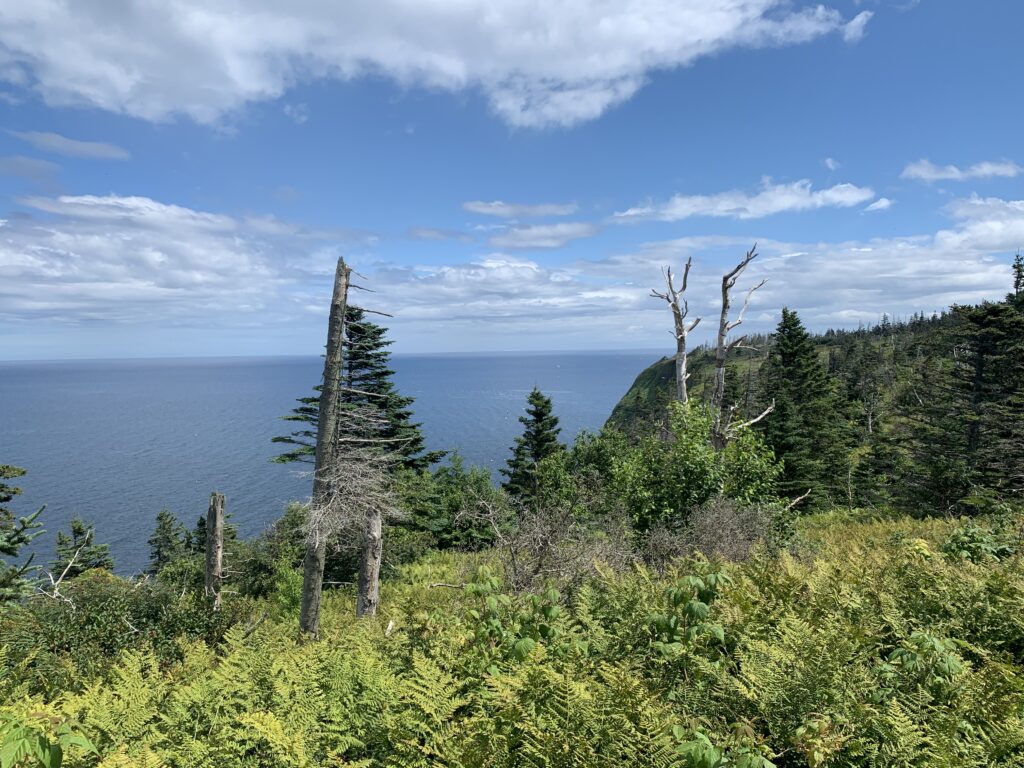
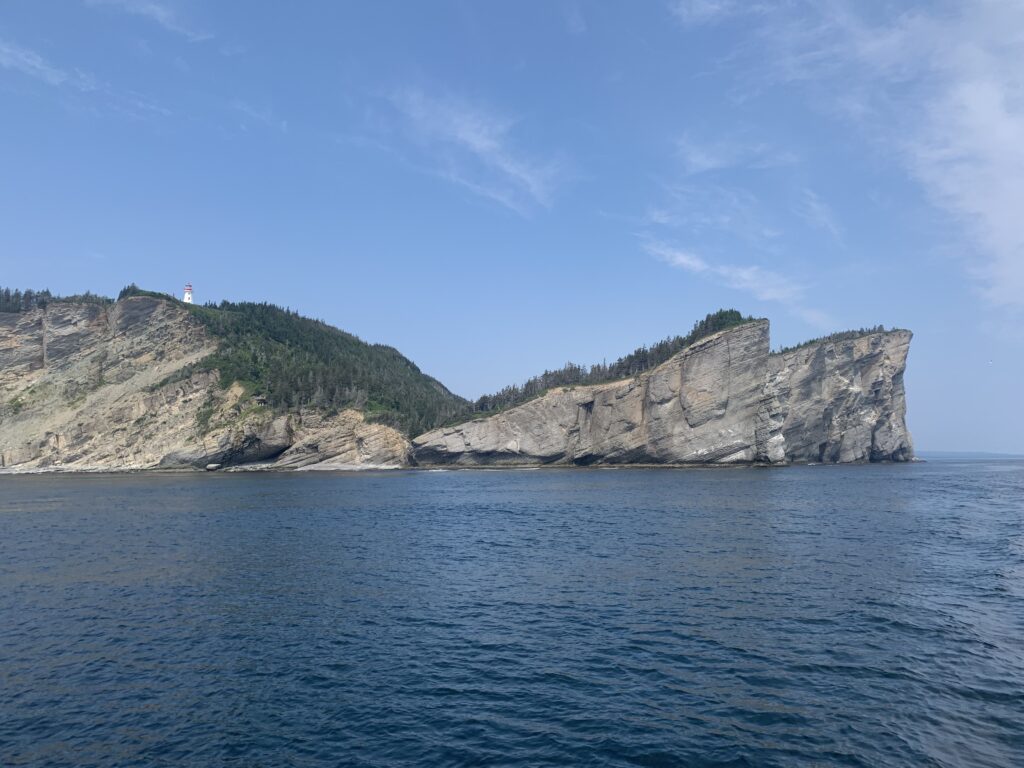
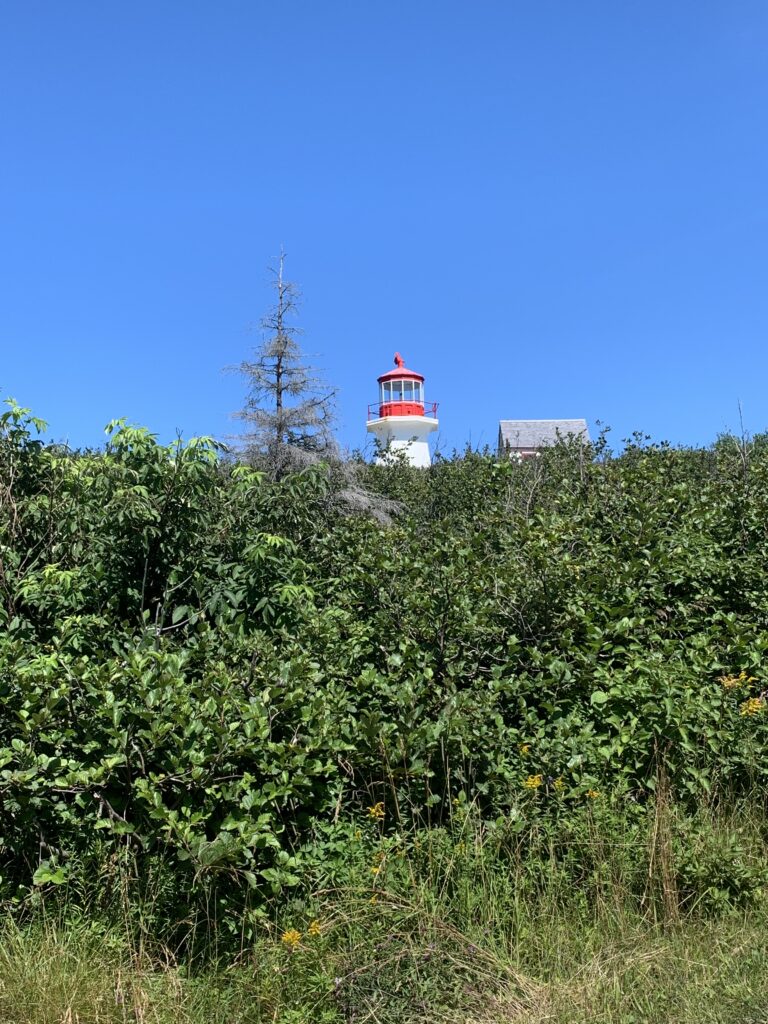
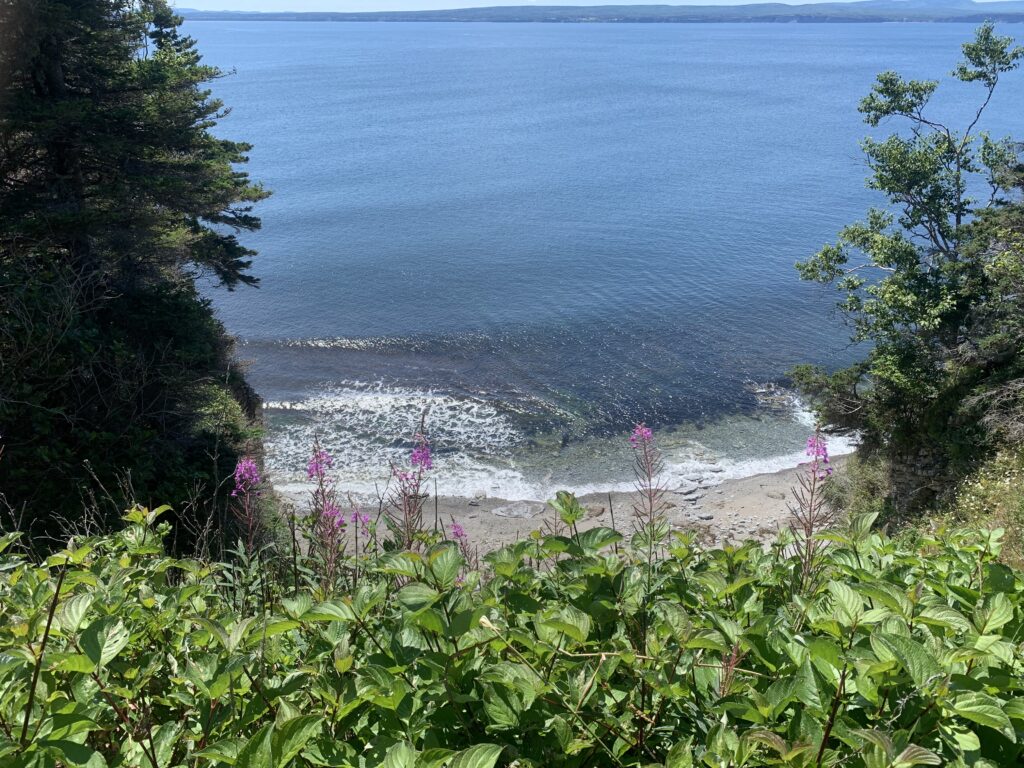
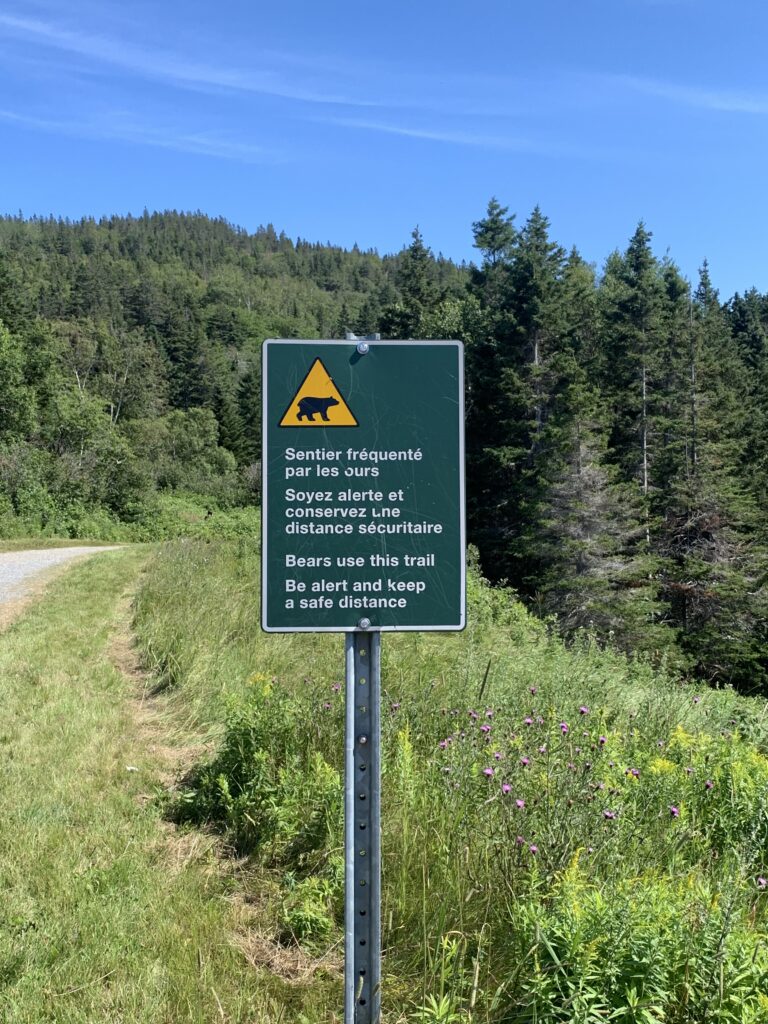
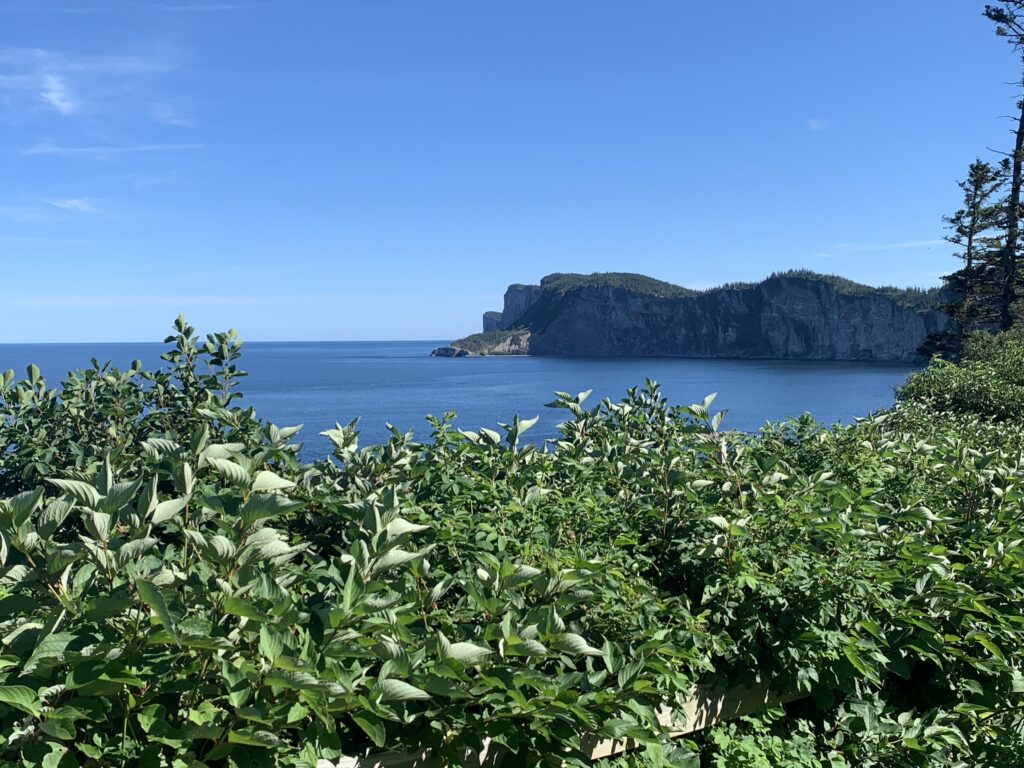
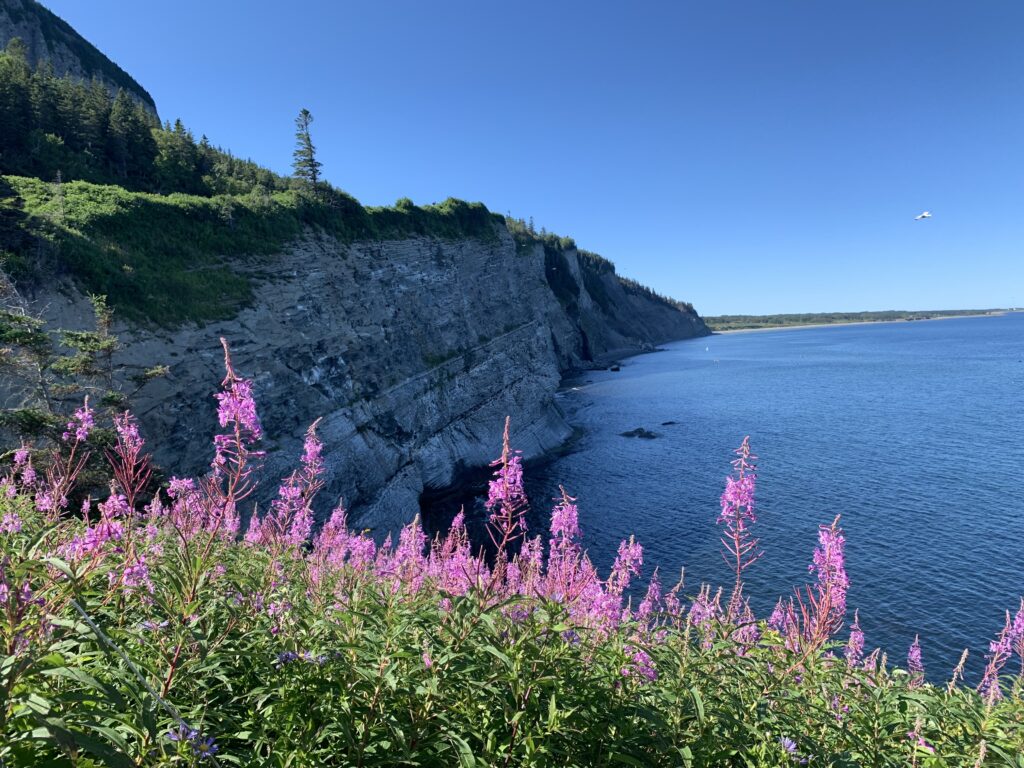
This park covers a large part of the peninsula and has something to offer every nature lover. Hiking trails in the forest, over the mountains and along the sea. You can go kayaking, whale watching, biking, camping, climbing. I chose a hike to the “End of Land” lighthouse, with spectacular views of the sea that took me down to a rocky beach then up to the top of the cliffs – exhausting, but so worth the views!
Food and Drink
The folks in Gaspésie have taken the eat & drink local movement to heart with most restaurants serving locally sourced foods and locally produced beer and spirits. Microbreweries are popping up everywhere, but an interesting trend here is micro-distilleries specializing in gin. We visited two, O’Dwyer, that makes Radoune, a fantastic artisanal gin made with wild mushrooms (and tastes nothing like mushrooms), and Marigot, that makes Récif, also using local ingredients from Gaspésie. Both are delicious, but unfortunately currently only available in Quebec. The regional food also focuses on local sources and ingredients, such as fish, seafood and much of it smoked, wild mushrooms and game and since I am not a fan of any of this, I cannot personally comment, but Allen has a new favorite: salmon tartare.
I will leave you with one last interesting fact for the history lovers, something I found surprising. During WWII, German U-Boats reached North American shores and were present in the Gulf of St Lawrence from 1942 -1944. During this time, they torpedoed 20 ships near the Gaspé coast. Civilian “coast watchers” stood on top of the cliffs to spot the u-boats and with the Canadian military, they were able to eventually secure the inland coastal waters of the Gulf of St. Lawrence.
Hi Silvia,
What a spectacular time to yourself!!
Did Allen being baby pics back?
Hazel & Dan
Enjoying reading about your adventures.
Would like to read about Cat Stevens take on the trip. Hope Cat is not getting seasick. Has he invited any felines on board for a little catnip? More photos of Cat Stevens, please.
Cat Stevens fan club
Woo Lucy made it on the blog! We missed you hope you enjoyed exploring.