
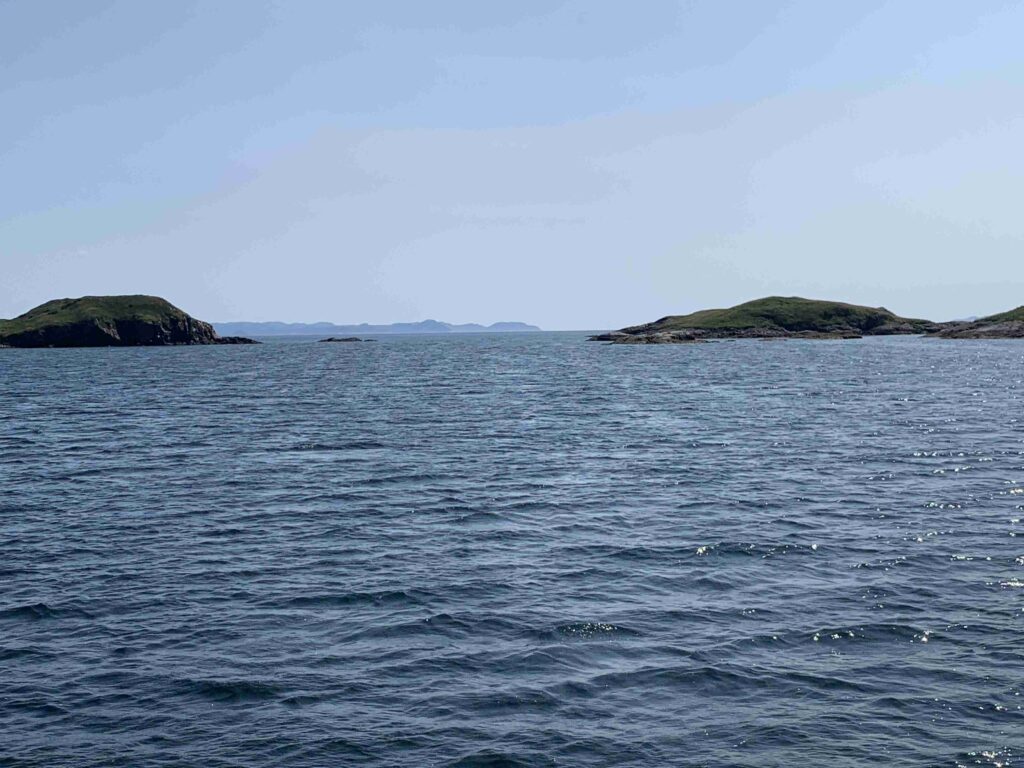
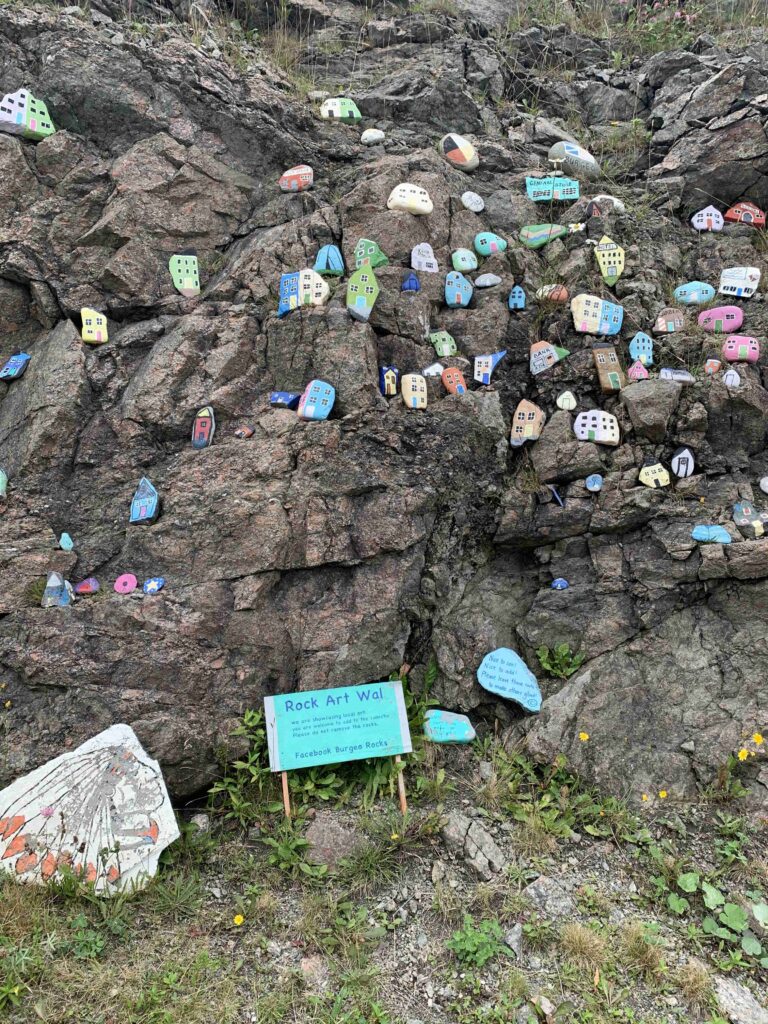
The next stop on the southern coast of Newfoundland was a larger town with road access to the rest of the province, Burgeo. Getting there was as interesting as it was challenging, again in the fog, passing a rocky coast, then a long white-sand beach and then again manoeuvring through a labyrinth – many times I look at Allen and say “in there?!”. Burgeo, aside from its shoreline, is not a very pretty town, but like most bigger towns, it has good resources for picking up groceries, doing laundry and taking long, hot showers (always luxury when living on a boat).
The next morning as we were preparing to cast off the dock, with the fridge stocked and the smell of fresh laundry, June the Harbour Master pulled up to us in her fishing boat. She came by to wish us farewell and as a parting gift, handed me a freshly caught Cod. I don’t like fish and I know nothing about fishing, but I didn’t want to appear ungracious, so as I took the fish from her asked “is it dead?”. Well, I’m sure June had a good laugh on me that day because not only was the fish not moving, she had already gutted it. I thanked June, handed the fish to Allen, who then cleaned and cooked it for dinner that night. And even though I don’t like fish, I have to admit fresh cod is not so bad.
Allen grew-up fishing with his dad, so he was interested in trying to fish while in Newfoundland. He inquired about getting a fishing license at a shop and was asked “trout or salmon”. Salmon! Then he was informed he may only fly-fish for salmon, no barbed lures, you may not keep salmon that are too small or too big, and the Fisheries wardens are very active on the waterways and fines are stiff for rule-breakers. Being far more complex than he thought and not having fly-fishing equipment, Allen passed on the license. However, we have now learned that cod fishing does not require a license, but it is allowed only 3 days a week – Saturday, Sunday and Monday – the max haul is 5 per person on the boat. Maybe he’ll try his luck, but not sure he has the stomach to clean another fish.
Our next port was one of my favourite stops, the beautiful island of Ramea, so obviously no land access. This is a fairly busy town with a population around 450, daily ferry service, a working fish plant that processes scallops and quite a few boats in the harbour. We learned that we could buy fresh sea scallops directly from the fish plant next to the harbour and all we had to do is walk up to any open door. We did just that, and for $16 walked away with a pound of the best scallops in Newfoundland.
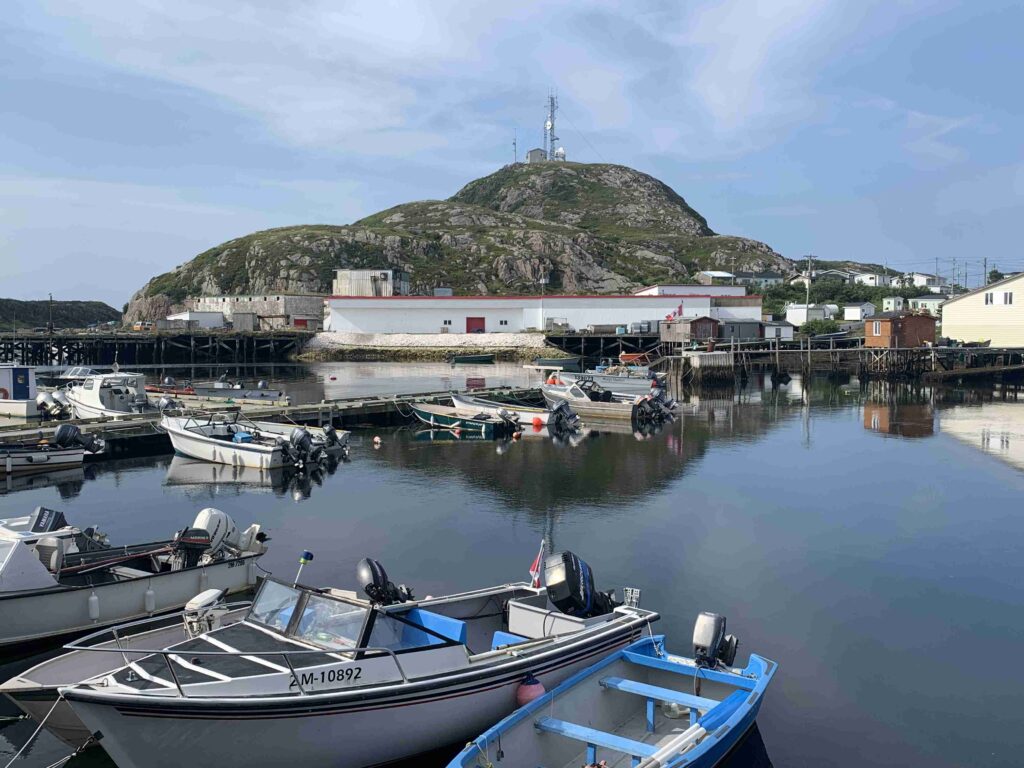
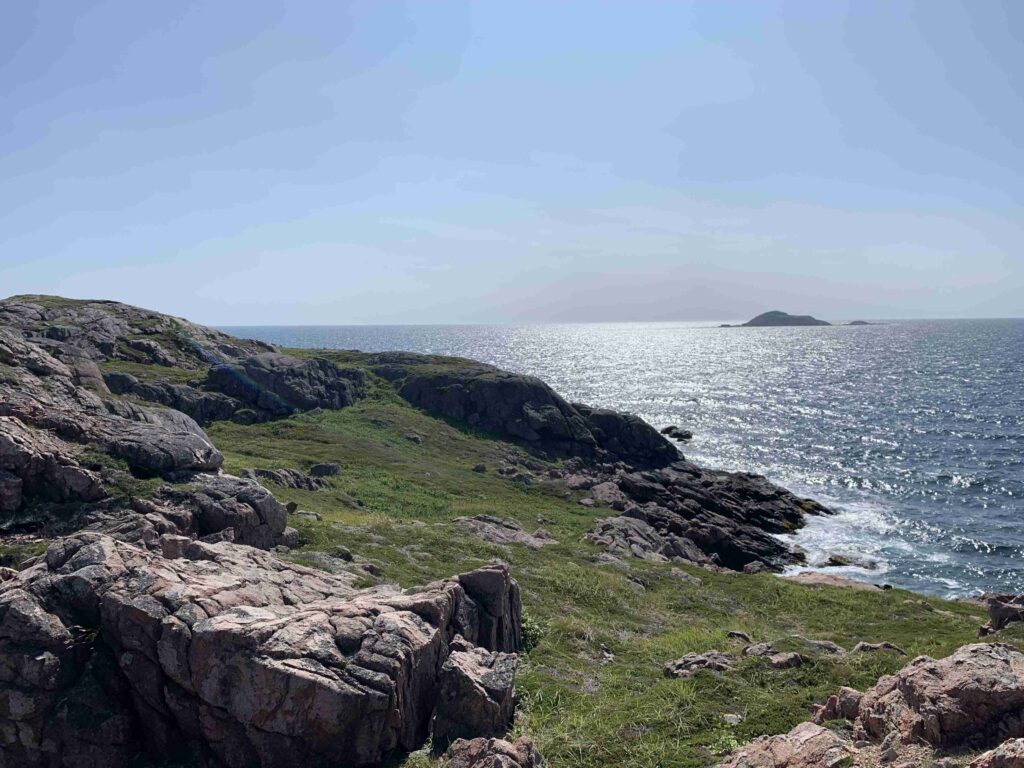
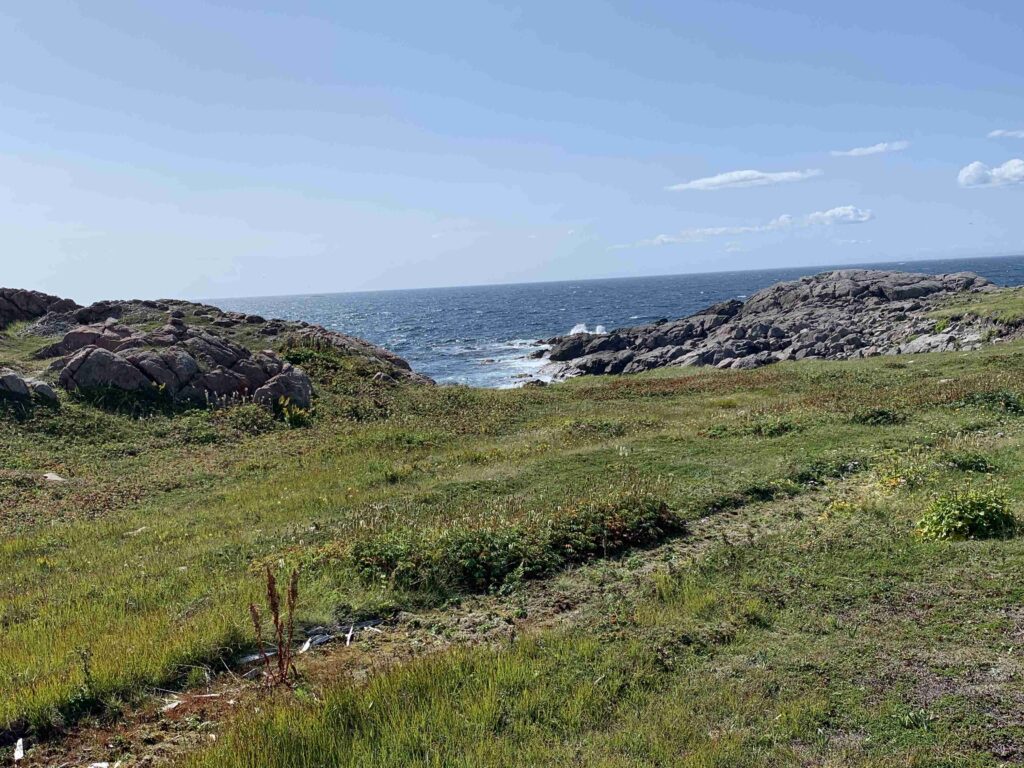
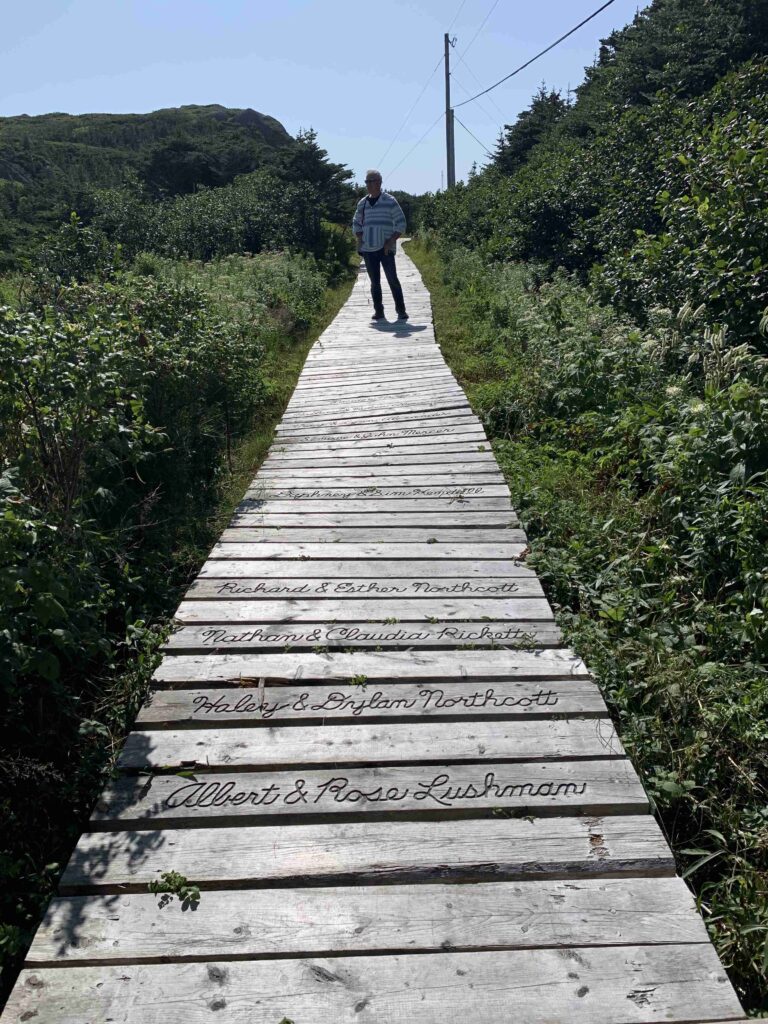
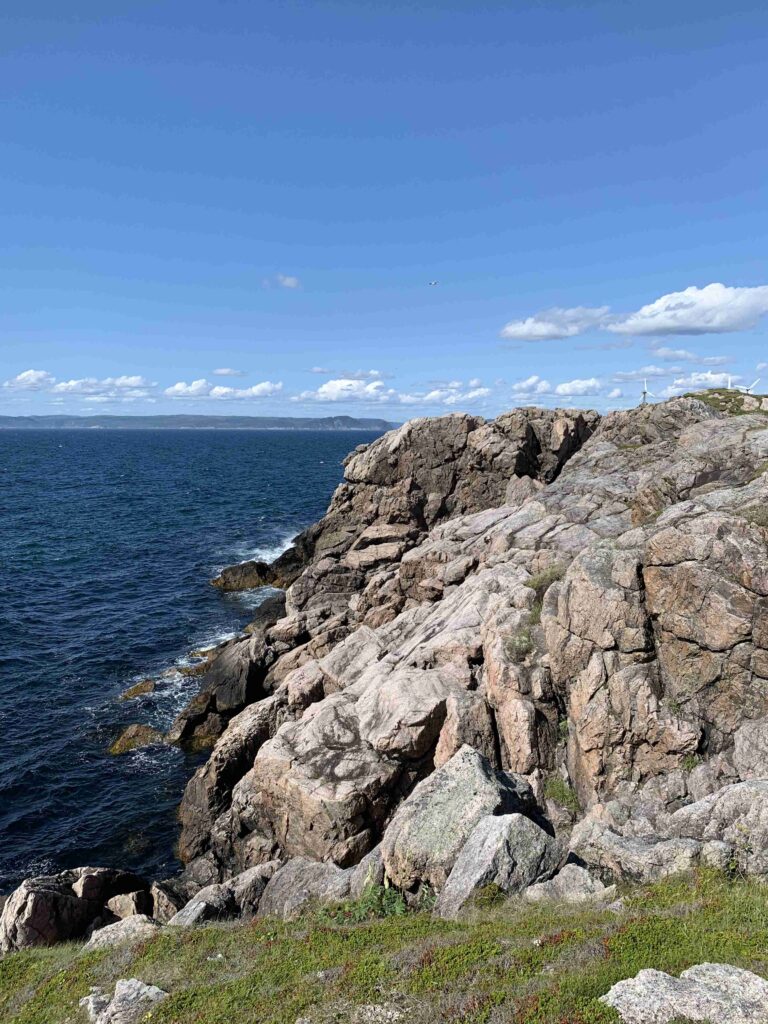
Ramea has an 8km boardwalk that runs the entire perimeter of the island, going through forest, marshes, cliffs, rocky beaches and a fresh-water lake that serves as the island’s drinking water source. We had a clear, sunny day and spent it walking along the boardwalk and soaking in the diverse landscape.
Our next 3 stops were really special because they are situated inside the fjords and are accessible only by boat. We’ve been told many times how most Newfoundlanders have never seen these outposts because of their isolated locations and how incredibly lucky we are to have gone there. These tiny fishing villages are served by a daily coastal ferry, there are no roads and no cars, but everyone has an ATV that they drive on the paved sidewalks. Each village has a heli-port for emergencies, a post office, a health clinic (though I don’t know how well it’s staffed), a volunteer fire department hall, a church and a school. There is also a small store that sells a little bit of everything, from groceries, liquor to boat parts; however, store hours seem to be variable.
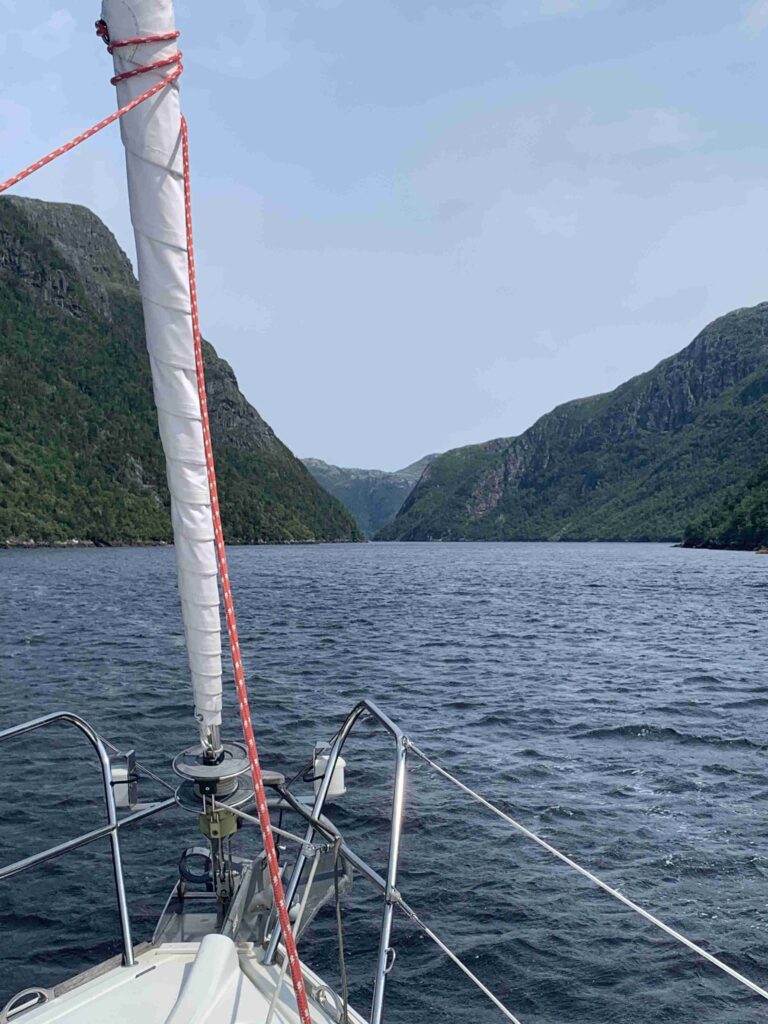
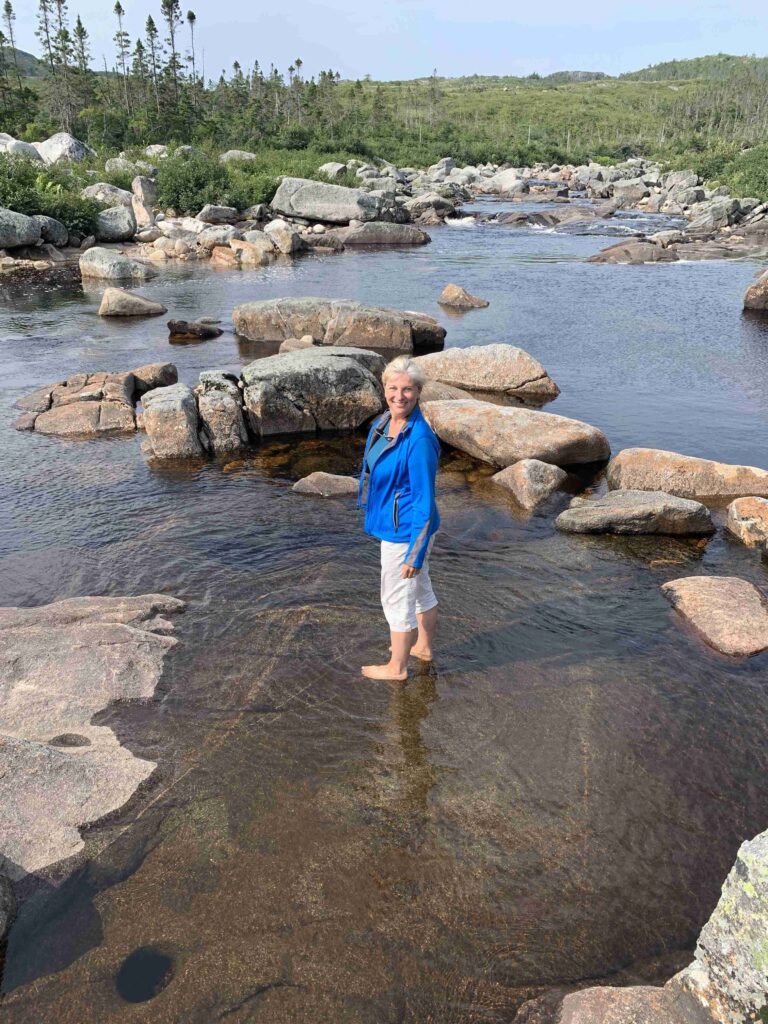
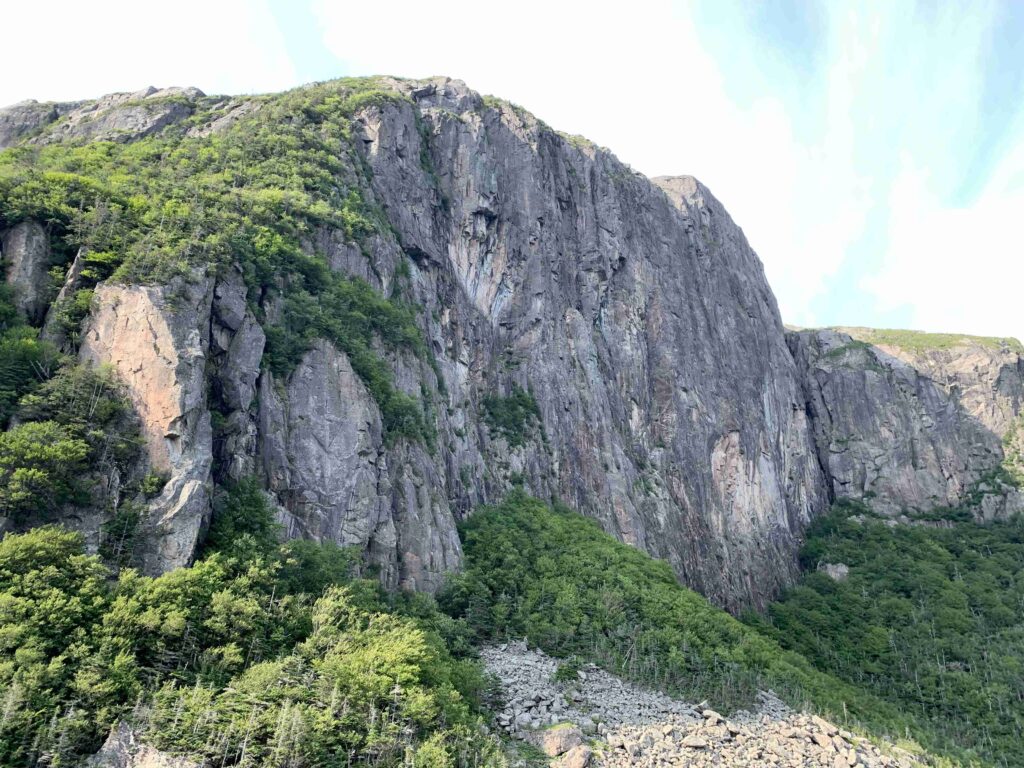
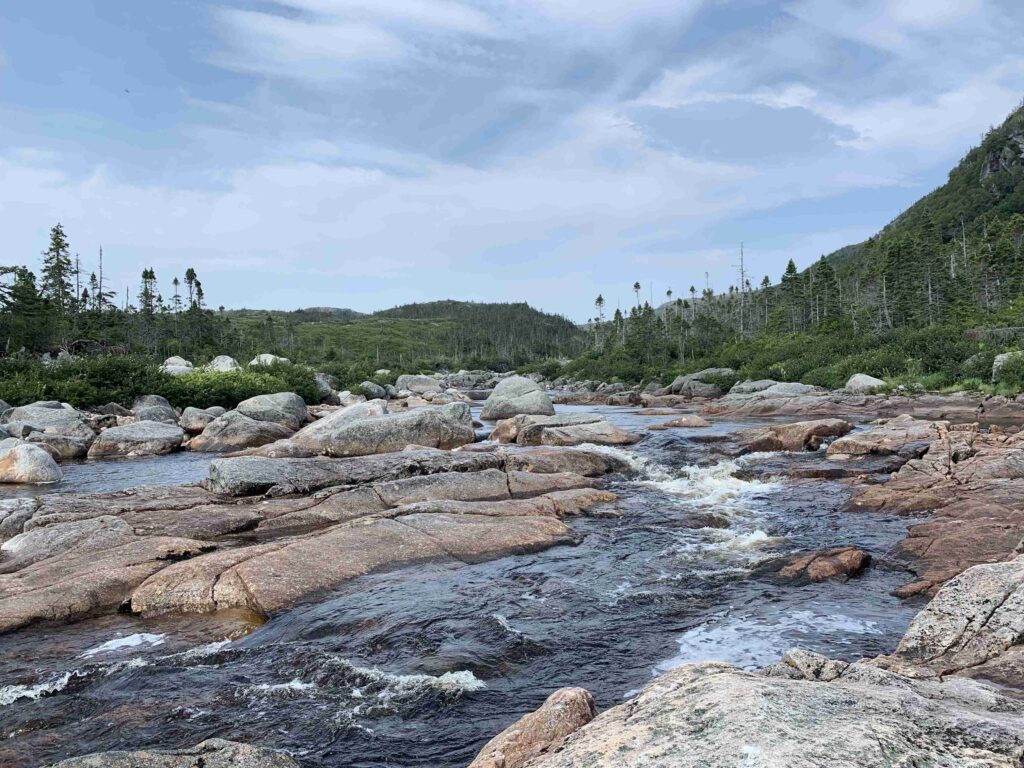
Grey River took us deep into the fjords where we knew we could find good anchoring in 20 feet of water. We arrived on a clear, sunny day so I sat on the bow as we navigated the 6 miles into the fjord. I was blown away by 1000-foot mountains, some with shear rock walls and others densely forested, rising vertically from the water. Once anchored, we launched the dinghy and explored even deeper into the fjord, hiked up a salmon river and took a refreshing dip in a mountain river.
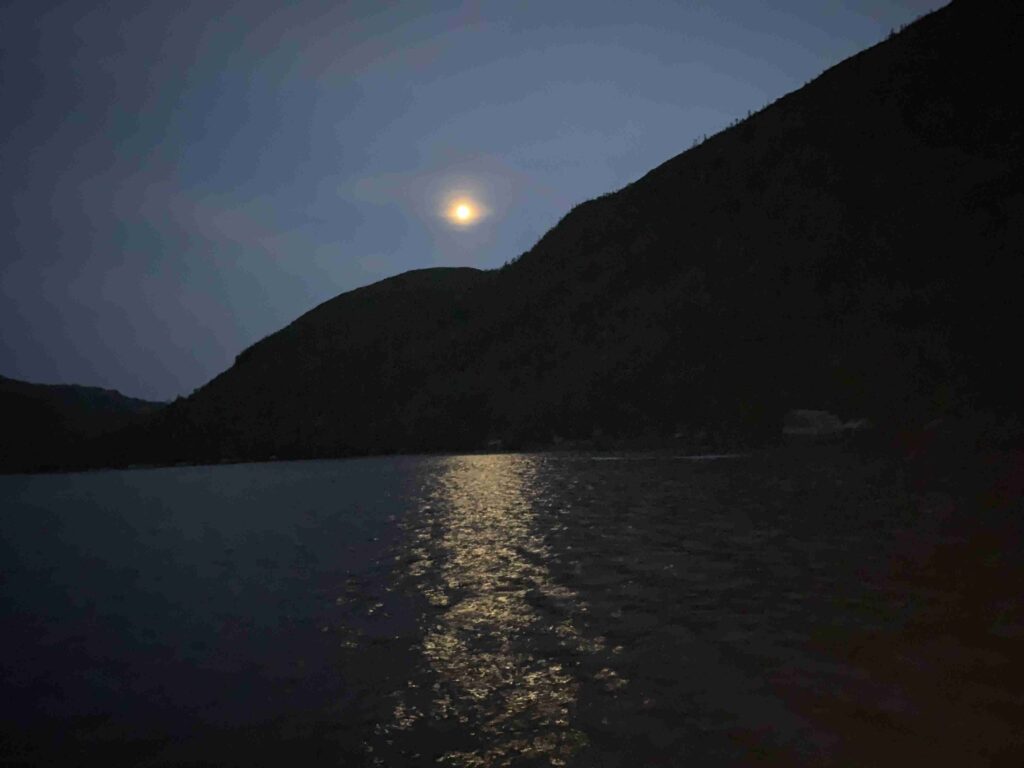
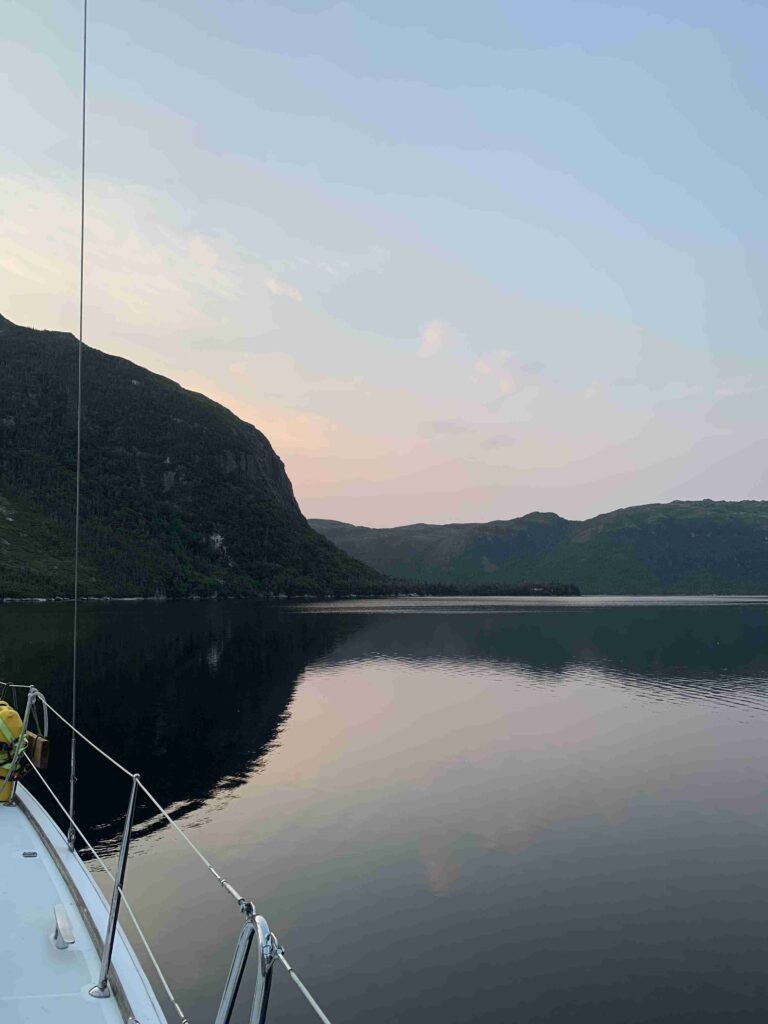
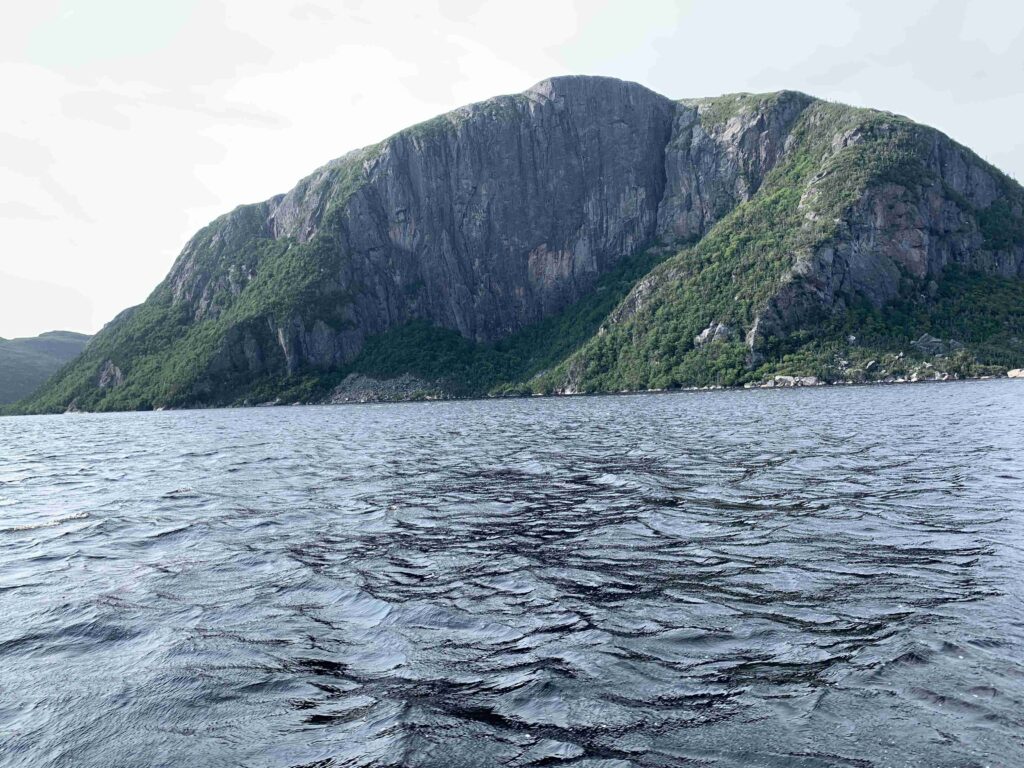
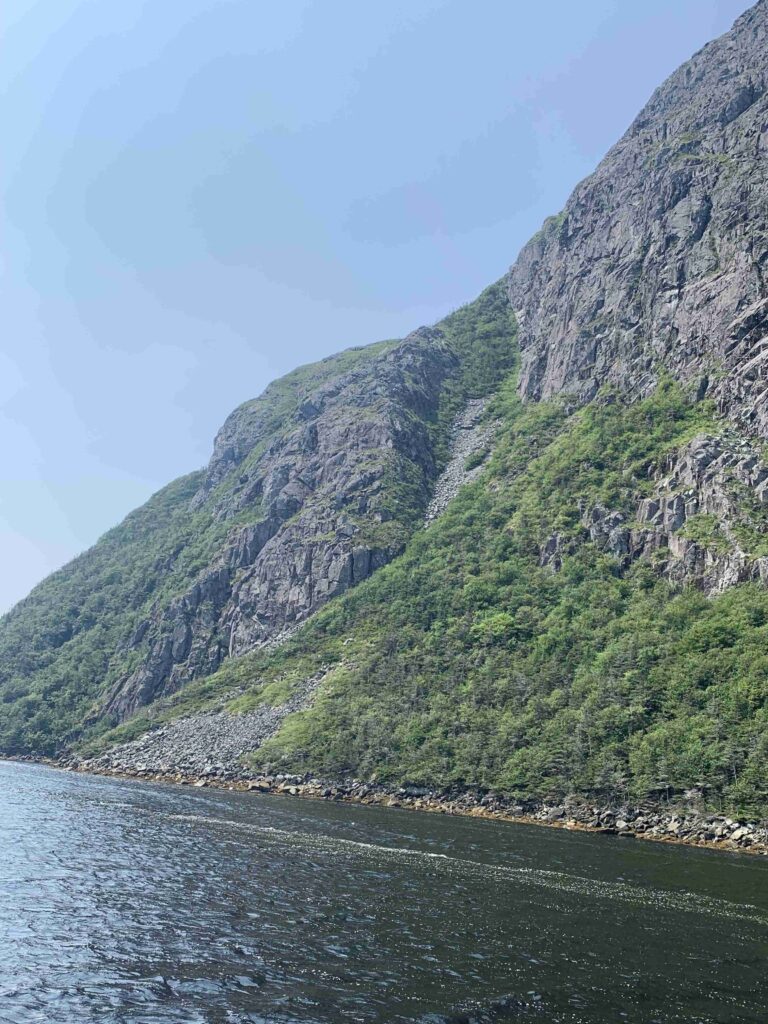
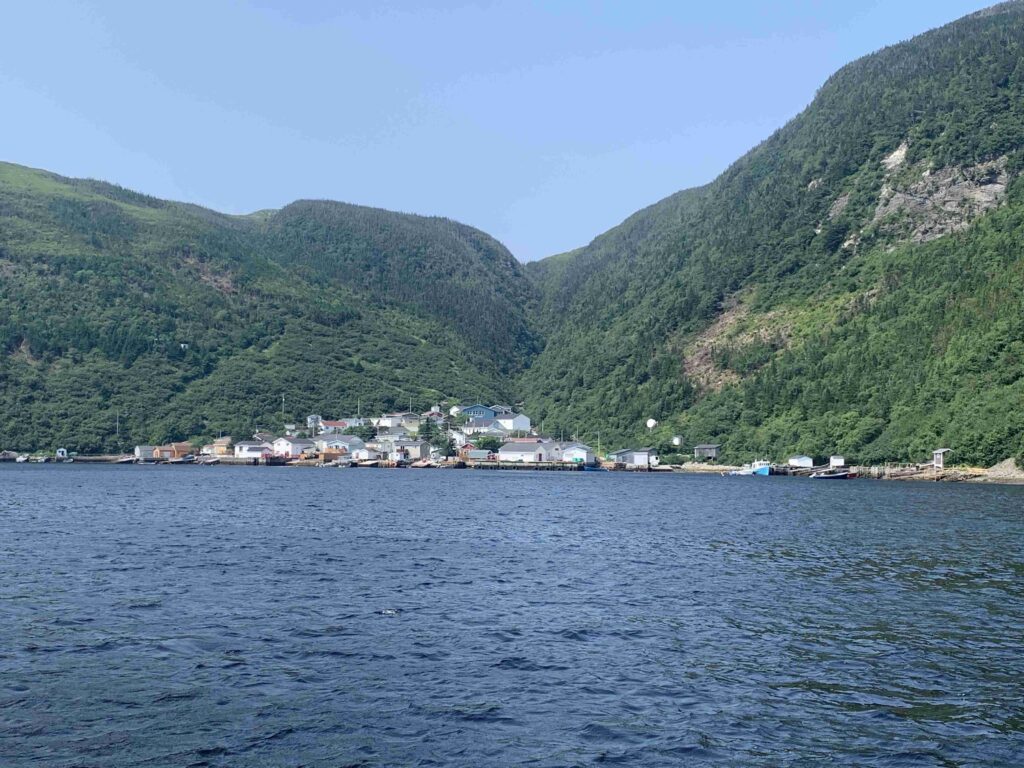
Francois, pronounced “Franz-sway”, is another unforgettable port. Francois was once a prosperous fishing village with about 90 kids enrolled in school, but the population has dwindled to 50, with no students in school.
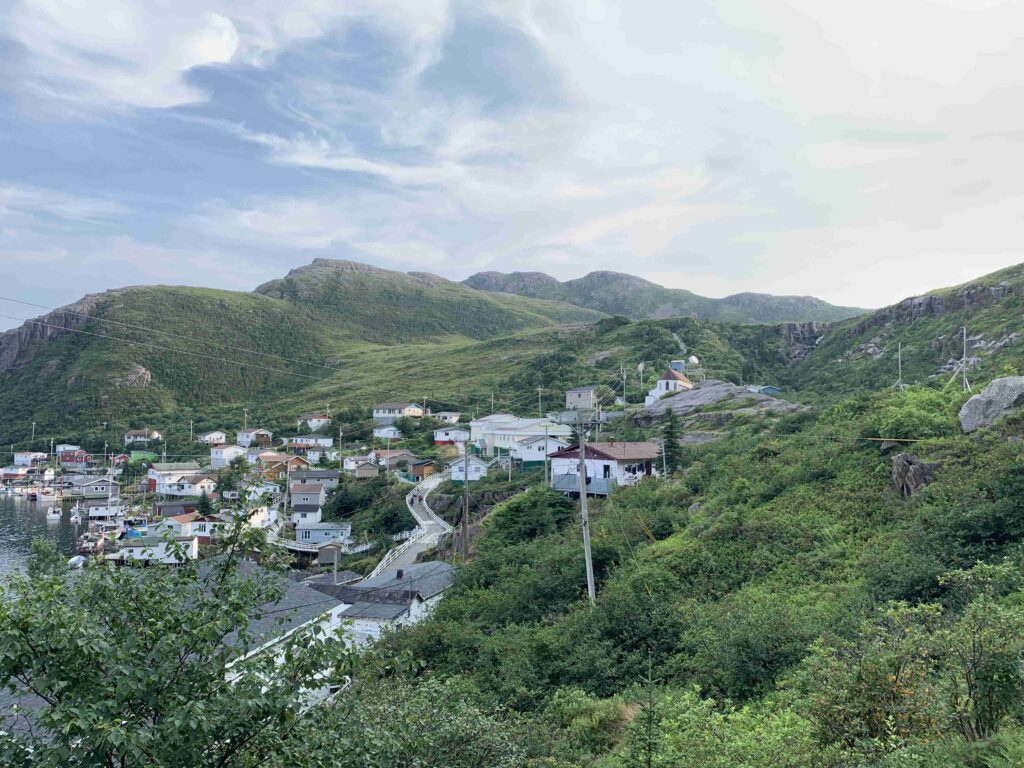
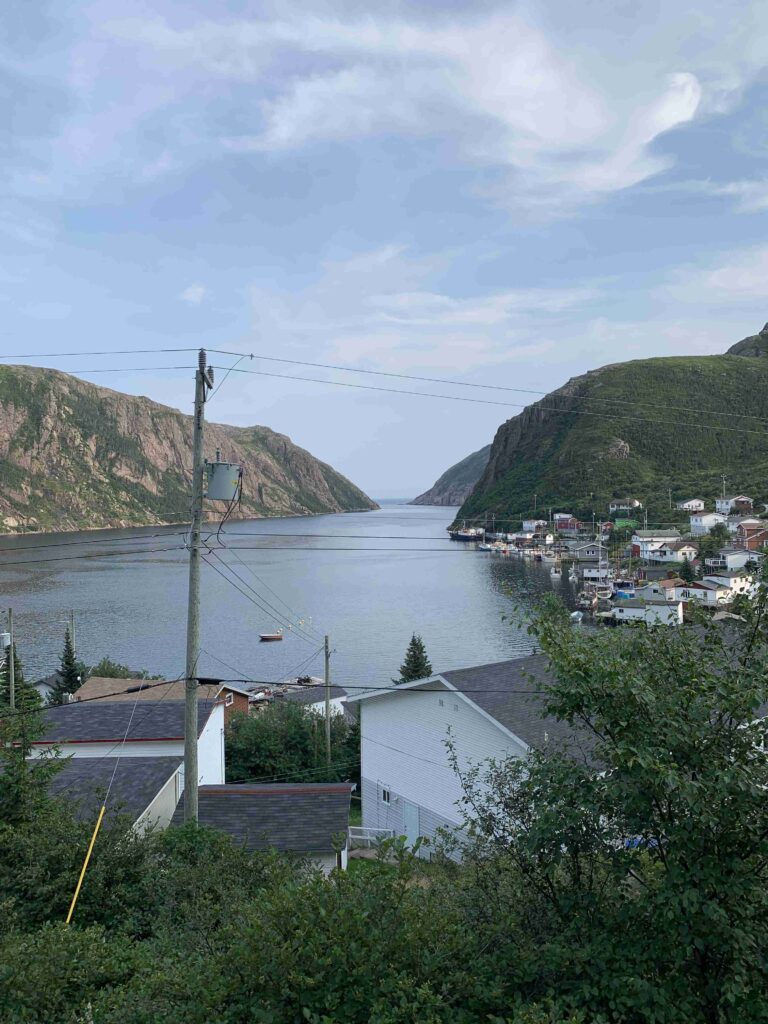
The narrow channel that leads to Francois is hard to spot from the Atlantic and we had to rely the chart to get us past the rocky headlands. Once inside, the short channel opens onto what can only be described as an amphitheatre – we were surrounded, nearly 360 degrees, by mountain walls. This bay is over 200 feet deep, so anchoring is not an option, but we were informed there were ample floating docks available for visiting boats. We circled the bay looking for the visitors’ docks and realized they were under construction and not usable and the only docks in the bay were crowded with commercial fishing vessels. As we circled looking for any open spot, we heard a shout from shore: Ken, the captain of a 45’ fishing boat named Courtney Pride II, told us to tie-up to his boat. We accepted his invitation, and finally got our opportunity to raft off a fishing boat. Ken, came down to help us tie-up to his boat, stayed to chat a while and in the morning was there again to say goodbye – another fine example of Newfoundland hospitality.
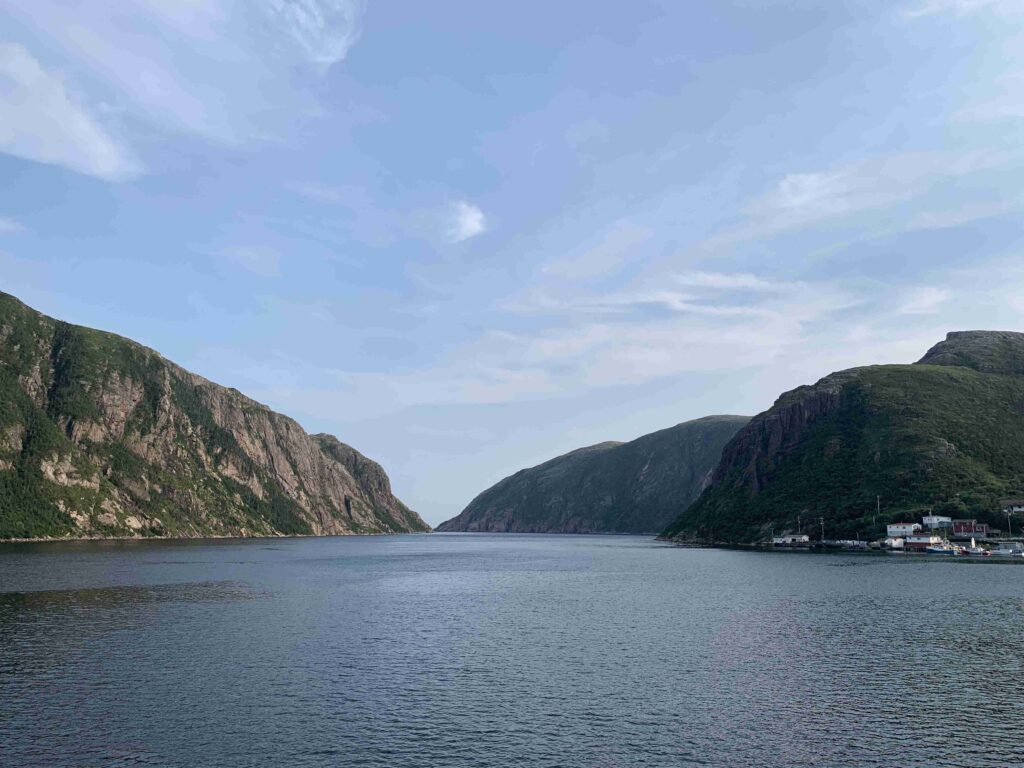
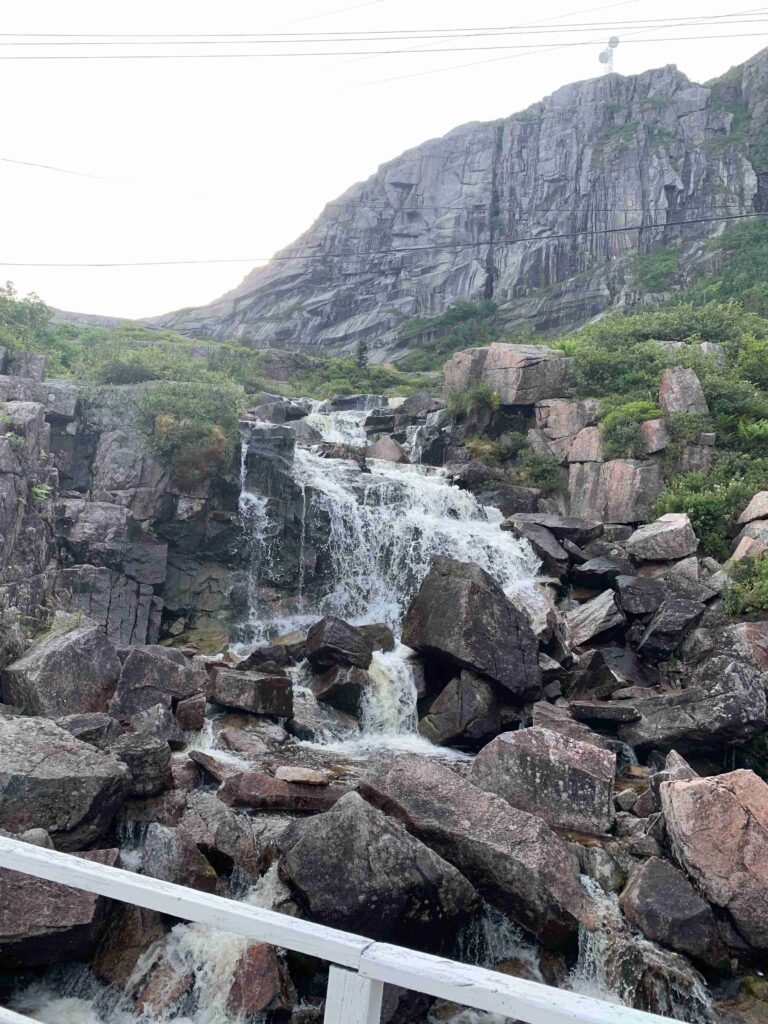
McCallum, that sits on the edge of a fjord overlooking a large bay, was our next outport and the last village on this trip with only boat access. We maneuvered through another rock maze into the harbour and tied-up at the nearly empty dock at the centre of town. The village has its very own diesel power generation plant so is totally self-reliant for power. Unfortunately the population here has also declinded and in now around 30 full-time residents.
Now that I have visited a few outposts, I better understand the reasons behind the resettlement program offered by the government of Newfoundland. At first it seemed to be a cruel program, forcing people from homes that have been in their families for generations; however, the cost of resources to maintain even minimal services for communities of 30 or 50 people must be astronomical. At the same time many people, especially the younger ones, are freely choosing to leave for education and the opportunity to make a better life for themselves.
So lucky you were able to experience all of these remote villages. That fresh cod sounds amazing!!