When Allen and I just began noodling around the idea of sailing the Great Lakes, we thought about putting Meshuggana on a truck and taking her to Georgian Bay/Lake Huron by road and beginning our adventure there. We then learned that Allen’s masterpiece, the arch he designed, built and installed on Meshuggana, made us too tall for highway travel – we would not clear some of the bridges.
The alternative was to go by water, west through the Welland Canal, locking-upstream along with all the other freighters and commercial traffic going to Lake Erie and then navigating the Detroit River, connecting Lake Erie to Lake St Clair, and fighting its 7 mph currents upstream. While doable, this route is not for the feint-hearted sailor. Then the TSW idea was born.
We always assumed the TSW would be too shallow, bridges too low, and really, we didn’t know a soul who had ever travelled it in anything bigger than a kayak. But the idea was there so we had to do some research. We learned that the TSW is in fact navigable by larger boats and they guarantee at least a 6 foot depth throughout the system (we now know this is not true). Meshuggana draws 5’4”, so having just inches below the keel was a little disconcerting, but the solution was high water – Spring.
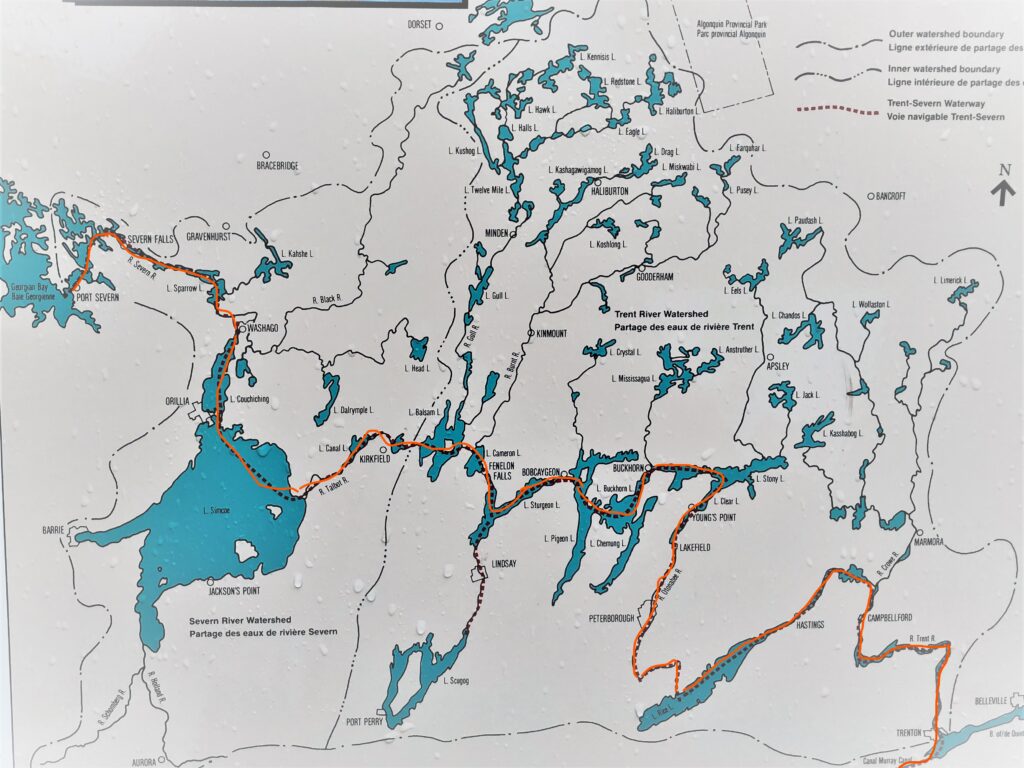
So what is the TSW? I admit that a year ago I didn’t know much about it. I had heard of the Trent River, the Lakes Rice, Buckhorn, Sturgeon, Simcoe, Couchiching, the towns of Bobcaygeon, Fenelon Falls, Orillia, but I had no idea they were connected….I had no idea that Lake Huron was connected by water to Lake Ontario.
The TSW is a now a national historic site managed by Parks Canada. It spans 386 kms, has 44 locks, including the highest and second highest lift lock in the world, Peterborough and Kirkfield. The locks are numbered 1-45, but lock #29 was decommissioned when it was combined with lock #28, so there are only 44 locks now.
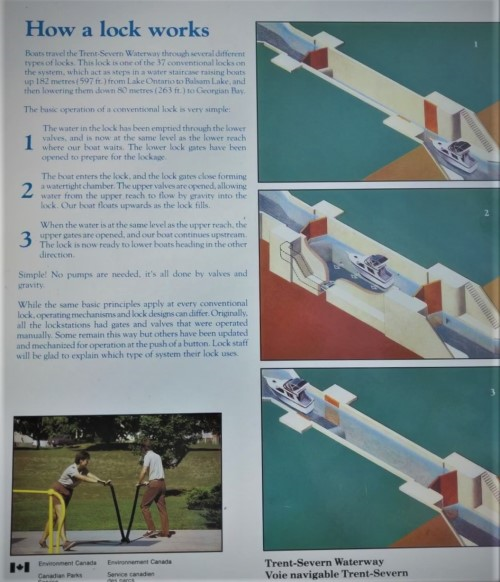
The system was originally conceptualized in the 1830’s as a military route, but this idea was soon abandoned because of the many rapids along the route. However, the economic advantages of moving product along the canal made sense, and the first lock was built in Bobcaygeon for the lumber industry. This led to more locks, but eventually, they had a neat little land-locked lock system that became obsolete with the advent of better roads and railways.
In the 1880’s, the Conservative party leveraged commercial interests to complete the system and the full canal system was finished in 1920, opening up a commercial waterway from Lake Ontario to the other Great Lakes. Then in 1932, this little thing called the Welland Canal opened, making the TSW pretty much obsolete for commercial traffic. Today it remains a tourist attraction and runs through the heart of Ontario Cottage Country.
As we near the end of our TSW journey, here are some thoughts and observations:
- The TSW is a gem! Come out an experience it, whether it’s cruising all 383 kms or just spending an afternoon or weekend in a fishing boat or kayak. If you are travelling by sailboat, stay vigilant to remain in the channel and watch your depth.
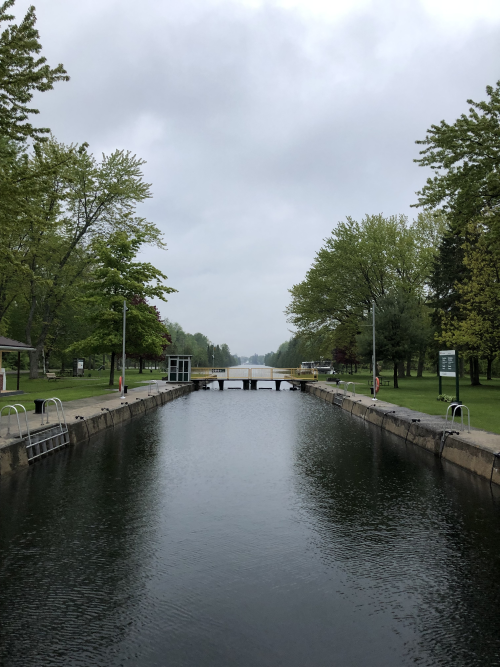
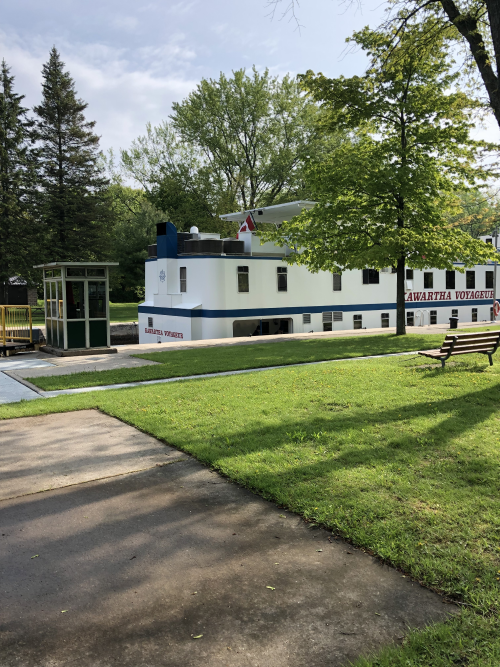
- Parks Canada does a fantastic job managing the waterway, which is a far more complex job than I ever imagined. In additional to running the locks, the lock masters are responsible for water management of the entire system with the dams as well as maintaining the facilities. These are not summer students, these are full-time careers and they are knowledgeable, friendly and helpful. The facilities, from the meticulously tended park-like gardens to the clean washrooms are spotless.
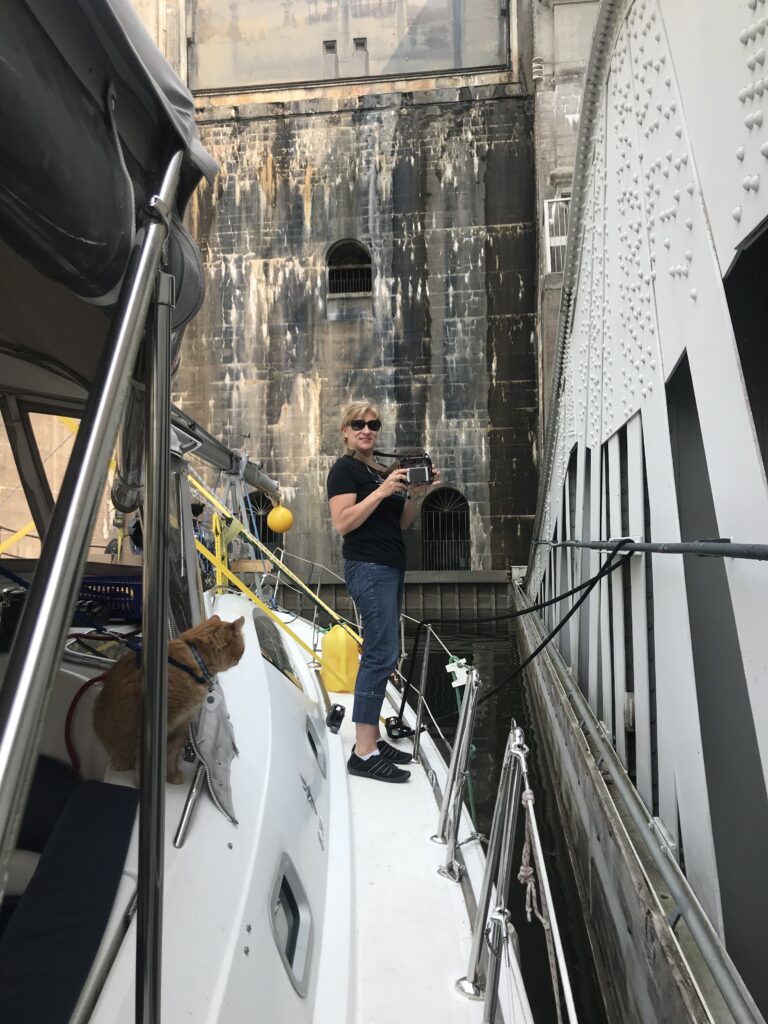
- The locks are super cool. Most of them are over 100 years old and have not changed much in that time. Some are slimy, smelly and crusted with zebra mussels with wooden doors that leak like a sieve and some have been updated and have smooth concrete walls and massive steel doors that clang shut like something out of Lord of the Rings, but for the most part the technology has not changed. You enter your first few locks with your pulse racing, but by the time you get to the 10th, 20th,, it’s pretty routine.