
We made it to Florida – another milestone! But more importantly, hurricane season was over! The season officially runs from June 1 to November 30, and in the Atlantic the most likely timeframe for severe storms is August through September, when the ocean’s surface water is at its warmest. Hurricanes (or cyclones, as they are called in the rest of the world) form when warm ocean air rises into a low-pressure area, fueling the storm, and as the air cools, storms can form. By December the Atlantic’s surface water has cooled enough so hurricanes are unlikely, but this no guarantee that Mother Nature won’t send us rough weather; therefore, we remain vigilant in paying attention to weather and forecasts.
The end of hurricane season was certainly a reason to celebrate, as was the change in temperature. Finally, it has been consistently warm – no more sleeping in long underwear with 2 blankets and a cat (well, the cat still sleeps on my head). The days are getting hotter, yet the evenings are still cool and perfect for sleeping – my favorite kind of weather!
We returned to the ICW to continue our journey south. Each state along the coast has its own vibe, and Florida’s vibe is busy! Boat traffic has increased, with many more weekend boaters travelling the waterways. This also means more novice boaters, distracted boaters, impatient boaters and even impaired boaters so we need to be more watchful than ever.
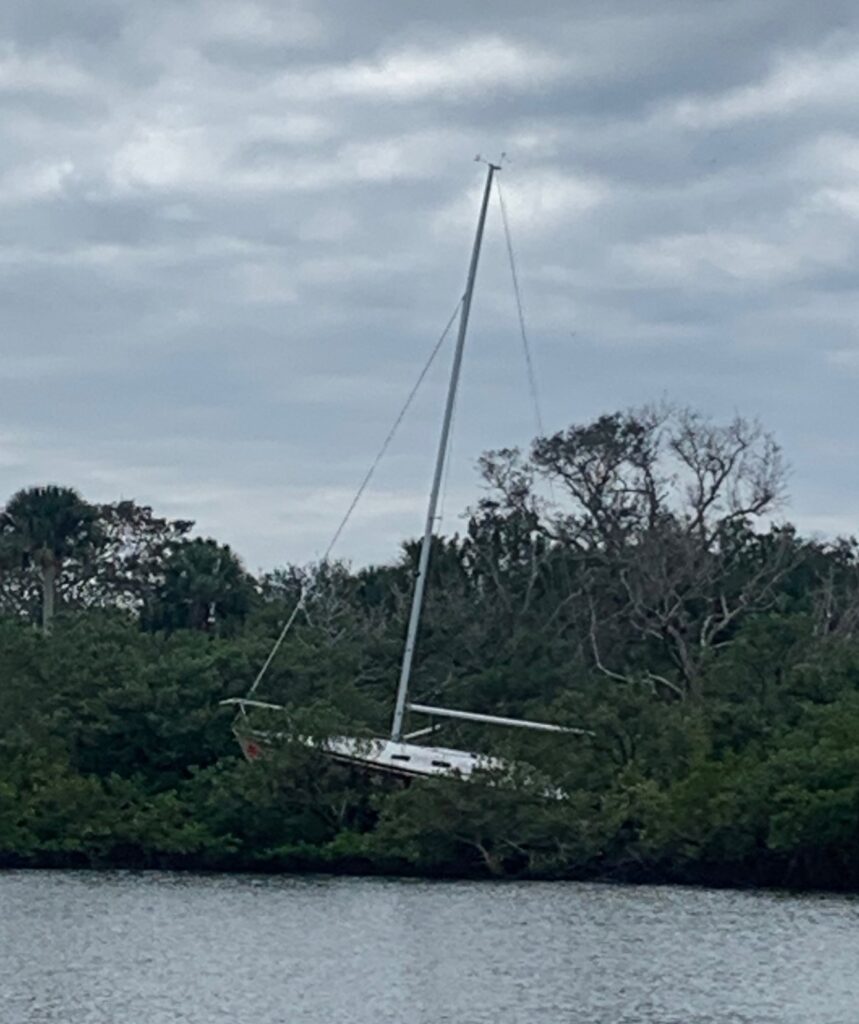
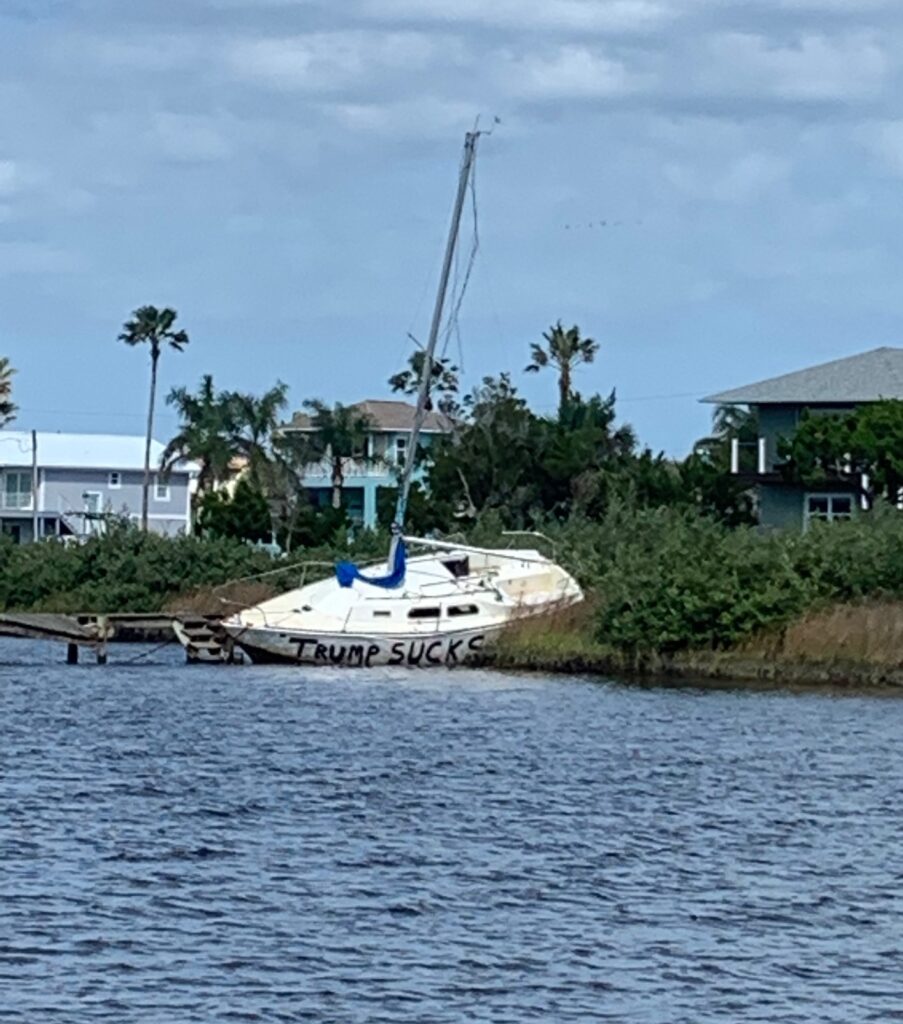
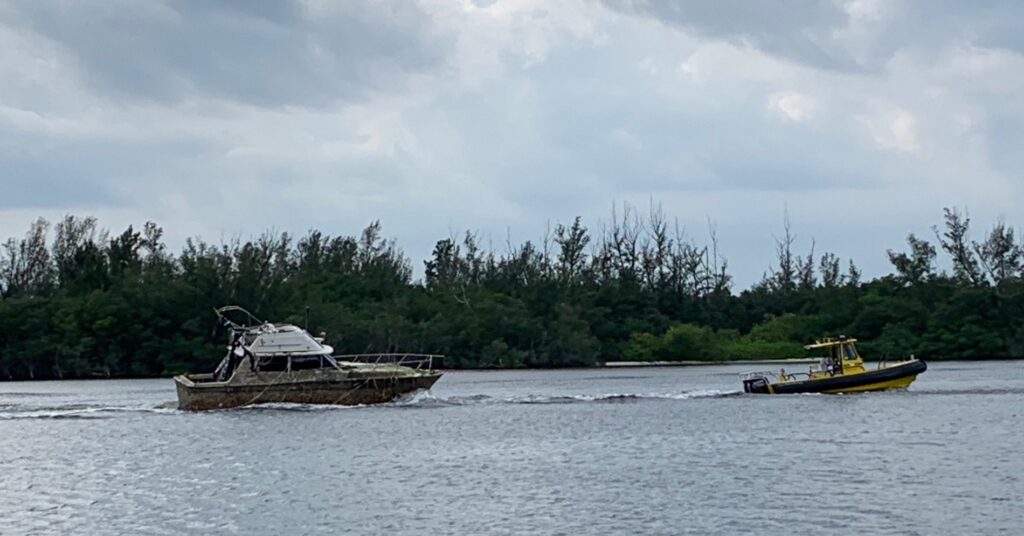
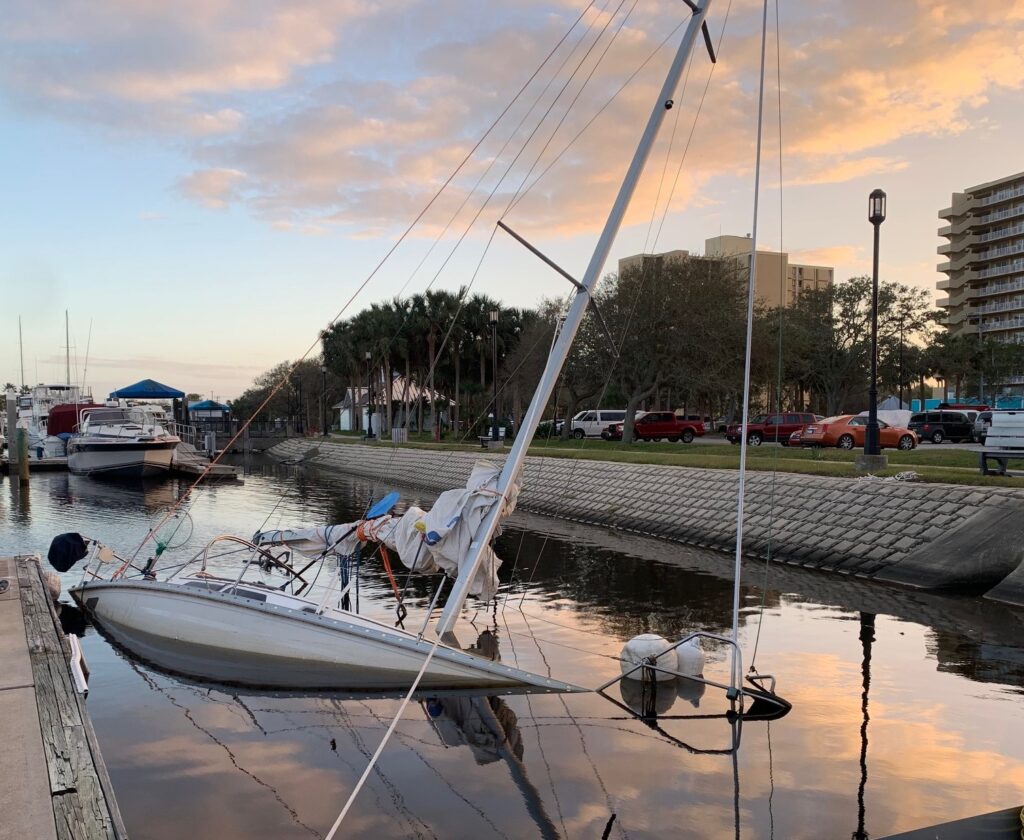
The devastation of Hurricanes Ian and Nicole are visible throughout the ICW. Destroyed piers, sunken boats and damaged buildings are obvious, but what is not obvious is the damage these hurricanes caused under the waterline. They created new hazards like large debris (trees, decking, telephone poles) floating at or below the water’s surface, as well as shoaling in areas marked as safe channels. Nearly every day we hear radio calls reporting boats that have gone aground, requiring a towboat to get them free. We have been fortunate – we’ve touched bottom a few times, but always in soft mud and have been able to power out of it unassisted, but we know there’s always the next time.
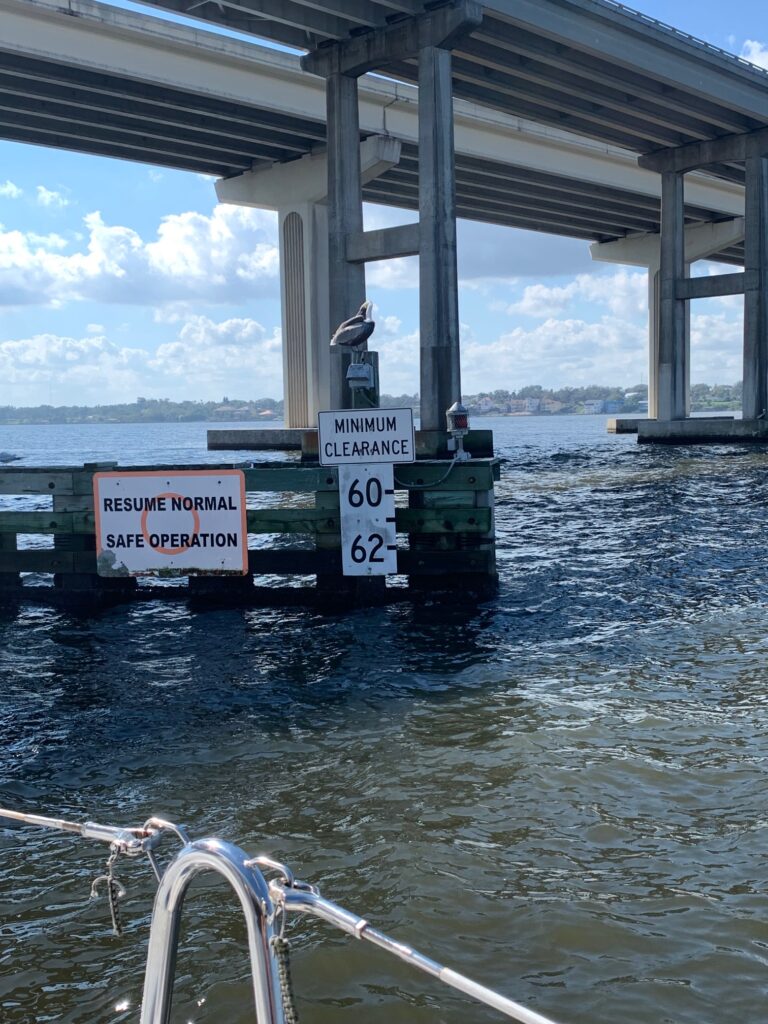
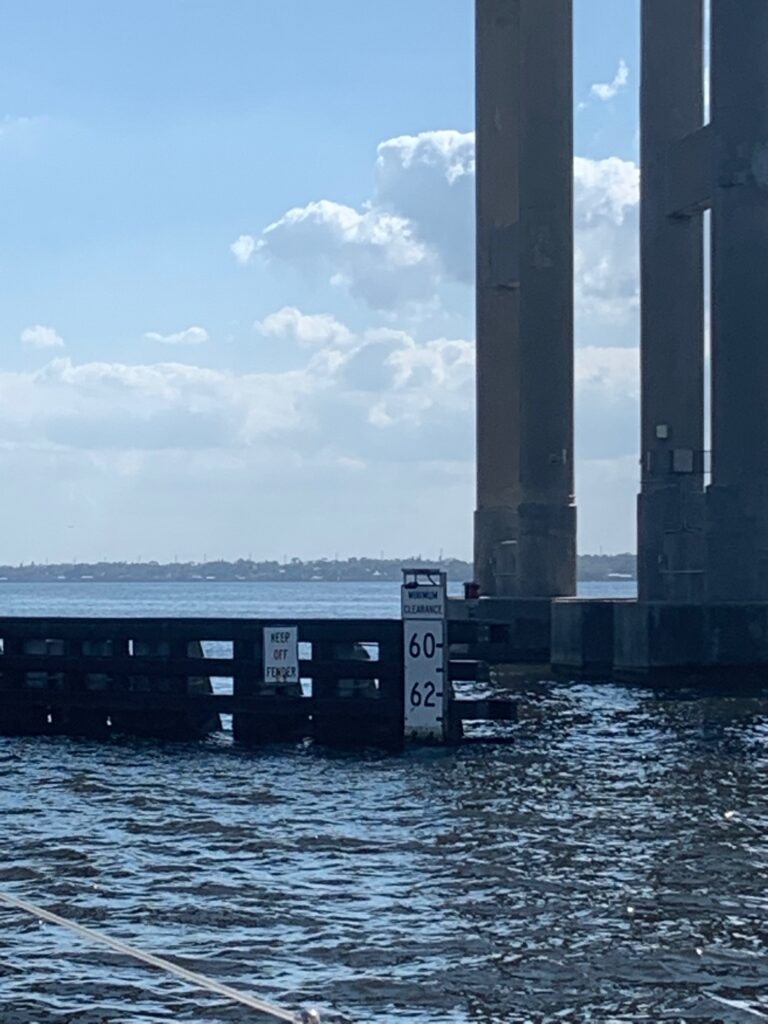
Florida’s ICW is notorious for its many bridges, some areas may have two or three within as many miles. Many are draw or swing bridges where we are at the mercy of a bridge operator to decide exactly when to stop car traffic and allow marine traffic to pass. For the most part these bridges have been easy, without extensive waits and pleasant greetings from the bridge master as we pass through, but the toughest bridges have been the fixed bridges. Fixed bridges on the ICW are designed to have a guaranteed clearance of 65 feet at low tide, and our air draft, the height from the water’s surface to the tip of our wind instruments on top of the mast, is 63 feet. The recent hurricanes caused underwater conditions to change and now some areas that were charted as safe for navigation are shoaled and no longer as deep as the charts show. An added complication are the bridges themselves – many are old and over time have shifted and the stated clearances can be a bit iffy and in some cases the clearance boards are broken off or missing completely. All this means is we must carefully time our travel with the tides, proceed slowly and hope for the best. We have come close a few times, just pinging our flexible VHF antenna on the girders as we pass under, but we have met other sailors that have had very expensive instruments knocked off their masts.
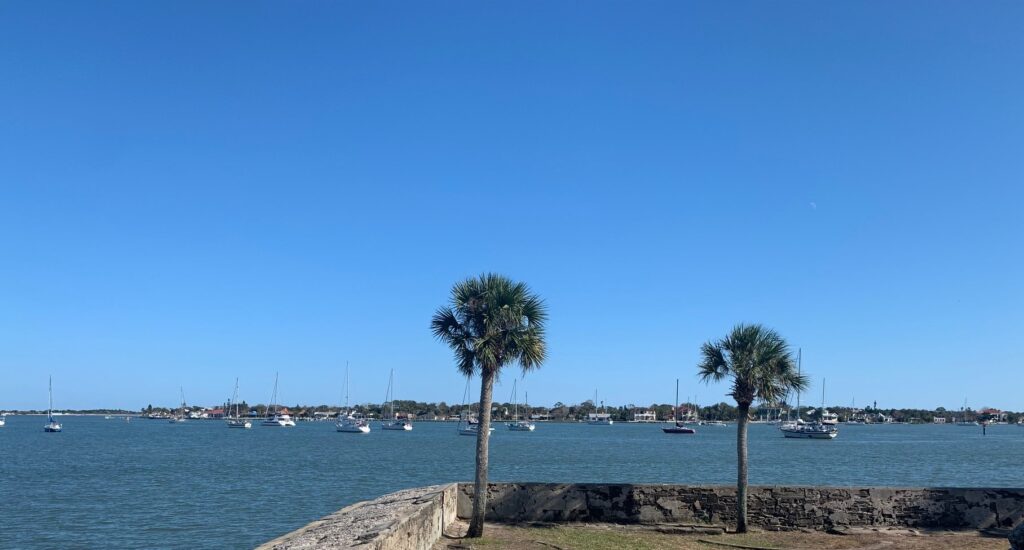
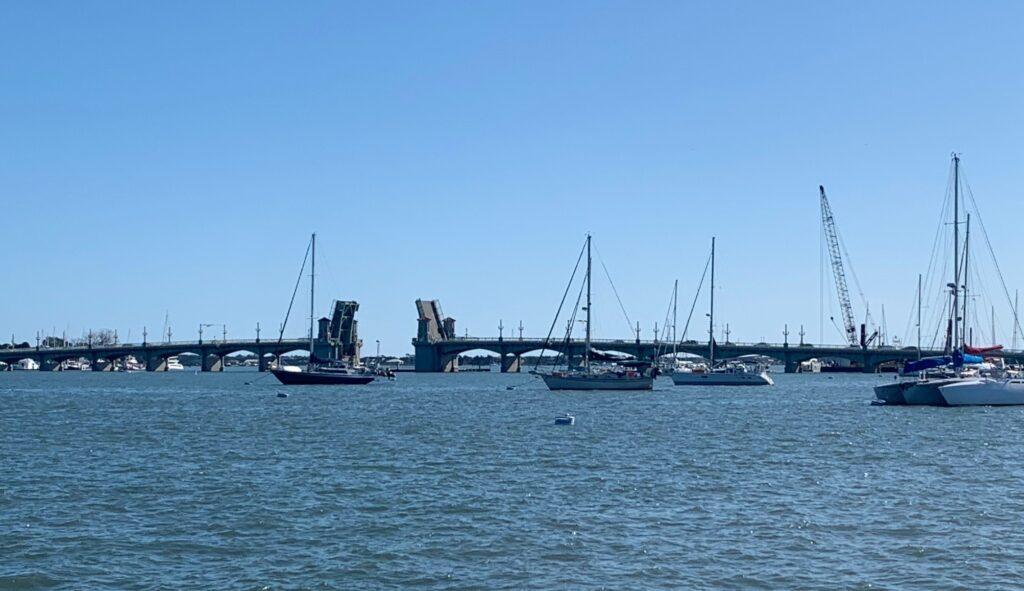
St. Augustine was the first big city on this trip, and just like Charleston, we’ve never been there, but have heard good things about it. St. Augustine is the oldest city in the United States and it’s full of history, Spanish Colonial architecture, a walled fort and many restaurants and shops. It’s a compact, walkable city, and though it is most definitely touristy, it has character and charm that sets it apart from other beachy-tourist towns.
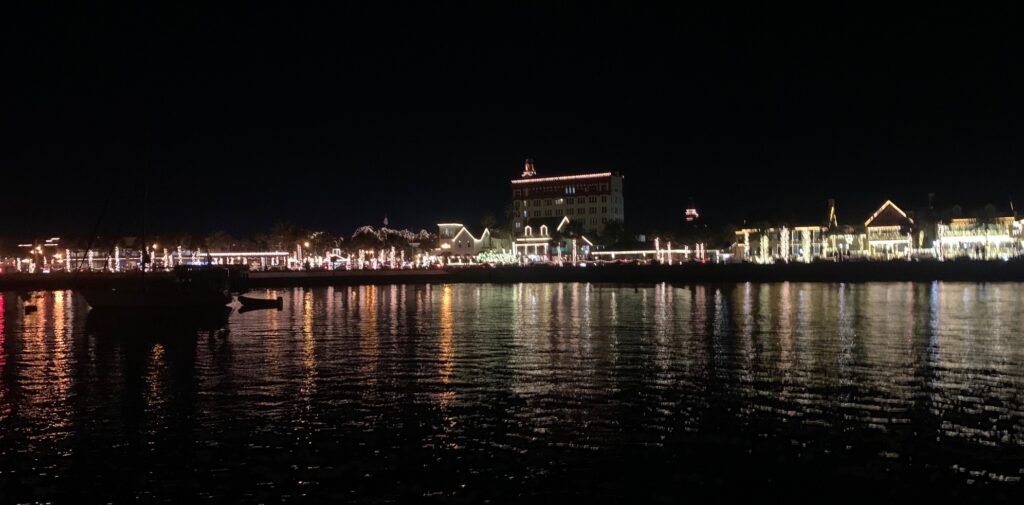
St Augustine is famous for its Christmas spirit and takes decorating seriously. Every single tree, pole and building literally sparkle with Christmas lights. If there is a surface to which a light can be attached, there is a light on it. I have never seen such a holiday light extravaganza, not even New York City can compete at this level of decorating.
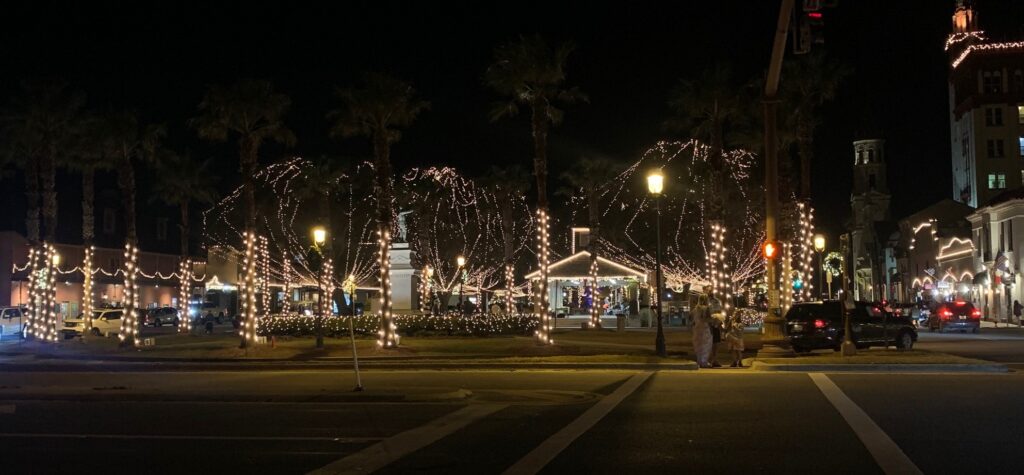
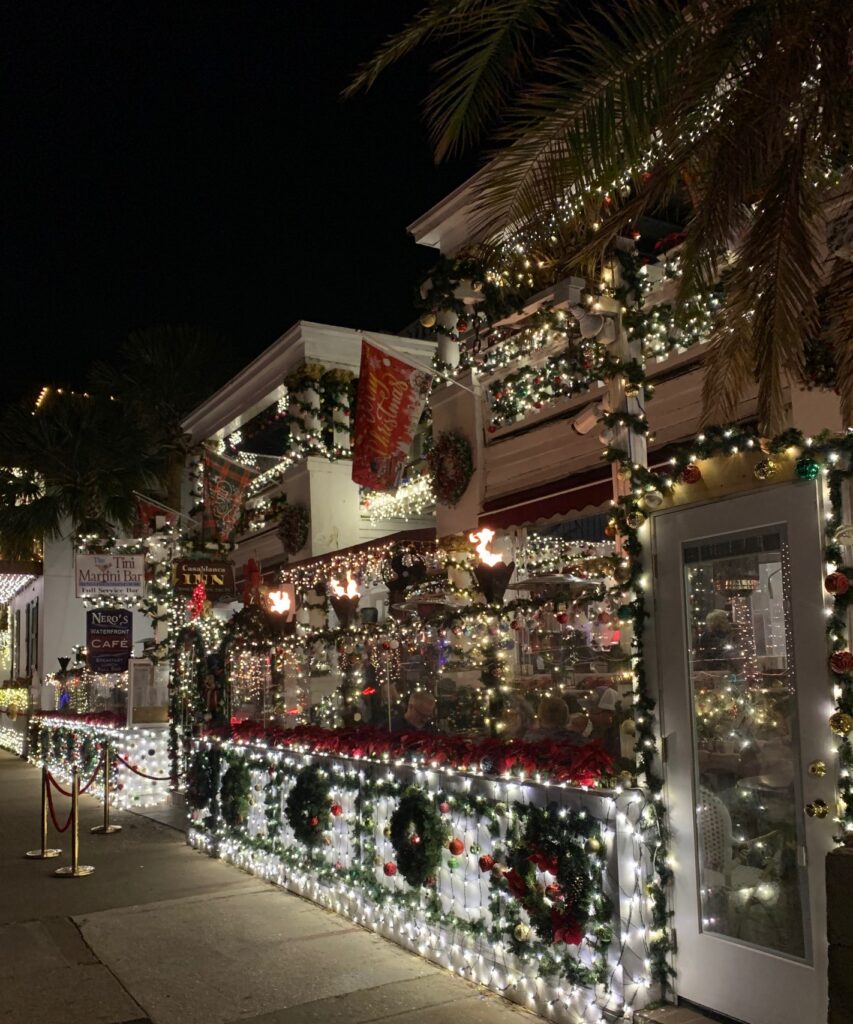
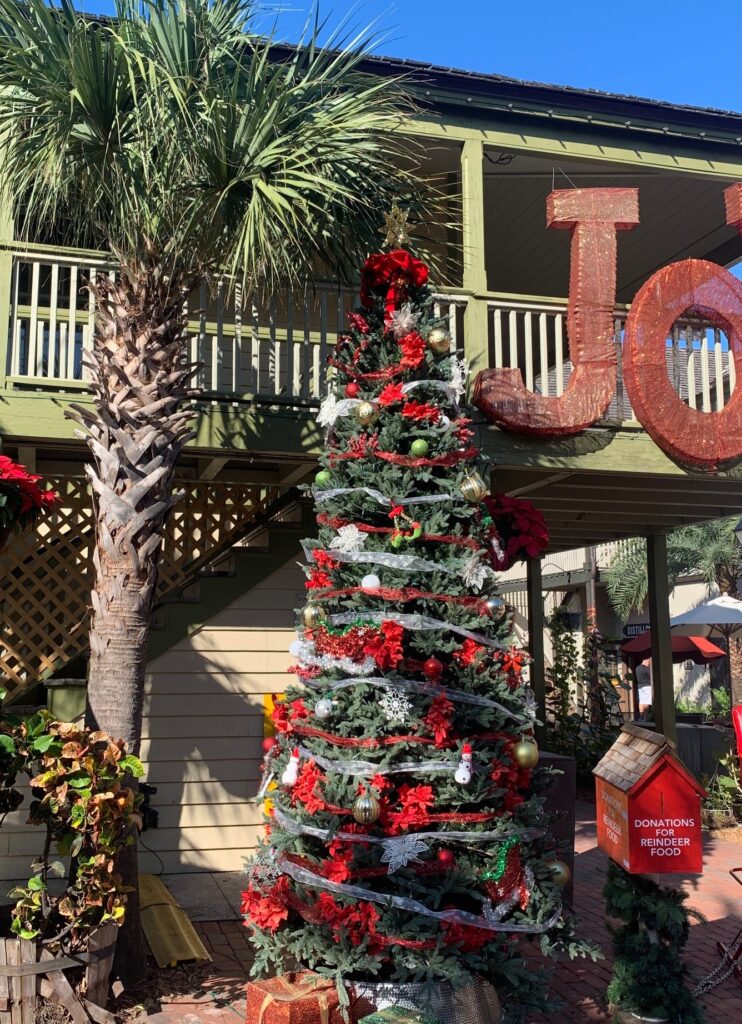
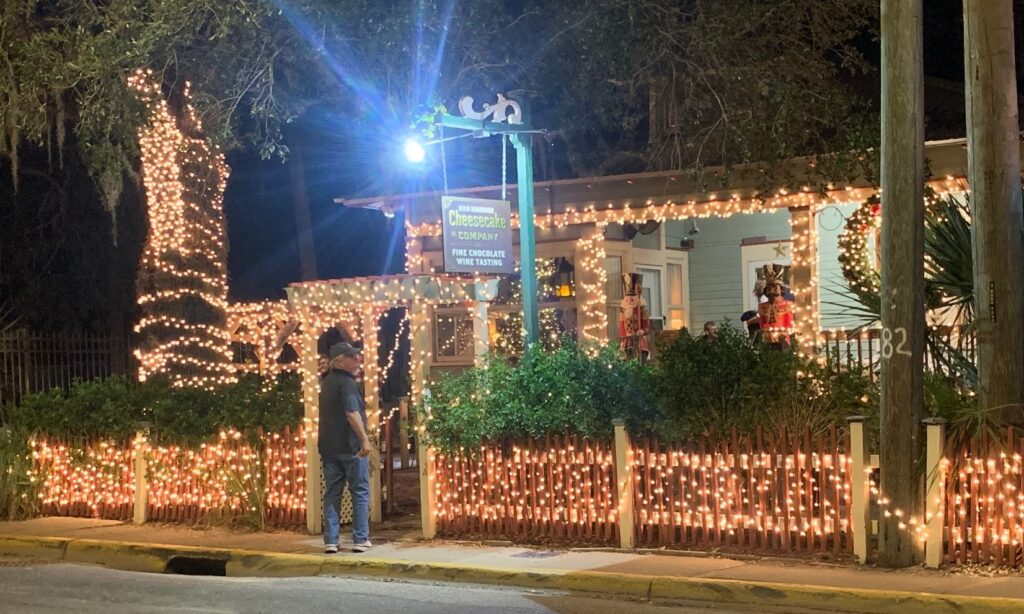
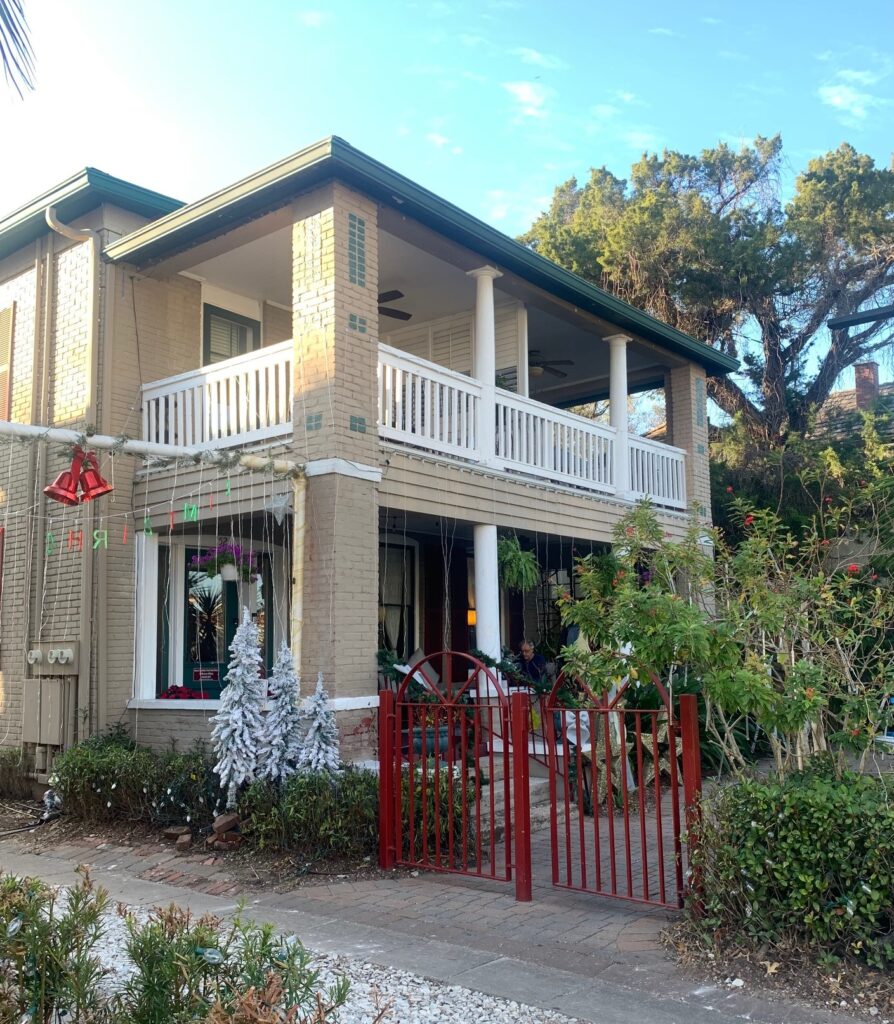
While in St. Augustine, we were able to spend a night in the marina where our new boat will be delivered next year. It was important for Allen to check out the place where he will be working on commissioning the new boat, and what we will call home for at least a couple weeks next Fall. It’s not a glamourous place, but it has what we need and is just a few minutes from the fun part of St. Augustine.
We arrived in Daytona Beach a couple days later and pulled into the very large and busy Halifax Harbor Marina. It’s centrally located with easy access to groceries and hardware stores, and to my cousin’s home near the beach. Unfortunately, Sig and Anita were back in Cleveland, but they graciously gave us access to their home and car, and we had some lovely land-time doing errands not easily done on foot, enjoying their home and sipping their whiskey. They were lucky to have only minor damage to their home as the hurricanes ripped through Daytona, but carnage is everywhere, destroyed homes, downed trees, cracked retaining walls and dozens of boats washed-up on shore or half sunken.
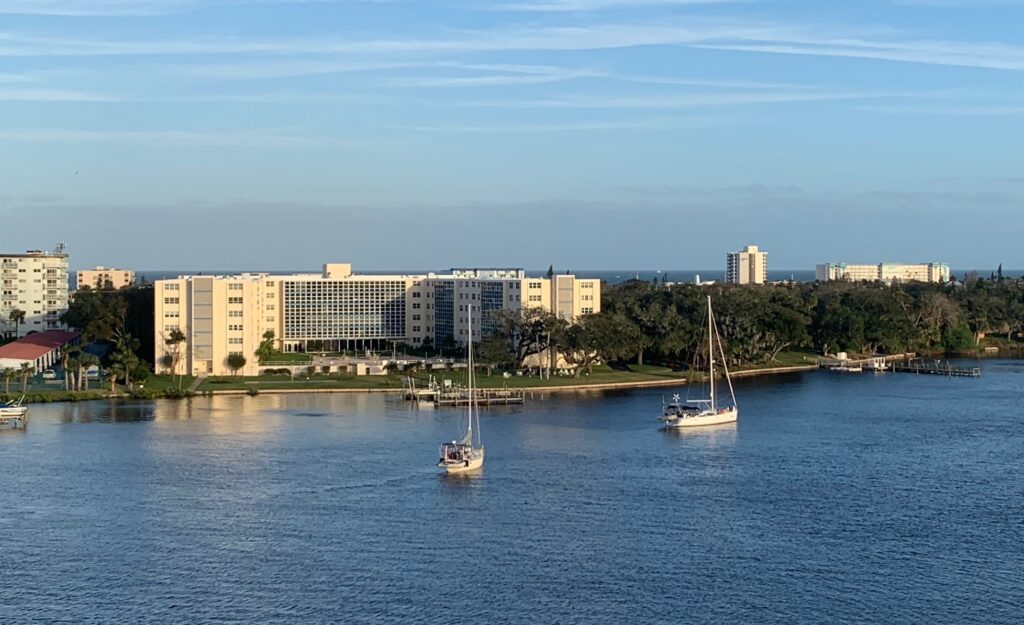
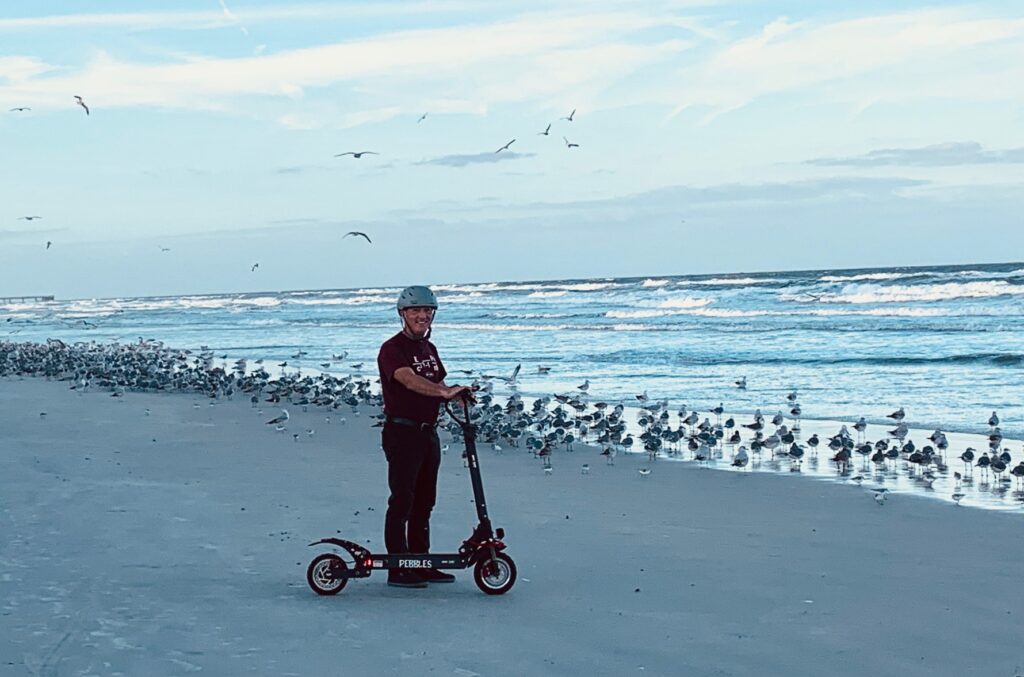
Now that the weather was becoming even warmer, we were craving something for which Florida is famous – a beach! Just a few miles south of Daytona Beach you can find the Ponce Inlet, an area with “disappearing islands”, or sand bars that appear at low tide, creating small islands that fill-up with small boats carrying beachgoers, mostly families with little kids playing in the soft, wet sand or fishing in waist deep water. When the tide comes back in, the islands and families are gone, and we are left with a quiet, lovely view of a Florida marsh.
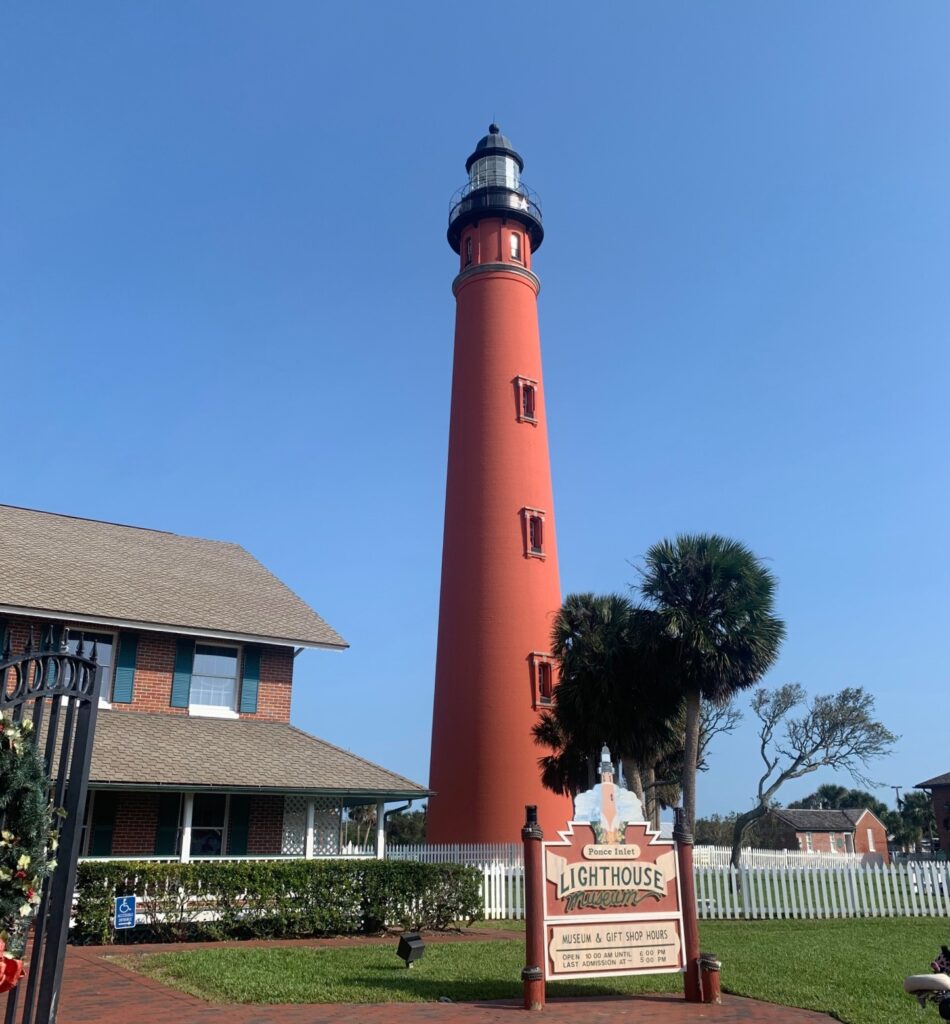
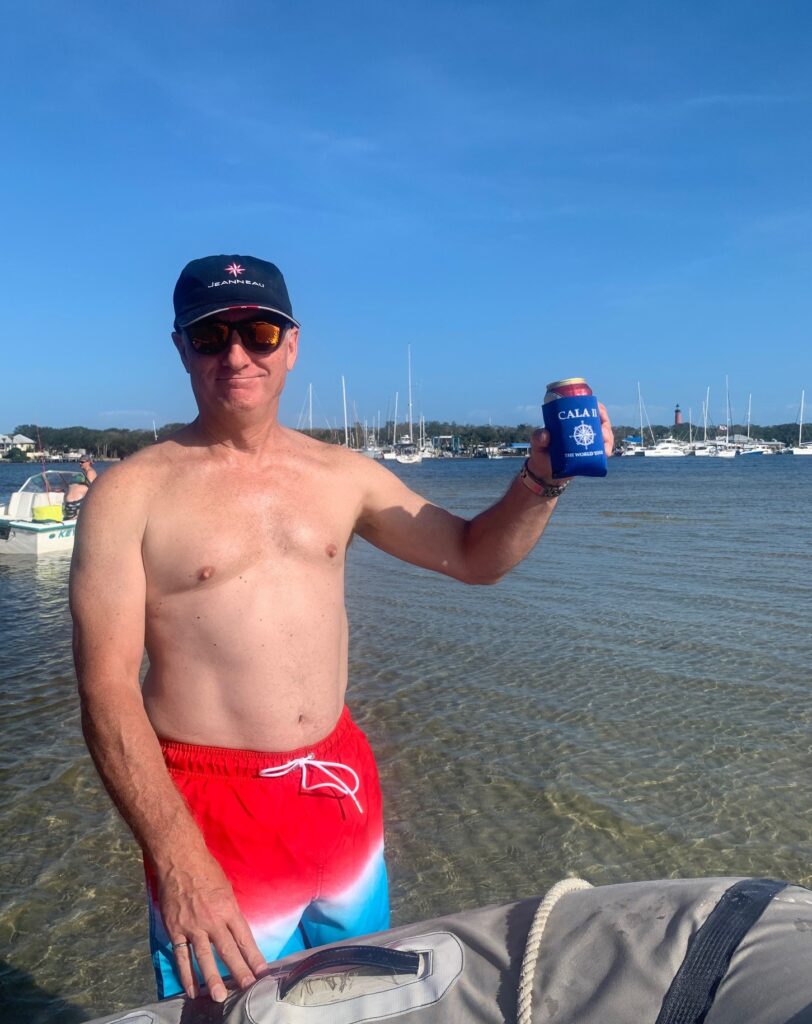
As our journey continues south, the weather it’s getting hotter and buggier (Florida no-see-ums are the worst!) and traffic heavier than ever. The holidays are approaching quickly and again, we are racing a calendar so that I can make a flight to spend Christmas with my family.
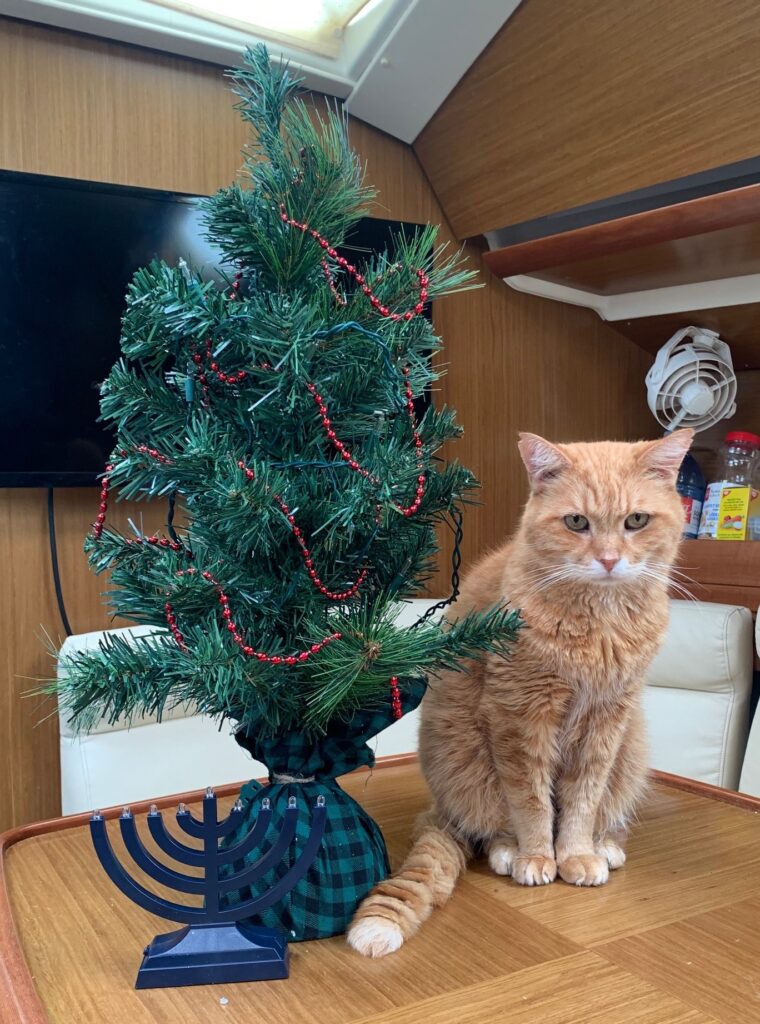
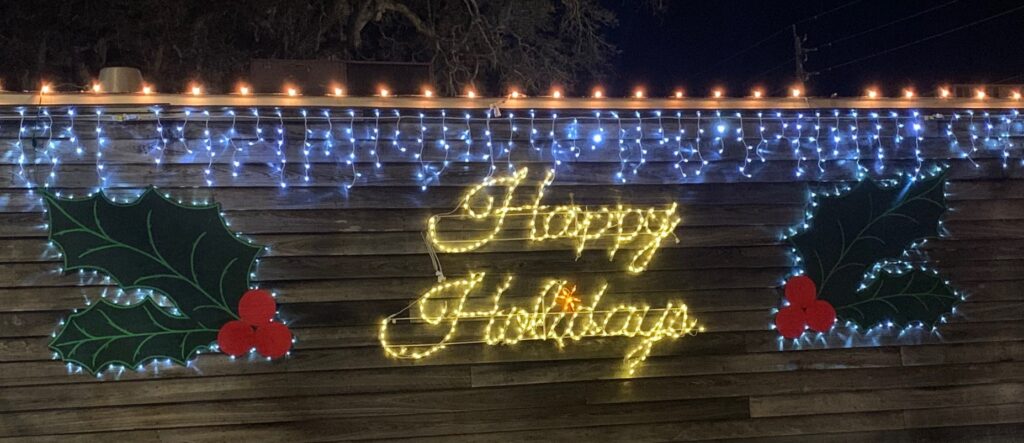
Almost there!
Looks like you’re still having fun!
Cat Stevens looks a little pensive. Does he know you’re about to leave him?
Hazel