
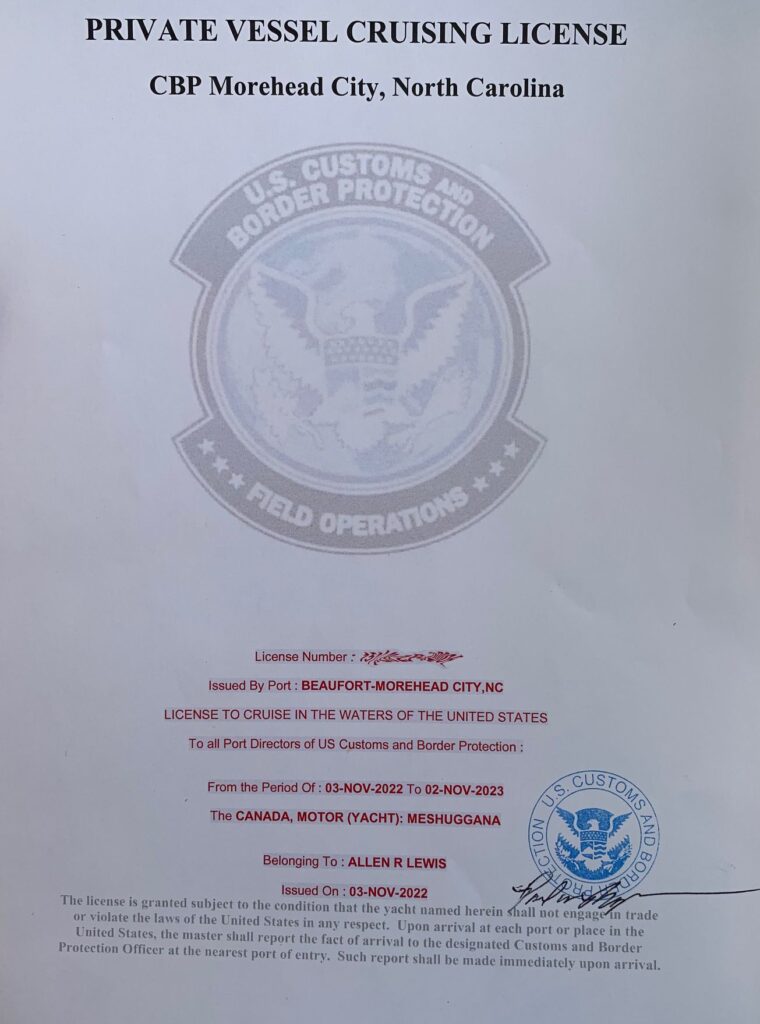
Before I write about the exciting city of Norfolk, Virginia and beginning our Intercoastal Waterway (ICW) journey, I have an update on our Customs and Border Protection (CBP) situation – if you haven’t read about our huge problem yet, the details are in last week’s blog, Hello Chesapeake Again.
Our next required check-in with CBP was in Morehead City, NC. The office was quite a hike from our marina, so we powered up our electric scooters and made the half-hour journey, documents and exact change in hand, to endure another verbal walloping from another unsympathetic officer on a power trip. I don’t know what was different this time, but we were in for a surprise. We handed over our completed vessel forms and as the officer read them, he asked “why are you doing this?”. We explained how we missed getting our cruising permit and this is what we are now required to do. The man gently shook his head and said something like this is ridiculous, so much work for you and for us…do you want a cruising permit? Two emphatic YES’s!!! He collected our documents, left us for 20 minutes, and returned with an official Cruising Permit good for 1 year! We still have to check-in with CBP when we enter a new district, but now it can be done via an app or phone call from our boat. That night we popped a bottle of bubbly!
Now back to our adventure…
To reach Norfolk, VA, we traveled about 10 miles along the Elizabeth River, past the Norfolk Naval Station, headquarters and home port of the US Navy’s Fleet Forces Command and is the world’s largest naval station. As we sailed down the river, the USA’s mighty naval force was on display with dozens of ships, some ready to go to sea, some being loaded, and some being repaired. The shear number and size of these ships was stunning. When the navy piers ended, commercial piers began, again with several enormous ocean freighters docked and taking on or unloading their cargo. It was unique feeling to be sailing amongst these giants.
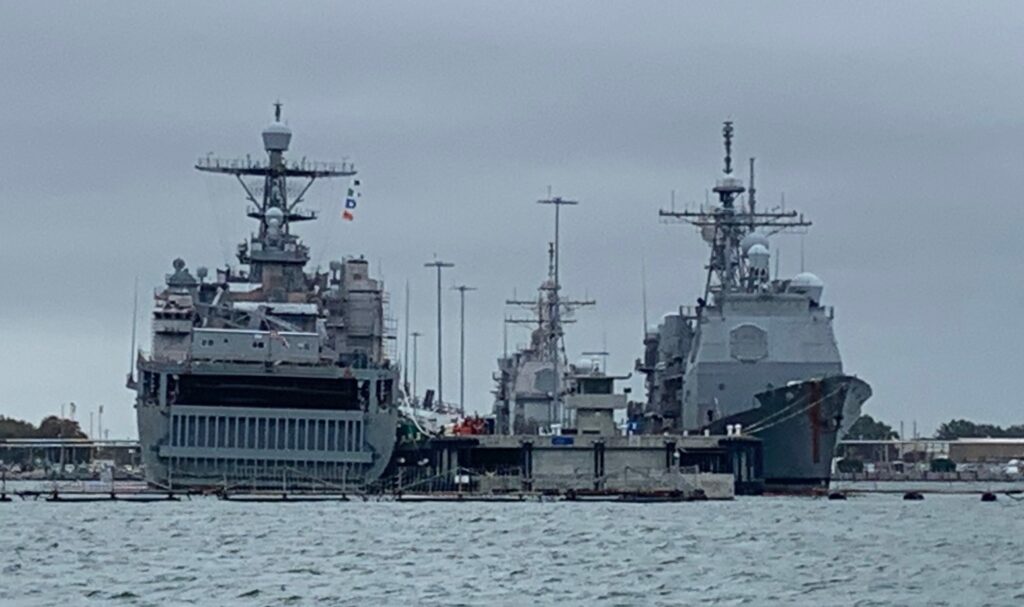
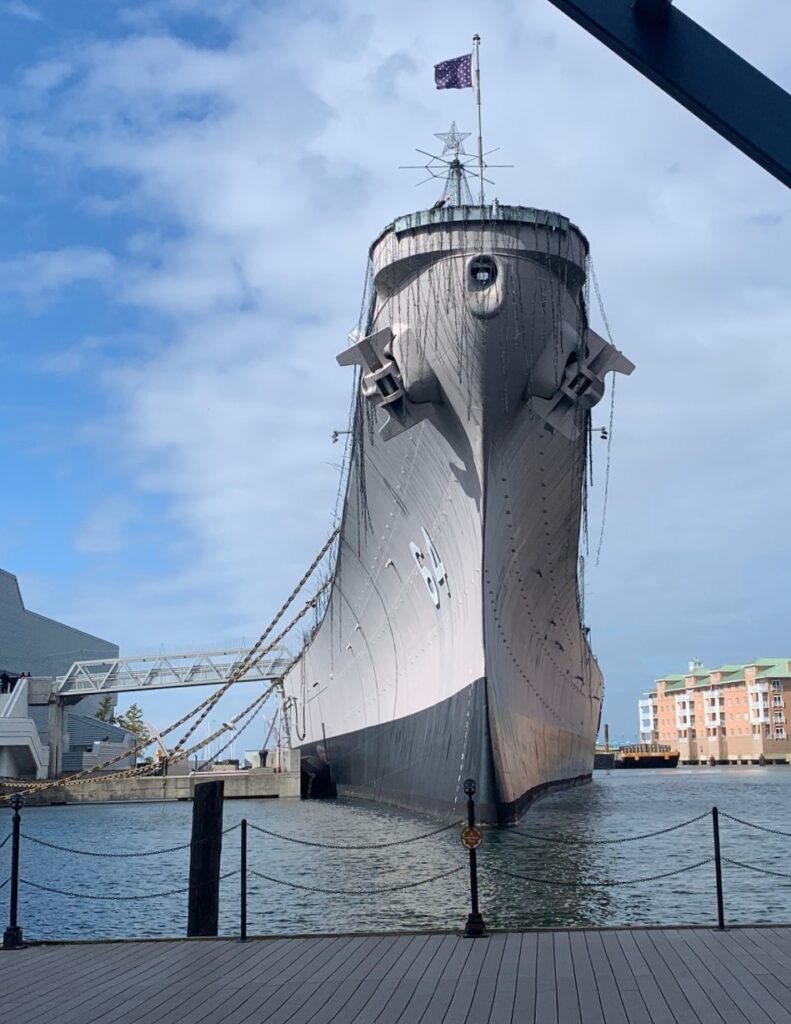
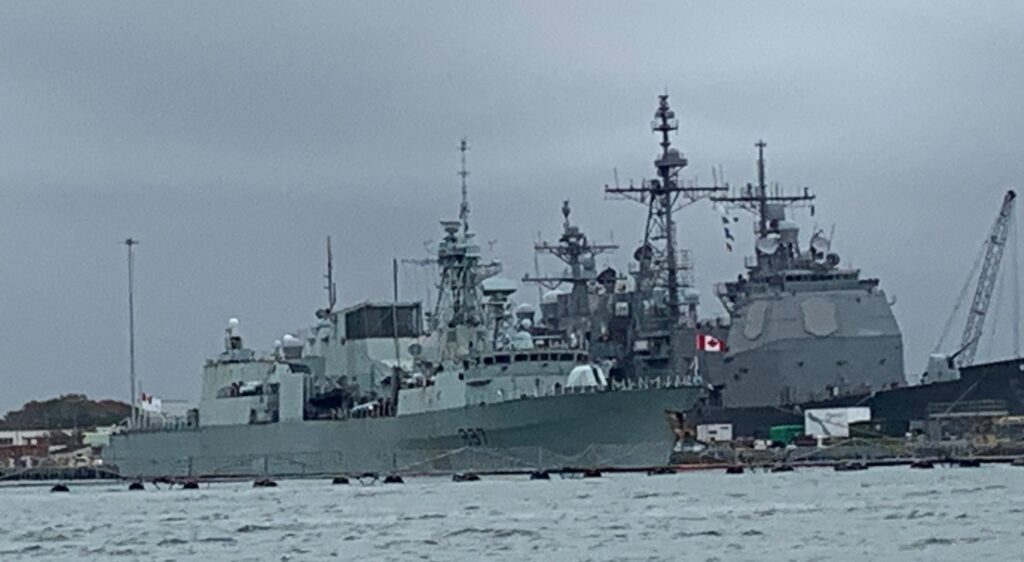
Norfolk is all about the maritime industry, from the Naval station to massive commercial ports, with cargo containers stacked 10-high, massive cranes, dry-dock facilities for shipbuilding and repairs – all so fascinating to see. Our marina was in Portsmouth, across the river from Norfolk, so we had a front row seat to watch all the action. We used a convenient passenger ferry to cross over to Norfolk and saw much of these sights from the water as well.
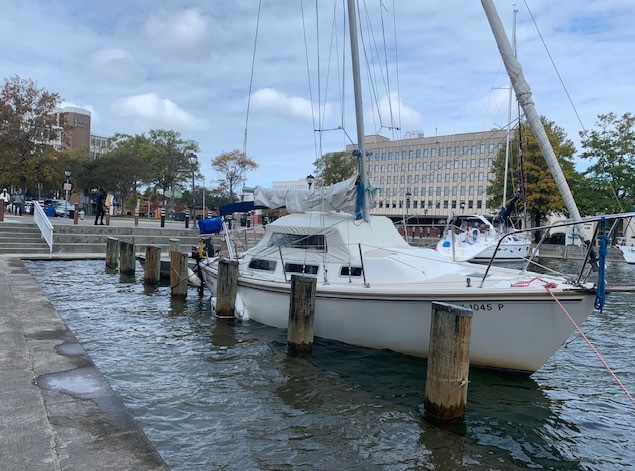
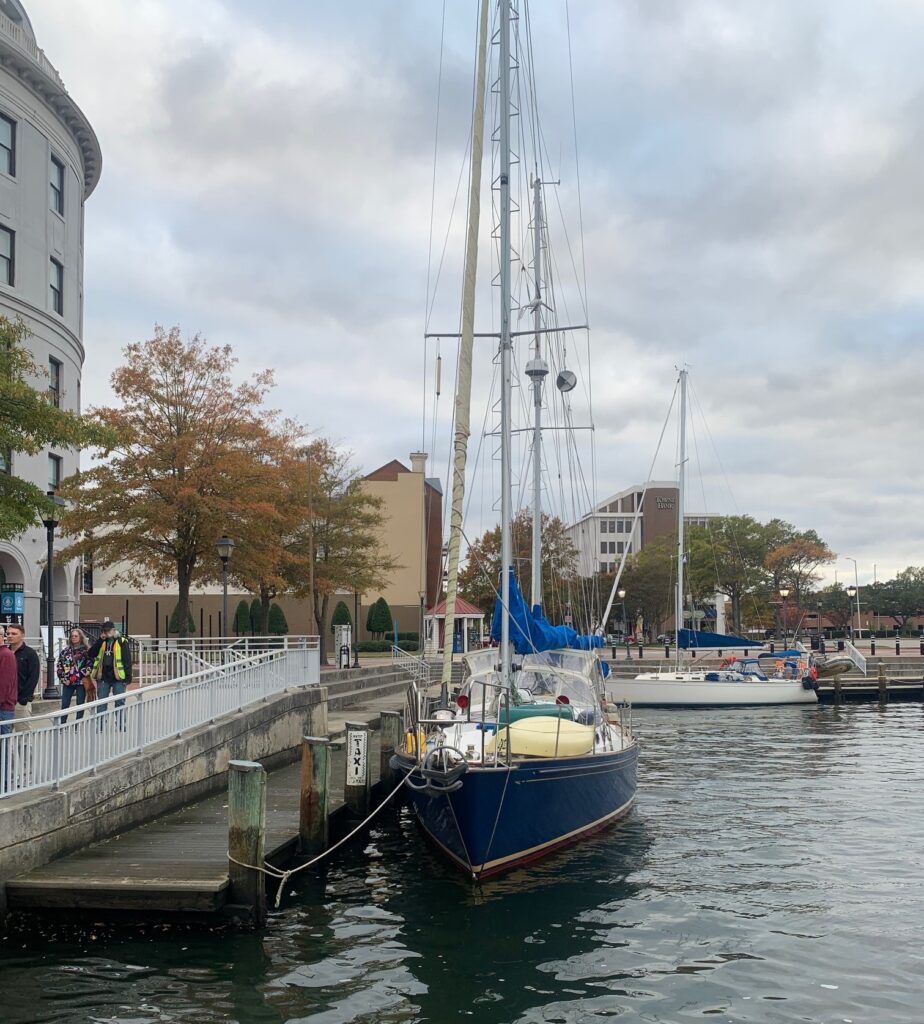
Norfolk and Portsmouth are a beautiful cities, vibrant with many restaurants, shops and spectacular Victorian architecture. The Chrysler Museum of Art and Glass Studio, in Norfolk, is an amazing way to spend a few hours if you want get away from boats for while. Walter Chrysler Jr., heir to the Chrysler fortune and life-time art collector, donated his extensive collection to the museum. We spent an afternoon in this beautiful place and took in a glass blowing demonstration at their renowned glass studio.
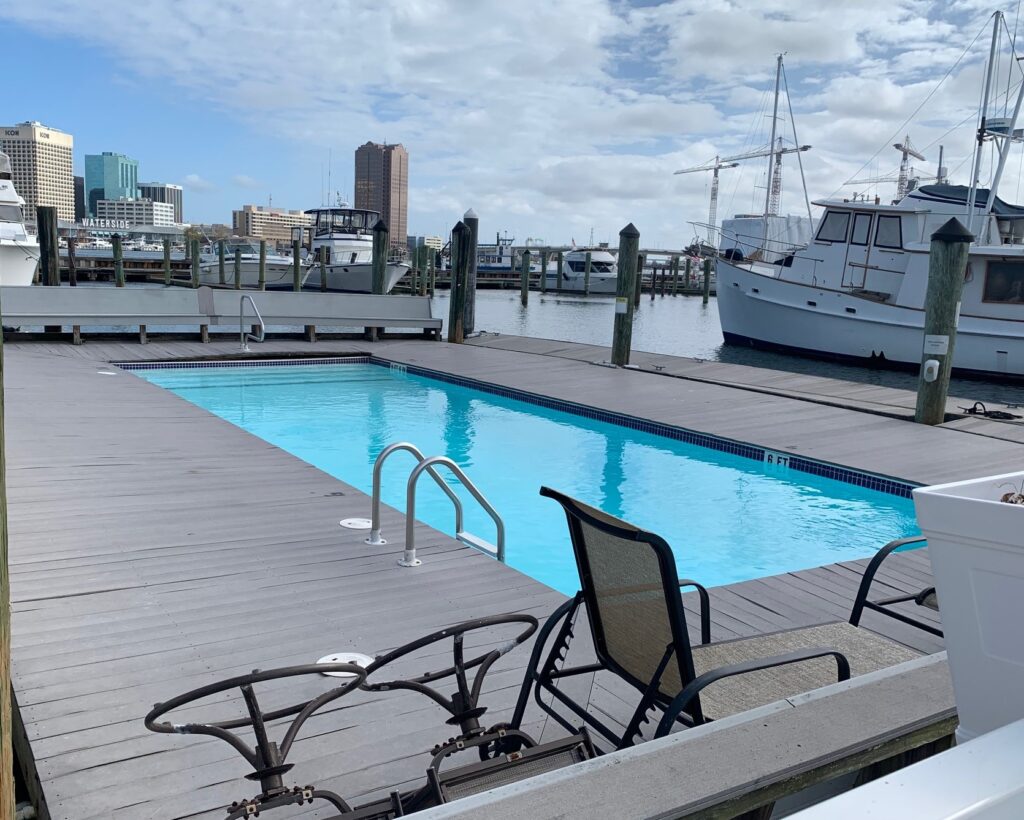
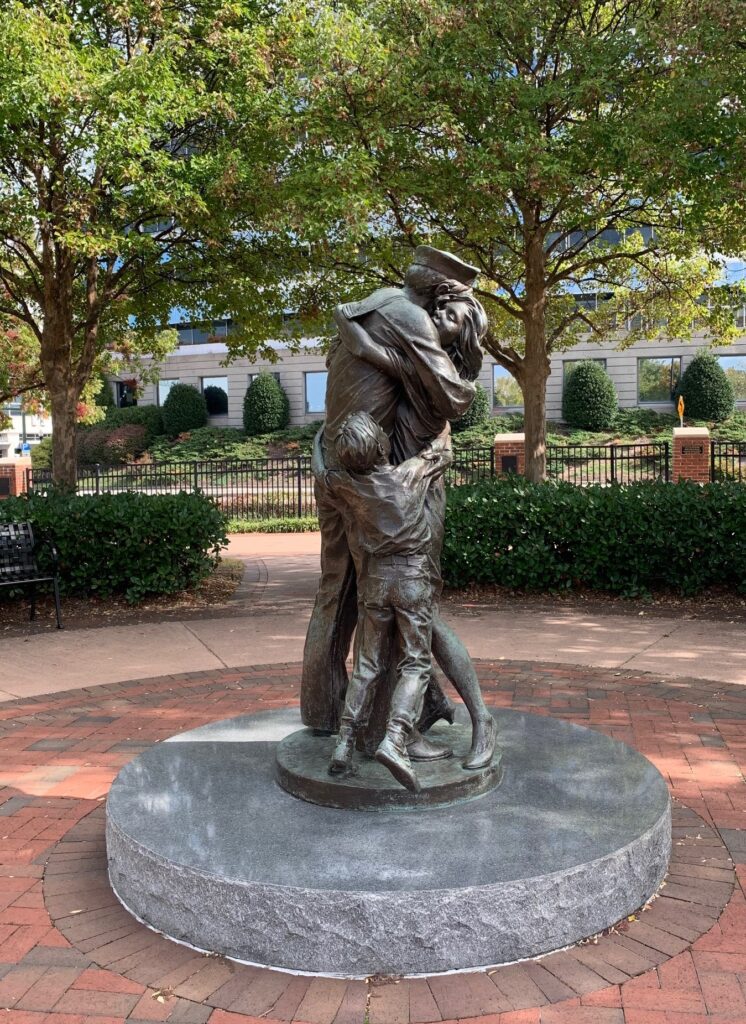
It was time to get moving again and we wanted to get a jump on the caravan of boats setting-up to travel south. Norfolk is the starting point for southbound travel on the ICW. Many marine insurance companies do not provide coverage to boats that are south of Norfolk until November 1, so Norfolk and vicinity become a staging area for boaters as they wait for that date. After checking with our insurance company, we got the green-light to depart as soon as we felt it was safe to do so, and on October 30, with no hurricane activity in the Atlantic, we crossed the next major milestone of our journey – the ICW.
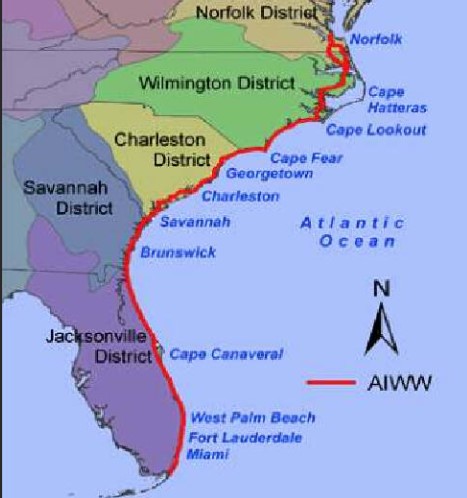
Soon after departing Norfolk we came to a fork in the road and had two options to travel south: The Virginia Cut or The Dismal Swamp. With a name like Dismal Swamp, it sounds like an easy choice, no? Don’t let the name fool you because the Dismal Swamp is an interesting, historic place and now a national wildlife refuge. George Washington owned part of the swamp, hoping to drain it and create farmland, but sold his shares when that proved impossible. The swamp also became a common route for fleeing slaves and is well documented in literature from this time. We were hoping to take this route, but we heard from other boaters that the depths were unpredictable this year and our 5.5 foot draft may not make it through. To be safe, we took the Virginia Cut, but someday I’d like to return and visit the swamp.
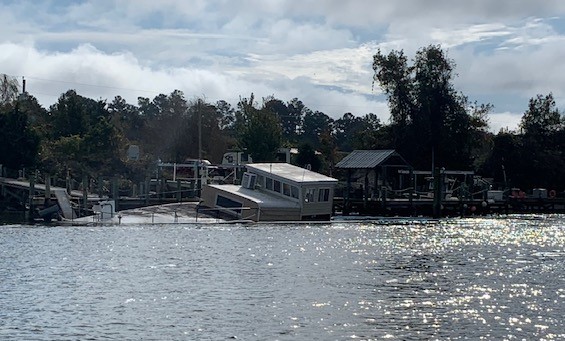
While the Virginia Cut was the safter bet with deeper water, it was also a beautiful journey, through rivers and lakes lined with spectacular homes, sweet-scented forests (Allen actually asked if I was wearing perfume), marshes and quaint towns where we could stop to have a meal and pick-up provisions. It also provided ample opportunity to anchor at night.
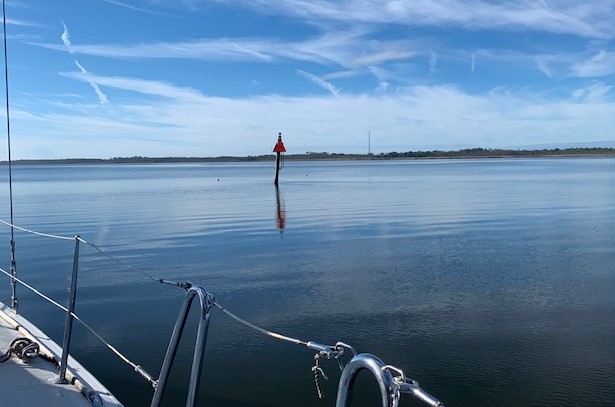
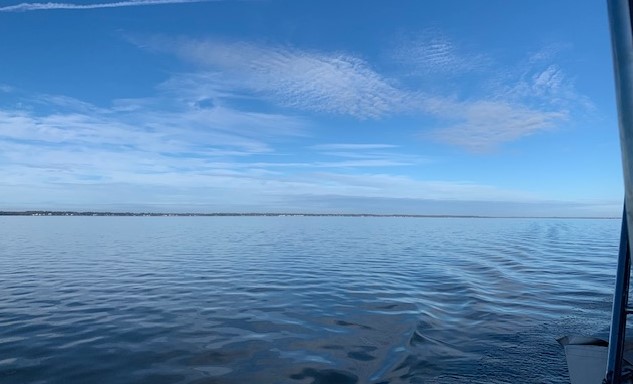
An ideal anchorage is in a cove or bay, surrounded by land on as many sides as possible to be out of the wind, waves and wake of passing boats, in about 10-15 feet of water and with plenty of room to swing with currents and wind and not hit other boats (or rocks). The anchorages here were very different from what we are used to – most were just a few feet off the main channel, in wide-open expanses of water nowhere near land. We had to watch depths carefully as it can drop from 10 to 2 feet in an instant, but our anchorages proved to be secure with good anchor-holding, some we had to ourselves and some were busy with several boats…we really enjoyed this part of the journey.
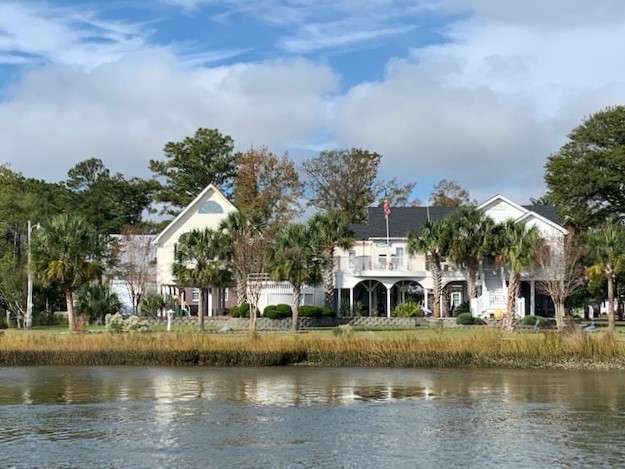
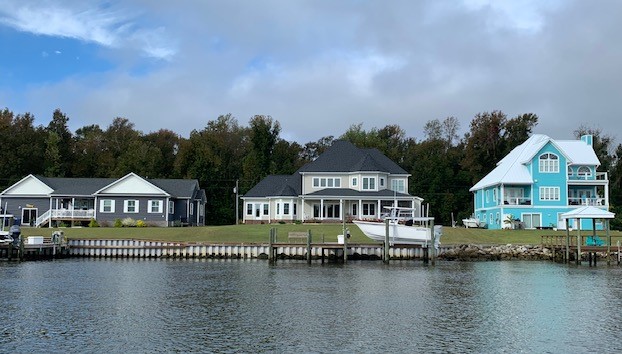
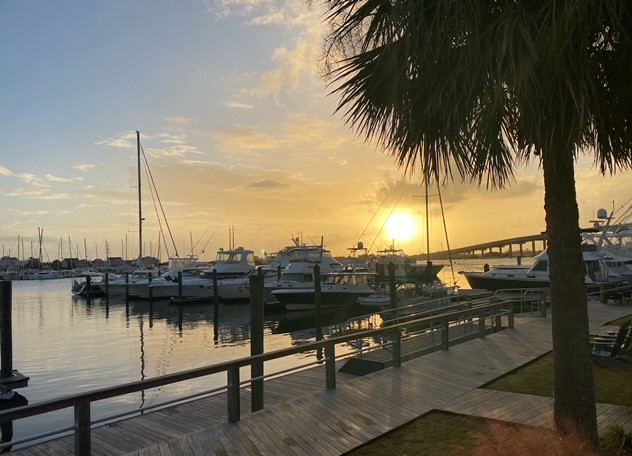
The next big stop was a marina in Beaufort, NC (where we finally got our cruising permit) that provided a courtesy car so we could do a big shopping trip to re-provision and enjoy some land time. Old Beaufort is a lovely seaside tourist town full of shops and restaurants and was bustling with boaters heading south. We thoroughly enjoyed the break and the camaraderie as we met more like-minded cruisers heading south.
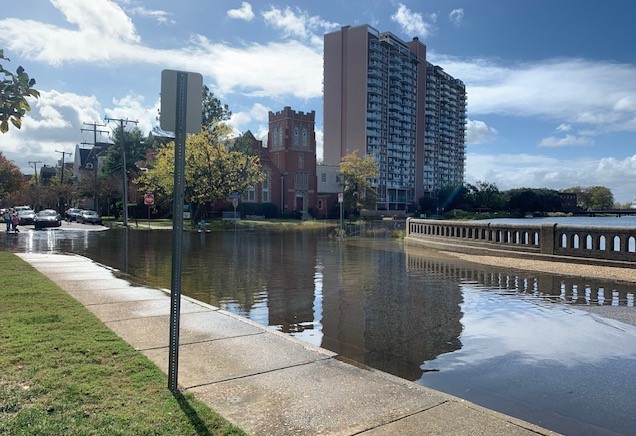
That’s crazy that it is normal that some streets just flood! Imagine the city planning that has to go into an area that floods on the daily.