The Great European Adventure: Chapter 1 – Italy

We were barely home two weeks from our Great Lakes Adventure and just getting adjusted to living on land again, when we departed for the next adventure, Italy and Croatia.   However, this adventure was booked and planned months before we even considered the Great Lakes Adventure.  In October 2018, Allen and I attended the Annapolis Boat Show where we learned about sailing Croatia’s Adriatic coast.  We returned home with a sweet bareboat charter deal (see note #1 below) and began to make plans to sail Croatia in September 2019.  Little did we know at the time that this once-in-a-lifetime-trip would become Book 2 of an incredible year of adventures.

Our 7-night charter began and ended in Split, Croatia and since we were flying all the way across the Atlantic, we wanted to extend our vacation in Europe.  There are no direct flights into Split from Toronto, so we looked for an interesting connection to explore.  The choice was easy – Italy. 

Venice was our first stop after a direct flight from Toronto, and from the first peek outside the airport, we knew we weren’t in North America anymore.  The usual services are there, car rental, taxis, busses, hotel shuttles, but what makes Marco Polo Airport unusual are the water docks.  Travelers have a choice of traveling by land to the modern city or the old city (separated by a 4 km causeway) and being dropped off in a square at the edge of town.  Or they can opt for a private water taxi, gleaming 1960’s style wooden power boats or a large barge-type passenger boat – the water bus.  We chose the water bus.   As we descended into the belly of the water bus we understood this was not for the weak stomached, as the massive wakes from the water traffic tossed us like toys in a bathtub.  It was fascinating to see boats of all types and sizes, sleek power boats to heavy working barges, zipping around the opaque green waters – they make rush-hour on the 401 look like a Sunday drive in the country.  In about 40 minutes we reached our stop, checked into our B&B and were ready to indulge in two of Italy’s delicacies: pizza and a spritz (see note #2 below).
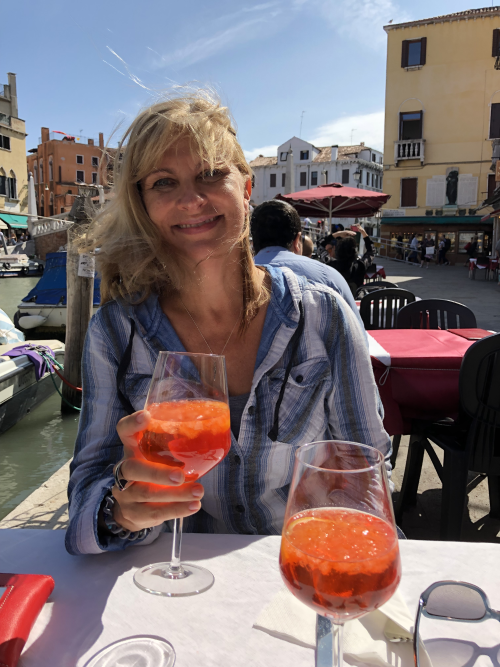
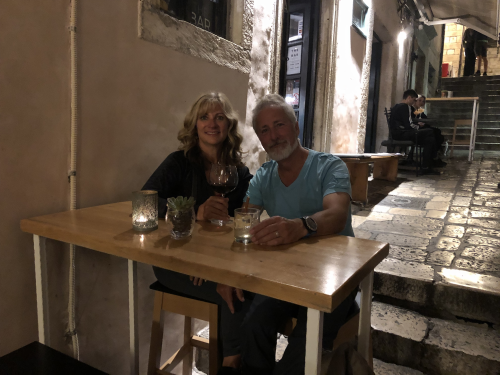
Enjoying our first Spritz in Italy
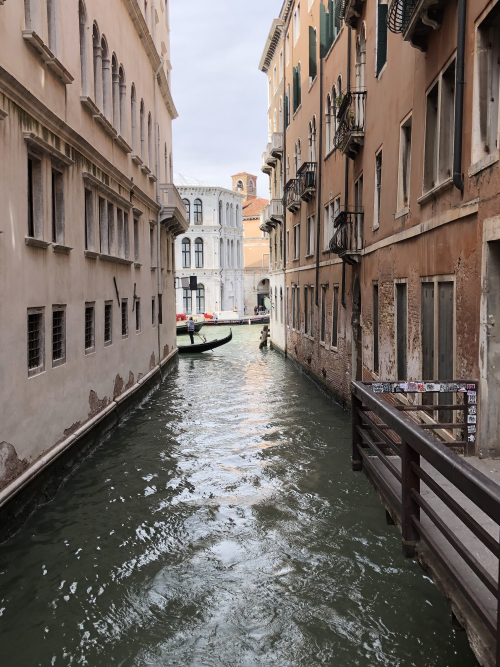
Canal with a Gondola

We only had two nights in Venice and I could have spent a couple more there.  An ancient city, from a time when city planning was not a thing, it was fun to explore.  You never know what you’ll find around the corner – what appeared to be a dingy alley, turned out to be a major thoroughfare and sometimes what looked to be a major street, dead-ended in a canal.  Although we did check-out the major tourist attractions such as the Realto Bridge and St  Marks Square, we tried to avoid the large crowds by finding out-of-way shops and restaurants.  And no, we did not spring 80 euro for a 30 minute gondola ride.
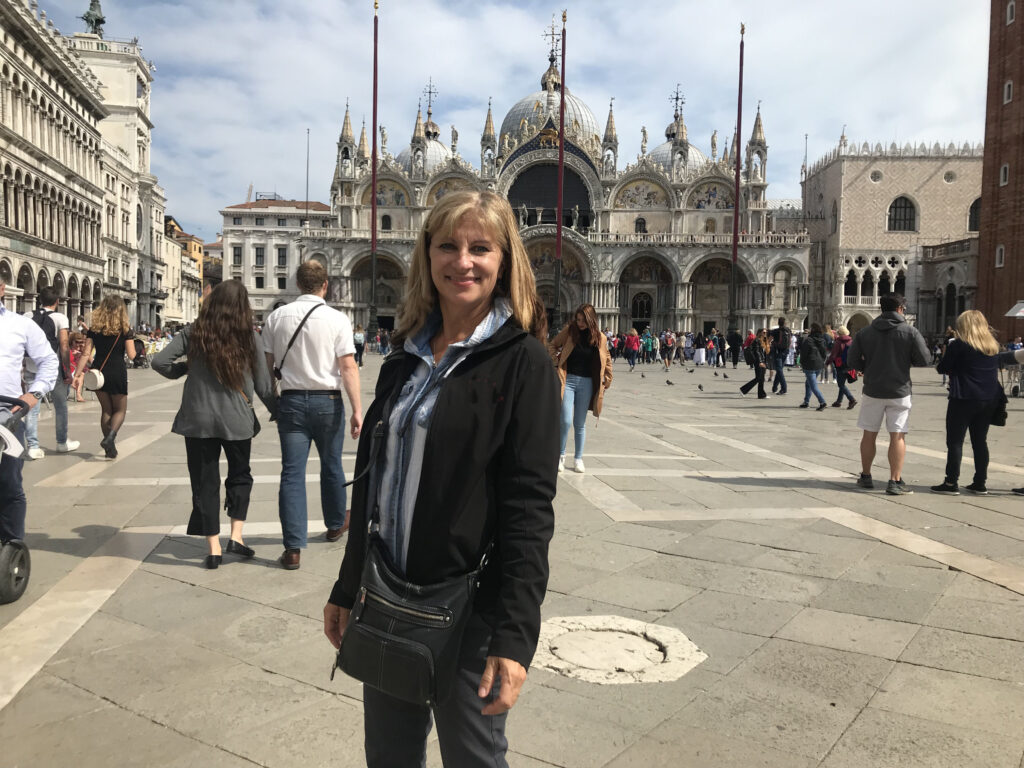
St Mark’s Square

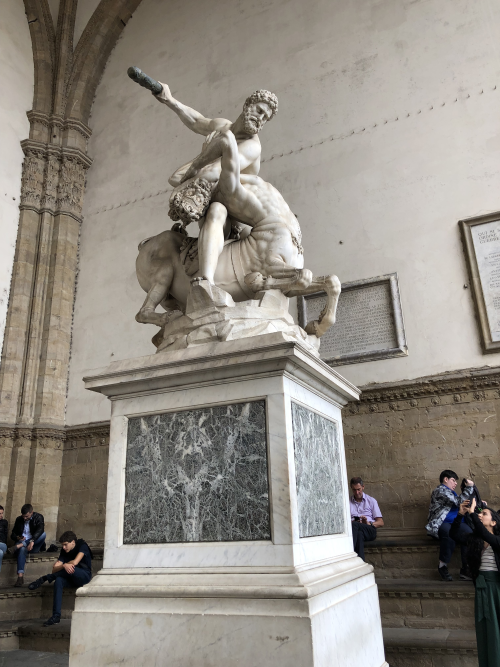
Florence was a 2 hour Frecciargento high-speed train ride (Italy’s trains travel up to 220 km/hour) from Venice and our next stop in our Italian adventure.  We spent 2 nights here and found that to be more than enough.  For those who love the arts and museums, I imagine 2 weeks wouldn’t be enough, but 2 days were plenty for us.  We went inside only one museum, Galleria dell’Accademia, which houses Michelangelo’s David statue (photos do not do it justice!), but we enjoyed just wandering the city, taking in the multitudes of statues displayed in public parks and piazzas and gawking at enormous Duomo Cathedral.  We did a little shopping in Florence’s famous leather markets, but found most of the merchandise to be mass produced and overpriced (but I did find a fabulous handbag).
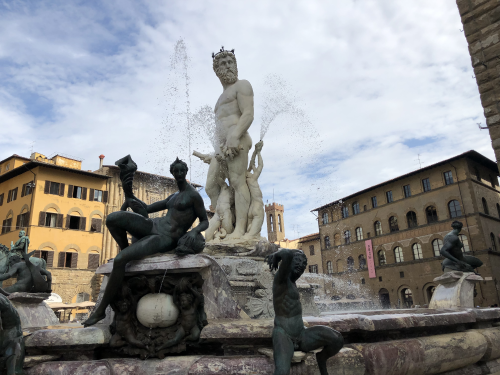
Neptune Fountain in Florence
Statues in Florence, outside and free to view at any time
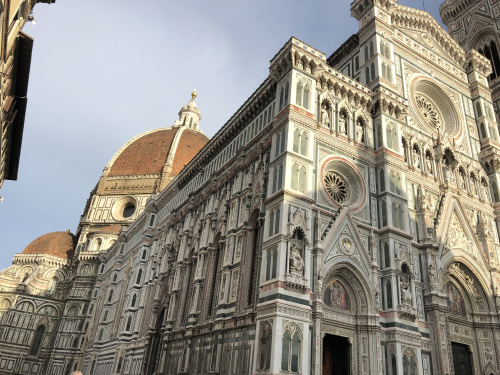
The enormous Duomo Cathedral in Florence

Another fast train that connected to a really slow, really crowded train brought us to Manarola in Cinque Terre, on the coast of the Mediterranean Sea.  The 5 villages of Cinque Terre, Monterosso al Mare, Vernazza, Corniglia, Manarola, and Riomaggiore, grow out of hillsides perched above the sea, are part of Cinque Terre National Park a UNESCO World Heritage Site.  This latest distinction, greatly contributing to the explosion of tourism, is likely Cinque Terre’s biggest blessing and worst nightmare. 
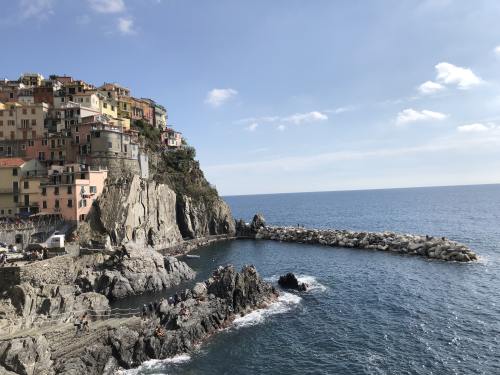
Manarola, Cinque Terre
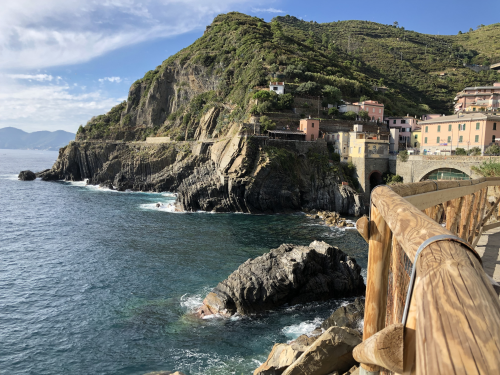
Riogmaggiore, Cinqe Terre

With lush hillside vineyards, centuries old buildings impossibly built into rock walls, the sea crashing into rugged cliffs, Cinque Terre is perhaps one of the most beautiful places on earth, I have not seen anything much better.  However, despite all this beauty, this was my least favorite part of our journey.  September is supposed to be off-season, but there were hordes of tourists everywhere. They were in every village, in every restaurant, in every shop, every alley, making it nearly impossible to snap a picture of a bay or sunset without 5 strangers in the way.  The shops and restaurants are clearly thriving with the influx of tourists’ euros, but true Italian culture is melting away with every made-in-China tea towel and lemon-shaped soap sold.  Restaurants seem to have photocopied the same menu, offering mediocre expensive meals to the lined-up tourists.   And the trains!  One train connects all 5 villages and it was like the Yonge Bloor subway station at 5pm on a Friday.  Cinque Terre is beautiful, but it was also very sad.  The authentic fishing and farming village culture is gone. I was happy to move on after only 2 days.
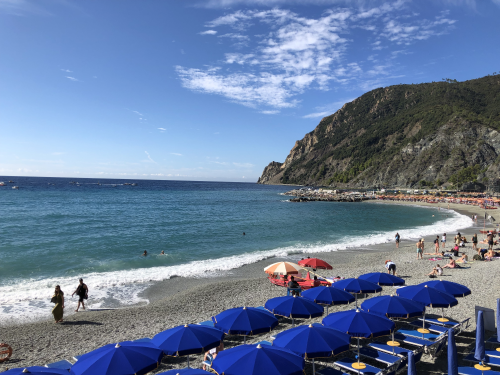
Monterosso al Mare Beach, Cinque Terre
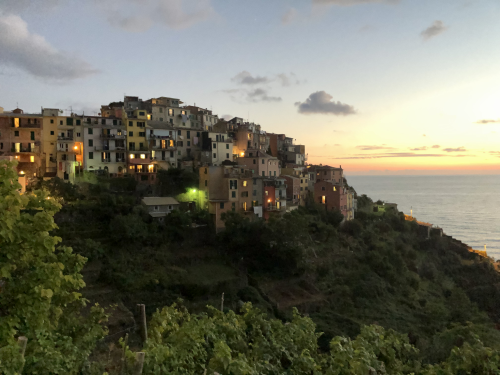
Corniglia, Cinque Terre
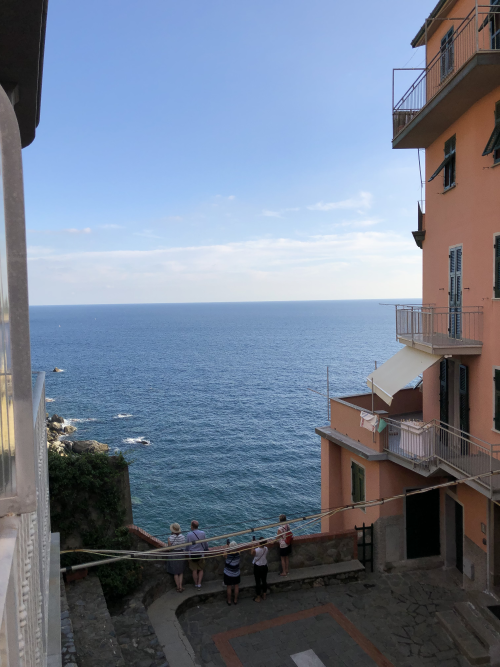
View from our balcony in Manarola. Big hike up the hill to get there, but the view was worth it

When in Rome….  I was told that even though Rome also has throngs of tourists, it is big enough to absorb them and maintain its authentic culture.  What a relief!  Yes, there were massive crowds in the popular attractions such as the Colosseum, Trevi Fountain, Spanish Steps and Vatican, and yes, we saw them all (how could we not?) and loved them, but there was space to get away from the crowds and explore the rest of this magnificent city and experience some real Roman culture.
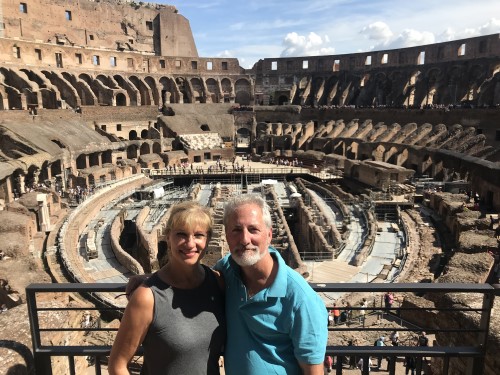
We had to see the Colosseum in Rome
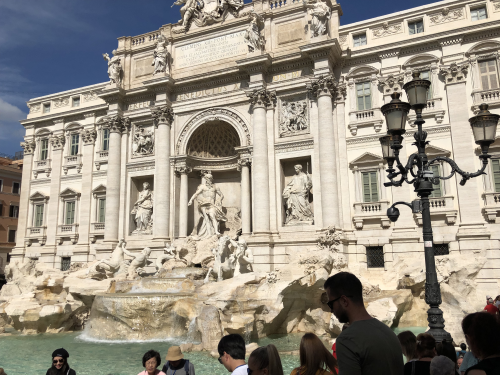
Trevi Fountain. Lovely, but we couldn’t get close enough to toss a coin into the fountain
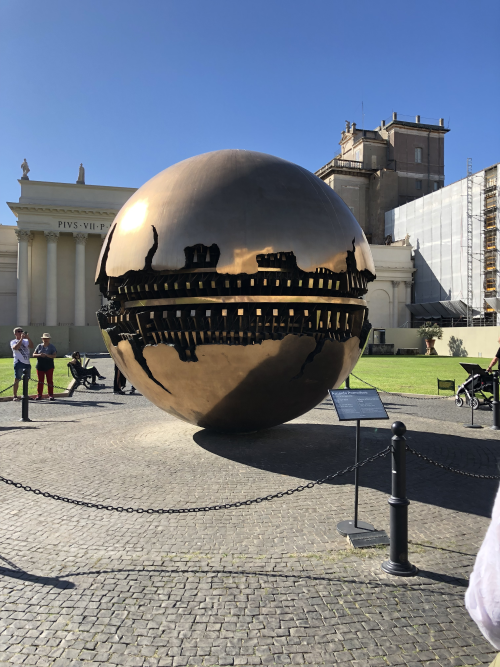
A golden sphere outisde the Vatican buildings, a gift from Arnaldo Pomodoro, an Italian sculptor
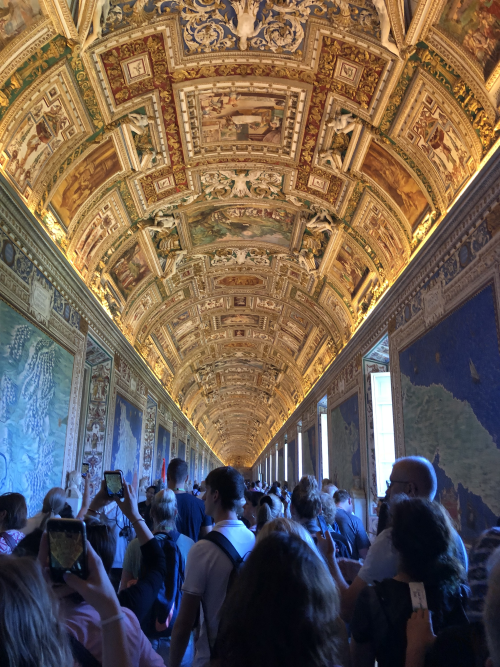
Tapestry room inside the Vatican
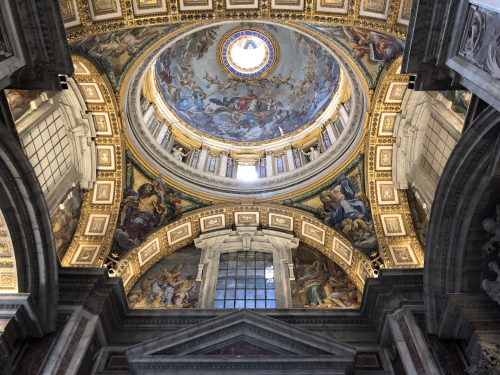
One of many magnificent ceilings inside St Peter’s Basilica
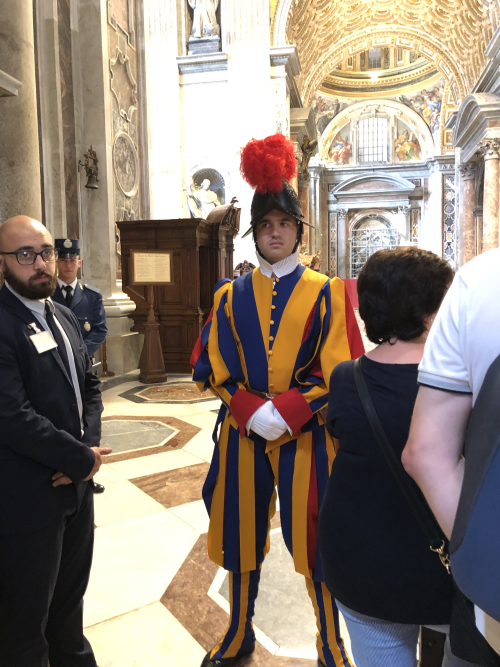
A Pontifical Swiss Guard, inside St Peter’s, stading guard for a service going on in the basilica

We had the opportunity to have a unique tour, one off the typical tourist beaten track.  Ironically, it was a guided tour; however, was not an average tour that can be purchased from on-line websites.  We met a guide who leads independent tours in Rome, to sights that tourist typically don’t visit.  After Googling “The Gladiator Guide” to make sure he was legit, we signed up for the evening tour. Our guide, Alex, led us down back alleys and side streets (with our take-away glasses of wine because it was after 5 o’clock) to show us some very interesting sights.   The first was Michelangelo’s Roman tomb.
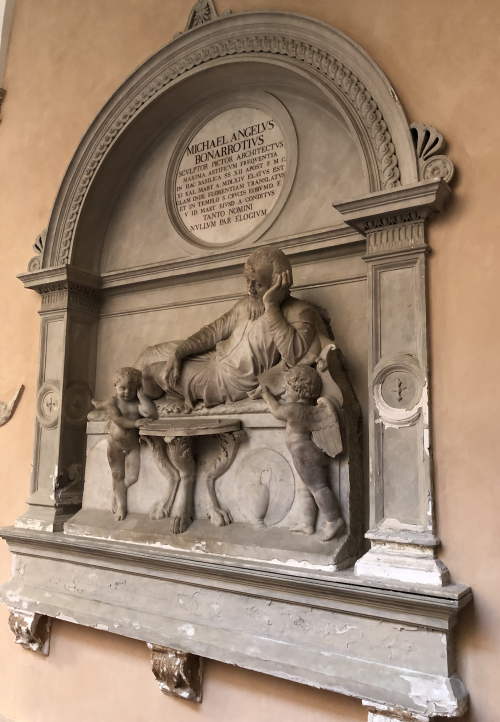
Michelangelo’s grave marker, unfinished, for the tomb the Pope planned for him in Rome. Read the inscription and look at the face, no doubt this is Michelangelo.
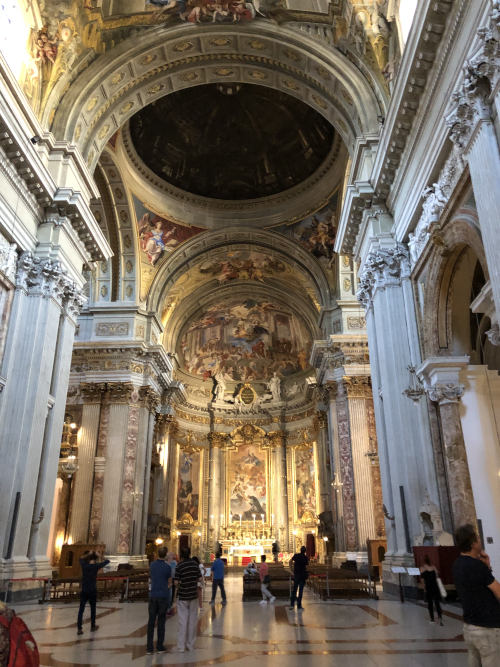
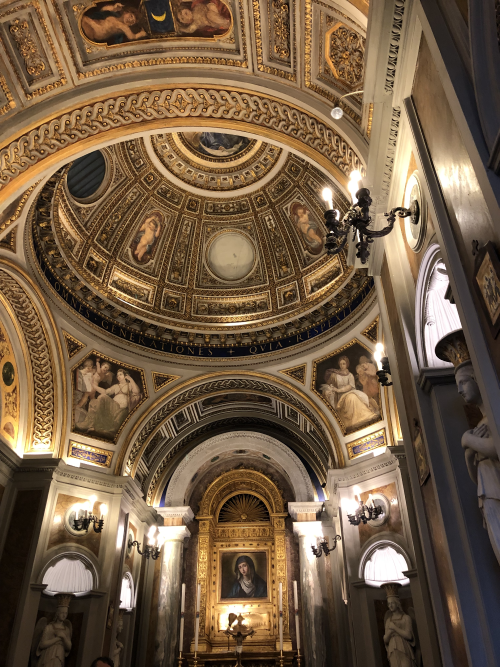
Looks like another dome in a basicila. It’s actually a flat ceiling painted to look like a dome.
Replica of St Peter’s, in a tiny little church in and alley

You may know that Michelangelo’s tomb and body rests in Florence, not Rome, as he wished to be returned to his birthplace after death. So how did we visit his tomb in Rome? Michelangelo spent the last few decades of his life in Rome and when he died the Pope wanted to keep him in Rome, but knowing this may not sit well with his family, Michelangelo’s body was hidden in a tomb in the SS. Apostoli Church, on a quiet little street in Rome.  The Pope quietly ordered a grand tomb to be carved, that would eventually entomb Michelangelo and moved to St Peter’s Basilica, so he would rest among saints, popes and royalty.   However, Michelangelo’s family wanted to bring him home, so his nephew traveled to Rome, found his uncle’s body, broke into the tomb, hid it among in rags and hay in a wagon and brought it back to Florence.  We visited the SS. Apostoli Church, saw the original tomb as well as the original tomb marker located in the adjoining monastery, carvings begun, but not completed.  We also visited a tiny church that is an exact replica of St Peter’s Basilica, but only seats about 15 people, as well as the exact location where Julius Caesar was stabbed to death.  I’m not sure if all of these claims can be proven, but this was by far the most fascinating tour of the trip.
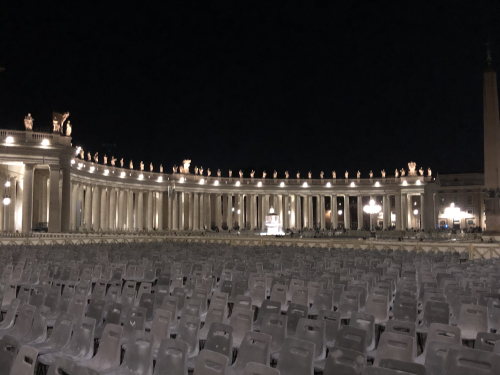
St Peter’s set up for service

After 9 incredible days in Italy, we were ready for Chapter 2 of our Great European Adventure, Croatia, but first some thoughts on Italy.  Although I travelled through Italy many years ago, this was my first visit to Italy.  It seems that in the last few years Italy’s tourism industry has exploded.  Just a decade ago Italy did not seem to be on many bucket lists (it was not on mine), but I know at least a dozen people who have travelled there in recent years and many more with plans to do so.  And I understand why it’s so popular: the history, the art, the culture, the weather and just the sheer beauty of the land make it a perfect European destination.  It’s easy to travel by public transportation and most people speak English, making it comfortable to move around.  I love Italy and some day will return for more; however, I was disappointed by one thing, something for which Italy is very famous – the food.  Perhaps my expectations were too high, perhaps living in a multi-cultural city like Toronto I can have gourmet Italian food at any time, perhaps growing up next door to Sicilian-born Mrs. Cerito I had already sampled the best Italian food on the planet, but the food in Italy was a disappointment.  Now, we ate well, every day, in every city, but it felt like the same food over and over…pizza and pasta.  I craved fresh vegetables and salads and anything original, but rarely found them.  However, there are two items where Italy cannot be topped: cappuccino and gelato.  Wow, now that is something I wish I could have brought home with me.
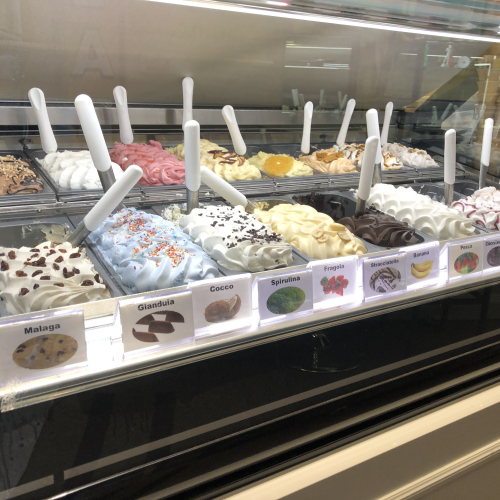
Oh, the gelato!!

Note #1

A bareboat charter is a chartered boat, where all crew, provisions and itineraries are supplied by the customers instead of the charter company, as opposed to cruises, where you buy rent a room on a ship and all else is provided for you.  It’s a lot like renting a car.

Note #2

Aperol Spritz, or known as a Spritz in Italy, is a uniquely Italian cocktail consisting of Aperol, a bitter and citrusy Italian aperitif bright orange in color, prosecco and a splash of soda water and is gloriously delicious!
The Great European Adventure Chapter 2 – Croatia

Croatia was never in my Top 10 places I wanted to go.  I had never given Croatia much thought, although I had heard it was beautiful, so are so many other places I’ve dreamed about visiting.  That changed last year in Annapolis when we visited the Croatia sailing booth, saw the photos, heard the testimonials and were offered a sweet deal to charter a big catamaran in Split, Croatia and sail the Adriatic Sea.  Now that I’ve seen and sailed Croatia, I’m singing a different tune. 

To truly appreciate Croatia, one must know a little about its history.  I confess I knew very little, other than it was a former communist country that had gained independence not that long ago; however, during our adventure I learned some interesting information that helped me appreciate this land and its people even more.

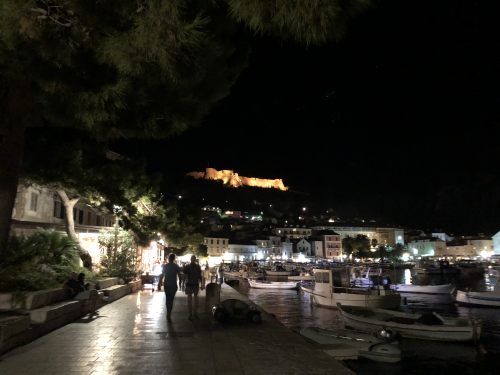
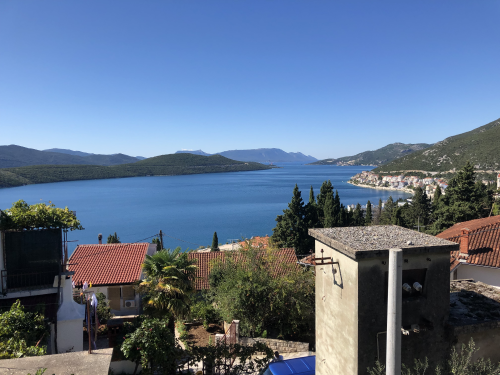
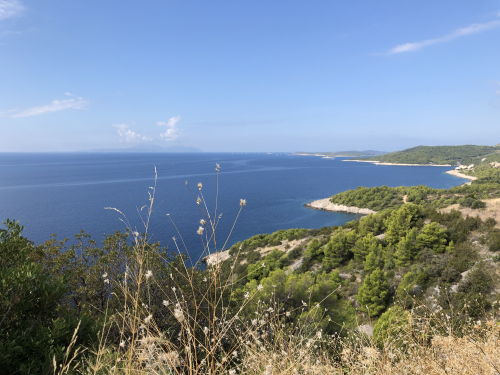
View from top of Hvar

Croatia’s history can be traced back well into the BCs, where it bounced around between emperors and conquerors and at the end of WWII, Croatia was part of Communist Yugoslavia, which also included Bosnia and Herzegovina, Macedonia, Montenegro, Slovenia and Serbia.  Fast forward to 1991, having had enough of the Communist regime, Croatia declared independence from Yugoslavia, which triggered a civil war among Croats, Serbs and Bosnians.  This war, known to be the bloodiest event in Europe since WWII, ended in 1995 only after NATO intervened.  In 2013, after almost 2 decades of peace and independence, Croatia joined the EU (but instead of Euro, it still uses its own currency, the Kuna).

As our plane descended into Split, it was impossible to not gape at the incredible Mosor Mountain range that runs along the Adriatic coastline.  Split’s airport is small, but new and modern and efficient – tarmac to border control to checked luggage in hand in less than 30 minutes.  Then a 20 minute bus ride to the town of Trogir, and we were ready for our next adventure – sailing the Adriatic.

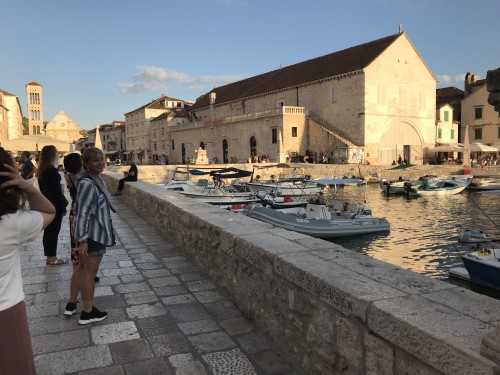
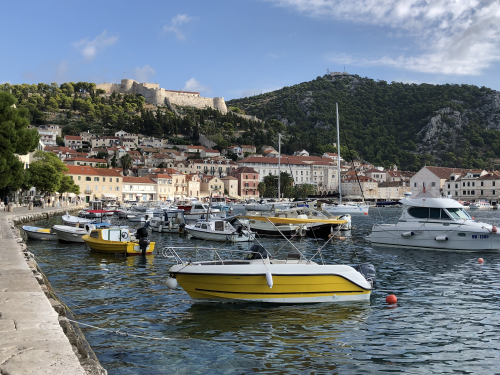
Harbour in Hvar

We had chartered a 45 foot Lagoon catamaran and invited 6 friends to join us on this adventure.  This impressive boat has 4 queen-sized staterooms, each with its own head.  Our “Gatto de Mare” had a decent galley for meal prep with a dining table that comfortably sits 8, and an outdoor deck with another dining table and extra couch space.  Up top, another seating area to watch the waves and sunsets and a fly bridge sitting way up high, from where to drive the boat. 

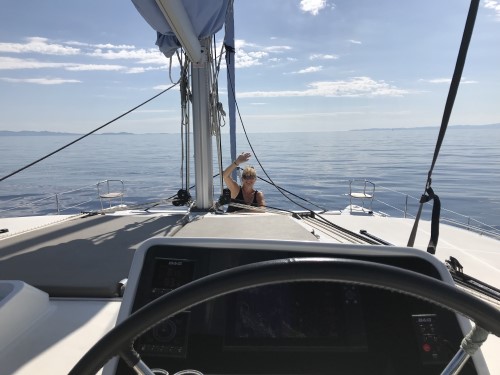
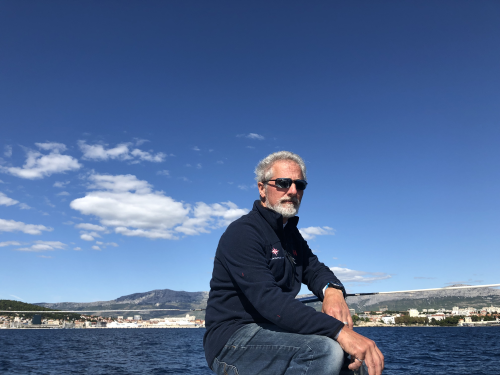
That’s me on Gatto de Mare

I had no interest in driving the boat myself, but instead left that to Allen and the other guys while I enjoyed the scenery and the company onboard.  Just the sheer size of this yacht was intimidating; however, with dual engines, controlling it was not an issue – Allen described it as driving a big, fat marshmallow.  And for the most part, we were driving and not sailing, as most of the time we either did not have enough wind, or the day the bora (a northern to north-eastern katabatic wind in the Adriatic Sea) came down, we had too much wind. 

Our first sail was to the town of Hvar on Hvar Island, a bustling town and harbour between the blue sea and soaring mountains.  There are only two docking options in this busy, crowded harbour: mooring ball or wall tie-up.  We chose the mooring ball and with fenders out on both sides, we tucked in between two other large catamarans.  We soon noticed another large boat trying to squeeze into the tiny spot next to us and wanted to protest, but then we realized that’s just the way it’s done.  Here, boats are tucked-in, hull to hull, fender to fender, even on mooring balls.  We were so close to our neighbors that we could see the guy next door brushing his teeth in the morning.  This took some getting used to, but that’s just the way it’s done here.

We had similar experiences each night during the trip.  The shorelines are very deep and out of anchoring range, so we grabbed a mooring ball most nights and then used the dinghy to taxi to and from shore.  Mooring balls cost in the ballpark of $100 C per night, and docking on the wall can be triple that price.  Local port authority boats come to your boat to collect paperwork and arrange payment.  One night we were able to anchor, but the port authority still came by to collect a fee, although it was only about half the cost of a mooring ball.   

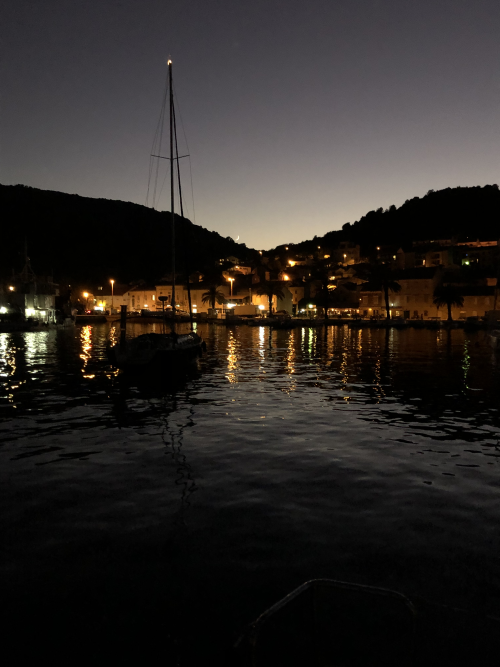
Harbour in Vis

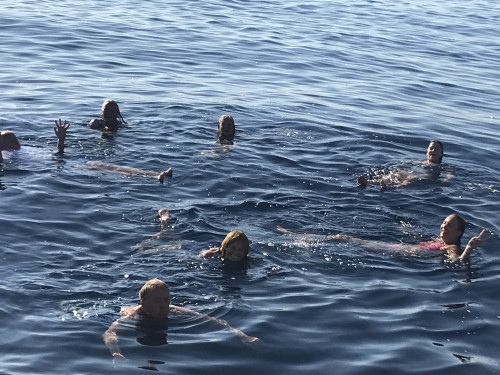
We spent 7 days and nights on the boat, with only one rainy day.  Each day we appreciated the clear blue water, the mountains, and the villages, even the church bells that began ringing at 6am and seemed to ring all day long at random times.  We rented scooters and drove through the mountains, through tunnels, farms and olive groves. We walked small village streets, bought local produce and indulged in Croatian gelato (a little softer than Italian gelato, but just as good).  It was a special trip shared with special friends, with memories that will last a lifetime. We ended our trip where it started, in a marina in Trogir, we said our farewells and Allen and I began to head south to explore the second largest city in Croatia, Split.

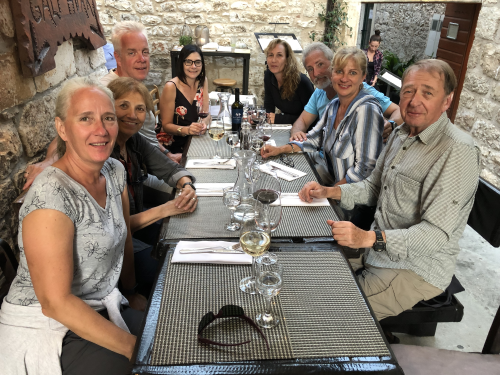
Crew of Gatto de Mare

Split is an ancient city that was the retirement residence for the Roman Emperor Diocletian in the 4th century. Today his palace is essentially a walled town, with old buildings, stone streets and walkways, twisting alleys, trendy restaurants and brand-name shops and a big-ass sculpture of Gregory of Nin (medieval Croatian bishop).  Split also boasts a large waterfront promenade lined with high-end restaurants with patrons who definitely go there to be seen. 

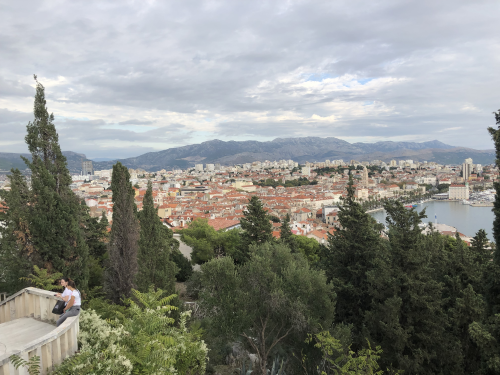
View of Split
Split from the harbour
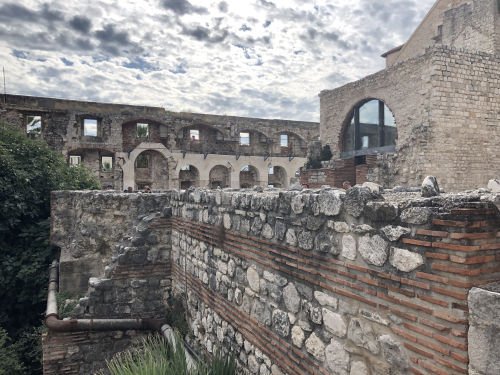
Ruins in Split old town

We only had one night is Split before boarding a bus to Dubrovnik.  We learned there are no easy options to get to Dubrovnik from Split.  There is one ferry a day in the off-season, departing at 7am.  Then there are several busses that go throughout the day, length of trip depends on number of stops, and all of them have to pass through the Bosnia and Herzegovina border and then back into Croatia.  Just a couple decades ago these countries waged a long, bloody war with each other, so the thought of crossing their borders was a bit daunting; however, we were assured that although it could be time consuming, it would be easy.   Without better options, we picked up some sandwiches, boarded a bus with no washrooms (5 hour trip!), a driver who did not speak English, but it was clean and comfortable.  The upside was being able to watch the magnificent Croatian coastline roll by us as the bus navigated the twists and turns of the coastal road. 

About 4 hours into the journey we came to the Bosnian border.  A young officer boarded the bus, collected passports and left.  Ten minutes later, the driver walked through the bus handing back passports.  After traveling for about 15 minutes, another young man in a Croatian uniform came aboard and had a quick conversation with the driver and then announced anyone traveling with a passport has to get off the bus.  Allen and I, along with just a few others, left the bus and entered the building where the young man took each passport, matched our faces, stamped it and waved us away.  We learned Croatians are issued cards to make crossing back into Croatia easy, but those without cards need to go through the regular border process.

Bosnia & Hercegovina – view from a rest stop

Soon we were in Dubrovnik and after what felt like a never-ending climb up a mountain slope, we were in our next, and last, B&B of our European adventure. 

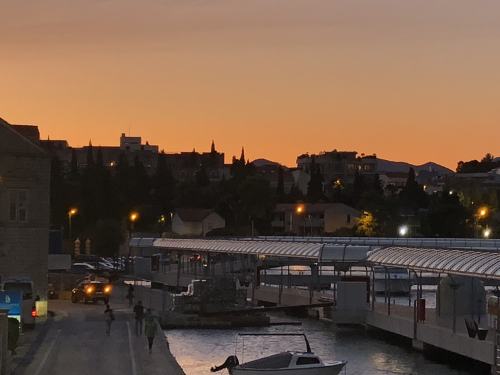
Sunset in Dubrovnik
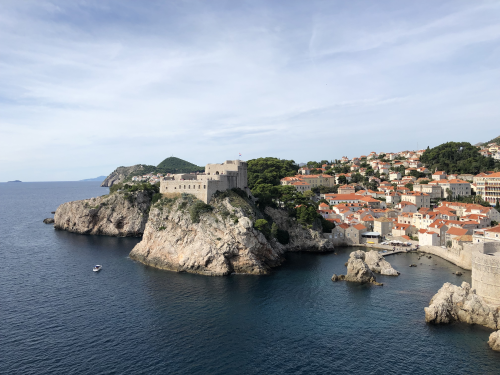
View from the wall in Old Town Dubrovnik

Dubrovnik is an unusual city.  Outside the wall, it is a typical modern-ish European city, and typically Croatian with mountains and sea views.  The Old Town, inside the fortress walls, is famous for several things.  First, it’s a protected Unesco World Heritage site.  This means it was chosen because of its cultural and historical significance and is legally protected by international treaties.  Unfortunately, this distinction did not protect Dubrovnik during the civil war when the rest of the world watched in horror as nearly 56% of Dubrovnik’s buildings were bombed and civilians were killed.  In recent years Dubrovnik has found new fame as the place where Game of Thrones was filmed.  GOT was actually filmed in several locations in Croatia and elsewhere, but some of the most recognizable locations are in Dubrovnik.  As GOT fans, we couldn’t resist being the tacky tourists and signed up for a GOT walking tour in the Old Town.  I was a little worried it would be cheesy, but all I could say is “wow”.  Not only did we see many recognizable locations, we got some insider tidbits on the actors and as a bonus, our guide was a historian and provided some real history as well.

Dubrovnik
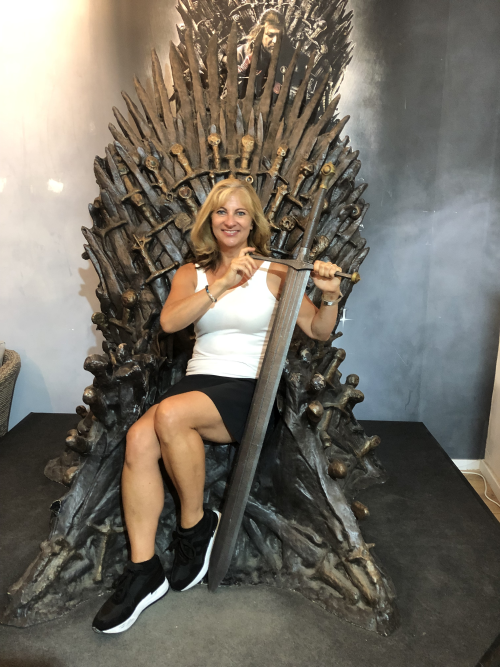
Call me Khaleesi

We also paid the $20 to walk atop the Old Town walls, walls that have been there since Roman times and were free to walk until GOT turned this city into a tourist destination, but it was worth the views.  The city itself is charmingly beautiful, stone buildings and tile roofs, stone roads, no motorized vehicles. It was; however, interesting to note that while the buildings looked old from a distance, most were fairly new builds.  This makes sense as over half the city was damaged in the war and the recent influx of tourists and their kuna is allowing the city to thrive financially and continue to rebuild.  Though what I found unfortunate was the gross commercialization, the tacky souvenir shops and overpriced restaurants and bars capitalizing on GOT fame.  In speaking with some local residents, they are not happy with what is happening to their city either.  Housing prices are skyrocketing and families living in the Old Town, families that have always lived there, now have to line-up with tourists to get in and out of their city (the wait can be up to an hour in high season), pay exorbitant prices for everyday items like groceries and have to put up with daily throngs of strangers wandering past their homes and looking in their windows.   

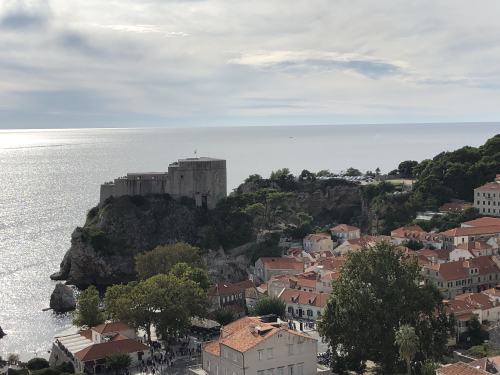
“Blackwater Bay”
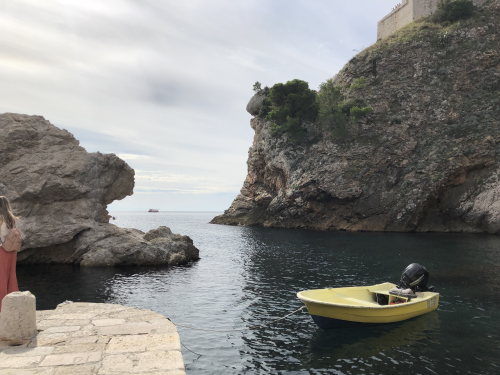
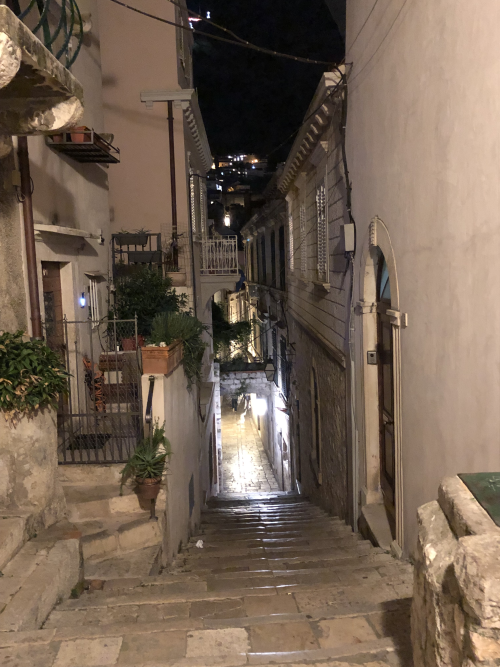
Dubrovnik Alley

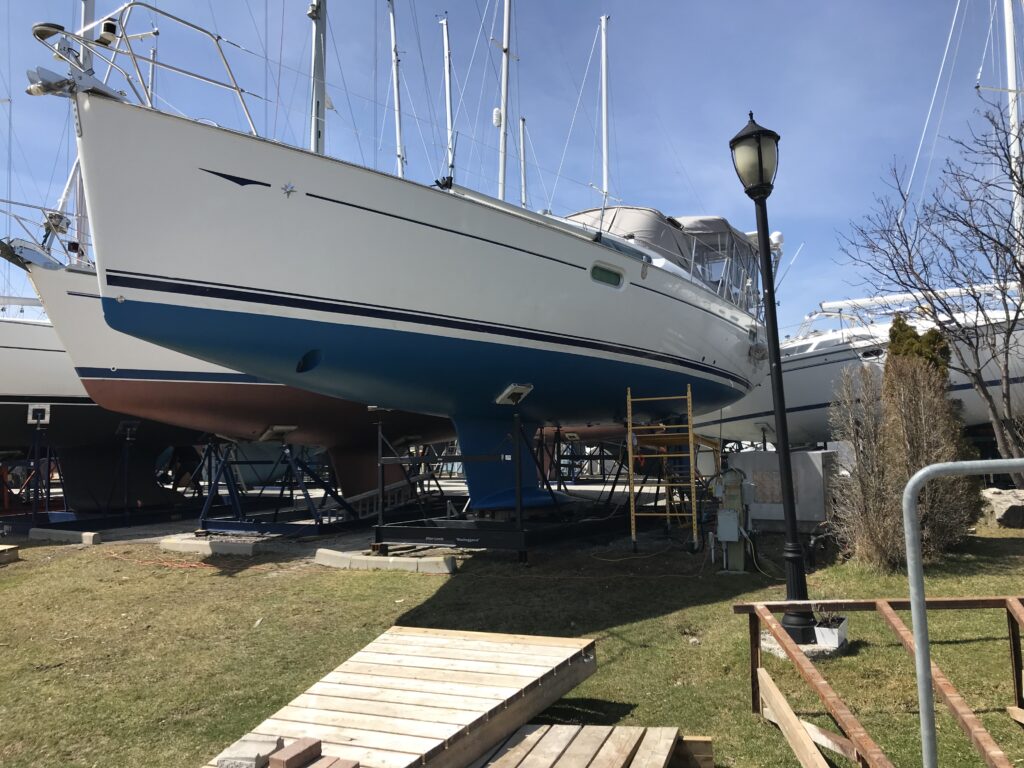
This wrapped up our 3 week European Adventure, and to be honest, we were ready to come home.   After all of the incredible adventures we’ve had since leaving our dock in May, it does feel good to be in one place again.  Our boat, Meshuggana is on-the-hard, tucked-in for winter.  We are using every opportunity to reconnect with our loved ones, family and friends we’ve missed.  It’s even nice to return to the same address each evening…well, maybe for a little while…the next adventure is around the corner, just 4 weeks away…   

Stay tuned as Allen, Cat Stevens and I skip Canadian winter and move to beautiful and WARM Merida, Mexico.

Hasta la vista!

I’m a new to this…thank you for your patience….

I am just figuring out how this blogging thing works, so give me a little slack as I get things up and going. So, this is kind of a test:

Let’s start with some basics. When the idea of sailing away was a mere inkling of my (or rather, Allen’s) imagination, my first reaction was “not in this boat”. At the time we had a nice 28.5 Hunter, with a comfy v-berth for sleeping, but no storage, no refrigeration and a head (aka toilet) that was for emergencies only, there was no way I could fathom sailing away for more than a day or two. Then came Meshuggana.

Meshuggana is a 42′ Jeanneau Sun Odyssey Deck Salon. We picked her up near Chicago, trucked her to Toronto and Allen has spent the last 5 years upgrading “his mistress”. So, we have refrigeration, heat and AC, solar, radar, sonar, wifi, real heads (bathrooms) and a king sized bed – we are not roughing it. But we are in for an adventure – come along with us as we explore the Great Lakes!
June 2, 2019 – One Week in the Books

Here we go – Our Great Lakes Adventure!  One week is in the books, and it’s been educational, at times frustrating, but overall one of the best weeks of my life!
The question I’ve been asked over and over is “how do you prepare for this”?  It’s a question I asked myself at least 100 times a day since March, when I put the For Sale sign on my front lawn.  How do I deal with the contents of a full house? Decide what to store? What to sell or give away? And most importantly, what comes with me on a 400 square foot boat that I will call home for almost 5 months?  There is no easy answer that question, but after several anxiety attacks, some tears and with the help of one very patient husband, and a son willing to move boxes and furniture (and promise to drive up and visit), it all got done. 

My rule of thumb was if it was easy and inexpensive to replace, bring just a little bit (ex: tomato sauce, eggs, bug spray, batteries).  If it may be difficult or expensive to find, bring it (ex: Starbucks coffee beans and special diet cat food).   Observations after one week– I have way too many sweaters, every small town has a pretty decent grocery store, and absolutely no chance of finding a Starbucks on this route.

We left the docks of our Ashbridges Bay Yacht Club (ABYC) at10:10 am on Friday, May 24, about 5 days later than planned.  We were delayed by easterly winds and waves from the east, which would have made the trip very uncomfortable at best, but could have been disaster. However, this delay was fortuitous for two reasons – the Trent Severn Waterway delayed opening by 1 week due to high water and currents and it gave us a few extra days to prepare and spend extra time with loved ones.

Tonight, as I sit in the cockpit our home, currently in Bobcaygeon, ON, tied up to the wall by Lock 32, enjoying late afternoon sunshine and hoping the 25 knot winds die down, I reflect on what has been at once one of the most terrifying, yet most exciting decision of my life:

  • It may be cliché, but it is true – there will never be a perfect time to follow your dream, so you just gotta make the decision, do some research and go for it!
  • I have HUGE respect for the power of water – wowsa! 
  • Ontario has some of the most breathtakingly beautiful landscape, from the lush greenness of the lower Trent area to now the stunning granite of Kawartha.  I can’t wait to see what’s next.
  • Boaters are really, really nice people – always willing to lend a hand and no judgment when the wind catches your bow and you blow the docking.
  • Wi-fi is our most precious commodity.
  • And finally, but certainly not least – take your best friend along on your adventure – Allen, my best friend, husband and my captain (nothing sexist here, he’s just got the experience), and the ever precocious Cat Stevens – sometimes referred to as Houdini or Little Bastard, but always entertaining. 
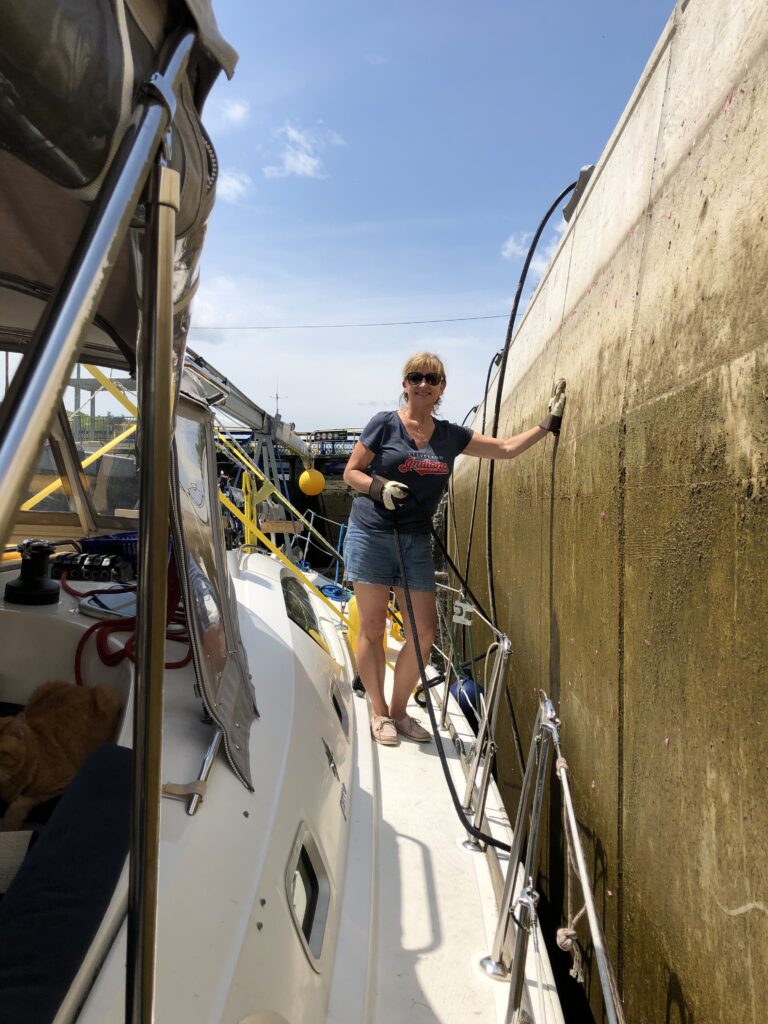
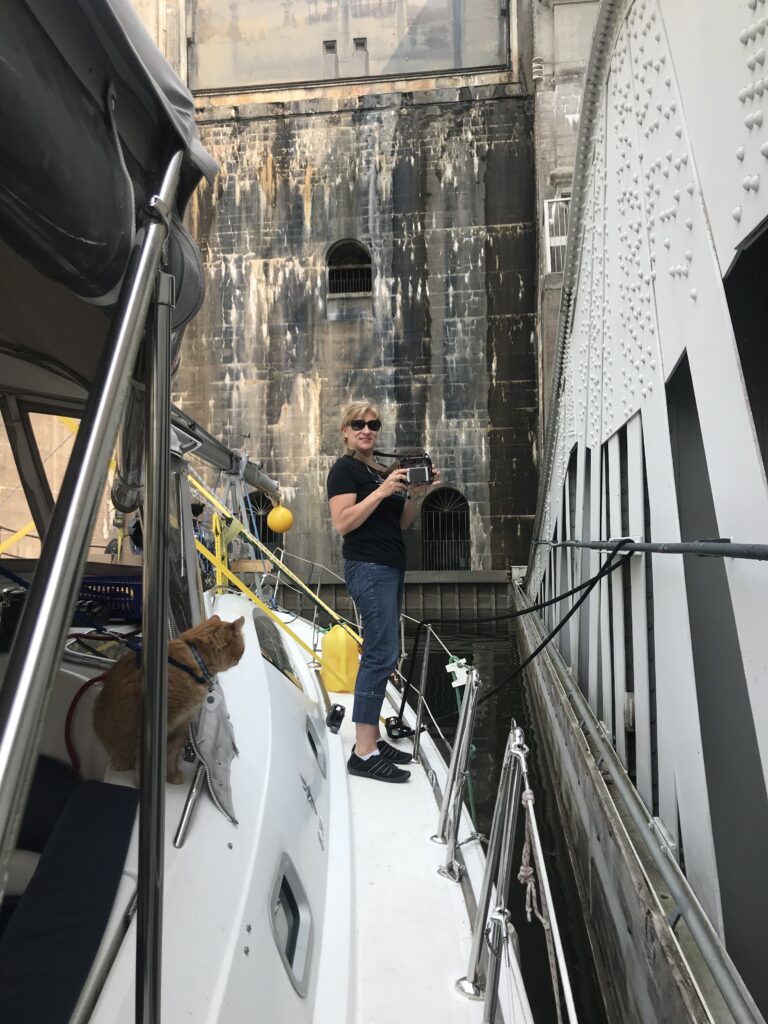
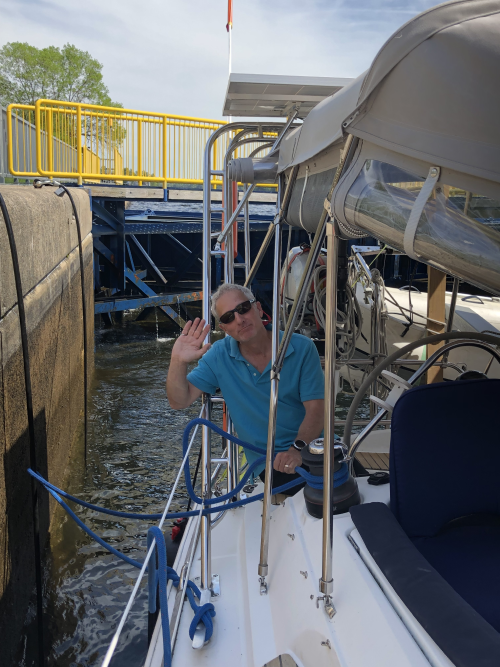
Inside a typical lock…a little slimy, a little stinky, but pretty cool…at least for the first 20.
The sun can’t shine every day.
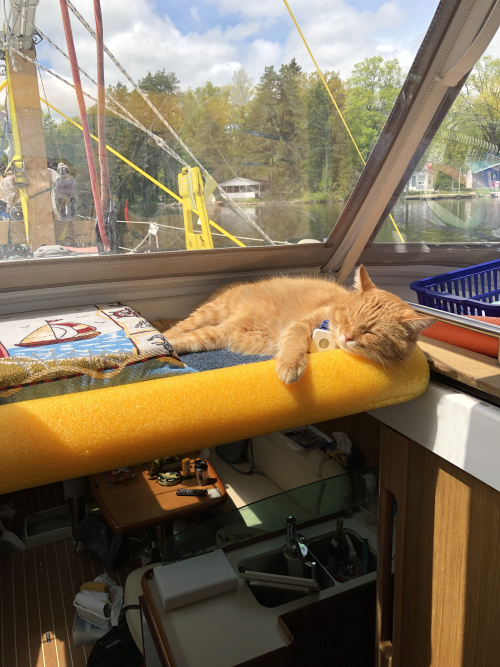
Cat Stevens…Cruise Director…Houdini….Little Bastard…soaking up the sun.
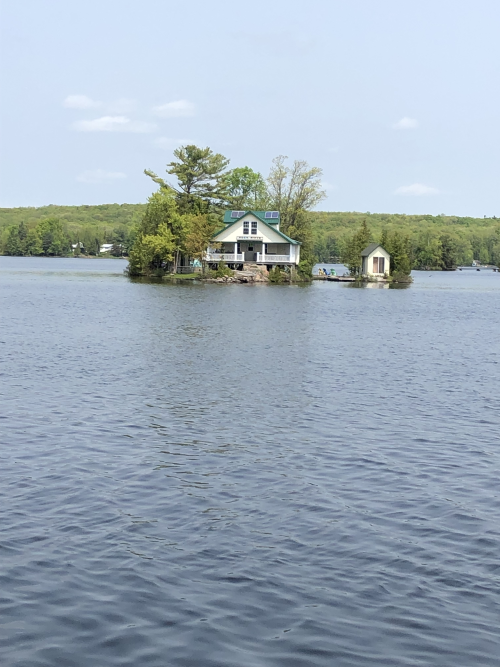
A lovely little cottage in the Kawarthas.
Beautiful landscape.

The TSW – an Overview

When Allen and I just began noodling around the idea of sailing the Great Lakes, we thought about putting Meshuggana on a truck and taking her to Georgian Bay/Lake Huron by road and beginning our adventure there.  We then learned that Allen’s masterpiece, the arch he designed, built and installed on Meshuggana, made us too tall for highway travel – we would not clear some of the bridges.

The alternative was to go by water, west through the Welland Canal, locking-upstream along with all the other freighters and commercial traffic going to Lake Erie and then navigating the Detroit River, connecting Lake Erie to Lake St Clair, and fighting its 7 mph currents upstream. While doable, this route is not for the feint-hearted sailor.  Then the TSW idea was born.

We always assumed the TSW would be too shallow, bridges too low, and really, we didn’t know a soul who had ever travelled it in anything bigger than a kayak.  But the idea was there so we had to do some research.  We learned that the TSW is in fact navigable by larger boats and they guarantee at least a 6 foot depth throughout the system (we now know this is not true).  Meshuggana draws 5’4”, so having just inches below the keel was a little disconcerting, but the solution was high water – Spring.

So what is the TSW? I admit that a year ago I didn’t know much about it.  I had heard of the Trent River, the Lakes Rice, Buckhorn, Sturgeon, Simcoe, Couchiching, the towns of Bobcaygeon, Fenelon Falls, Orillia, but I had no idea they were connected….I had no idea that Lake Huron was connected  by water to Lake Ontario. 

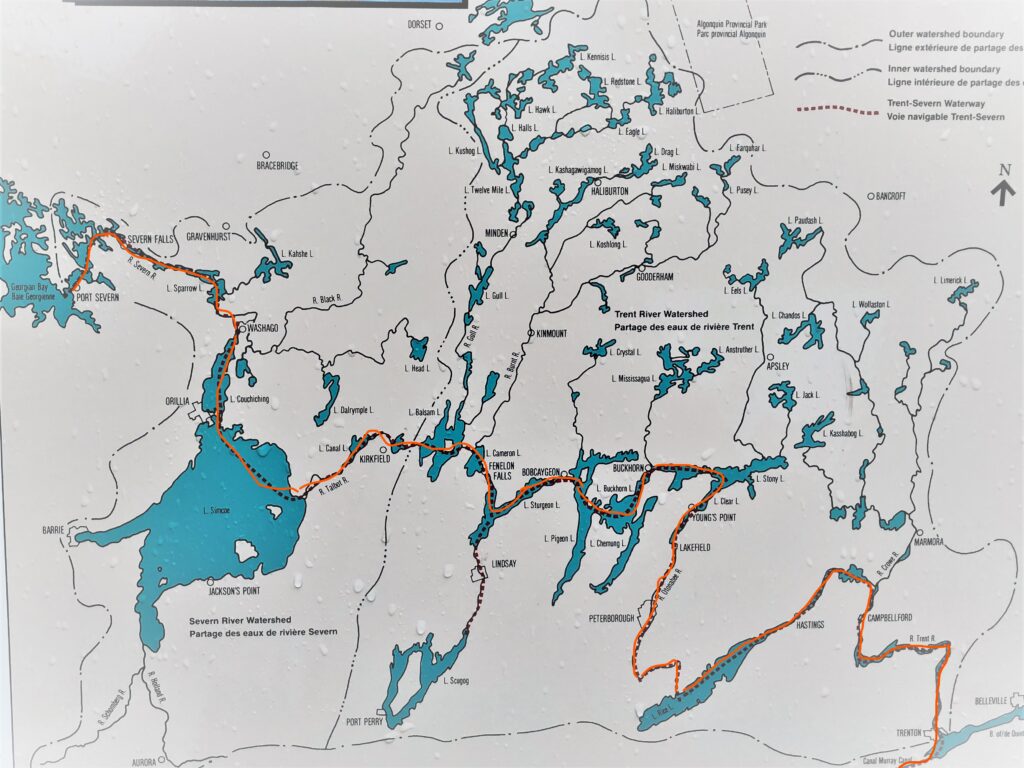
The TSW is a now a national historic site managed by Parks Canada.  It spans 386 kms, has 44 locks, including the highest and second highest lift lock in the world, Peterborough and Kirkfield.  The locks are numbered 1-45, but lock #29 was decommissioned when it was combined with lock #28, so there are only 44 locks now. 

The system was originally conceptualized in the 1830’s as a military route, but this idea was soon abandoned because of the many rapids along the route.  However, the economic advantages of moving product along the canal made sense, and the first lock was built in Bobcaygeon for the lumber industry.  This led to more locks, but eventually, they had a neat little land-locked lock system that became obsolete with the advent of better roads and railways.

In the 1880’s, the Conservative party leveraged commercial interests to complete the system and the full canal system was finished in 1920, opening up a commercial waterway from Lake Ontario to the other Great Lakes.  Then in 1932, this little thing called the Welland Canal opened, making the TSW pretty much obsolete for commercial traffic.  Today it remains a tourist attraction and runs through the heart of Ontario Cottage Country.

Our route hi-lighted here. As I write this post, we are in Orillia.

As we near the end of our TSW journey, here are some thoughts and observations:

  • The TSW is a gem!  Come out an experience it, whether it’s cruising all 383 kms or just spending an afternoon or weekend in a fishing boat or kayak.  If you are travelling by sailboat, stay vigilant to remain in the channel and watch your depth.
  • Parks Canada does a fantastic job managing the waterway, which is a far more complex job than I ever imagined.  In additional to running the locks, the lock masters are responsible for water management of the entire system with the dams as well as maintaining the facilities.  These are not summer students, these are full-time careers and they are knowledgeable, friendly and helpful.  The facilities, from the meticulously tended park-like gardens to the clean washrooms are spotless.
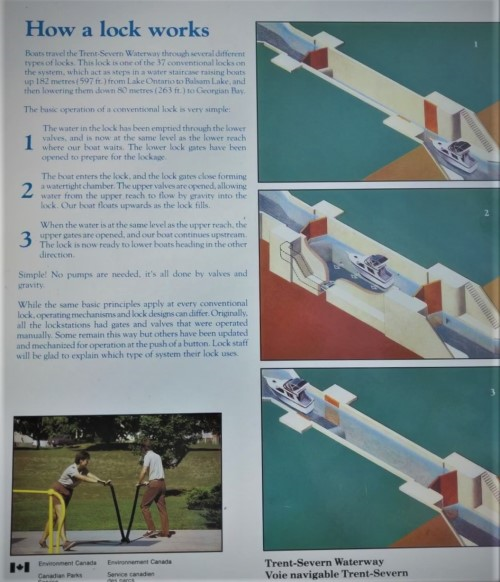
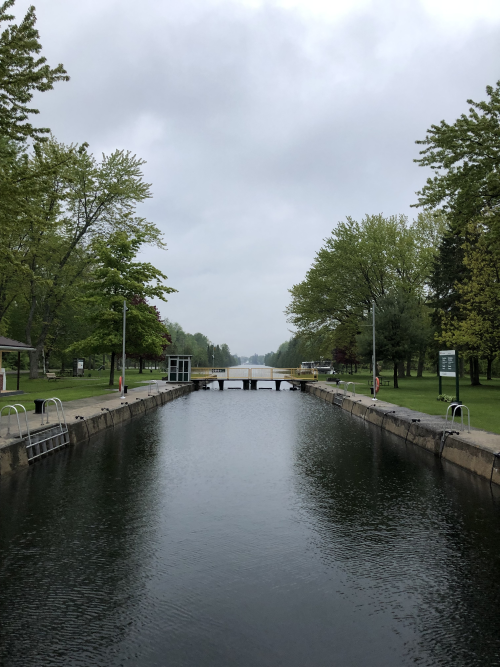
  • The locks are super cool.  Most of them are over 100 years old and have not changed much in that time. Some are slimy, smelly and crusted with zebra mussels with wooden doors that leak like a sieve and some have been updated and have smooth concrete walls and massive steel doors that clang shut like something out of Lord of the Rings, but for the most part the technology has not changed.  You enter your first few locks with your pulse racing, but by the time you get to the 10th, 20th,, it’s pretty routine.
Going up in the Peterborough Lift Lock, the world’s highest lift lock. Cat Stevens is an excellent supervisor, making sure we manage the lines and then has a chat with every lock master when we reach the top.
Leaving the Kirkfield Lift Lock (second highest), our first downstream lock. We “bounced” in the collected silt coming out of this lock.
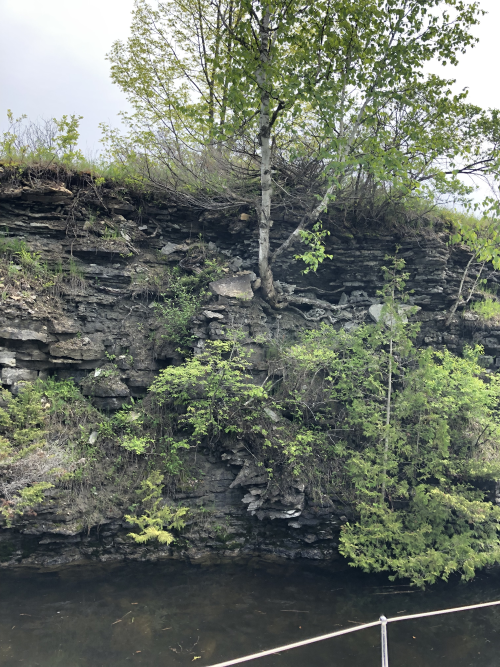
The rugged beauty of the Canadian Shield on full display. That rock extends all the way under the water, so extreme care needed to stay in the middle of the canal.
Rosedale lock, the highest lock of the TSW system.
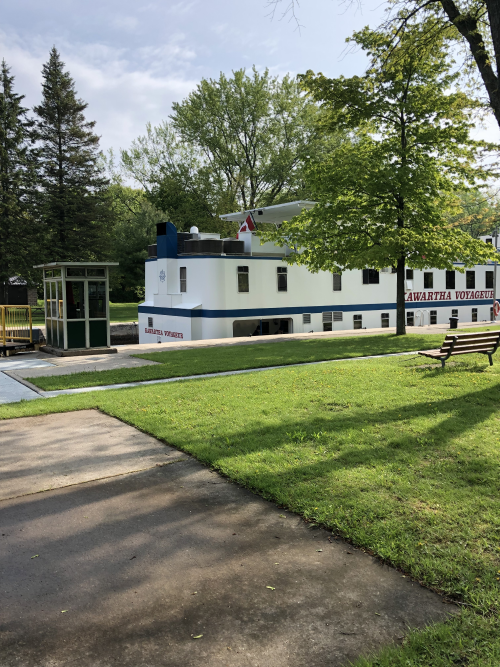
Tourism is the biggest industry on the canal and these cruise boats as well as rental house boats abound in the more populated areas.

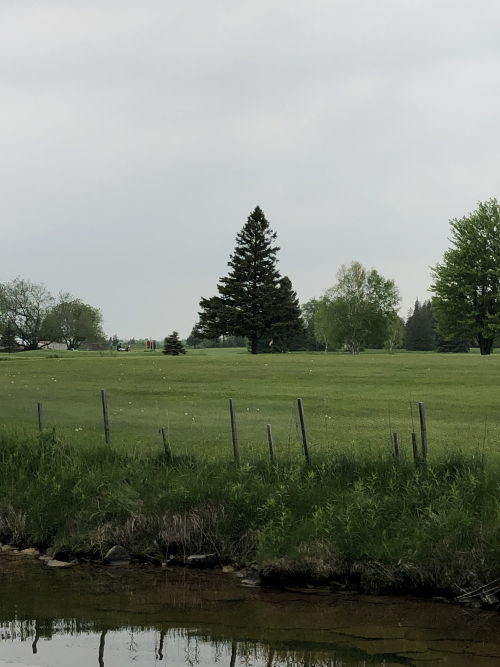
The stretch between Canal Lake and Lake Simcoe goes through farmland – we literally cruised through famers’ fields.

Chapter One – TSW Done! Next: Georgian Bay

Allen and I are having a debate – is Georgian Bay part of Lake Huron?  He says no, it’s just Georgian Bay.  I say yes, it’s a bay in Lake Huron, the same way Toronto is a city in Canada.  I don’t want to waste precious data researching this, so if anyone out there has the correct answer, please share.

Monday, June at 13:20 we cleared lock #45 in Port Severn, after 17 days and 43 locks (lock #29 was decommissioned and #33 in Lindsay is off the route), we officially left the TSW and motored into Georgian Bay.  The last few days in the TSW were quite eventful, in some wonderful events, and some not so wonderful

From Rosedale lock we motored into Balsam Lake, the summit of the system.  At that point, we had climbed 182 meters above our starting point from Trenton/Lake Ontario.  In those first 33 locks we “locked-up”, and the in the next 10 we would “lock-down” as we descend toward Georgian Bay.

Kirkfield Lock, #36, at 65 feet, is the second highest lift lock in the world, second only to Peterborough.  When locking down and driving into the lock, it feels like you are going to drive off the edge of the earth, a little unnerving; however, the staff are there to grab your lines and tuck you in.  A beautiful smooth ride to the bottom, and then we bumped bottom as we exited the lock.  A build-up of silt so no harm, but an omen of things to come. When planning this journey this winter, our biggest concern was water depth of the Narrows in Lake Couchiching.  Charts show that for about 200 critical feet, depth is only 4 feet (we need 5’5”).  We were assured Spring levels would accommodate, so we took the leap of faith.  HOWEVER, we did not know about Canal Lake! 

Canal Lake was 4 nautical miles (over an hour of travel) of stomach-churning hell!  We knew it wasn’t going to be good when we saw the weeds floating on top of the water, downed trees, and branches poking out.  We hit bottom almost immediately. Then again. And again.  In fact, we never floated in Canal Lake.  Throttle down, we dredged the entire lake.  We got through, but felt a bit nauseous – sailboats are not meant to dredge lakes.

Then came Couchiching and those first 200 feet.  The high water currently plaguing the Great Lakes was the advantage we needed, and with more than 9 feet beneath our keel as we easily glided into Orillia.  Orillia has beautiful city docks and facilities (similar to Trenton), so we took in a show at Rama (David Foster), a movie (Rocketman), topped-up water tanks, restocked the fridge, dined out and even had attended the Orillia Boat & Cottage show.  With warm and sunny weather, Orillia was a much needed break.

After 3 days off, “back to work”.  The trek from Orillia to Port Severn is slow going due to heavy cottage country boat traffic and several swing bridges plus the locks.  We dined and overnighted at the lovely Waubic Inn (boat access only).  Tasty, simple food and incredibly friendly, gracious hosts – highly recommend you’re ever in the area.

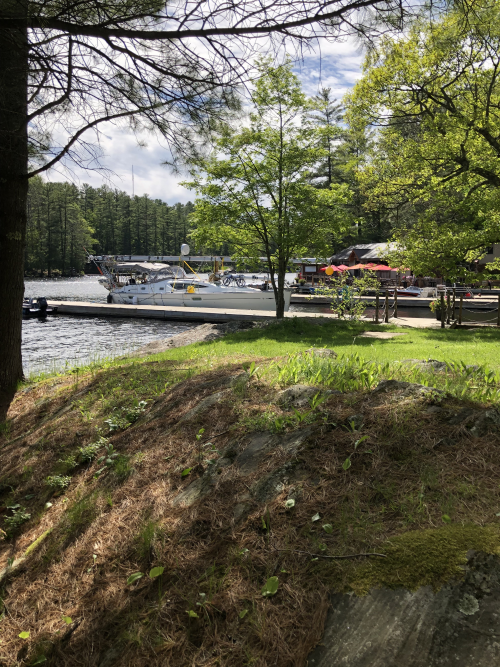
Meshuggana docked by The Waubic Inn.

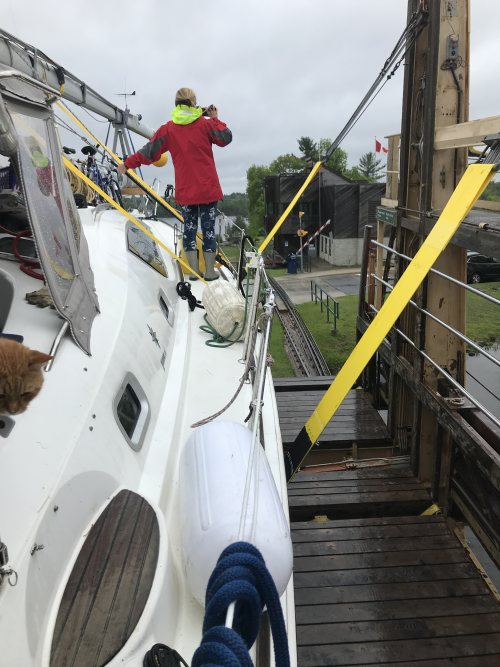
Big Chute Marine Railway!  Wow!  We were a bit nervous going in – putting the boat in a giant cradle and having it driven across a ROAD, down a big hill and plopped into a lake!  Easy-peasy!  Smooth, steady ride and a free keel inspection to boot!  The lock masters were happy to check the bottom and they confirmed all we lost was some paint, no damage.

That’s me on deck, crossing the road on Big Chute.
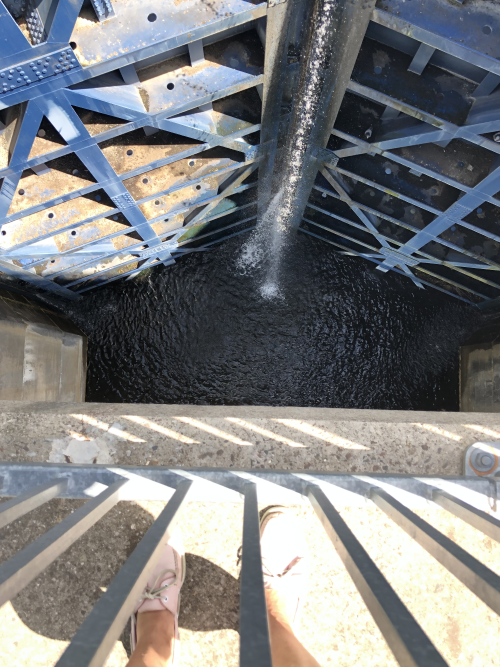
Looking down into Swift Rapids Lock – 47 feet down!
Captain Allen, in Swift Rapids Lock.

So Chapter 1 is done.  Would I do it again?  In a heartbeat.  But maybe not in a 42’ sailboat.

Coming up next: a technical blog from Allen….stay tuned!

The Trent Severn Waterway in a sailboat – Should you or shouldn’t you?…..by Allen

First let me say that I am no authority on the subject and my recommendations are based only on my own observations.  That being said let me begin.

Parks Canada states that it is possible to travel the TSW with a 6’ draft.  I strongly disagree with that assessment.  We entered Lock #1 at Trenton the day after it opened in the spring, during one of the highest water level years on record. We draw 5’4” and have a bulb keel on our 42’ sailboat, and displace a little over 21,000 pounds dry.  Needless to say, the mast was as well secured horizontally on the deck of the boat and yielded a minimum bridge height clearance of 15’.

The journey upbound to the highest lake at Rosedale had us travel through 35 locks.  One of our biggest bounces was 50 m in front of the centre of the marked channel while entering the famous and most traveled Peterborough lock.  I lost count of how many times we skipped along as we approached the Kirkfield lock, despite water breaching the top of Roseldale’s lock doors.

However, almost as nerve racking as feeling the ground beneath our keel, were the weeds, especially so early in the season.   I have two major recommendations:

  1. If you have a large wing on your keel or draw more than 64”, consider journeying to Georgian Bay through the Welland Canal and Lake Erie!  The weeds in the TSW will wrap around your keel and bring you to a grinding halt. You will have to stop and clear them every 100m if your keel edges exposed for the weeds to wrap around and drag you to a crawl. 
  2. If; however, you do not mind plugging your way through, my biggest recommendation to save your sanity is to have either a traditional sonar transducer on board or at least a portable fish finder.  If you rely on the single depth reading you see on a typical sailboat which just gives you a depth number, you cannot see the consistency of the bottom.   A single frequency depth sounder signal will bounce off the top of the weeds giving you readings shallower than your draw. You will never know the true depth, and as a result will be biting your nails not knowing what your real depth is.  Traditional sonar or a fish finder will graphically shows what the bottom looks like and the weed stalks growing up from the bottom can be seen. It provided relief when we saw negative depth readings and helped us to avoid some bumps through some very weedy sections (about 40% of the time). The biggest problems were not in the man-made canals, but rather the openings and exits to these canals. Oh, and by the way, get used to seeing only 6 inches under your keel for most of the way.

Here is a statement of the obvious. NEVER, NEVER leave the the marked channel, even by a few feet. That means no authohelm, even in the long straight sections.  Don’t circle in front of a lock waiting for the doors to open, or run the chance of slightly crossing the imaginary line between the calm water sheltered by the breakwall of the lock entrance and the turbulent outflow of the adjacent dam. Although you would still be technically in the channel, your slow speed crossing into that raging current will throw you out of the channel and aground faster than you can say “Jack Robinson”. Thank God for our bow thrusters that pointed us in the right direction so we could drive right off.

Did I mention the raging current? At high water, the amount of water coming out of those dams looks like a great place for extreme kayakers to have the time of their lives. My experience with this was coming into Lock #4, heading to the breakwall separating the lock from the dam, I had to keep the boat at a 45 degree leeway (angle of the bow relative to the direction you wanted to go).  So make sure your boat has enough horsepower to fight the current and if you only have a 9.9 outboard on the back that only sticks in the water 12”, then consider not doing the TSW.

No matter how many fenders you have, it is not enough, so prepare to scratch your hull. Not on the lock walls, but the concrete piers you pull up to and tie off to while waiting for the locks to drain and open.  I have never experienced switching currents like this. The currents can flip 180 degrees several times during a 5 minute wait, and the speed is faster than you can react to and the power is stronger than anyone can fend off.  Most of time we had only 3 mooring lines out while waiting, but when the current switches, the third line was likely in the wrong direction and the fenders popped out.  Lots of gel work to do this winter.

Locking down the TSW truly is simple, but exiting the locks is still nail biting as you wait for the bump of silt that builds up at the exit of many of the locks. Even with record breaking water levels this season, Canal Lake was our nemesis. I swear the keel dredged through mud and weeds the entire 4 NM.  A sailboat that draws 6 feet as per Parks Canada would never make it through.

Once we made it to Lake Simcoe, things started getting easier. Even at the narrows in Lake Couchiching which shows the chartered depth at 3’ over a stretch of 50m. It actually turned out to be more like 8’.

Was it worth it? Yes, it was as the scenery and cottages made it all worth while. Would I do it again? Not in a sailboat that draws over 5’.

Allen

Chapter 2: Georgian Bay

Today is Friday, June 21 and we are exactly 4 weeks into our journey – could we really be ¼ of the way through?  Time goes by in a blink, but then again, sometimes I hardly remember living as a “land-lubber”.   Some observations from my first month living in a tiny space, with no set address:

  • I packed way too many clothes!  But as usual, forgot a few key items I have needed to pick up along the way (a belt, socks).
  • The Ontario landscape is breathtaking!  Just when I think I’ve seen the most beautiful rock formation, bay or sunset, another one surprises me.  Get out there and see it, by sailboat, kayak or car, just get out there.
  • A healthy lifestyle is easier on the boat.  Every day we’re out walking, hiking or just managing the boat.  Junk food– if it’s not on the boat, there is no way easy way to get it.  I’ve lost 6 pounds since starting the journey and Allen has a decent six pack.  We are the fittest we’ve been in decades!
  • My cat is a rock star.  Check out his Instagram:  catstevensthetravelingcat

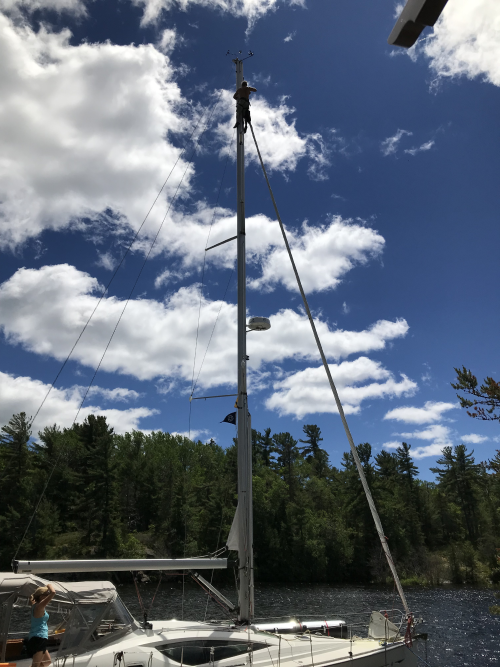
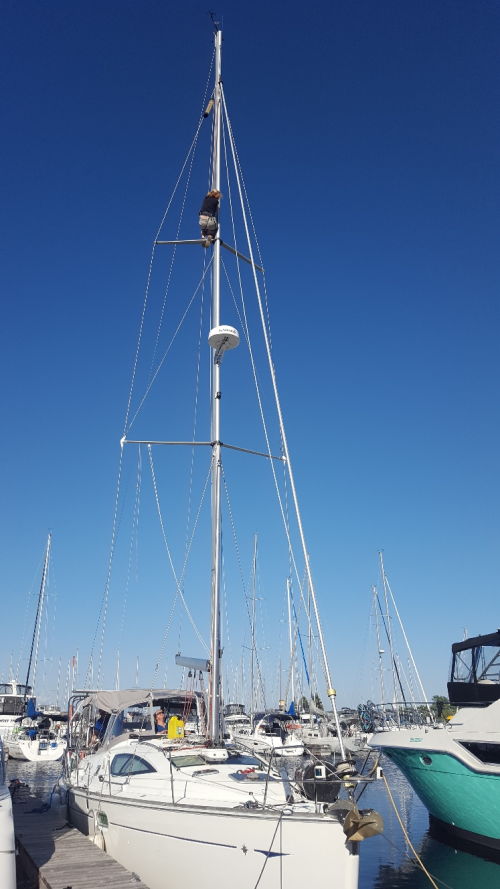
On Monday June 10 we arrived in Midland and pulled into the marina for a couple days to prepare for the next leg.  We carried our mast mounted horizontally across our deck to get through the TSW’s bridges and locks, but in Georgian Bay we can become a sailboat again. Our mast weighs more than 1000 pounds and all our electronics run through it and connect to the boat (radar, lighting, wind instruments, antennas), so this is a heavy, but delicate operation requiring a crane, a crew and lots of patience.  Fortunately for us, my sister and brother-in-law drove up to lend a hand.  Midland is also a bigger city with many resources, so we could stock up on groceries and other necessary supplies.  It was also incredibly good to have some family time.

Holding on from 40 feet.
It was worth the trip up the mast.

The forecast told us 25 knot winds were coming, so we needed a safe, protected anchorage.  Frying Pan Bay, about 3 hours from Midland, is a spacious, deep water bay, with great wind protection from all sides, surrounded by public park land.  We were aware that this bay can get very busy on weekends, but arriving mid-week, in a wet, cold Spring, we thought we’d have the place to ourselves.  Wrong!  There were at least 9 other power boats already there, in what looked like a guys’ trip of fishing and beer.  They were harmless, but hogging the public dock so going ashore with the dingy was a little awkward.  We rode out the wind storm and two days later headed to Bernadette Island for our next anchorage.

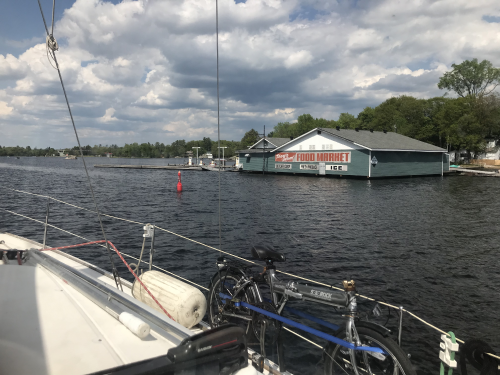
Now that’s a convenience store!

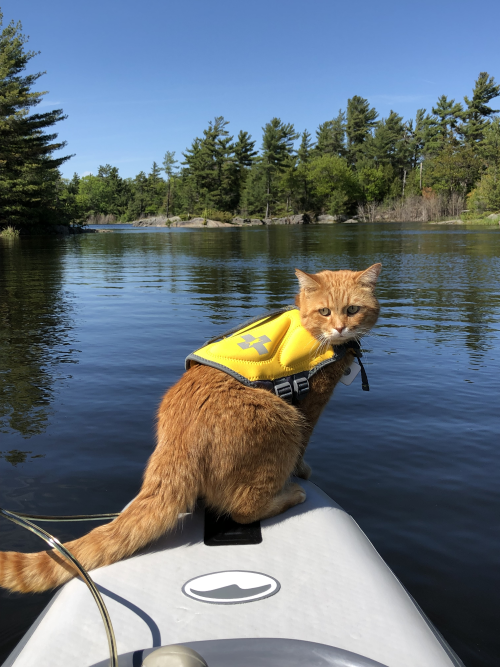
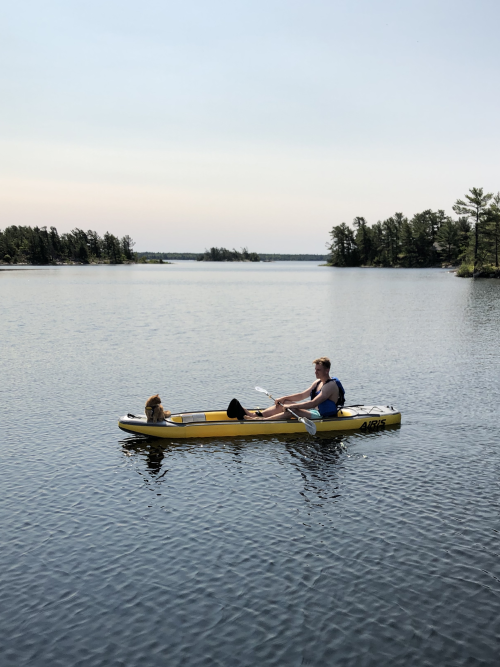
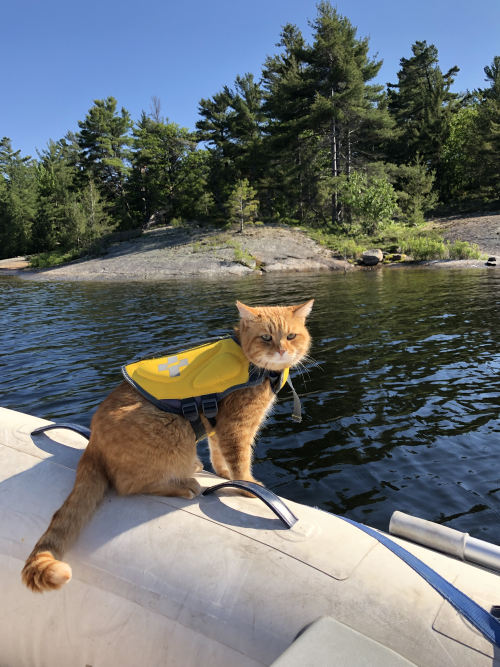
Bernadette is accessed through narrow channels of deep water and huge rocks and shoals if you venture anywhere outside the channel; however, that pretty much describes all of Georgian Bay.   Another storm was coming, so a secure anchorage was our primary concern.  We tucked into a cove, our anchor holding well and tied off the stern to shore to prevent wild swings in the wind storm.  After 2 stormy days and nights cooped up in the boat, we were treated to a lovely sunset and kayak trip, the first ever with Cat Stevens. Well, to say he took to kayaking like a natural is an understatement, even after he took a spill into the water. Now he jumps on with no hesitation and goes for a paddle. 

Sailor in his previous life?

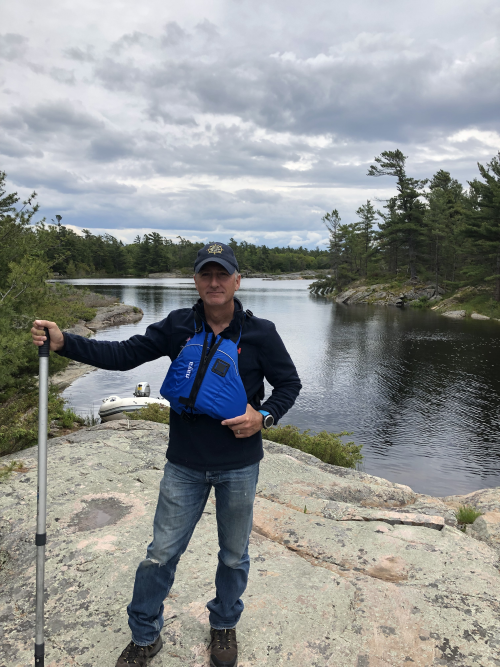
Next Stop – Wreck Island, part of the Massassauga Provincial Park system.  As Bernadette is surrounded by private property and No Trespassing signs, this anchorage gave us an opportunity to get off the boat and stretch our legs on the hiking trail.  With Cat Stevens on his leash, we spent several hours hiking through forest and climbing impressive granite slopes along the shoreline.  We also decided next provisioning stop, buy hiking boots.

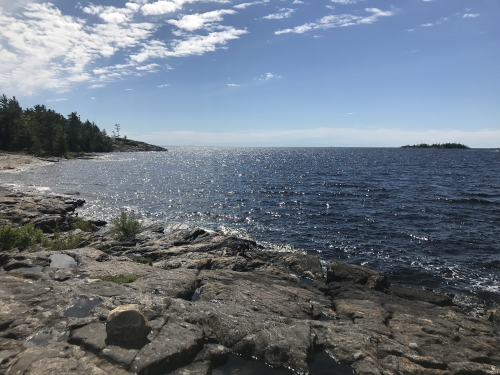
Shoreline of Wreck Island
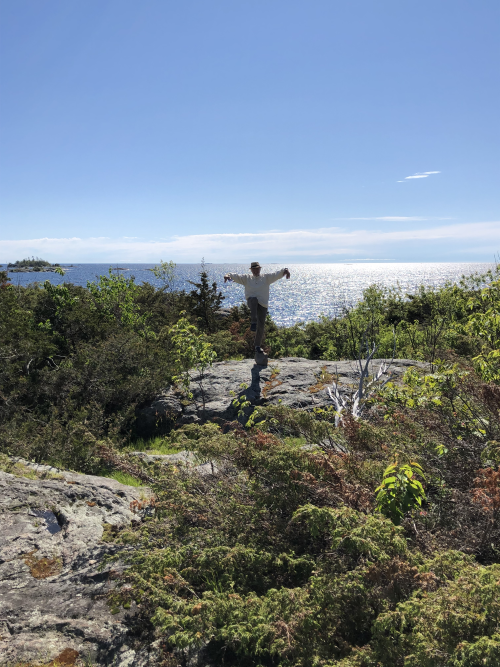
Karate Kid on Wreck

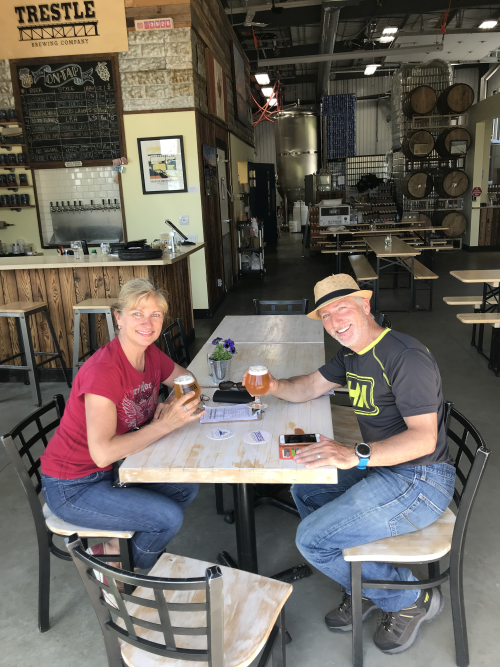
After 5 nights of “swinging on the hook” (anchoring), we pulled into Parry Sound for fuel, holding tank pump out, provisioning and good wi-fi.  The “Home of Bobby Orr” is off Highway 69 and has always been a good spot to fill the tank and move on north, so this was our first visit to this town.  A lovely downtown core with mom & pop shops, independent restaurants, a brewery, free summer concerts and a river with rapids running through it, was just what we needed to restock the boat and recharge our own batteries. 

Recharging at Tressle Brewing Company in Parry Sound.

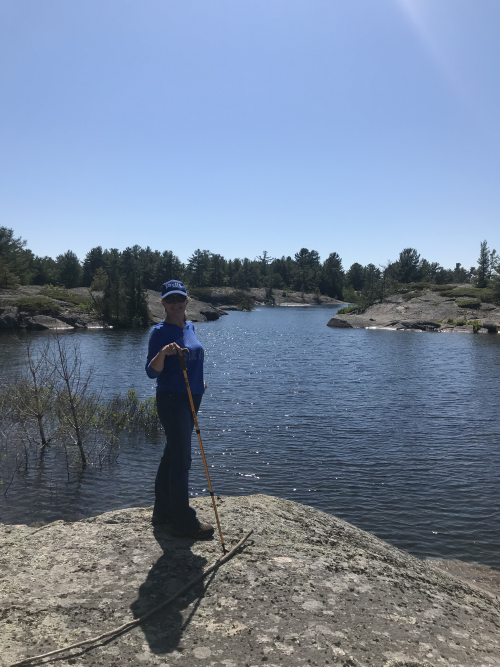
We’ve moved back to nature the last 2 nights, anchoring off Franklin Island near Snug Harbour. A provincial park, Franklin Island is known as a kayaker’s paradise.  No kidding!  Allen and I set out in the dinghy planning to circumnavigate the island.  Our planned 1-hour tour turned into a 3 hour tour!  This island is huge, with so many coves and crannies worth exploring.  One cove turned into an interior lake, and then another and another.  This is home to osprey, loons, turtles, all kinds of birds and we read that bears live here too (though we didn’t meet any).  It would take a week to see it all.  Being here mid-week, we didn’t see another soul on the island and sometimes it felt like we were the first humans to explore it.  Then we turn a corner and see a camp fire pit or inuksuk indicating this place must be crawling with kayakers and campers on weekends.  So glad we could experience it as we did. 

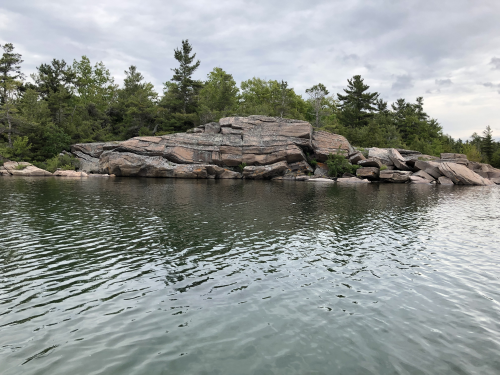
One of many beautiful rocks on Franklin Island.
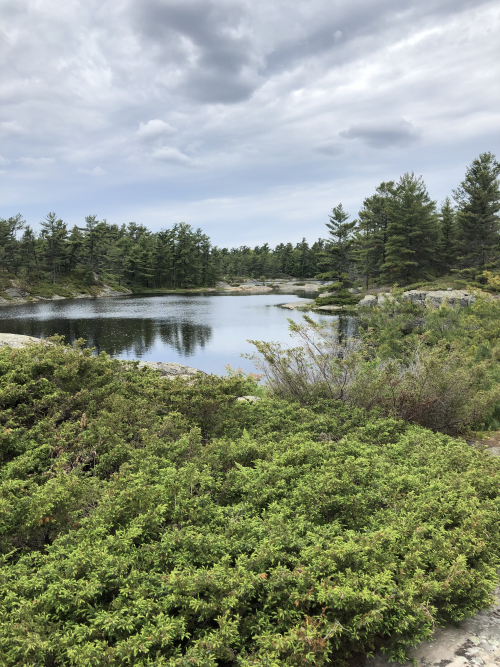
One of many lakes inside Franklin Island.
Hiking on Franklin.

In about an hour we will be pulling up the anchor and heading to Pointe Au Baril for a special treat – my boy is coming up for a visit, so signing off until next time.

We are Gunkholers.

Gunkholing:  a type of cruising in shallow water, meandering from place to place, spending nights in coves.   Yes, we are gunkholers.  This is a lifestyle for those who aren’t afraid of not knowing where they are going to sleep tonight, can take some educated risks, perhaps a sleepless night or two, even an occasional light tap on the keel (for you non-sailors – this means hitting bottom), no wifi or data, all in search of the perfect anchorage: calm water, protection from winds, but most of all, solitude with a view. 

To gunkhole properly, you have to leave the marked channel (the safe route that Transport Canada marks with navigation buoys) and move into uncharted waters that may or may not have enough depth for your boat and may or may not  have submerged rocks, islands or tree stumps.  This is not for the feint-hearted, nor for anyone without good electronics or polarized sunglasses.  

Gunkholing with Meshuggana

After a couple days in the big city of Parry Sound (“Big City” is defined as more than one restaurant, a grocery store, Walmart and a Canadian Tire), in a marina with all of life’s conveniences (defined as hot showers, shore power, wifi and laundry facilities), we were ready for some gunkholing and set out in search of that perfect anchorage.  What made it really special for me was my son, Davis, was coming to spend a day with us; however, that added a challenge of finding a place where we could anchor and Davis could leave his car overnight and we’d be able to pick-up and drop-off. 

Point au Baril is a tiny hamlet between Parry Sound and Sudbury.  Once a busy metropolis (see definition of Big City above), it now consists of several small power boat marinas, a single hardware/grocery store and a chip truck.  However, for a mere $15, one can park a car at a marina and we can get in with our dinghy for easy pick-up and drop-off.   

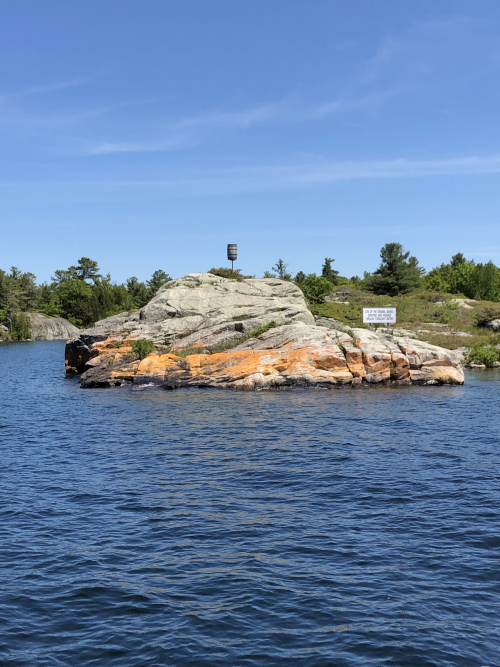
Entrance to Pointe au Baril from Georgian Bay. In the old days, the apparance of the barrel indicated safe waters. Later it was replaced by a lighthouse.
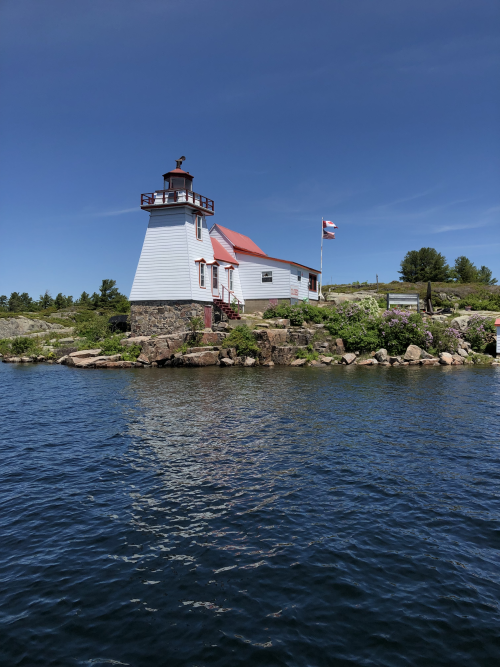
Point au Baril Lighthouse

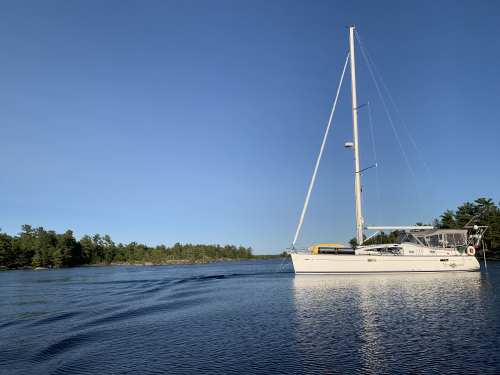
Tucked far into Hopewell Bay off  Shawanaga Island, with 8 feet of water beneath our keel, well secured between a rock island and shore, we were a mere 1 hour dinghy-boat ride away from Pointe au Baril.  I had everything I needed: good protection from wind, calm water, postcard perfect landscape and the company of my 3 boys – Davis, Allen and Cat Stevens.  Add some good food, kayaking, music, a little wine and my heart was full.  Time went by in a flash, and before I knew it we were journeying back to Point au Baril to send my boy off to the REALLY big city (Toronto).

Davis kayaking with Cat Stevens.
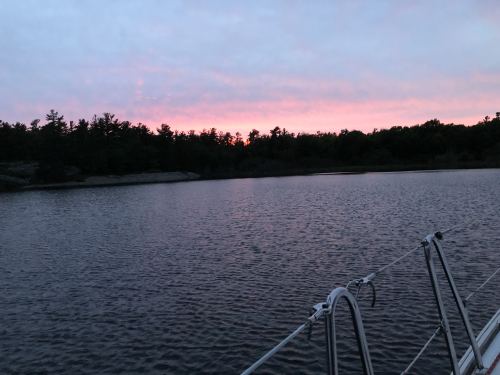
Sunset from Hopewell Bay.

Next stop Nares Inlet.  I wish I knew exactly where it is, but that’s the thing with gunkholing – I really don’t know where we are most of the time.  We found a quiet cove off of a larger bay, with cottages and an occasional fishing boat.  This was a near perfect spot, secure and with beautiful scenery, but we were surrounded by private property and so leaving the boat to hike and explore is not really an option.  Most cottagers are friendly; however, it’s not really OK to hike on their property without permission.

Sandy Bay, about an hour past the Byng Inlet, was our next destination.  To get there, we navigated a minefield of rocks, some visible, but many submerged due to extremely high water levels in Georgian Bay.  Communicating with walkie-talkies and hand signals, Allen drives the boat and watches sonar, while I stand on the bow looking for underlying hazards.  Just one good hit on a rock could end our trip and do tens of thousands in damage to Meshuggana. 

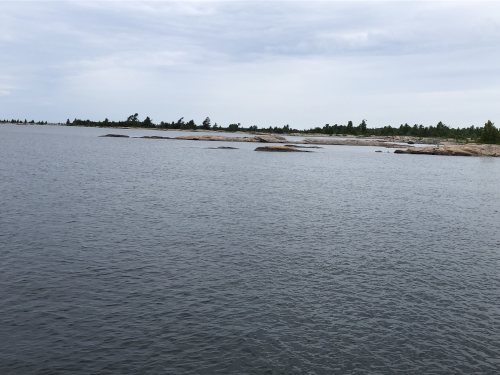
Minefield of rocks, some visible, some submerged.

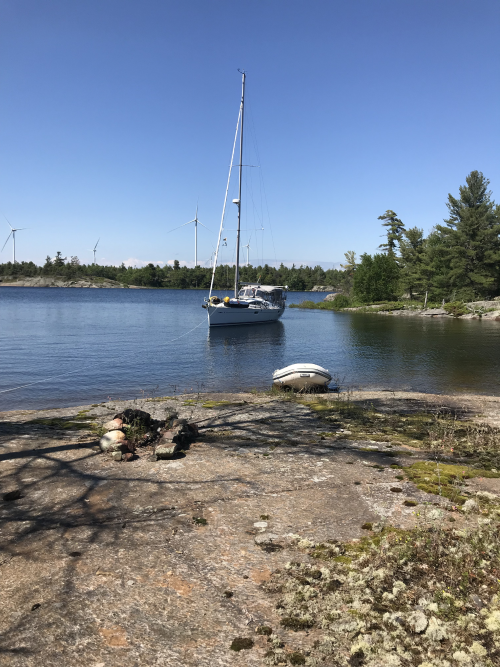
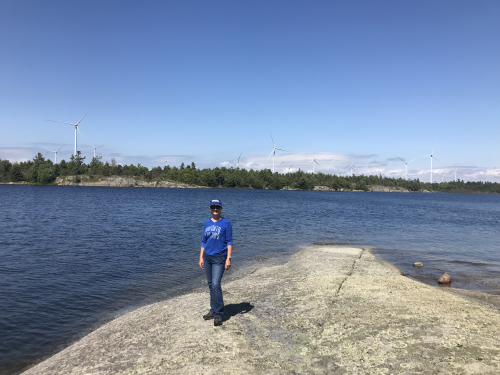
We were told Sandy Bay is usually buzzing with boat and cottager traffic, but we found it completely secluded.  In fact, we did not see a single human for 3 straight days – not a fishing boat, not a kayak, not a cottage, not a hiker, and only sporadic data and cell service.  The only reminder that we were not the only humans on earth were the long-ago used fire pits on massive pink granite slopes on shore and the 100 wind turbines right across the bay.

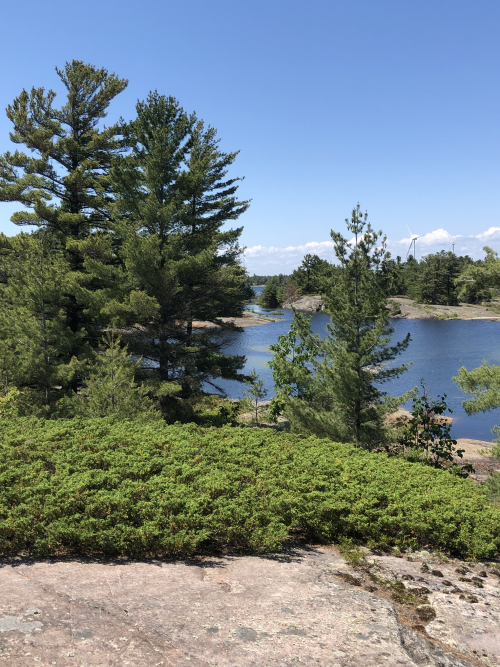
An interior lake near Sandy Bay with a wind turbine in the background.

The Henvey Inlet First Nation Reserve is comprised of 3 native reserves, Henvey, Sawanaga and Magnetawan reserves.  The wind farm is the first wind power project on First Nations land, the largest in Ontario and has the highest hub-height (distance from ground platform to blade rotor) in North America.  It’s strange, being in the middle of staggering natural beauty peppered with wind turbines. I’m not sure if I found them ugly or just interesting; however, they provide economic opportunities and jobs to First Nations people now and for generations to come.

An old fire pit and some turbines to remind us we are not alone.
Look at all those wind turbines!

We stayed in Sandy Bay for 3 nights, waiting out 25 knot winds and 4 foot waves in Georgian Bay.  While not really dangerous for a 42′ sailboat, travelling would have been incredibly uncomfortable, not only for us, but especially Cat Stevens.  And as gunkholers in a calm, safe anchorage and a vast amount of (public) land to hike and explore, there was no reason to leave. 

Even Cat Stevens enjoys the solitude of Sandy Bay

The stakes of gunkholing can be high, but so are the rewards of finding the perfect anchorage. Eventually we did leave our serene anchorage to journey back to the Byng Inlet and the village of Britt, to spend some time with family and finally some civilization…solitude is nice, but I can only take so much!

Everyone needs a break – even when you’re living the dream

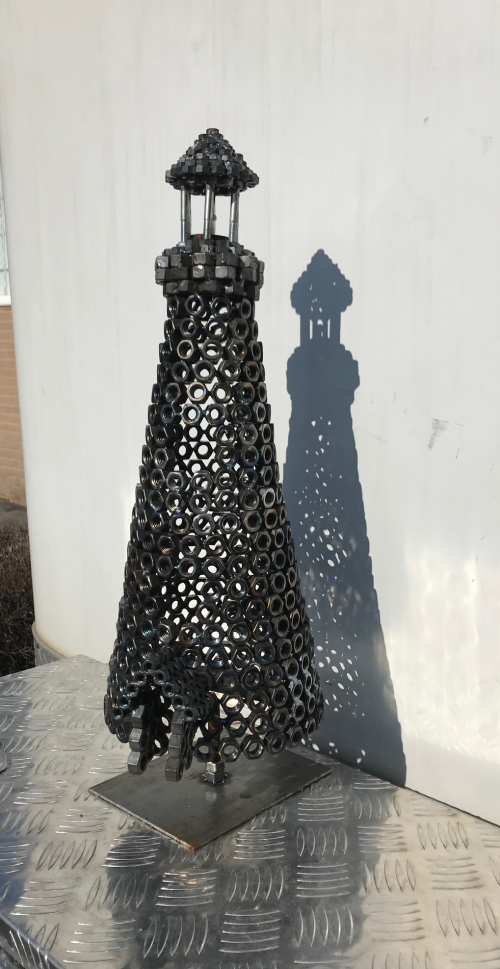
Our journey took us to a very special place: Britt, Ontario on the Magnetawan River, off Georgian Bay.  Growing up Allen spent many happy days at the Andrews’ family cottage in Britt, now the lovely summer home of Naireen (Andrews) and Ian Lowe. Allen’s parents, Saul and Tobie, continued to travel to Britt into their final years, to enjoy the beauty and tranquility and spend time with Naireen and Ian.  To honour his parents’ memory, Allen created a memorial in the shape of a small lighthouse, which now stands on the break wall in front of the home.  As we navigated the Magnetawan River, Allen was not sure if he’d recognize the Lowe’s home as it’s been many years since his last visit, long before the new home was built.  But there is was, on the shore, the little lighthouse, directing us into safe harbor.   


Lighthouse memorial for Saul and Tobie Lewis.
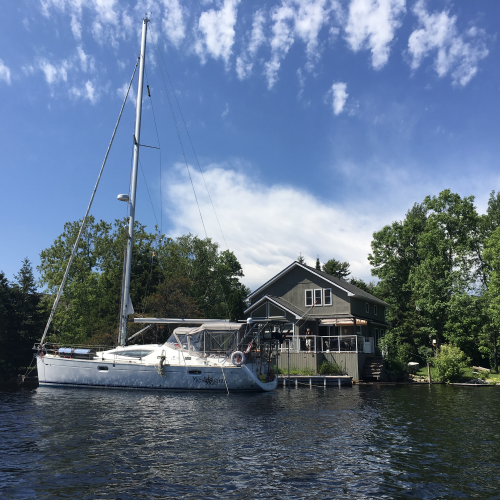
Meshuggana docked in Britt.

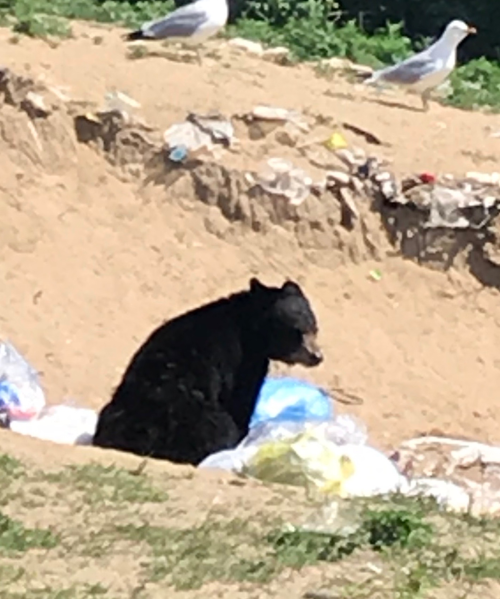
Docked in front of the Lowes’ home, we spent several sunny days with family enjoying the luxuries of land-living (hot showers, clean laundry and wifi) and took in the Britt Canada Day Boat Parade, with “front row” seats in our cockpit, day trips to the French River Park, the Trading Post and of course, the local dump so see some wildlife. 

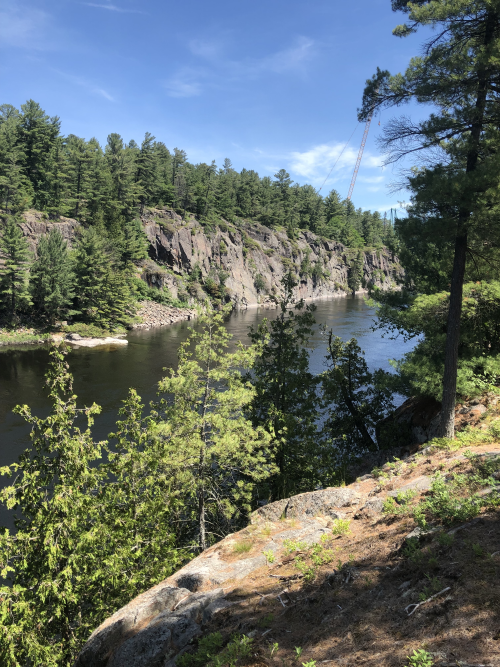
French River
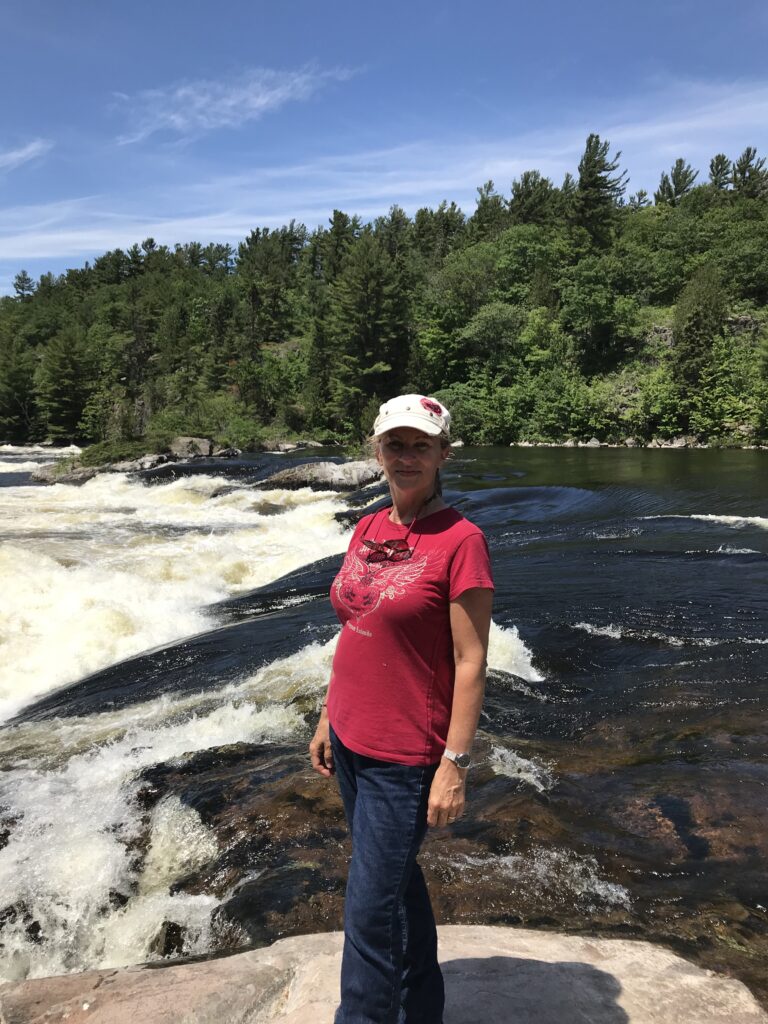
Happy Canada Day from Recollett Falls, French River.
Baby Black Bear looking for lunch at the town dump.

Cool evenings with family dinners, a bonfire and learning new card games made this the perfect break from gunkholing. 

Allen fixing instruments at the top of the mast.

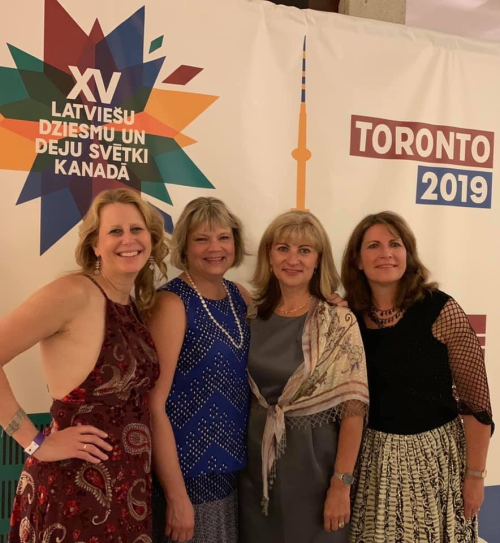
Our break culminated with a trip to Toronto to take in the Latvian Song & Dance festival.  Borrowing a car, we made the 4 hour drive to the REALLY big city.  After 6 weeks of living on a boat, it felt a little odd to put on nice clothes, heels and make-up!  First stop hairdresser, then a mani-pedi, then I was ready to re-join civilization.

Latvian Song & Dance festivals have always been very special for me, as a former participant (I folk-danced in my previous life) as well as an opportunity to reconnect with family and lifelong friends from near and far.  I’ve been asked what is the hardest part of this Great Lakes journey.  It’s not living in a small space, not the rain, the insects, or the cold (soon to be hot) weather, or even the submerged rocks and nasty waves.  It’s missing our family…our kids, grandkid, siblings, nieces/nephews, cousins. We were blessed to spend time with all, even if brief – my heart is full.   

GVV (Latvian summer high school) Roommates’ Reunion.
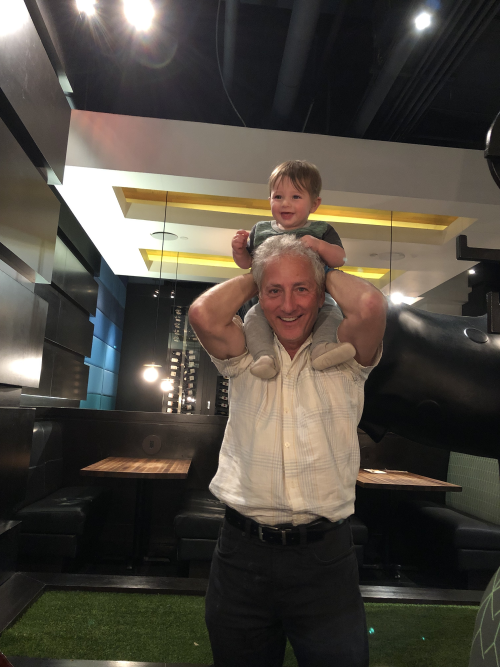
Giving grandson Tommy a ride.

Now we are recharged both spiritually and physically  – fridge and freezer filled, holding tanks empty, fuel-up topped  – North Channel, here we come!  

Thank you Naireen and Ian, for generously sharing your home (and car), taking good care of Cat Stevens and Meshuggana, and especially for your love and company.  Those are memories we will always cherish.

Thank you Anita Lewis, for your hospitality and taking-in your brother & sister with “no set address”.  I love our long talks and laughs  with glasses of bubbly. We’re waiting for you to come visit – our guest berth awaits!